“Long Way Back Home” Starring Michael Shannon and Directed by Jeff Nichols
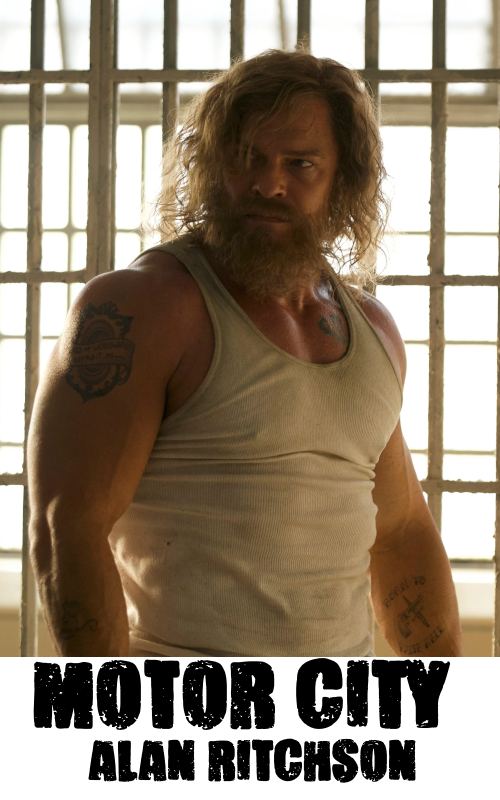
Long Way Back Home stars Michael Shannon and is directed by Jeff Nichols. It was made to promote the release of Lucero’s new album Among the Ghosts.
More, please.
Previews and Reviews that are Z's Views
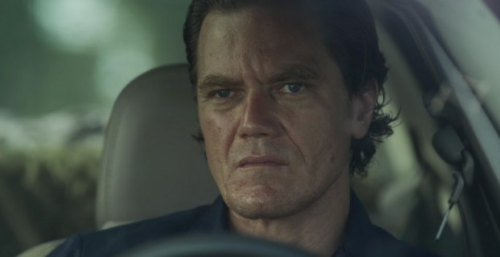
Long Way Back Home stars Michael Shannon and is directed by Jeff Nichols. It was made to promote the release of Lucero’s new album Among the Ghosts.
More, please.
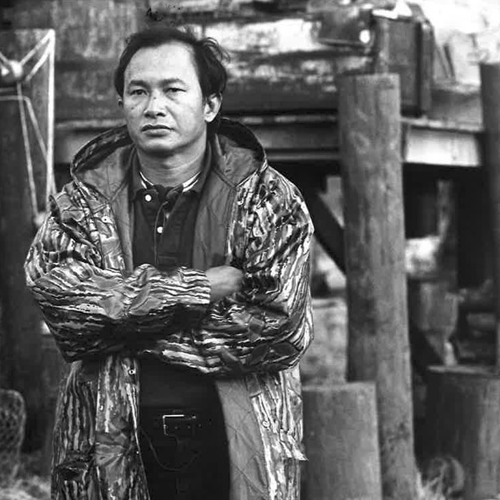
Pete Keeley at The Hollywood Reporter recently posted ‘Hard Target’ at 25: John Woo on Fighting for Respect in Hollywood. The interview is more than worth a read and if you click over you’ll learn…

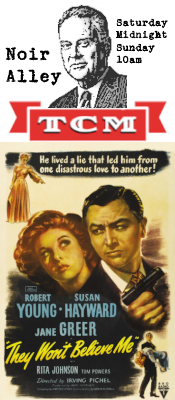
Matthew Jackson and Mental Floss present 10 Fascinating Facts About Double Indemnity. Not only is Double Indemnity one of my favorite noirs, it is one of my favorite films. Period. Speaking of favorites, here are three of my favorite Double Indemnity facts…
1. IT WAS INSPIRED BY A REAL MURDER.
Before he began making serious headway as a writer of fiction, Double Indemnity author James M. Cain worked as a journalist in New York, and it was there that he stumbled upon the real-life murder case of Albert Snyder, who was killed in 1927 by his wife, Ruth Brown Snyder, and her lover, a corset salesman named Henry Judd Gray. Before committing the murder, Brown took out a $100,000 life insurance policy on her husband, then tried to kill him several times, but was unsuccessful. She ultimately turned to Gray for help in the murder plot, and both were ultimately executed for the murder in 1928.Cain used the case as the inspiration for two of his earliest and most famous stories. His first novel, 1934’s The Postman Always Rings Twice, is about a man who falls in love with a beautiful woman and then helps her—unsuccessfully, at first—murder her older husband. The novel quickly made its way to Hollywood, where the Hays Production Code—which provided moral oversight for movie production—was just beginning to be strictly enforced, so the story languished without a film adaptation for years.
In the meantime, Cain wrote Double Indemnity, another story of a man swept up in a plot to murder his lover’s husband, this time with an insurance scam added. The story was serialized in the pages of Liberty magazine in 1936, but was first submitted as a potential Hollywood property in 1935. Double Indemnity finally made it to the screen in 1944, and The Postman Always Rings Twice followed with its own well-received film version in 1946. (It was remade in 1981 with Jack Nicholson and Jessica Lange, from a script by David Mamet.)
7. STUDIO EXECUTIVES HATED STANWYCK’S WIG.
Stanwyck’s performance in Double Indemnity was hailed as one of her best even in 1944, when critics and executives were finally seeing the completed film, but there was one complaint that kept going around, and that some viewers still notice: her hair. Though it may seem like an immovable part of the film now, the blonde wig Phyllis wears was a noticeable change to Stanwyck’s overall look at the time, and some viewers complained that it looked too cheap and fake. One executive at Paramount, after seeing some early footage, commented: “We hire Barbara Stanwyck and here we get George Washington.”Having Stanwyck go blonde for the film was Wilder’s idea, and while he told people for years that the wig was chosen to intentionally convey something showy and even trashy about Phyllis, he later admitted that was just the answer he made up after realizing he made a mistake with the choice of wig a bit too late.
“But after the picture is half-finished, after I shot for four weeks with Stanwyck, now I know I made a mistake. I can’t say, ‘Look tomorrow, you ain’t going to be wearing the blonde wig.’ I’m stuck … I can’t reshoot four weeks of stuff. I’m totally stuck. I’ve committed myself; the mistake was caught too late. Fortunately it did not hurt the picture. But it was too thick, we were not very clever about wig-making. But when people say, ‘My god, that wig. It looked phony,’ I answer ‘You noticed that? That was my intention. I wanted the phoniness in the girl, bad taste, phony wig.’ That is how I get out of it.”
8. THE ORIGINAL ENDING FEATURED NEFF’S EXECUTION.
Cain’s original novella ends with the two lovers committing suicide together, but since suicide was forbidden by the Production Code, Wilder and Chandler had to develop an alternate ending, and came up with the notion that Neff would shoot Phyllis after she wounds him, and he would then return to the insurance office to record his confession, only to be discovered by Barton Keyes, a claims adjuster and co-worker. The film famously ends with Walter collapsed on the floor, with Keyes lighting a cigarette for him as sirens approach outside, but the original script actually went further, showing Neff’s arrest and his eventual execution in a gas chamber. Wilder even shot the gas chamber ending, but cut it for two reasons: The PCA was concerned the details were too gruesome, and Wilder himself felt that it was ultimately unnecessary to the story.“I shot that whole thing in the gas chamber, the execution, when everything was still, with tremendous accuracy. But then I realized, look this thing is already over. I just already have one tag outside that office, when Neff collapses on the way to the elevator, where he can’t even light the match,” he recalled. “And from the distance, you hear the sirens, be it an ambulance or be it the police, you know it is over. No need for the gas chamber.”
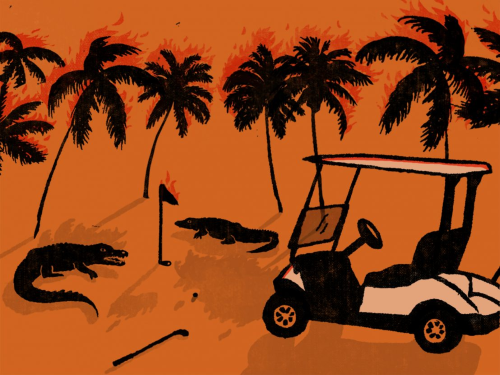
Illustration by Simon Hayes
Christopher McKittrick’s The Wild, Untold Story of The Good Life at Little White Lies is an interesting profile of a “lost” Sylvester Stallone film. Most Stallone fans have heard of (although never seen) The Good Life, a film starring Frank Stallone, Burt Young, Andrew Dice Clay, David Carradine, Beverly D’Angelo, Frank Vincent, Tony Sirico and former middleweight boxing champ Vinny Pazienza. It even featured a cameo by Frank’s brother Sly.
Because the film was low-budget and for the opportunity to work with Frank, Sly agreed to his cameo in The Good Life for some golf clubs and the understanding that he wouldn’t be featured prominently in advertisements for the film. Unfortunately, the film was promoted making it look as if Sly had a much larger, if not starring role in the film. And that’s when things went off the rails. Before it was over several lawsuits were filed, an agreement was reached and The Good Life was shelved.
Years ago, I asked Frank Stallone if he thought the film would ever be released. He said it was highly unlikely.
Maybe someday enough time will have passed and a new agreement could be worked out so that The Good Life gets released.
If you’ve read this far, you’ll definitely want to click over to McKittrick’s The Wild, Untold Story of The Good Life.
Thanks to Chris Heathcoat for finding and sharing the article.
Want to watch legendary artist John Byrne draw Cyclops? You can by clicking on the video below.
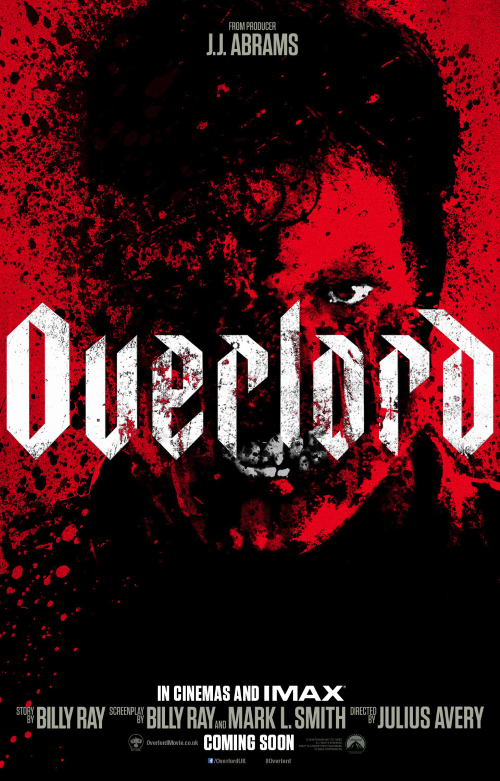
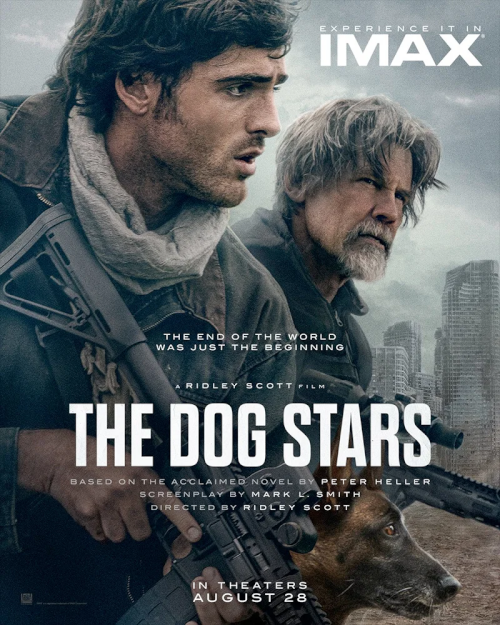
The Latest Overlord Poster and Trailer are Here!
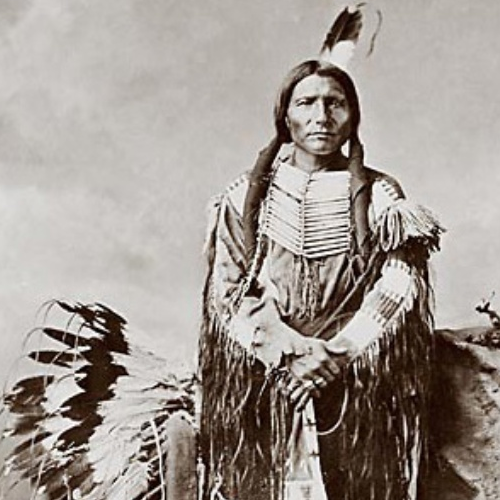
Lucas Reilly and Mental Floss present 12 Things to Know About Crazy Horse. Here are three of my favorites…
1. “CRAZY HORSE” WAS NOT HIS FIRST GIVEN NAME.
Born around 1840 to Lakota parents, Crazy Horse was originally named Cha-O-Ha, or Among the Trees. (His mother, however, insisted on calling him “Curly.”) When Cha-O-Ha reached maturity, he was given the name held by his father and grandfather—Ta-Sunko-Witko, or Crazy Horse.
9. HIS PERFORMANCE AT THE BATTLE OF THE LITTLE BIGHORN WAS LEGENDARY.
And we mean legendary—nobody is sure what, exactly, Crazy Horse did. But there are rumors. An Arapaho warrior named Water Man said Crazy Horse “was the bravest man I ever saw. He rode closest to the soldiers, yelling to his warriors. All the soldiers were shooting at him, but he was never hit.” Another Native American soldier said, “The greatest fighter in the whole battle was Crazy Horse.”
12. IF COMPLETED, THE CRAZY HORSE MEMORIAL COULD BE THE WORLD’S LARGEST SCULPTURE.
Under construction since 1948, the Crazy Horse Memorial was commissioned by Henry Standing Bear, the Oglala Lakota chief in the late 1930s, as a response to Mount Rushmore. Today, the memorial—built by a non-profit that refuses government funding—is still incomplete. When it is finished, the monument carved into the side of South Dakota’s Thunderhead Mountain will stand 563 feet high.
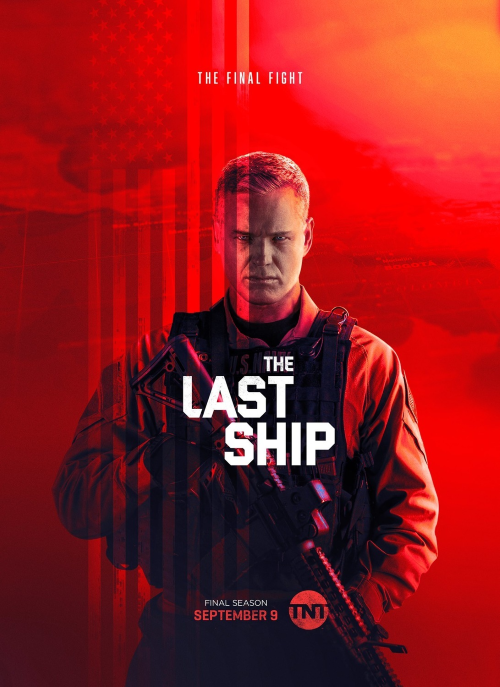
The poster and trailer for the final season of The Last Ship is here! I’m looking forward to the September 9th premiere. I’m going to miss this show.
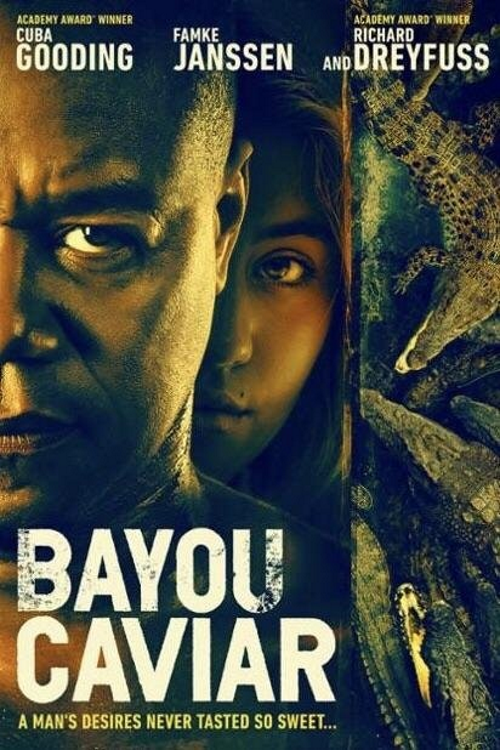
To be honest I’m not a fan of the title or the poster but I am diggin’ the trailer for Bayou Caviar!
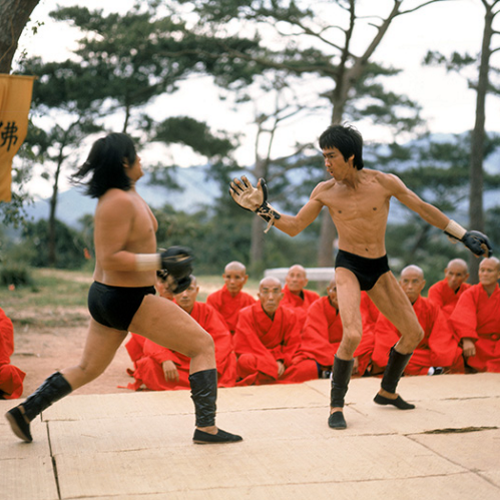
To honor one of the all-time greatest action movies Warner Bros. recently posted ENTER THE DRAGON – 45TH ANNIVERSARY: Celebrating a Classic Through Pictures. There are a couple of rate photos making it more than worth a peek.
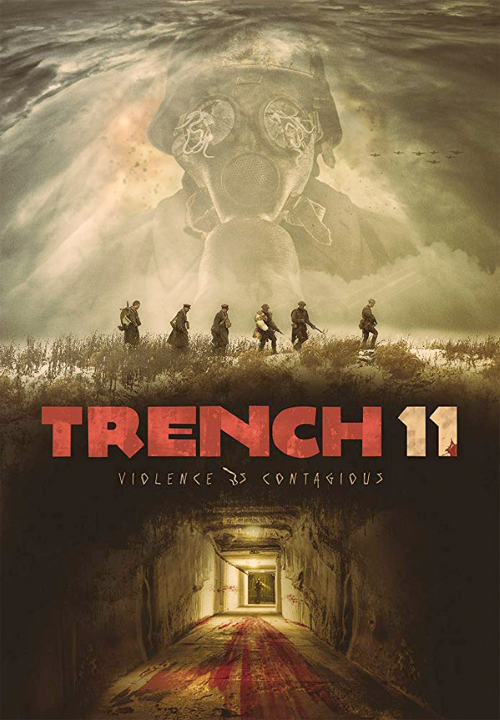
The Trench 11 Poster and Trailer are Here!
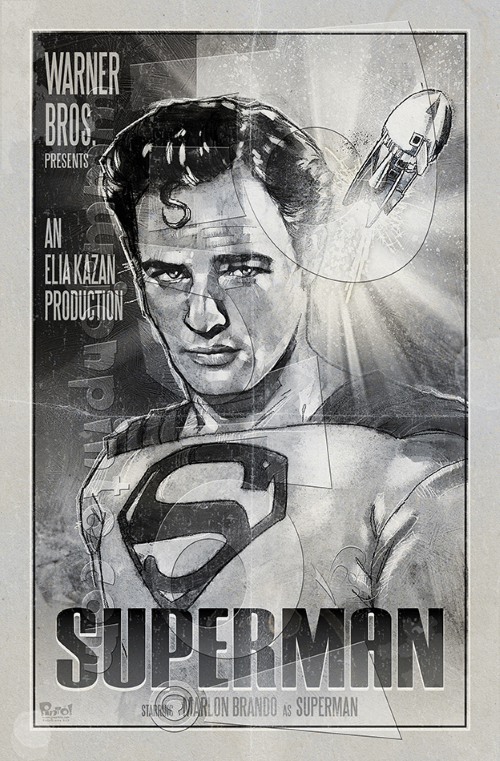
Remember when Jon Pinto and some of his friends were riffing on Aquaman and decided that Paul Newman would be the ideal lead for a movie made back in the day. Then Pinto went on to create a poster with Newman as Aquaman and Sidney Poitier and Ann Margaret as co-stars?
If not, then click here or you can see an ocean-sized version of Pinto’s poster by clicking over.
Pinto is back with Brando as Superman! You can see a bigger version at Pinto’s site (and even more of his art)!
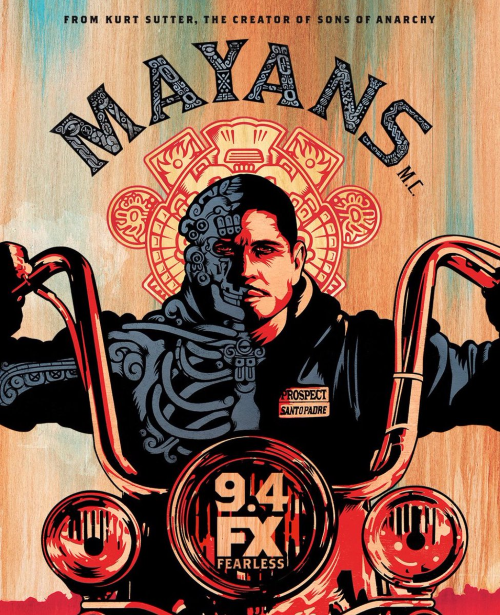
It’s not just a club. It’s a family. Get a FIRST LOOK at Mayans M.C., FX’s new series from the creator of Sons of Anarchy. #MayansFX pic.twitter.com/1AWzTDtIc6
— Mayans MC (@MayansFX) August 27, 2018
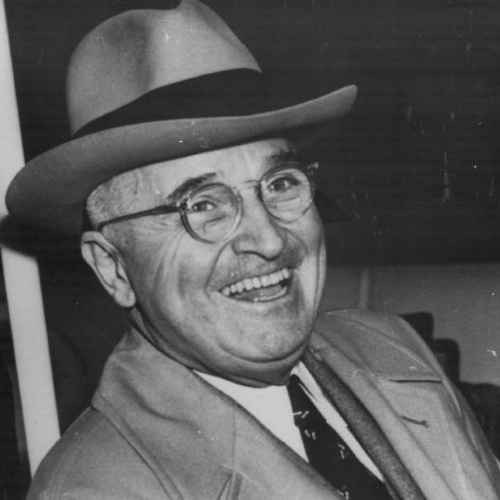
Jake Rossen and Mental Floss present 10 Things You May Not Know About Harry S. Truman. Here are three of my favorites…
1. THE “S” DOESN’T REALLY STAND FOR ANYTHING.
Truman was born in Lamar, Missouri on May 8, 1884 to mule trader and farmer John Anderson Truman and Martha Ellen Truman. After some deliberation, John and Martha realized they couldn’t decide on a middle name for their first child, so they settled on “S.” His maternal grandfather was named Solomon, while his paternal grandfather had a middle name of Shipp. “S” was his parents’ compromise. (And, since his S is a name of sorts rather than an initial, it can stand alone without a period, though stylistically, it’s most often seen with one.)
5. HE PUSHED FOR UNIVERSAL HEALTH INSURANCE.
Truman anticipated much of the contemporary debates over health care spending. Just seven months into office, he began advocating for care facilities in underrepresented rural areas and more public health services. He wanted Americans to pay monthly fees that would go toward health care that would cover costs if and when they fell ill. It would not be “socialized medicine,” he argued, since the doctors weren’t government employees. But the American Medical Association resisted, instead promoting private insurance. With Democrats losing power in the Senate and the House, Truman’s plans withered. He later referred to his failed attempt for national health insurance to be one of the biggest defeats of his presidency.
7. TWO ASSASSINS TRIED TO KILL HIM OUTSIDE THE WHITE HOUSE.
The morning of November 1, 1950 could have been the last of Truman’s life. Two members of the Puerto Rican National Party, Oscar Collazo and Griselio Torresola, traveled from the Bronx to Washington with plans to assassinate the president. They believed the move would bring attention to Puerto Rico’s struggle for independence. Both wielding guns, the two idled outside Blair House, the residence across the street from the White House where Truman and his family were staying during renovations. A gun fight ensued—a guard killed Torresola but later died of gunshot wounds himself. Collazo was shot but survived and later had his death sentence commuted to life imprisonment by Truman (President Carter would later commute that sentence, too, and Collazo was released in 1979). Truman was napping upstairs at the beginning of the altercation; he woke up, went to the window, and was shouted at to get down.
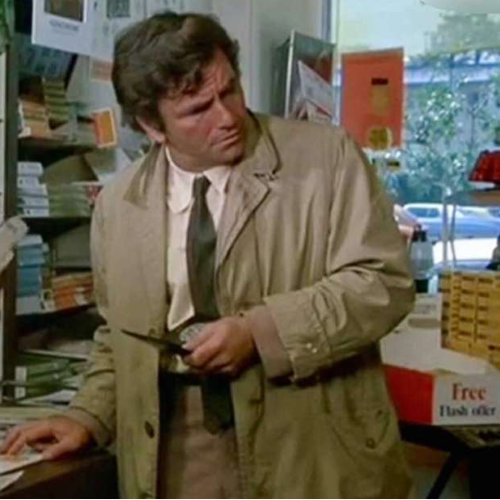
Kara Kovalchik and Mental Floss present 10 Things You Might Not Know About Columbo. Here are three of my favorites…
9. THE SERIES DIDN’T FOLLOW A STANDARD MYSTERY FORMAT.
The premise of Columbo was the “inverted mystery,” or a “HowCatchEm” instead of a “WhoDunIt.” Every episode began with the actual crime being played out in full view of the audience, meaning viewers already knew “WhodunIt.” What they wanted to know is how Lt. Columbo would slowly zero in on the perpetrator. This sort of story was particularly challenging for the series’s writers, and they sometimes found inspiration in the most unlikely places. Like the Yellow Pages, for example. One of Peter Falk’s personal favorite episodes, “Now You See Him,” had its genesis when the writers were flipping through the telephone book looking for a possible profession for a Columbo murderer (keep in mind that all of Columbo’s victims and perps were of the Beverly Hills elite variety, not your typical Starsky and Hutch-type thug).A page listing professional magicians caught their eye, and that led to a classic episode featuring the ever-suave Jack Cassidy playing the role of the former SS Nazi officer who worked as a nightclub magician. When the Jewish nightclub owner recognized him and threatened to expose him, well, you can guess what happened. But the challenge is to guess how Lt. Columbo ultimately caught him.
7. STEVEN SPIELBERG GOT AN EARLY BREAK ON COLUMBO.
“Murder by the Book” was the second Columbo episode filmed, but it was the first one to air after the show was picked up as a series. Filming was delayed for a month, though, when Falk refused to sign off on this “kid”—a 25-year-old named Steven Spielberg—to direct the episode. Finally he watched a few of Spielberg’s previous credits (all of them TV episodes) and was impressed by his work on the short-lived NBC series called The Psychiatrist. Once filming was underway, Falk was impressed by many of the techniques employed by the young director, such as filming a street scene with a long lens from a building across the road. “That wasn’t common 20 years ago,” Falk said. He went on to tell producers Link and Levinson that “this guy is too good for Columbo.”
6. THE CHARACTER’S TRADEMARK RAINCOAT CAME FROM FALK’S CLOSET.
The initial wardrobe proposed for Columbo struck Peter Falk as completely wrong for the character. To get closer to what he wanted for Columbo, the actor went into his closet and found a beat-up coat he had bought years earlier when caught in a rainstorm on 57th Street. And he ordered one of the blue suits chosen for him to be dyed brown. The drab outfit would become one of the trademarks of the character for decades.