35 THINGS WE LEARNED FROM THE ‘IRON GIANT’ COMMENTARY

Film School Rejects presents 35 THINGS WE LEARNED FROM THE IRON GIANT COMMENTARY .  Here are three of my favorites…

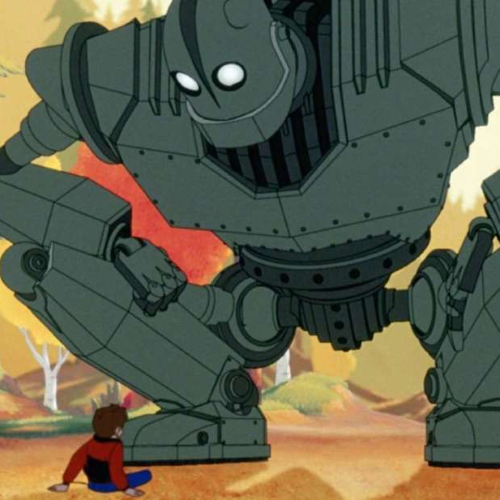
One of the big questions Bird and Lynch faced was in how much they should reveal of the Giant early on. They wanted to keep the Giant interesting and grab the audience’s attention without giving away too much too early. This seems to always be a concern for filmmakers creating a story that involves an otherworldly creature. Some director’s just don’t even bother with subtlety.

As Bird and Markowski mention, the first time Hogarth runs into the Iron Giant is the most robotic the Giant is in the entire film. They wanted to gradually show the Giant picking up Hogarth’s mannerisms and acting more and more human as the story progressed. As mentioned later on in the scene when Hogarth confronts and talk to the Giant for the first time, the Giant learns these humanistic skills very quickly going from “pet to friend to hero” as Markowski says.

One of the things Bird is very proud of in The Iron Giant is how real his characters feel. He mentions the audience reacting audibly when Hogarth gets hit in the face with a branch and how that’s a very difficult thing to pull from the audience when you’re dealing with animated characters. Audiences are so used to Wile Coyote falling off cliffs they’ve become accustomed to animated characters being more malleable than real people. “If you defy gravity and later on need to feel danger in the film, you have a really hard time convincing the audience how to do that,” says Bird.

39 THINGS WE LEARNED FROM ‘THE BOONDOCK SAINTS’ COMMENTARY

Film School Rejects presents 39 THINGS WE LEARNED FROM THE BOONDOCK SAINTS COMMENTARY .  Here are three of my favorites…

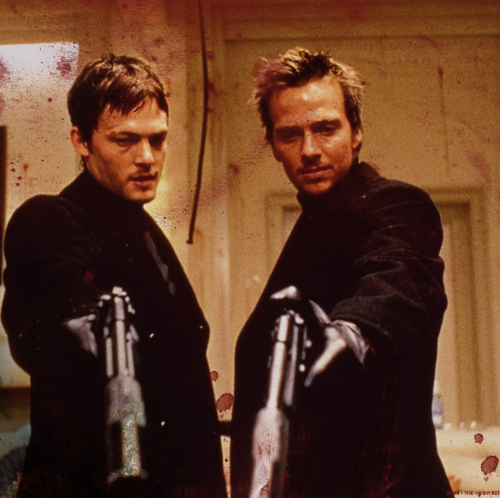
To make it look legit that Reedus’ character, Murphy, was picking up and carrying Connor, the director told Flanery not to help Reedus in any way. Reedus had to jog out of the alley with dead weight of about 180 pounds on his shoulder.

The initial premise for The Boondock Saints came when Duffy and his brother, Taylor, were living in a run-down apartment complex. Duffy notes the drugs and guns that constantly came through the building and how he and his brother always fantasized about doing something about it. “Not that we’ve ever killed anybody, because we certainly have not…to the best of your knowledge.” Oh, that Troy Duffy cracks me up with his crazy antics about back in the day when he was a vigilante.

1:23:40 – Duffy gets angry. The comparisons made by critics and other commentators of Duffy and other directors like Quentin Tarantino and Guy Ritchie comes up. Duffy notes that The Boondock Saints was finished before Lock, Stock, and Two Smoking Barrels hit theaters. “Tarantino’s another story,” Duffy says. He feels Tarantino “reinvented cool,” but also mentions certain elements of Pulp Fiction may have subconsciously influenced The Boondock Saints. He also notes the films Tarantino had been influenced by for his films. “So what? We’re creators. We go and do these things to the best of our ability. There are similarities, and there are differences. Everybody’s going to have their own opinion about it, but I guess it could be worse, you know?”

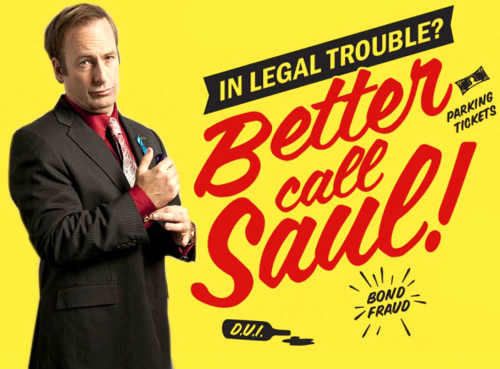
10 Fun Facts About “Better Call Saul”

Scott Beggs and Mental Floss present 10 Fun Facts About Better Call Saul.  Here are three of my favorites…

3. THE TITLES HAVE HIDDEN MEANINGS.
You can take nothing for granted in the Better Call Saul universe, including the episode titles. In the first season, every episode (from “Uno” to “Marco”) ended in the letter O, except “Alpine Shepherd Boy,” which was supposed to be called “Jell-O” before the producers waved it off to avoid being sued by the gelatin makers. Even crazier, the first letters of season two’s episodes (S-C-A-G-R-B-I-F-N-K) unscramble to spell “Fring’s Back”—a clear message for Breaking Bad fans.

6. CHUCK WASN’T INTENDED TO BE A BAD GUY.
Everyone who watches the show hates Chuck McGill, Jimmy’s brother played by Michael McKean, but it wasn’t until writing the seventh episode that Gilligan and the writers realized Chuck was a villain. “Believe it or not, the idea of Chuck being the ‘bad guy’ was a late addition to Season 1,” Gilligan explained during a 2015 Reddit AMA. “This points out one of the things I love most about writing for TV. There are enough episodes and enough lead time (if you’re lucky) for writers to change the direction of a story midstream.”

8. YOU SHOULD PAY ATTENTION TO WHAT COLOR PEOPLE ARE WEARING.
Gilligan’s fanatical dedication to detail includes the colors that get associated with each character. It was a major element in Breaking Bad. It’s also a big part of Better Call Saul in the form of the “Fire and Ice Theory,” partially confirmed by writer Peter Gould, who confessed that hotter colors like red were associated with criminals. That tacitly means cooler colors are meant for the innocent, so it’s curious that Jimmy’s car is yellow with one red door …

Midnight Mystery by Bernie Gonzalez

Midnight Mystery is a four issue mini-series that looks to appeal to a lot of folks.  Written and illustrated by Bernie Gonzalez, Midnight Mystery…

… is a suspense/horror comic book series that follows the strange adventures of detective Ezekiel “Zeke” King.   It’s a mix of Supernatural, X-Files, and film noir movies told in the style of Batman: The Animated Series and Darwyn Cooke’s New Frontier.

That’s enough to get me on board.  But if you want more info, in the first four issue mini-series…

Zeke King’s latest case goes from freaky to fatal when he’s hired to find the lost son of a deceased horror host! The mystery begins in this new supernatural horror series!

Still need more?  Click over to Midnight Mystery and you can sign up for the newsletter, see preview art and more.  I can’t wait for this one!

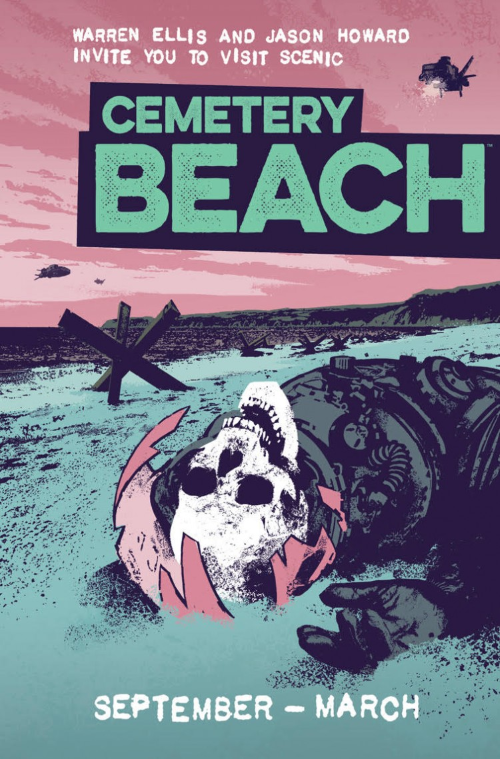
Cemetery Beach: A SDCC Interview with Jason Howard

Tim Midura had a chance to interview artist Jason Howard about his new project with Warren Ellis.  Here’s a tidbit…

Tim: Warren Ellis described Cemetery Beach as a relentless action book..

Jason: It starts with the idea of what this world is. In the story of Cemetery Beach, kind of the setup is that back in the 1920s/1930s, scientists found this exoplanet they thought could support life. So they built a rocketship with 1920s-era tech, sextants and all this stuff. They sent a group to colonize this planet. The plans and everything were lost to history. Everyone ended up dead or whatever. 100 years later we uncover this warehouse full of all the plans and we realize we sent that ship and nobody knows what happened. So they send a recon guy to look into it and see if they survived and report back. That’s kind of where the story starts. This guy ends up on the planet and the colony has survived but things are a little insane. It’s been 100 years.

If this sounds like something you’d enjoy, check out Talking a Long Walk on Cemetery Beach: A SDCC Interview with Jason Howard.


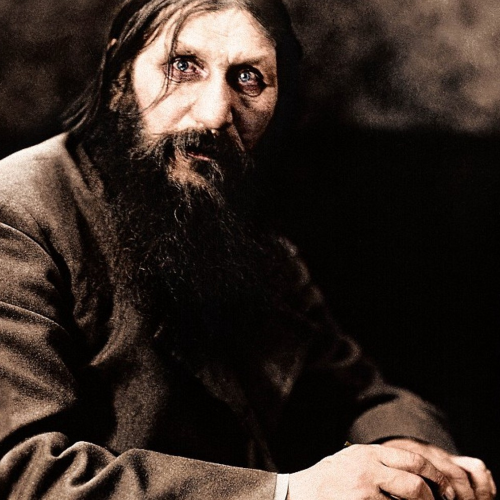
10 Strange Facts About The Mysterious Death Of Rasputin

After over 100 years most folks still know the story of the murder of Rasputin, the Mad Monk!  That he was fed enough poison to kill an elephant and showed no signs of sickness.  That he was shot through the heart and still struggled with his assassins.  That he was shot several more times, tied up and tossed in a river… and when his body was found his hands were free!

History books tell us that  Prince Felix Yusupov and four co-conspirators planned and executed Rasputin.  Yisupov took credit from the start…

… But Yusupov’s confession didn’t fit a single one of the facts. Every single detail in his story contradicted the autopsy and the evidence…

Mark Oliver and Listverse present 10 Strange Facts About The Mysterious Death Of Rasputin.  Here are three of my favorites…

7.  The Autopsy That Contradicts Everything Yusupov Said
Yusupov’s story certainly is exciting—but it doesn’t fit the facts. The autopsy report on Rasputin’s body, conducted by Professor Dmitry Kosorotov, contradicts every single word.In his memoirs, Yusupov claims that he shot Rasputin in the heart and even says that he had Dr. Lazovert check the body and confirm that was where the bullet had hit its mark. Kosorotov’s autopsy, though, found only three bullet wounds, and not a single one had even come close to the heart. Instead, the bullets went through his stomach, liver, kidney, and skull, with wounds that no physician could possibly mistake for a gunshot to the heart.[4]Likewise, Yusupov claimed that Rasputin was taken down by a long-range shot from Purishkevich that took him in the back of the head. The bullet in Rasputin’s skull, however, had entered from the front at point-blank range, while Rasputin was lying on the ground.It’s hard to reconcile Yusupov’s story with the facts. Some have suggested that he blew the murder up to make Rasputin more of a threat—but his account is nowhere near the truth. It’s almost as though Yusupov had no idea how Rasputin died.

3. The British Spy Who Might Have Killed Him
Every bullet in Rasputin’s body, according to the autopsy, came out of a different caliber gun. At least three people—or at least three guns—had to have been involved in his death.The bullet holes in his stomach and kidney could have been made by Yusupov and Purishkevich’s guns, but the one in his skull didn’t fit. It was made with a revolver, specifically, according to the most popular theory, a .455 Webley—a gun none of the conspirators carried.A British friend of Yusupov’s named Oswald Rayner, though, carried a .455 Webley on him at almost all times. And though Yusupov denies that he was ever there, a lot of people think that Rayner fired the shot that finished Rasputin off, all under the orders of British Intelligence.The British had a vested interest in seeing Rasputin dead. He was trying to broker peace between Russia and Germany, and his treaty would have turned the tide of World War I against the Allies. In Rasputin hadn’t died, it’s possible that the Germans would have won the war. And there’s a letter that seems to completely give it away. A man named Stephen Alley, stationed in Petrograd, sent a missive to England on January 7, 1917, that read: Our objective has clearly been achieved. Reaction to the demise of ‘Dark Forces’ has been well received by all, although a few awkward questions have already been asked about wider involvement. Rayner is attending to loose ends and will no doubt brief you on your return.

1.  The Burning Body That Sat Up
The most popular explanation for Yusupov’s outrageous story is that he was trying to erase a guilty conscience. He’d killed a defenseless man in cold blood, but he still wanted the people to believe that he was a hero. And so he changed the truth, making himself look better by selling Rasputin as a demonic monster who couldn’t be killed.But one strange moment in March 1917 almost makes it tempting to believe that Yusupov was telling the truth: that Rasputin really a supernatural being.A group of soldiers exhumed Rasputin’s body, threw it onto a pile of logs, doused it in gasoline, and set it on fire. They destroyed his body, afraid his tomb would become a monument to the Tsarist regime.A whole crowd of villagers came out to watch Rasputin’s body burn—and almost every one of them insists that they saw his decomposing corpse rise up in the fire.[10]There are scientific explanations, of course. It’s been speculated that Rasputin’s tendons shrank in the fire, causing his body to bend at the waist. Or else the whole thing has been written off as a great mass delusion.But Rasputin, they say, predicted every bit of it. In a letter that Rasputin (supposedly) wrote to Tsarina Alexandra shortly before his death, he said: “I feel that I shall leave life before January 1. ”Even dead, the sorcerer predicted, he would not be left in peace. His body would be burned, his ashes scattered into the winds.
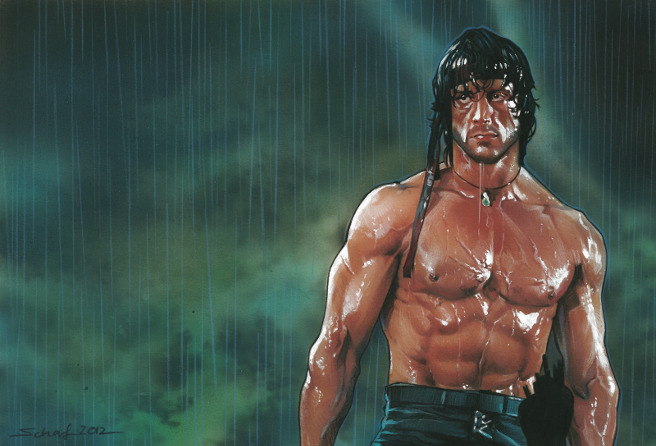
Rambo by Jonas Scharf

Once a week Joblo.com posts Awesome Art We’ve Found Around the Net.  As you can imagine, they post awesome art that they, well, you get the idea.

I always enjoy seeing what JoBlo has found because with each post they list the artist’s name and a link to more of his/her art.  If you check it out you’ll discover amazing artists like Jonas Scharf who did the Rambo piece above.  Click on the photo and you can see a slightly bigger version.

The 50 Best Movie Fights You’ll Want to Watch Again and Again

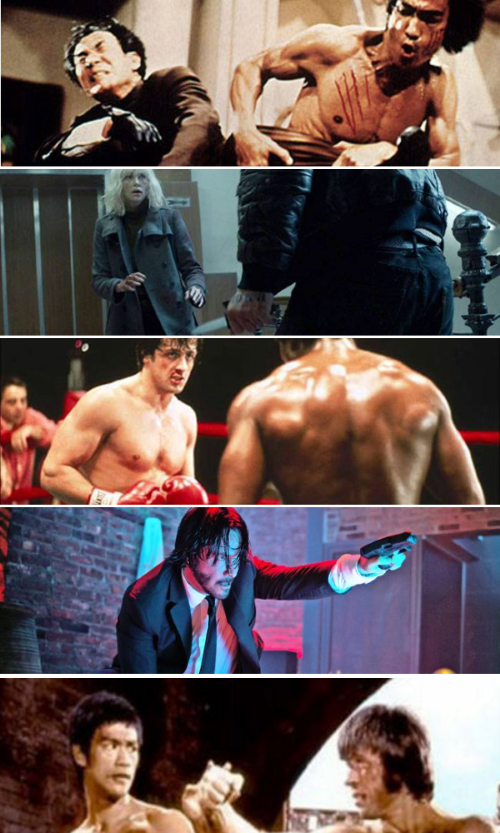
GamesRadar posted The 50 Best Movie Fights You’ll Want to Watch Again and Again.  There are a lot of great choices in this list.  Using just their picks here are five of my favorites…

41. Enter the Dragon (1973)
The fight: Bruce Lee faces his last great opponent, Han, in a showdown finale featuring trick mirrors and deadly traps. Because, when Bruce was at the top of his game, the best way his opponent could hope to defeat him was through cunning.
Killer move: After much skulking around mirrored corridors, Lee finally catches Han out and delivers a final blow, high kicking him into his own spear.

40. Atomic Blonde (2017)
The fight: Charlize Theron’s spy has already been through a lot when she’s faced down by two attackers in a stairwell in Berlin during the Cold War, but that doesn’t stop her from kicking ass. This fight scene is so impressive due mainly to the fact that it goes on for a long time (the baddies seem to fight through many a mortal wound before finally going down) and the realistic brutality of the moves.

Killer move: Towards the end of the fight, one of the men pulls his own dagger out of his chest only for Theron to slammed it back into his throat multiple times and throw him down the stairs.

34. Rocky (1976)
The fight: THE sporting underdog story: the little-known Italian Stallion’s climactic bout with arrogant heavyweight champion Apollo Creed.

Killer move: Rocky’s sheer stamina. Having already taken a severe beating, Creed knocks him to the floor and throws his hands up in celebration. But his incredulous look is priceless as Rocky struggles back up to his feet…

16. John Wick (2014)
The fight: After declaring war on the Russian mob (who are indirectly responsible for killing his dog), Wick seeks out Alfie Allen’s Iosef Tarasov in the fancy sauna room of a nightclub. He cuts through Tarasov’s security with ease, practically punching them with bullets from his gun.

Killer move: This actually happens at the start of the scene, when Wick finds and kills Tarasov’s buddy, Victor in the changing room of the club.

10. Way of the Dragon (1972)
The fight: Bruce Lee and Chuck Norris put each other through their paces in this legendary battle from Way of the Dragon. Watch out for Chucks shoulder hair its worryingly prominent.

Killer move: The series of kicks that puts Norris on his backside. For a minute there, he almost looks worried.

And here are three that didn’t make the list that should have…

  • Nada [Roddy Piper] vs. Frank [David Keith] in They Live
  • Chaney [Charles Bronson] vs. Jim Henry [Robert Tessier] in Hard Times
  • A Number 1[Lee Marvin] vs. Shack [Ernest Borgnine] in Emperor of the North

Others?