Mark Schultz Tarzan Cover
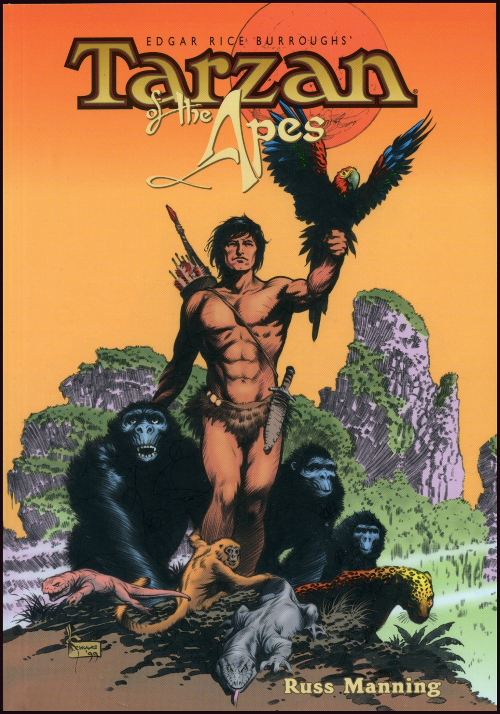
The Mark Schultz Tarzan cover is worthy of sharing. So I did.
Previews and Reviews that are Z's Views
The Mark Schultz Tarzan cover is worthy of sharing. So I did.

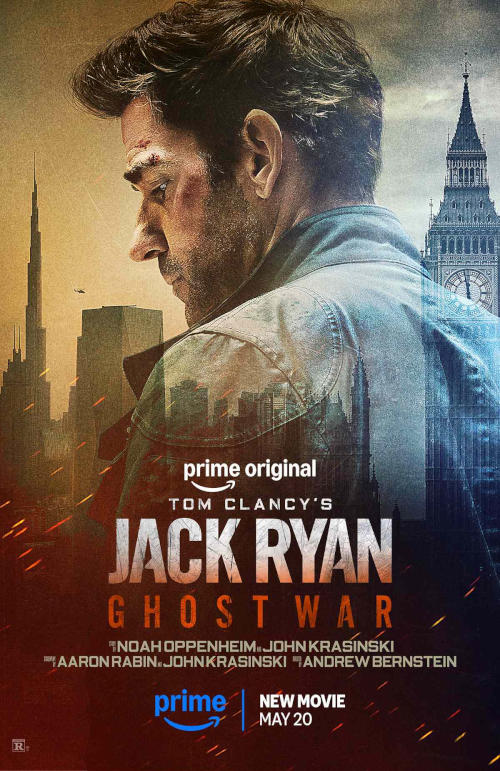
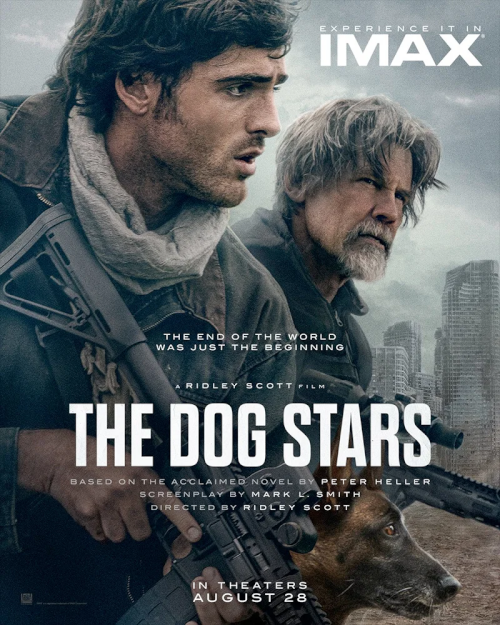
This poster takes me back to my childhood. Every new James Bond movie was an event. I miss those days.

When I was growing up it wasn’t unusual to see references to hobos in television shows and movies. These were men [can’t remember seeing or hearing of female hobos, but there must have been] who rode the rails, traveled the country, picking up odd jobs or a free meal before moving on to the next town.
Perhaps hobos are now lumped in the homeless category, although I think there is a difference.
Mental_Floss presents 15 Rules from the Hobo Ethical Code of 1889. I wish more people in 2015 followed the Hobo Code of over 100 years ago.

Jonathan Maberry spoke with Amy M. Hawes and gave her The Inside Scoop on the Joe Ledger Novels!
Source: Book Club Babble.

/Film recently posted Quentin Tarantino’s Original Pulp Fiction Cast Wish List.
Although it is hard to imagine anyone else in the key roles it is fun to think about the possibilities. Perhaps Stallone in the Bruce Willis role?

You like action? Then check out the trailer for Close Range starring Scott Adkins!
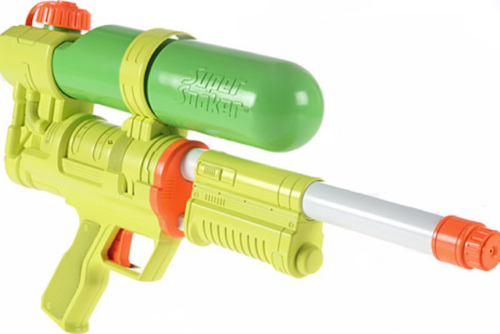
TopTenz and Kristine Alexander present 10 Famous Toys with Wildly Different Original Purposes. I’ve played with everyone of these toys except paintball.

I thought the photo above was pretty cool. You probably know why without reading Jamie Lee Curtis‘ caption.
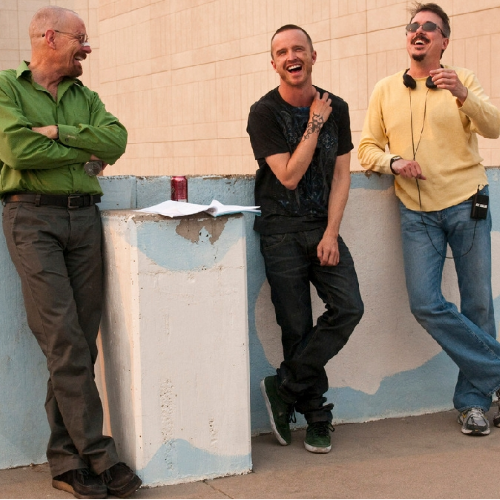
Briff.me presents Breaking Bad: Secrets, Facts, Quotes and Rare Behind the Scenes Photos… [Beware of Spoilers!].

I like the cast [Robert Deniro, Jeffrey Dean Morgan, Kate Bosworth and Dave Bautista] and the trailer for Heist, but it begins to lose me about the time it turns into Speed.
Hopefully, Heist will not disappoint.

Jennifer M. Wood and Mental_Floss present 15 Creepy Facts About Carrie. Here are three of my favorites… [Beware of Spoilers!]
5. THE STARS OF CARRIE COULD HAVE BEEN THE STARS OF STAR WARS.
Brian De Palma ended up casting for Carrie at the same time his good friend George Lucas was doing the same for a little sci-fi film he was making called Star Wars. So the two made the rather unorthodox decision to hold joint auditions, which ended up becoming a bit confusing. De Palma liked Amy Irving for the lead in Carrie, but she was also considered for Princess Leia in Star Wars. William Katt also auditioned for Star Wars, alongside Kurt Russell.7. BRIAN DE PALMA DIDN’T SEE SISSY SPACEK AS CARRIE.
Though De Palma was a fan of Spacek’s work, he was convinced that he had already found his Carrie in another actress. His decision to let Spacek audition at all was mostly out of courtesy to her husband, Jack Fisk, the film’s art director. “He told me that if I wanted to, I could try out for the part of Carrie White,” Spacek recounted to Rolling Stone. “There was another girl that he was set on and unless he was really surprised, she was the one. I hung up and decided to go for it.”Spacek showed up at her audition in an old dress she hadn’t worn since grade school and with her hair slicked back with Vaseline. When she was done, she waited in the parking lot while her husband reviewed her audition with the rest of the production team. After Fisk came out to tell her that the part was hers, “We sped off before anybody could change his mind,” Spacek said.
13. SPACEK LOVED TO WITNESS MOVIEGOERS’ REACTIONS TO THE ENDING.
“When I was in New York, and Carrie came out, I would go to theaters just for the last five minutes of the film to watch everyone jump out of their chairs,” Spacek recalled. “People are all relaxed. The music is really beautiful and relaxing, and all of a sudden that comes up, and people just go crazy.” [I saw Carrie at a midnight movie during the original theatrical release and had no idea of the shocking ending. I jumped out of my seat and probably scared others around me worse than the movie. – Craig]

Marc Mancini and Mental_Floss present 10 Starry Facts About Contact. Here are three of my favorites for a movie that I really like and feel is totally under-rated… [Beware of Spoilers!]
1. ITS OPENING SHOT SET AN INDUSTRY RECORD.
Contact begins with a close-up of our home planet. At first, a babel of ’90s radio broadcasts nearly deafens the audience. But as the camera pulls back and Earth grows smaller and smaller, iconic audio clips that were recorded 20, 30, and even 100 years ago greet our ears—only to fade seconds later. By the time our galaxy recedes into an endless cosmic backdrop, there’s nothing left but silence.
This is one of the most ambitious sequences in cinema history. The completely digital intro lasted for 4170 uninterrupted frames, making it the longest computer-generated shot that had ever appeared in a live-action film at the time. Great pains were taken to capture the look of deep space. On the special edition DVD commentary, visual effects supervisor Stephen Rosenbaum recalls getting started by gathering “absolutely incredible” Hubble snapshots of “distant galaxies and stars and other interstellar phenomenon … We laid out what we liked and said, ‘Okay, how can we pass through some of this? How can we combine it together into something [that’s] visually stunning?’”
Brilliant as it is, however, the moment ignores physical law. Just ask Neil deGrasse Tyson. If one could really overtake the radio signals, he argues, “you would hear them in reverse.” Still, the good doctor acknowledges that—for artistry’s sake—everything needed to sound intelligible. “[They] couldn’t have gotten it right and still had the scene work,” Tyson concedes, “so they had to do it the way they did.”
8. MATTHEW MCCONAUGHEY REFUSED TO DELIVER A CERTAIN LINE.
Late in the final script, McConaughey’s character—a self-described “man of the cloth without the cloth” named Palmer Joss—says “My God was too small.” Though Druyan really liked this line, McConaughey called it sacrilegious and wouldn’t say it. Later on, the two talked at length about faith and became good friends (despite differences of opinion).9. NASA FLATLY DENIES ONE OF THE FILM’S INSINUATIONS.
In the movie’s third act, a stunned Arroway receives a cyanide pill before entering the pod. According to Zemeckis, Sagan swore that this just-in-case practice was observed “on every single [NASA] mission.” However, Apollo 13 veteran James Lovell has dismissed the idea, writing “many people have asked me ‘Did you have suicide pills on board?’ We didn’t, and I never heard of such a thing in the 11 years I spent as an astronaut and a NASA executive.”
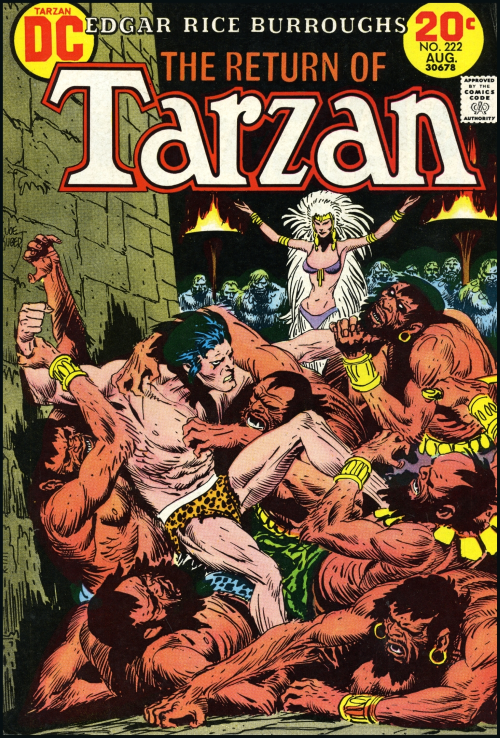
The Joe Kubert Tarzan cover above is just one of over 40 Tarzan covers drawn by Kubert! Here’s a cover gallery that showcases 13 of them!

Eric D. Snider and Mental_Floss present 12 High Stakes Facts About Casino. Here are three of my favorites… [Beware of Spoilers!]
1. IT ONLY EXISTS BECAUSE THE REAL GUY IT’S BASED ON WAS A BIG DE NIRO FAN.
The main character, Sam “Ace” Rothstein, is based on Frank “Lefty” Rosenthal, who was retired and living in Florida when writer Nicholas Pileggi came around wanting to write a book about his career. Rosenthal didn’t actively oppose the project, but he had no interest in helping, either—until he found out that Martin Scorsese planned to make Pileggi’s eventual book into a movie, and that Robert De Niro would probably be the star. Then he perked up, asking Pileggi (who also wrote GoodFellas) if he could arrange a meeting with De Niro. Next thing Pileggi knew, formerly reticent associates of Rosenthal’s were coming out of the woodwork, offering their cooperation.5. JOE PESCI LOOKED SO MUCH LIKE THE REAL GUY THAT SOME CASINO PIT BOSSES DID DOUBLE-TAKES.
Pesci bore some natural resemblance to Tony “The Ant” Spilotro, the violent psychopath who busted heads for Rosenthal, and upon whom his character—Nicky Santoro—was based. In makeup, he looked even more like Spilotro—so much so that, according to Pileggi, when Pesci entered the casino where the movie was being shot, some pit bosses who’d had personal dealings with Spilotro “almost fainted.”6. ACCORDING TO SCORSESE, THE FILM HAS “NO PLOT AT ALL.”
“There’s no plot at all,” Scorsese said in an interview included on the Blu-ray. “It’s three hours, no plot. So you know this going in. There’s a lot of action, a lot of story, but no plot.”

I’m a fan of the original Point Break and I’ll see the new one. Looks like a ride!