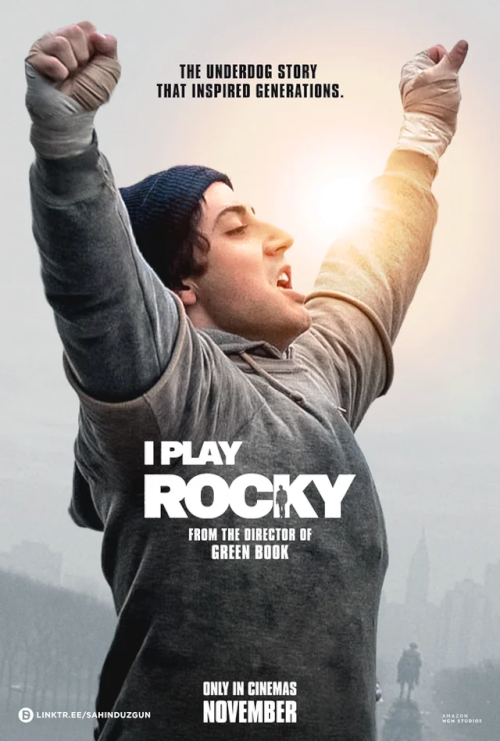
“Rocky” Poster by Tony Stella for Sly Stallone’s Birthday!
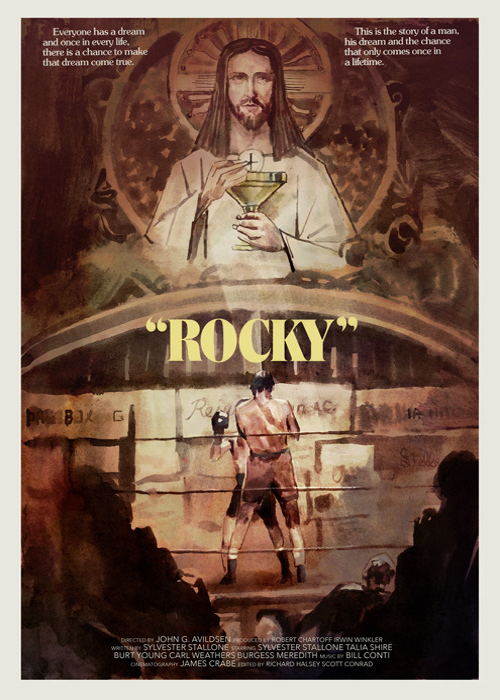
What perfect timing! Today is Sylvester Stallone’s birthday (Happy Birthday Sly!) and Tony Stella posted his take on a new Rocky poster!
Previews and Reviews that are Z's Views
What perfect timing! Today is Sylvester Stallone’s birthday (Happy Birthday Sly!) and Tony Stella posted his take on a new Rocky poster!

At one point a few years ago, John Carpenter was scheduled to direct a remake of The Creature from the Black Lagoon. In preparation for the film, Rick Baker was brought on board to re-design the Creature based on Milicent Patrick’s original work for the 1954 film. Although Carpenter’s update was never made, he does have several of the models on display in his home.

The gentleman above is William Afflis, but if you grew up anywhere in the midwest from the 1960’s or later, you knew him as Dick the Bruiser. As you probably guessed (if you didn’t know) Mr. Afflis was a professional wrestler. Beyond that Afflis was a legitimate tough guy and smart business man.
Brandon Davenport has written an informative profile of The Bruiser that details his early life, his amateur and pro football career, his brawls with coaches, police and the riot he and Alex Karras caused when they got into a bar fight with each other, as well as his Hall of Fame wrestling career from newcomer to owner of the World Wrestling Association. Even if you’re not a fan of pro wrestling, I think you’ll get a kick out of You Don’t Mess with William Afflis.
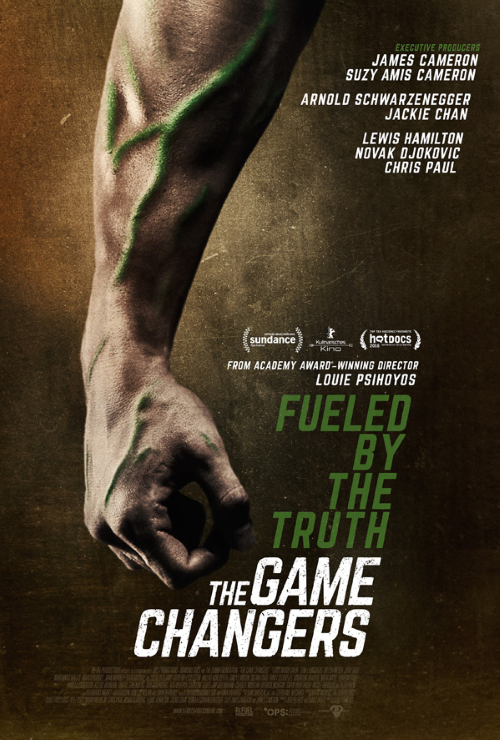
The Game Changers poster and trailer are here! This looks interesting. I’m going to keep an eye out for it.
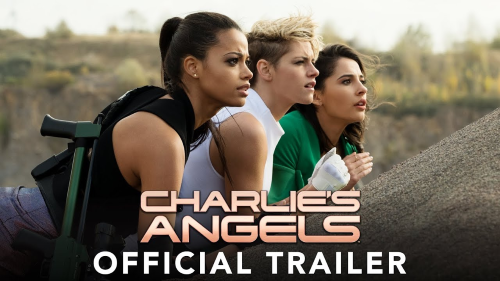
Well… this isn’t my Charlie’s Angels (original tv show era) or the next generation Charlie’s Angels (Cameron Diaz, Drew Barrymore, and Lucy Liu) but it is the new Charlie’s Angels…
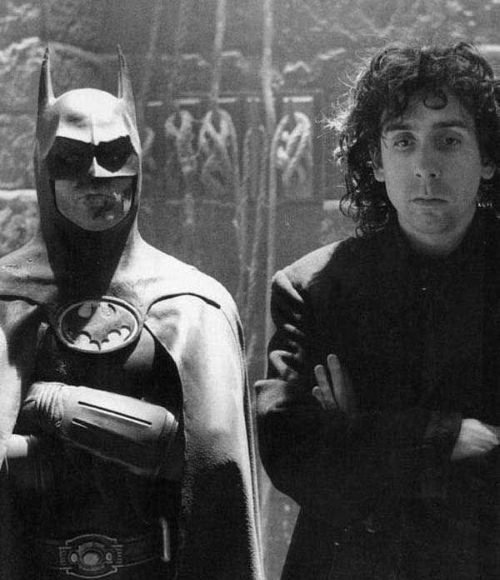
Film School Rejects presents 26 Things We Learned from Tim Burton’s ‘Batman’ Commentary. Here are three of my favorites and some of my thoughts at the end…
3. People expected him to take a goofy tone with the film, “but that was the furthest thing from my mind.” He wasn’t a big comic book fan, but he loved Batman and the psychology of the character meaning he knew he wanted to stay true to that idea.
5. He met with numerous actors for the title role who fit the traditional “square-jawed” and heroic look, but he eventually realized “there’s a reason why a guy dresses up as a bat, he’s trying to create a menacing persona.” Michael Keaton has the crazy eyes, but physically he’s someone who would need costuming to make him seem scarier.
24. He took older films like The Man Who Laughs (1928), vampire movies, and the work of Val Lewton as inspirations for Batman.
I wasn’t a fan of Michael Keaton being cast as Batman. I get now why Burton went with MK after reading #5 above.
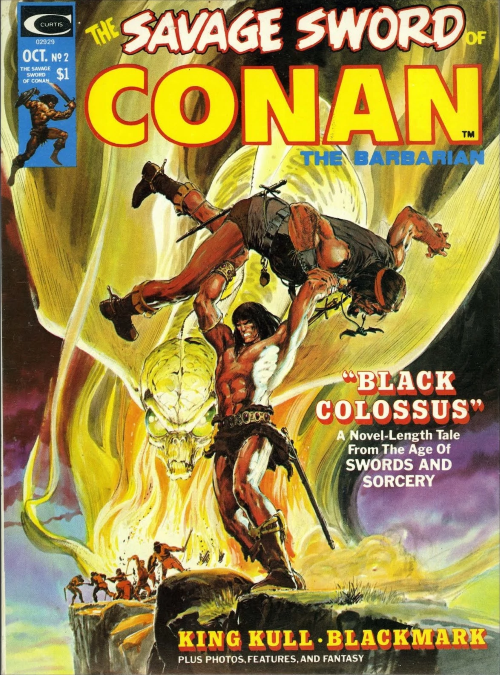
The cover above is to the Savage Sword of Conan #2 and was created by the legendary Neal Adams. It’s always been one of my favorite Conan and Neal Adams’ covers.
I had the good fortune to see the original painting at an OrlandoCon. The year was 1978 or ’79 (to the best of my memory). Mike Kott, a buddy of mine, had it on display for sale. He was asking $10,000.00 for it. Although that was a ton of money back then (and is still a lot today), the painting in person was so nice, it had more than one person saying, “If I was a rich man…”
I’d see Mike Kott on a fairly regular basis. He’d come into Jim Ivey’s Cartoon Museum or over to my apartment (we had a weekly card game) or I’d go by his place. It was on one of those get-togethers that Mike said his house had a break-in and thieves had made off with some cash (not a lot). Nothing else had been taken. Mike said that they had to have seen the painting but obviously hadn’t known the value of the art. Not long after that Mike sold the painting.
$10,000.00 was a small fortune back then. As to what the painting is worth today… I won’t venture a guess, but I will say that Neal Adams gets $50 for his autograph and fans line up all day long.
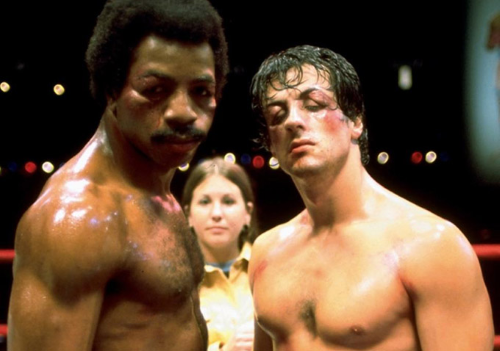
Nate Williams and ComingSoon came up with their list of The Best On-Screen Duos. Here’s their top ten…
Williams’ list is a good one. Click over and check out his comments for each choice.
If I was going to make an addition to the list I’d put in one or both of the following…
Who’d I miss?

It’s hard to believe that it’s been a week since HeroesCon 2019 kicked off. We’ve been going to the show for decades and it’s always a treat. Here are the highlights…
I went to the show hoping…
Friday
My first stop was Richard Cox’s table. My buddy, Little John had told me that Richard’s list filled up on Thursday night. I thought LJ was messing with me and it turns out he was. I was able to get on Richard’s list.
I was also able to get on Pan Quinn’s and Dan Panosian’s lists. Matthew Childers’ had my sketch ready and also shared some cover commissions that he was doing for fans. Little John had ordered a cool one to add to his Search for Superman theme. Matthew also was working on a Batman & Godzilla cover. Inspired pairing, that one!
I met Shane Douberly for the first time and commissioned a Rocky head sketch from him. I then spent the bulk of the day visiting with old / new friends and walking the convention floor. My sketch commissions were set up, so the pressure was off.
Little John and his wife Patricia, along with my better half, Doralya, and son Chris headed over to the Red Ginger for a great hibachi dinner. LJ repeated his feat of draining the saki sprayed from the bottle. Luckily, there were no college kids at our table this year to try to replicate this feat.
After dinner we headed over to the HeroesCon Drink and Draw for charity. LJ and Patricia scored a few very nice pieces. Chris Flick created 3 sketch cards for the charity. LJ picked up two and I scored the other (Stallone from Expendables). Yeah, Chris knows what I like.
Saturday

Because of flight issues (detailed at ME’s blog), Mark Evanier and Sergio Aragones weren’t able to arrive until Saturday. So ME was my first stop. I was able to meet Mark Evanier and get his autograph in my Kirby hardcover. I also attended a panel that ME moderated. The panel featured my best bud, John Beatty along with Mike Royer and Klaus Janson. The panel was informative and it was nice to see so many people there to hear inkers talk about their craft.
Today was art pick-up day. Richard Cox had a great Rocky (III) painting waiting for me. Dan Panosian’s piece was ready as well (Rocky II). Dan’s sketches are second to none. (By the way, Dan was turning all of the proceeds of his head sketch commissions over to the Heroes Initiative charity.) When I picked up my sketch, I also purchased Dan’s second sketch book. Pat Quinn created a very cool Jack Carter sketch for me. Chris Visions was still working through his sketch list but assured me it would be ready by Sunday.
Hainanu Saulque goes by the name Nooligan. I’d never met him before, but after seeing his Rocky: Once and Future Champ print, I knew he was an artist I wanted to meet. Nooligan is an amazing artist with a unique style. We spoke about Stallone, films, comics and more for the better part of an hour. I usually don’t buy prints, but I purchased both Nooligan’s Rocky and John Wick prints. Hopefully some day I’ll get a Nooligan original for my Stallone art collection. Meeting Nooligan was a definite HeroesCon highlight this year.
Dinner that evening was at the Redeye Diner with my wife, son, Little John & Patricia, Richard Cox and his wife. My only regret about eating at the Redeye Diner is that we only made it there once this trip. Great atmosphere and food.
Our next stop was the HeroesCon Art Auction. LJ showed a lot of restraint purchasing just one piece — a painting by Josh Greathouse. I made it most of the way through the auction but called it a night before it was over since we were heading home early Sunday.
I proud to say that I was able to complete all of the things I had hoped to get done. It was great meeting Mark Evanier after following his blog daily for nearly 20 years. I was happy that my son Chris joined me at the show on Saturday. Comics aren’t his thing, but he had fun at the panel (he’s known John Beatty his whole life) and art auction.
It was great seeing old friends and meeting new. The art on display was, as always, jaw-dropping. I need to give a special shout out to Casey Jones. His art book was filled with page after page of beautiful art ranging from sketches to inked pieces to published pages.
I’ll be posting my art pick-ups in the coming weeks.
A few years ago, we began going to Charlotte on Thursday night to meet with friends before the show starts on Friday. Sadly, we usually cut out before the show ends on Sunday. Little John has convinced me that we need to stay for the full experience. Starting next year, that will be the plan. Let the countdown begin!

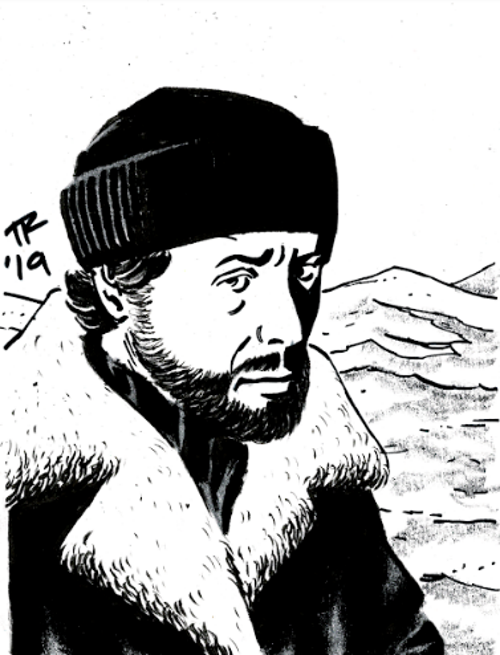
Recently I posted my Tom Reilly Jack Carter/John Wick piece. Today we have the Rocky 4 head sketch Tom also did for me.
You can check out more of Tom’s art at his website or follow him on Twitter.

Reader readers are familiar with Gerardo Moreno’s art. So they won’t be surprised at how cool his latest piece is. Impressed, yes, but not surprised.

So Justin Bieber issued a challenge to fight Tom Cruise in a cage match.
Any way you look at this…
If Bieber did it for free publicity…
If Bieber thinks Tom Cruise is a real fighter because of his movies…
If Bieber believes he is a tough guy and wants to prove it by fighting Tom Cruise, an actor who is more than twice as old as Bieber…
…it is just plain stupid.
If Bieber wants to prove he’s a tough guy, then he should challenge someone known for fighting like say, Nate Diaz. Nate would probably show up at any location for free if Bieber called him out.
How could this get any dumber?

Oh, boy. I shouldn’t have asked.
So Conor McGregor, the former UFC Champion and now also a sports and entertainment promoter has offered to promote/host the Bieber vs Cruise fight should it ever happen. If it wasn’t for the fact that McGregor is already known for saying outrageous things and looking for free publicity where he can get it, I’d say he should know better than to get involved in something so stupid.
Well, at least McGregor didn’t go full on stupid and challenge an actor to a cage fight.

Are you kidding me?
So McGregor has upped the ante and challenged actor Mark Walhberg to a cage fight? For my thoughts on this please refer back above to “Any way you look at this…” and substitute McGregor’s name for Bieber and Wahlberg’s name for Cruise.
I also offer the same suggestion as to an alternate fight — McGregor should challenge Nate Diaz to a cage match. They’ve already fought twice with each man winning once, so a third time would make sense.
Hey! I’ve got an idea: How about Bieber and McGregor fight each other? McGregor could promote it and each of them would get what they want. Bieber would get a chance to prove he’s a tough guy. McGregor would get to fight a celebrity.
The reality is of course that Bieber would get knocked out. McGregor would be ridiculed for taking the fight and hardly anyone would tune in.
You know I started by saying that Bieber challenging Cruise was stupid. I still think it is, but I will say this, Bieber is sure getting the publicity. The news of his challenge is blowing up everywhere. Heck, in all my years of blogging, I’ve never mentioned Bieber even once. Yet today I’ve devoted a long post to him.
Well played, Justin Bieber. Well played.

Jake Rossen and Mental Floss present 10 Facts About Alfred Hitchcock Presents. I love AHP… especially the half hour episodes. Here are my top three facts from a very good list…
5. IT COULD HAVE BEEN TITLED HENRY SLESAR PRESENTS.
Alfred Hitchcock Presents drew primarily from published short stories it optioned from writers. One such author, Henry Slesar, was a frequent contributor to Alfred Hitchcock’s Mystery Magazine, the monthly short story collection that had the director’s endorsement. When producer Norman Lloyd realized the prolific Slesar and three other authors had a story in the magazine every month, he invited all four of them out to California for a meeting about writing teleplays based on their stories. According to Lloyd, only Slesar showed up. This was because the other three writers were all his pseudonyms. Slesar ended up writing 55 scripts for the series, the most of any contributor.
3. HITCHCOCK’S DIRECT INVOLVEMENT IN THE SERIES WAS VERY LIMITED.
In style and substance, Alfred Hitchcock Presents shares a lot in common with Hitchcock’s films, particularly the scheming characters with murder on the mind in 1948’s Rope and 1951’s Strangers on a Train. Despite the Hitchcock aesthetic, his direct involvement in the show was limited. Because he was so busy with his movie career, he was convinced by MCA executive Lew Wasserman that lending his name and likeness to the series would not take up much of his time. Producers and frequent Hitchcock collaborators Joan Harrison and Norman Lloyd handled most of the production chores, though Hitchcock did direct 17 episodes over the course of the series. The director later said his supervision of the show extended to delivering “fatherly words of advice without trying to usurp their position.”Viewers, however, seemed to infer he wrote and directed much of what they saw, sending fan letters to the director stating as much. While his effort was not as significant as they believed, it proved to be lucrative. Hitchcock drew a reported $129,000 per episode from CBS and sponsor Bristol-Myers.
8. ONE EPISODE WAS DEEMED TOO GRUESOME TO AIR.
While none of the criminal deeds depicted in Alfred Hitchcock Presents were explicit, one episode in season 7 written by Psycho author Robert Bloch inferred something so disturbing that it was kept off the air by NBC. (Spoilers follow.) In “The Sorcerer’s Apprentice,” a boy who dreams of becoming a magician is coerced into murdering his stage idol by the performer’s cheating spouse. She convinces him to do it by telling the boy—who is none too quick of mind—that he will absorb her husband’s “powers” once the deed is done. He believes it, and proceeds to saw her in half despite not having much of an idea about how the illusion is actually supposed to work. At the conclusion, Hitchcock makes a characteristically grim observation that the scheming widow must be “beside herself.” The episode later ran in syndication.

Sly Stallone was scheduled to be a guest at the Keystone Comic Con, August 23rd – 25th at the Philly Convention Center. Unfortunately Sly has had to cancel. See the announcement from Keystone Comic Con below.