Category: Celebs

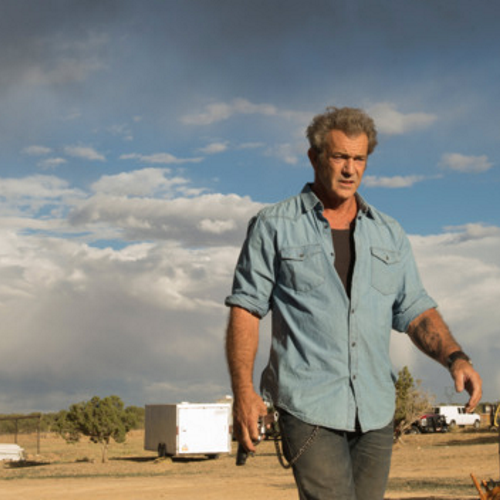
Are You Ready for Mel Gibson’s Comeback?

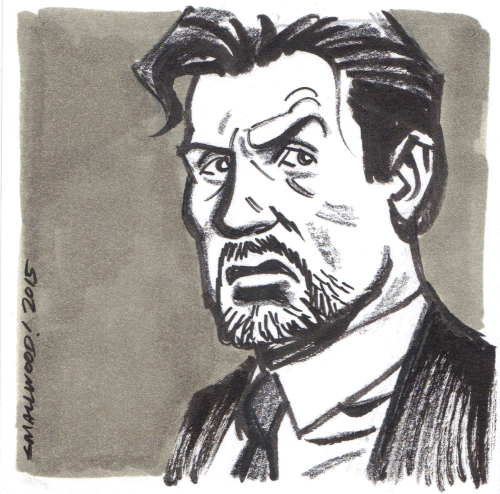
Are You Ready for Mel Gibson’s Comeback?  by Kevin Lincoln is an excellent profile of, well, the potential comeback of Mel Gibson.  Here’s a taste…

While Hollywood figures have made comebacks before — think Alec Baldwin or Robert Downey Jr. — it’s never been quite on the scale that Gibson faces… Gibson’s 60 years old; his days as a classical movie star would be behind him even if the last decade hadn’t happened. But every one of Clint Eastwood’s 11 Oscar nominations have come after that age, all in movies he’s directed. Gibson has been allowed to be a filmmaker again, with the potential for a long and rich career still to come, and Hacksaw Ridge will be a kind of referendum. The people have the power to forgive Mel Gibson. They also have the power not to.

Source: Vulture and Al Bundy’s Socks.

The Making of The Lords of Flatbush by Stephen Verona (2008) / Z-View

The Making of The Lords of Flatbush by Stephen Verona (2008)

Paperback: 155 pages
Publisher: Creative Book Publishing International; First Edition ~1st Printing edition (June 15, 2008)

First sentence…

When I was single and dating I would regale girls with these stories of my childhood and the guys I hung with.


The Overview:  Beware of Spoilers…

Stephen Verona, the writer and director of Lords of Flatbush, takes us on the amazing trip to get Lords of Flatbush, one of the first truly independent films made.  Along the way, we’ll learn how Verona got started (becoming friends with John Lennon and working with Lennon to animate the Beatles song I Feel Fine) and the long process to get Lords of Flatbush made.

Verona worked with many big names [Lee Strasberg, Janet Leigh, The Beatles, Chicago, Barbara Steisand, etc.] prior to writing and directing Lords of Flatbush and those stories are fun but the heart of the book is of course getting LoF made.  Verona provides many anecdotes and behind the scenes photos and trivia.  (Did you know that Richard Gere was originally to play Perry King’s role? Stallone and Gere had a falling out and one had to go!]

Verona writes in a conversation style that’s easy to read.  Fans of LoF will love the behind-the-scenes peek and prospective film makers will learn from the mistakes Verona as a first time film-maker made.

Rating:

31 Things We Learned from “The In-Laws” Commentary

Rob Hunter and Film School Rejects present 31 Things We Learned from The In-Laws Commentary.  Here are three of my favorites…

7. The infamous “Serpentine! Serpentine!” line came from Bergman’s time at college playing touch football with friends. One of his friends used to say it as they left the huddle.

10. Marlon Brando was a huge fan of the film and told Arkin at dinner once that he’d seen it over twenty times. “And then he started doing imitations of me.” Bergman adds that this is the reason why Brando agreed to do The Freshman with him.

30. Hiller had difficulty finding enough American-looking performers to play the dozens of CIA agents who come to the rescue in Mexico. He ran across some American medical students in town and cast them as the extras. Over half of the agents are those students.

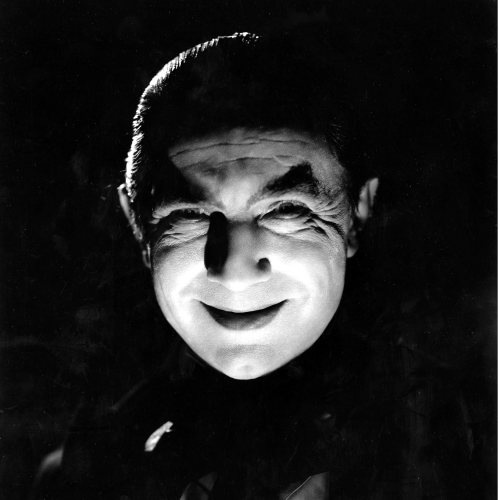
12 Surprising Facts About Bela Lugosi

Mark Mancini and Mental_Floss present 12 Surprising Facts About Bela Lugosi.  Here are three of my favorites…

4. UNIVERSAL DIDN’T WANT TO CAST HIM AS COUNT DRACULA.
The year 1927 saw Bela Lugosi sink his teeth into the role of a lifetime. A play based on the novel Dracula by Bram Stoker had opened in London in 1924. Sensing its potential, Horace Liveright, an American producer, decided to create an U.S. version of the show. Over the summer of 1927, Lugosi was cast as the blood-sucking Count Dracula. For him, the part represented a real challenge. In Lugosi’s own words, “It was a complete change from the usual romantic characters I was playing, but it was a success.” It certainly was. Enhanced by his presence, the American Dracula remained on Broadway for a full year, then spent two years touring the country.

Impressed by its box office prowess, Universal decided to adapt the show into a major motion picture in 1930. Horror fans might be surprised to learn that when the studio began the process of casting this movie’s vampiric villain, Lugosi was not their first choice. At the time, Lugosi was still a relative unknown, which made director Tod Browning more than a little hesitant to offer him the job. A number of established actors were all considered before the man who’d played Dracula on Broadway was tapped to immortalize his biting performance on film.

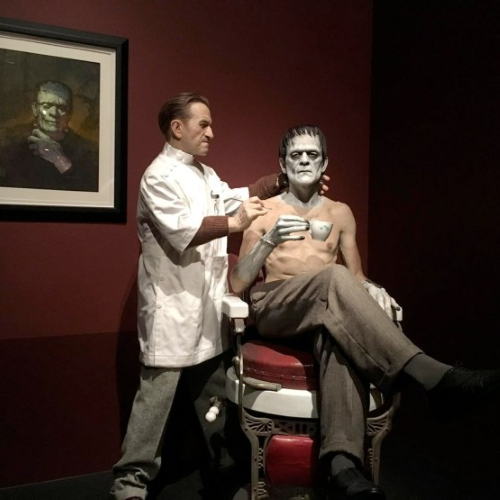
6. HE TURNED DOWN THE ROLE OF FRANKENSTEIN’S MONSTER.
Released in 1931, Dracula quickly became one of the year’s biggest hits for Universal (some film historians even argue that the movie single-handedly rescued the ailing studio from bankruptcy). Furthermore, its astronomical success transformed Lugosi into a household name for the first time in his career. Regrettably for him, though, he’d soon miss the chance to star in another smash. Pleased by Dracula’s box office showing, Universal green-lit a new cinematic adaptation of Mary Shelley’s Frankenstein. Lugosi seemed like the natural choice to play the monster, but because the poor brute had few lines and would be caked in layers of thick makeup, the actor rejected the job offer. As far as Lugosi was concerned, the character was better suited for some “half-wit extra” than a serious actor. Once the superstar tossed Frankenstein aside, the part was given to a little-known actor named Boris Karloff.

Moviegoers eventually did get to see Lugosi play the bolt-necked corpse in the 1943 cult classic Frankenstein Meets the Wolf Man. According to some sources, he strongly detested the guttural scream that the script forced him to emit at regular intervals. “That yell is the worst thing about the part. You feel like a big jerk every time you do it!” Lugosi allegedly complained.

10. LUGOSI ALMOST DIDN’T APPEAR IN ABBOTT AND COSTELLO MEET FRANKENSTEIN—BECAUSE THE STUDIO THOUGHT HE WAS DEAD.
The role of Count Dracula in this 1948 blockbuster was nearly given to Ian Keith—who was considered for the same role in the 1931 Dracula movie. Being a good sport, Lugosi helped promote the horror-comedy by making a special guest appearance on The Abbott and Costello Show. While playing himself in one memorable sketch, the famed actor claimed to eat rattlesnake burgers for dinner and “shrouded wheat” for breakfast.
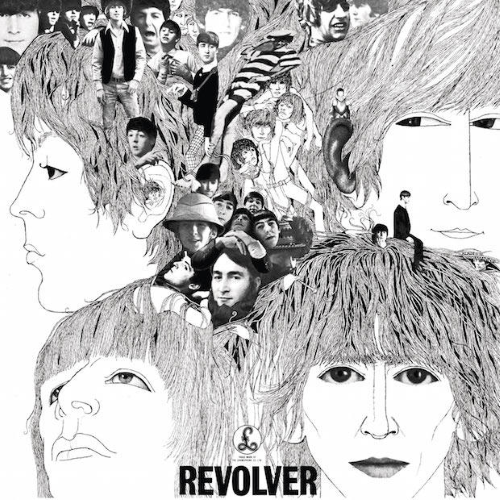
11 Fab Facts About The Beatles’ Revolver

Jeff Merron and Mental_Floss present 11 Fab Facts About The Beatles’ Revolver.  Here are three of my favorites…

7. IT WAS ALMOST TITLED ABRACADABRA.
All four Beatles liked that name, wrote Barry Miles in his Paul McCartney bio, Many Years From Now. Also considered: Four Sides of the Circle and Fat Man. Ringo, noting that the Rolling Stones had just come out with Aftermath, suggested After Geography. They finally settled on Revolver, because an album spins, man.

8. WITHOUT REVOLVER, THERE’D BE NO “BOHEMIAN RHAPSODY.”
Up until the spring of 1966, The Beatles had used a fairly conventional studio technique to make vocals sound richer: double tracking, in which the lead singer would simply record his vocals twice onto different tape tracks. But John Lennon hated doing this. So to accommodate him, EMI engineer Ken Townsend invented “automatic double tracking,” which allowed one performance to be recorded on two tape machines—with one delayed by about 100 milliseconds, automatically creating a nice, thick sound.

11. THEY NEVER PLAYED ANY PART OF THE ALBUM LIVE.
The Beatles were near the end of their touring days, but not quite. They began a 14-city North America circuit in Chicago on August 12, just four days after Revolver’s U.S. release. But they didn’t feel it was possible to reproduce the album’s technically sophisticated, studio-crafted songs on stage. The most recently recorded track that audiences heard was “Paperback Writer,” the number one hit single they had released on May 30, 1966. The Beatles’ last concert was on August 29, 1966, at Candlestick Park in San Francisco. But nobody outside the band knew it at the time.

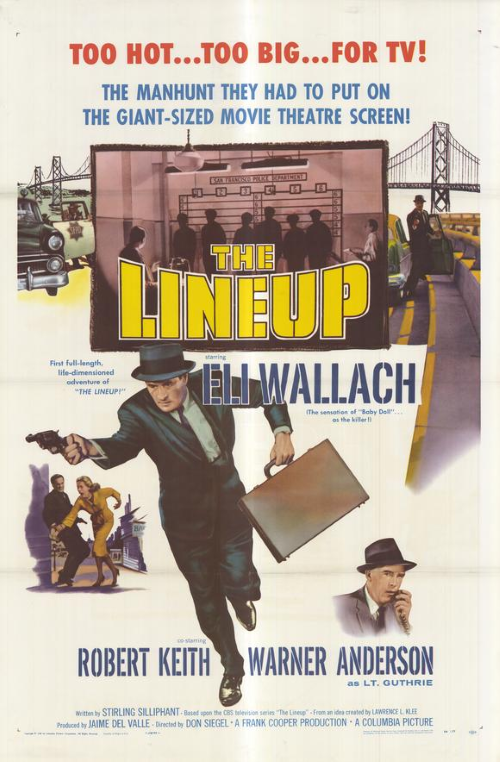
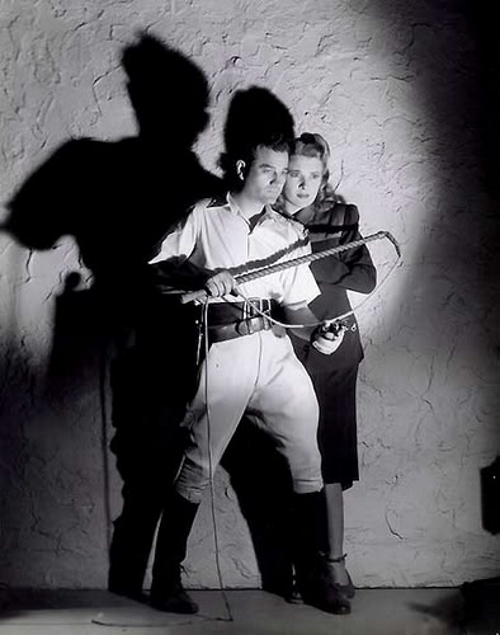
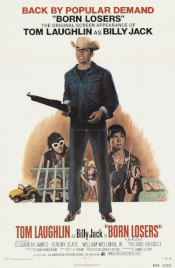
The Lineup (1958) / Z-View

The Lineup (1958)

Director: Don Siegal

Screenplay: Stirling Silliphant

Stars: Eli Wallach, Robert Keith and Richard Jaeckel.

The Pitch: “Hey, if it works on tv…?”

Tagline: “The Manhunt They Had To Put on the Giant-Sized Movie Theatre Screen!”

The Overview:  Beware of Spoilers…

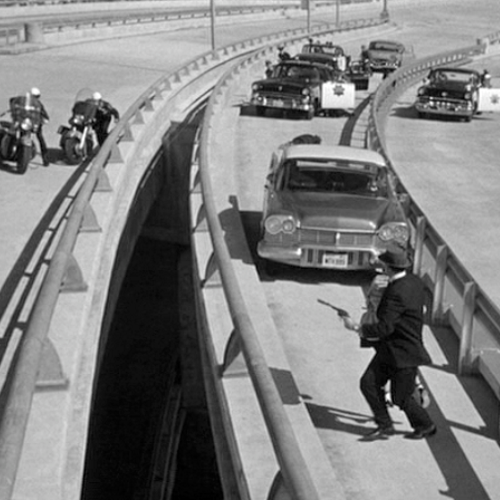
A criminal organization gets heroin into the US by hiding it in tourists’ luggage (without the tourists’ knowlege).  A psycho hitman and his partner then retrieve the heroin (by whatever force needed).

Two police detectives investigating a murder discover what is going on.  As the bodies pile up they learn that a woman and her little daughter are next on the psycho’s list!

I was expecting a lot more than a by-the-numbers police procedural from director, Don [Dirty Harry] Siegal, writer and Sterling [Route 66Silliphant.  There’s a lot of potential here but only Eli Wallach rises above the material given. 
Perhaps my rating is a bit tough because I was expecting so much more.


Rating:

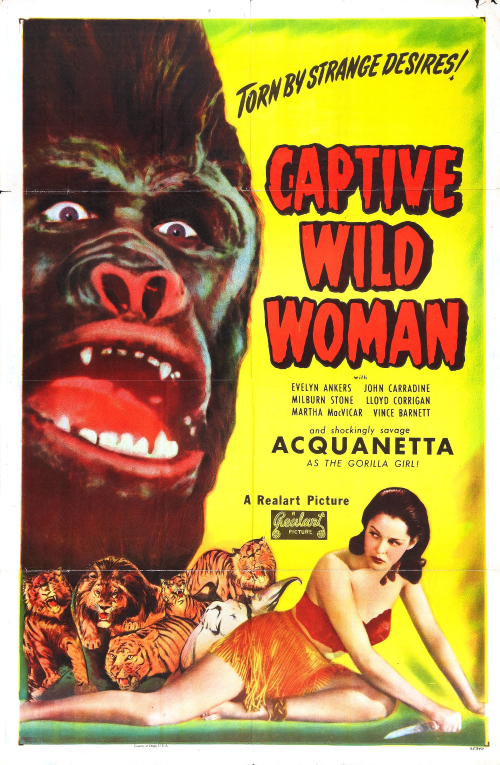
Captive Wild Woman (1943) / Z-View

Captive Wild Woman (1943)

Director: Edward Dmytryk

Screenplay: Griffin Jay and Henry Sucher

Stars: John Carradine, Evelyn Ankers, Milburn Stone, Martha Vickers and Paula Dupree.

The Pitch: “Hey, isn’t about time for another turn a gorilla into a pretty woman movie?”

Tagline: “STRANGEST OF SIGHTS… The brain of an animal… the form of a woman!”

The Overview:  Beware of Spoilers…

An insane scientist [Carradine] develops a transfusion that will turn a gorilla into a beautiful woman named Aquanetta [Dupree] but the process kills the human giving the transfusion.

While visiting the circus it is discovered that Aquanetta has a mysterious power over the animals.  Soon she is part of the act.  All goes well until Aquanetta becomes jealous and begins reverting back to gorilla form…

It was fun seeing the male lead, Fred Mason played by Milburn [Doc on Gunsmoke] Stone.

Rating:

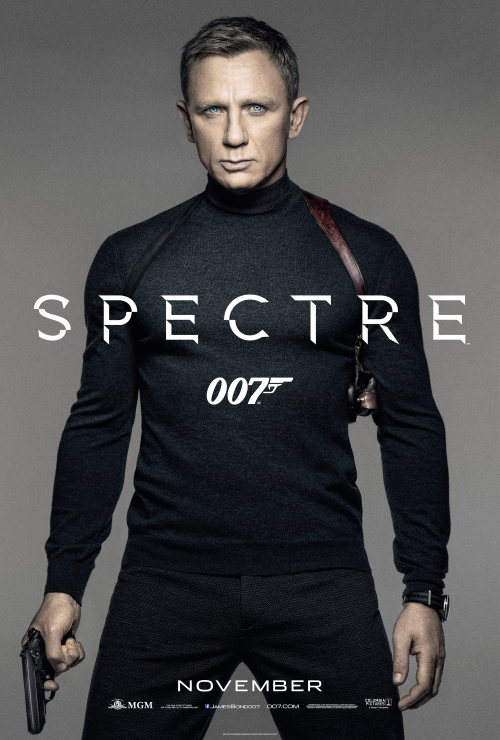
Spectre (2015) / Z-View

Spectre (2015)

Director: Sam Mendes

Screenplay: John Logan and Neal Purvis & Robert Wade and Jez Butterworth based on character created by Ian Fleming

Stars: Daniel Craig, Christoph Waltz, Léa Seydoux, Ralph Fiennes, Monica Bellucci, Ben Whishaw, Naomie Harris and Dave Bautista.

The Pitch: “Hey, I’ve got an idea on a new James Bond movie!”

Tagline: “The dead are alive”

The Overview:  Beware of Spoilers…

Bond [Craig] discovers SPECTRE, a mysterious worldwide organization behind many terrorist activities. As Bond follows clues in the field, the new head of National Security in England has decided to shut down the MI6 division of National Security.  Bond is alone and without backup when SPECTRE turns their sights to Bond.

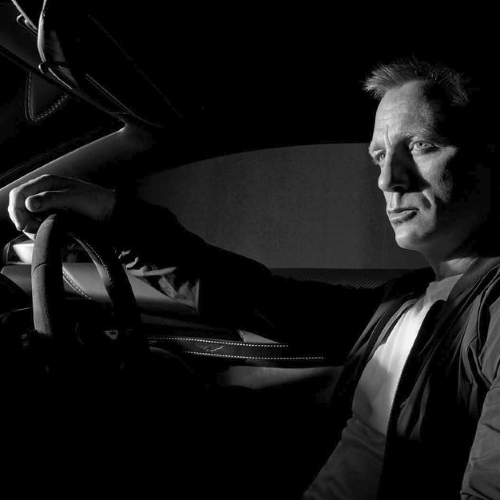
I really like Daniel Craig as Bond and much of Spectre was fun, but I found myself wanting more — more from the opening action sequence and more from the main fight between Craig and Batista.  Perhaps Casino Royale just set the bar too high…

Rating:

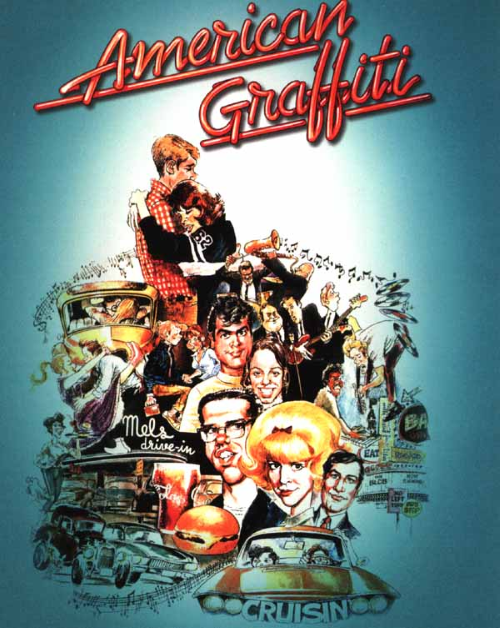
13 Nostalgic Facts About American Graffiti

Eric D. Snider and Mental_Floss present 13 Nostalgic Facts About American Graffiti.  Here are three of my favorites…

3. CONTRARY TO POPULAR BELIEF, THERE IS NO ACTUAL CONNECTION BETWEEN AMERICAN GRAFFITI AND HAPPY DAYS.
Happy Days premiered five months after American Graffiti was released. It was set in the ’50s, had Ron Howard playing a teen very similar to his American Graffiti character, used “Rock Around the Clock” as its theme song, and even borrowed the American Graffiti font for the credits. You’d think that Happy Days was somehow a spin-off of the movie, but you’d be wrong. It actually began as an unsold pilot in 1971 and aired in 1972 as part of the anthology series Love, American Style. (Lucas watched it at some point when he was considering casting Howard in American Graffiti.) After the movie took off, and with ’50s nostalgia in high gear (Grease was burning up Broadway), ABC reconsidered the Happy Days pilot, ordered a series, and did everything they could to make it remind people of American Graffiti. It ran for 10 years and was one of the most popular sitcoms in TV history.

8. THE PRODUCER HAD TO BECOME MACKENZIE PHILLIPS’ LEGAL GUARDIAN FOR THE SHOOT.
Mackenzie Phillips was just 12 years old when she arrived to make the film, and though she had showbiz experience (her father, John Phillips, was in The Mamas & the Papas), neither she nor her parents realized that California law required her to have a guardian present. “They were almost going to have to recast me, but Gary Kurtz”—a producer on the film—”and his family said, ‘We’ll take her,'” Phillips said in 1999. ” So they went to the courts in San Francisco and got guardianship of me.” Phillips lived with the Kurtzes for the duration of the shoot and described it as a happy experience.

2. IT WAS SAVED FROM BECOMING A TV MOVIE BY THE GODFATHER.
Universal Pictures gave Lucas a budget of $600,000, or about $3.5 million in 2016 dollars, to make the movie—in other words, not very much. When Coppola came onboard as a producer shortly after the release of The Godfather, Universal gave Lucas another $175,000. Later, when the film was finished and had test-screened positively, Universal inexplicably wanted to drastically re-edit it and release it as a TV movie. Lucas objected but had no clout. Coppola, on the other hand—by this time an Oscar-winner—could make studio executives listen. He convinced them to do only a little bit of trimming (the deleted scenes were reincorporated for home video release) and to release the film theatrically.