Category: Celebs

Key Largo (1948) / Z-View

Key Largo (1948)

Director:  John Huston

Screenplay:  Richard Brooks and John Huston from a play by Maxwell Anderson.

Stars: Humphrey Bogart, Edward G. Robinson, Lauren Bacall, Lionel Barrymore, Claire Trevor, Thomas Gomez, Thomas Gomez, Harry Lewis and Jay Silverheels.

The Pitch: “Bogie. Bacall. Huston.”

Tagline: “WHERE MEN IN HIDING WAITED…WITH READY GUN!”


The Overview:  Beware of Spoilers…

Frank McCloud (Bogart) a World War II vet, travels to Key Largo, Florida to visit the family of a soldier in his unit who was killed in the war.  McCloud arrives at the hotel just ahead of a hurricane and finds the hotel deserted except for his friend’s father and widow and famous mobster, Johnny Rocco and his crew.  Rocco’s crew are already on edge and the worsening weather keeps pushing them closer to the breaking point.

Rating:

16 High-Flying Facts About “The Rocketeer”

Stacy Conradt and Mental_Floss present 16 High-Flying Facts About The Rocketeer.  Here are three of my favorites…

1. IT WAS ORIGINALLY A COMIC BOOK.
In 1982, artist Dave Stevens created a comic book character called The Rocketeer, inspired by pulp characters and series from the 1930s through 1950s. Though originally intended to be a secondary strip in a more popular comic called Starslayer, the quirky character quickly proved his star power. Stevens’ Rocketeer was so popular, in fact, that the movie was optioned just a year later.

5. DISNEY WANTED JOHNNY DEPP FOR THE LEAD ROLE.
Billy Campbell was hired for the starring role after Johnny Depp turned it down—and Campbell’s agent played a part in getting Depp to nix the part. “As it happened, my agent’s office was right next to Johnny Depp’s agent’s office,” Campbell later said. “My agent called me one day all excited and he said, ‘Tracy is about to have a meeting with Johnny about whether to do Rocketeer or not, and she asked me to join in on the meeting. I’ll call you back.’ So, he went in on the meeting and he brilliantly convinced Johnny Depp that this was exactly not the kind of movie that he should be doing.”

Vincent D’Onofrio was also offered the lead at one point, but turned it down because he wasn’t sure it would fit with his image.

15. MORE MOVIES WERE IN THE WORKS.
This news is bittersweet for fans: Before the movie flopped at the box office, a sequel (and maybe even a trilogy) was in the works. “There was a lot of talk of a sequel on June 20, 1991, but there wasn’t any on the 22nd,” Johnston said in 2011.

16 Things You May Not Know About Ringo Starr

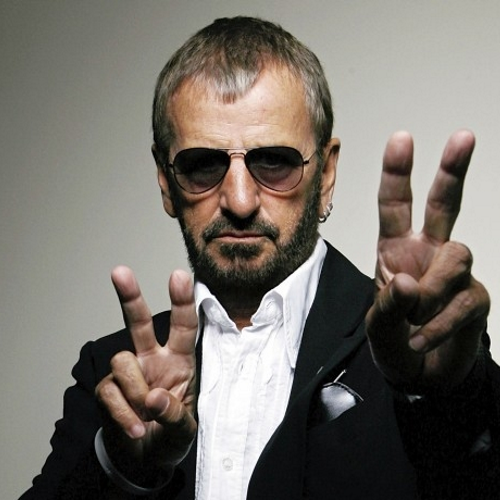
Eddie Deenzen and Neatorama present 16 Things You May Not Know About Ringo Starr.  Here are three of my favorites…

10. In 1964, when the Beatles first came to America, Ringo was actually the most popular Beatle. At least he received the most fan mail of the four.

16. In 2015, Ringo was finally inducted into the Rock and Roll Hall of Fame (the Beatles had been inducted as a group in 1988). But now Ringo was (finally) elected on his own

3. Ringo was so sick as young boy, three times his doctors told his mother he wouldn’t survive the night. He was indomitable and did survive. Because of his incredible ability to survive, his grandfather’s nickname for him was “Lazarus.”

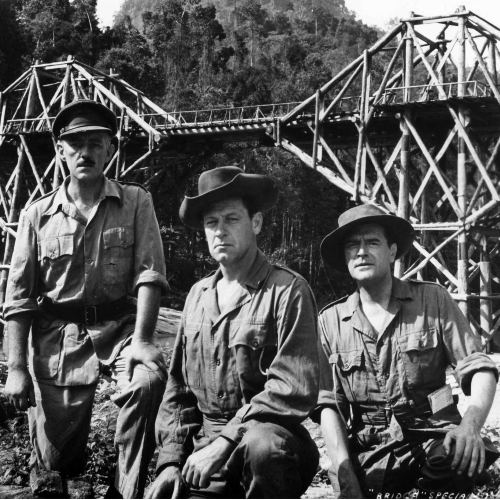
13 Fascinating Facts About “The Bridge on the River Kwai”

Eric D. Snider and Mental_Floss present 13 Fascinating Facts About The Bridge on the River Kwai.  Here are three of my favorites…

1. ITS OSCAR FOR BEST SCREENPLAY WENT TO SOMEONE WHO DIDN’T WRITE IT.
The process of adapting Pierre Boulle’s French-language novel Le Pont de la Riviere Kwai was difficult (more on that later), but the two writers ultimately responsible for it were Carl Foreman (High Noon) and Michael Wilson (A Place in the Sun). Neither of them got credit, though, as The Bridge on the River Kwai was released during the three-year period when people who’d ever been Communists (or who refused to answer questions about it before Congress) were ineligible for Academy Awards. The screenplay was instead credited to the novelist, Boulle—which was quite a feat, since he didn’t speak or read English. (He didn’t attend the Oscars, either.) In 1985, the Academy officially recognized Foreman and Wilson as the screenwriters and posthumously awarded the Oscar to them.

4. DAVID LEAN NEEDED THE WORK.
Though he’d already earned five Oscar nominations (three for directing, two for adapting the Dickens novels) and would soon be widely celebrated for Kwai, Lawrence of Arabia (1962), and Doctor Zhivago (1965), at this stage, Lean was in trouble. He’d just been through a costly divorce from actress Ann Todd. According to one biographer, he was “broke and needed work; he had even pawned his gold cigarette case.” This, plus the fact that he loved to travel, plus the fact that shooting a film in Southeast Asia would be good for him tax-wise, motivated him to accept a project that was bound to be grueling.

10. WILLIAM HOLDEN GOT A BETTER DEAL THAN THE DIRECTOR.
Lean wanted Holden, a big star and recent Oscar winner (for Stalag 17), to play American prisoner Major Shears, over the objections of producer Spiegel, who wanted Cary Grant. Once Spiegel relented, he realized Holden was a box office draw and offered him a great deal: $300,000 salary (about $2.5 million in 2016 dollars), plus 10 percent of the gross. Lean only got $150,000 himself, but he always said Holden was worth it.

15 Not-So-Simple Facts About “Blood Simple”

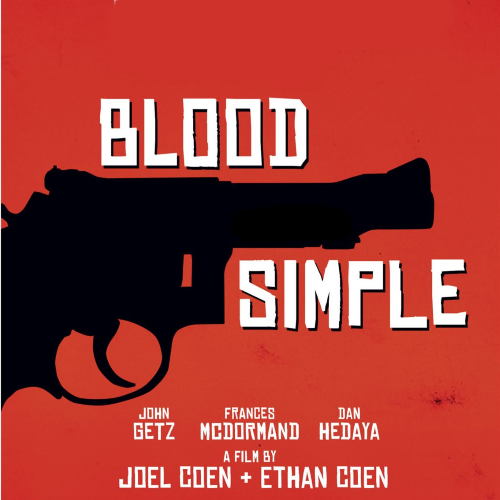
Garin Pirnia and Mental_Floss present 15 Not-So-Simple Facts About Blood Simple.  Here are three of my favorites…

1. ITS TITLE WAS INSPIRED BY DASHIELL HAMMETT’S RED HARVEST.
“It’s an expression he used to describe what happens to somebody psychologically once they’ve committed murder,” Joel Coen told Time Out. “They go ‘blood simple’ in the slang sense of ‘simple,’ meaning crazy. But it’s left up to the audience to ponder the implications; they’re never spelled out in the film itself.”

3. THE COENS—AND MANY OF THE CAST AND CREW—HAD NEVER BEEN ON A FILM SET BEFORE.
Joel Coen admitted in My First Movie, “The first day of shooting on Blood Simple was the first time I’d ever been on a feature movie set in any capacity, even as a visitor.” Coen had previously worked as an assistant editor on horror films, including 1981’s The Evil Dead. Coen mentioned how Sonnenfeld would throw up after looking at the dailies, because he was so nervous working on the film. “Everyone was in the same boat,” Joel said. “The gaffer had never gaffered a feature. The sound guy, the mixer on the set, had never mixed a feature.”

4. THE COENS CHOSE TO MAKE A FILM NOIR BECAUSE OF THE GENRE’S PRACTICALITY.
The Coens liked hard-boiled fiction authors James M. Cain, Dashiell Hammett, and Raymond Chandler, and used them to their advantage in writing the script. “It’s certainly a genre that is entertaining, and we also picked it for very practical reasons,” Ethan said. “We knew we weren’t going to have a big budget. The financing would not allow it. We could build something on the genre and the appeal it has.”

“It’s also a genre that allows you to get by rather modestly in some ways,” Joel added. “You can limit the number of characters, put them into a confined set. There’s no need to go for large-scale effects or scatter them through the film, and those cost a lot of money. So it was a pragmatic decision that determined what film we would make.”

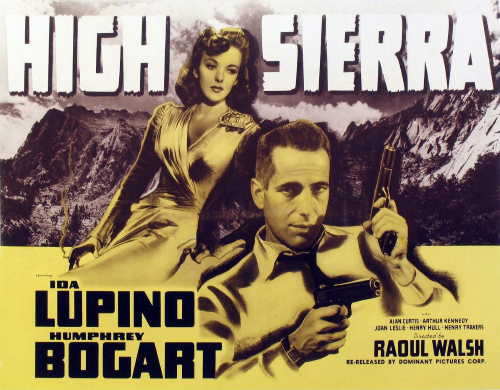
High Sierra (1941) / Z-View

High Sierra (1941)

Director:  Raoul Walsh

Screenplay: John Huston and W.R. Burnett from a novel by W.R. Burnett

Stars: Ida Lupino, Humphrey Bogart, Alan Curtis, Henry Hull and Cornell Wilde.

The Pitch: “Raoul Walsh. John Huston. WR Burnett. Ida Lupino. Bogart.”

Tagline: “The Blazing Mountain Manhunt for Killer ‘Mad-Dog’ Earle!”

The Overview:  Beware of Spoilers…

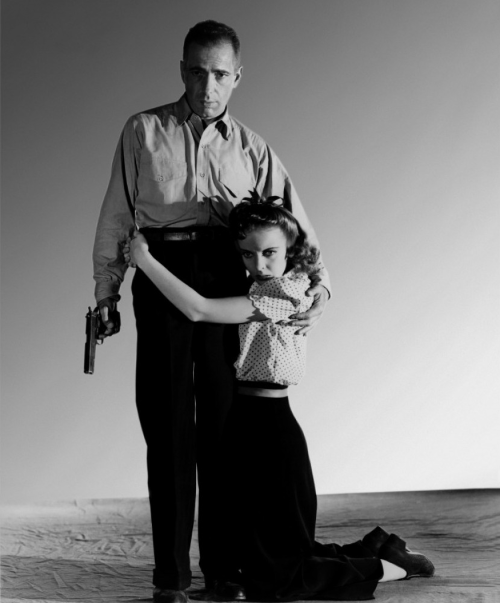
Roy Earl [Bogart] an infamous bank robber [think Dillinger] is sprung from prison by an old crime boss who wants Earl for a big robbery.  Obligated for his freedom, Earl drives west to check out the set up.

Once he meets up with his old boss, Earl discovers the robbery plan is good and the money is right, but his partners are young, inexperienced thugs looking to make a name for themselves… plus they have a woman [Lupino] with them and everyone knows women weaken legs and crime plans don’t work out.

Before it is over there will be a robbery, people killed, double-crosses and a manhunt for the “Mad Dog Killer” Roy Earl.

Rating: 4 of 5 stars.

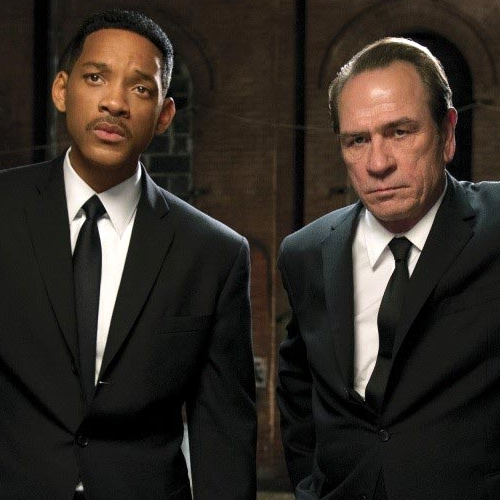
15 Out-of-this-World Facts About “Men in Black”

Garin Pirnia and Mental_Floss present 15 Out-of-this-World Facts About Men in Black.  Here are three of my favorites…

9. MEN IN BLACK IS THE HIGHEST-GROSSING ACTION BUDDY COMEDY OF ALL TIME.
Rush Hour 2 almost dethroned Men in Black from the top spot in 2001, but with a gross of $250 million, Men in Black held onto its position. 22 Jump Street comes in third, and Men in Black II and Men in Black 3 rank fourth and fifth on the list, respectively. On the sci-fi comedy chart, the Men in Black movies corner the top three positions.

11. WILL SMITH CAME UP WITH THE PLOT FOR MEN IN BLACK 3 WHILE FILMING MEN IN BLACK II.
One night while on the set of Men in Black II, Smith told Sonnenfeld his idea for a third film. “At the beginning, something has happened and Agent Kay is missing and I have to go back to the past to go try to save young Agent Kay,” Sonnenfeld recalled to CNN. “In doing so, myself and the audience find out all sorts of secrets about the world that we didn’t even know were out there.” All Sonnenfeld could muster was, “Can we just finish this one?” Over a decade later, the plot to Men in Black 3 did revolve around time travel and saving a young Agent Kay, played by Josh Brolin.

15. THE RAY-BAN GLASSES WORN IN THE MOVIE ALMOST DIDN’T GET A SHOUT OUT.
The sunglasses Smith and Jones sport in the film are Ray-Ban Predator II glasses. According to a 1997 article in Promo Magazine, a special coating was applied to the glasses to limit reflection, which meant removing the logo. Without the logo, nobody would know what type of glasses they were (Sonnenfeld edited out a previous line in the movie where Jones says “that’s why they call them Ray-Bans”). Ray-Ban tried to convince the studio to reinstate the logo, but they refused. After some coercing, Smith compromised and name dropped the company in the “Men in Black” song: “Black tie with the black attitude / New style, black Ray-Bans, I’m stunnin’, man.” The popularity of the movie and the song’s music video gave the $100 Predators a four- to fivefold increase in sales, and a boost to Ray-Ban’s entire catalog of shades.

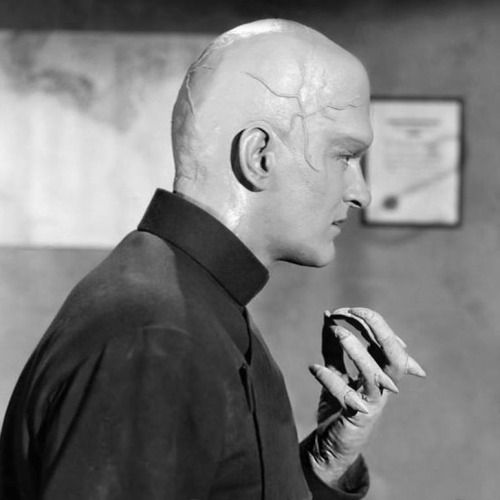
10 Huge Facts About “Big Trouble in Little China”

Roger Cormier and Mental_Floss present 10 Huge Facts About Big Trouble in Little China.  Here are three of my favorites…

7. THE STUDIO DEMANDED THAT THE BEGINNING OF THE FILM  BE CHANGED.
Barry Diller felt that Jack Burton wasn’t heroic enough, so after production wrapped, Carpenter went back and shot an introductory scene where Egg Shen (Victor Wong) says Jack is a courageous man. Had Diller not said anything, the film would have begun with Jack driving. Carpenter didn’t necessarily want Burton to be seen as the hero; he wanted both leads to be considered the film’s heroes.

9. KURT RUSSELL WAS LED TO BELIEVE IT WOULD BE THE BIGGEST MOVIE OF 1986.
Russell had never, before or since, been asked by so many members of the press what it was like to be in the biggest movie of the year than when he was promoting Big Trouble in Little China. After the test screenings went really well, Russell said he “kept waiting to see ads and things that just didn’t happen.”

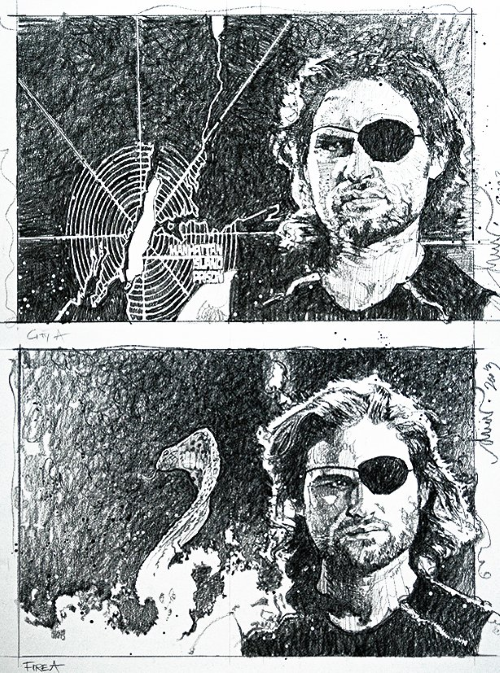
10. THE ROCK WANTS TO REMAKE IT, WITH CARPENTER.
Carpenter said he’s “ambivalent” about the idea. New movie or not, there’s been a comic book series that picks up from where the movie ended. And if you can find it, there was a Big Trouble in Little China video game released in 1986. A secret screen on the DVD contains images from it.

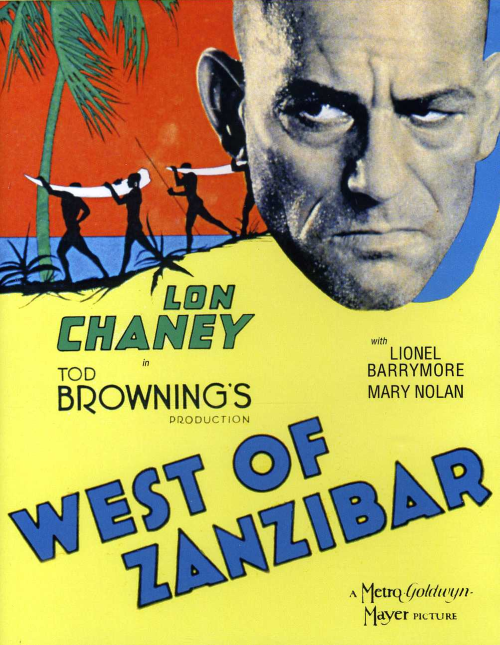
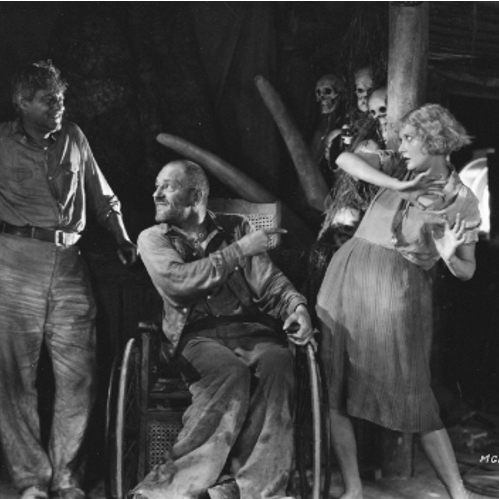
West of Zanzibar (1928) / Z-View

West of Zanzibar (1928)
Director:  Todd Browning

Screenplay:  Elliott J. Clawson

Stars: Lon Chaney, Lionel Barrymore and Mary Nolan .

The Pitch: “Let’s make a movie with Lon Chaney directed by Todd Browning!”

Tagline: “A story of love and revenge in the African jungles!”


The Overview:  Beware of Spoilers…

A magician named Phroso [Chaney] discovers his wife has been having an affair with a man named Crane [Barrymore].  Phroso confronts Crane, and during their fight is thrown over a rail, breaking his back and leaving him paralyzed and alone.

Later his wife returns only to die a short time later.  Before she dies Phroso learns that she had a daughter and Crane is now an ivory dealer in Africa.  Phroso heads to Africa with the child and plots his revenge.  First his makes sure that his wife’s daughter is raised in a brothel so that she grows up to be a drug-addicted prostitute.  Then he  takes on the persona “Dead Legs” and over the course of nearly two decades builds his criminal empire.

Once the time is right, Phroso brings the grown daughter to him so that he can extract his final revenge on her and Crane.  Dark stuff, indeed and with a twist [although easily seen coming] worthy of the Twilight Zone.

Rating:

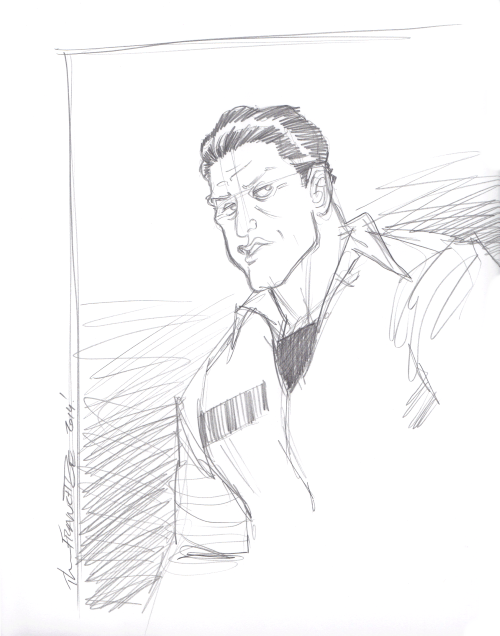
The Franchize Has an Escape Plan for Sly!

Jerry Gaylord aka The Franchize returns with his take on Sly from Escape Plan.  

Jerry is one of my favorite sketch artists.  He always gives collectors more than they’re expecting and he is just plain good!

I highly recommend Jerry to all sketch collectors. He quickly responds to e-mails, his turnaround time is fast and he packages the art to ensure it arrives safely.

To check out more of Jerry’s art, head here. – Craig