Category: Crime

Gravedigger: The Abductors by Mills and Burchett

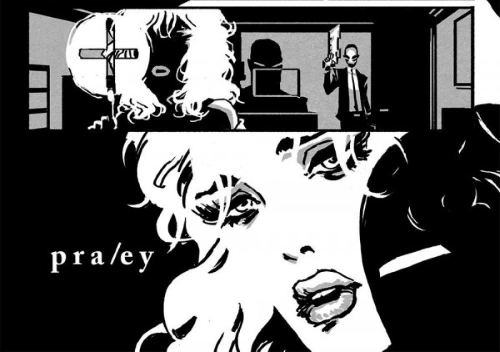
The photo above is of page two of the third Gravedigger story that Chris Mills and Rick Burchett would like to complete.

I sure hope they’re able to since Gravedigger is one of my favorite comic characters and the first two stories that Mills and Burchett created are some of my favorite crime, no scratch that, some of my favorite comics of any genre.

If you haven’t read any of “Digger” McCrae’s crime yarns, you can easily and cheaply enough here.    The trade paperback is also available through Amazon and InStockTrades. [I don’t make any kickbacks on any of the links, and honestly if I did, I send it to Mills and Burchett to get them closer to more Gravedigger tales.]

If you’re a fan of crime comics, great stories and art, or just want to help out a couple of really decent human beings — please consider giving Gravedigger a go.

The 12 Deadliest Hit Men [and Women] in Film and TV

Hollywood.com posted their choices for The 12 Deadliest Hit Men [and Women] in Film and TV.

There are some good choices in the list…

  • Samuel L. Jackson as Jules Winnfield  in Pulp Fiction

  • Jean Reno as Leon  in The Professional

  • Javier Bardem as Anton Chigurh  in No Country for Old Men

  • Uma Thurman as The Bride in Kill Bill: Volume 1 & 2

  •  Chow Yun Fat as Ah Jong in The Killer

…for example.

But how do you create a list of the best hit men and leave off…

  • Keanu Reeves as John Wick in John Wick

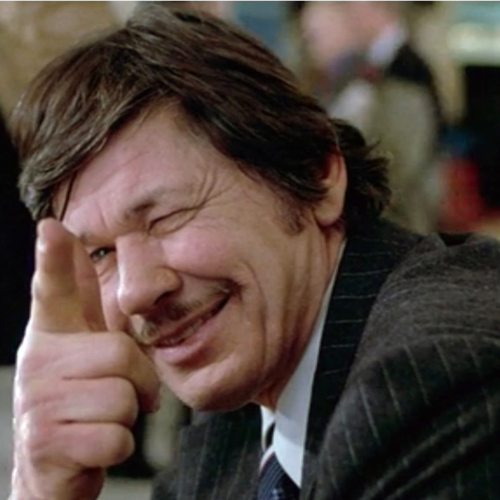
  • Charles Bronson as Arthur Bishop in The Mechanic

  • Clint Eastwood aka William Munny in Unforgiven

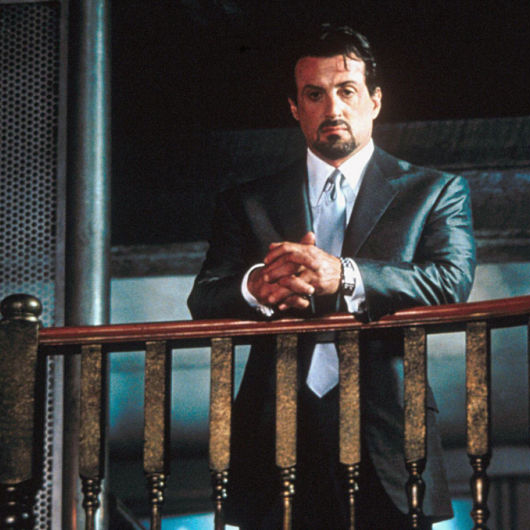
  • Sly Stallone as Jimmy Bonomo in Bullet to the Head

13 Epic Facts About “Once Upon a Time in America”

Eric D. Snider and Mental_Floss present 13 Epic Facts About Once Upon a Time in America Here are three of my favorites

1. SERGIO LEONE TURNED DOWN THE GODFATHER TO MAKE IT. 
By his own account, Once Upon a Time in America was Leone’s pet project, the one he devoted most of his adult life to making. He became interested in the story while he was making 1968’s Once Upon a Time in the West , and was so fixated on it that when Paramount approached him a few years later to make The Godfather, he politely declined. If he’d known it would take another 12 years to get Once Upon a Time in America produced anyway, maybe he would have accepted. But then where would Francis Ford Coppola be?

8. NOBODY HAS EVER SEEN LEONE’S COMPLETE VERSION.
After the nine-month shoot, Leone had eight to 10 hours’ worth of material. He trimmed it down to six hours, hoping to release it in two three-hour parts, but the producers were having none of that. So he reduced it to 269 minutes—four and a half hours—but it still wasn’t enough. He chopped out another 40 minutes, and this 229-minute version is what premiered at the 1984 Cannes Film Festival and subsequently played in European theaters.

American distributors butchered the film even more, cutting out another 90 minutes and rearranging the scenes into chronological order (no more flashbacks), which rendered the movie incomprehensible. The American version flopped, of course, and Leone was devastated. A Martin Scorsese-led effort to restore Leone’s original version resulted in a 251-minute cut playing at Cannes in 2012, but some 18 minutes were still missing due to legal issues over who owned the missing scenes. The 251-minute version is now available on Blu-ray and DVD. Someday, perhaps the complete version will be restored.

12. LEONE WAS A PERFECTIONIST. 
Leone and De Niro had their different approaches, but one thing they had in common was perfectionism. According to one of the screenwriters, Leone did 35 takes of a large (and expensive) crowd scene, only to insist on one more because he noticed a kid in the crowd looking directly at the camera.

10 Deliberate Facts About “12 Angry Men”

Eric D. Snider and Mental_Floss present 10 Deliberate Facts About 12 Angry Men.  Here are three of my favorites

2. IT’S THE ONLY FILM HENRY FONDA EVER PRODUCED. 
The actor saw the TV production and felt strongly that it would make a great movie. Unable to find any producers willing to take a risk on it (a serious, single-room drama in a time when colorful widescreen epics were in fashion), Fonda teamed up with the writer, Reginald Rose,to produce it themselves. Fonda wound up hating the experience—not the acting side, which he loved (and he was always very proud of the film), but the business side. He hated having to worry about financial and logistical details, and couldn’t stand watching himself in the daily rushes (which producers, but not necessarily actors, are expected to do).

5. IT USES CAMERA TRICKS TO INCREASE THE TENSION.
The problem with making a film set entirely in one room is that it’s bound to get boring, visually speaking (unless it’s a very interesting room, which a jury room is not). Lumet also realized he couldn’t have his characters moving around very much, meaning most of the “action” would involve sitting around a table. So he had the camera move a lot instead. He and his cinematographer, Boris Kaufman (who won an Oscar in 1955 for On the Waterfront), also devised some photographic methods of amplifying the movie’s tone. Lumet wrote: “I shot the first third of the movie above eye level, shot the second third at eye level, and the last third from below eye level. In that way, toward the end, the ceiling began to appear. Not only were the walls closing in, the ceiling was as well. The sense of increasing claustrophobia did a lot to raise the tension of the last part of the movie.”
8. LUMET WAS ONLY THE THIRD PERSON TO GET A BEST DIRECTOR NOMINATION FOR HIS DEBUT FILM.
Orson Welles had been nominated for Citizen Kane, and Delbert Mann had actually won forMarty. About 20 directors have since been Oscar-nominated for their debuts. (Six have won.)

‘THE GODFATHER’: A HISTORICAL CURIOSITY THAT PROVED INSTRUMENTAL FOR OUR FILMMAKING EDUCATION AND APPRECIATION

Those are Francis Ford Coppola’s notes from a page of Mario Puzo’s novel The Godfather.  If you’re a fan of The Godfather movies and love behind-the-scenes materials, then you’ll absolutely love Cinephilia and Beyond’s ‘THE GODFATHER’: A HISTORICAL CURIOSITY THAT PROVED INSTRUMENTAL FOR OUR FILMMAKING EDUCATION AND APPRECIATION.

If you click over, plan to stay a while because there are a treasure trove of Godfather items waiting.

How We All Miss the Point on School Shootings

I try to keep our posts here light, fun and focused on some aspect of entertainment.  My hope is that the folks who drop in daily will get a smile.  Sometimes, and it is rare, I post something serious.

I thought that Mark Manson’s How We All Miss the Point on School Shootings was one of those rare, serious pieces worth posting.  I hope regular readers will as well.

If you just drop in for the entertainment posts, have no worries, we’ll be back to the fun stuff with the next post.

13 Fascinating Facts About “Miller’s Crossing”
Matthew Jackson and Mental_Floss present 13 Fascinating Facts About Miller’s Crossing.  Here are three of my favorites

2. THE COEN BROTHERS TURNED DOWN BATMAN TO MAKE MILLER’S CROSSING.
After Raising Arizona’s success established them as more than one-hit indie film wonders, the Coens had some options with regard to what project they could tackle next. Reportedly, their success meant that they were among the filmmakers being considered to make Batman for Warner Bros. Of course, the Coens ultimately decided to go the less commercial route, and Tim Burton ended up telling the story of The Dark Knight on the big screen.

8. GABRIEL BYRNE HAD TO CONVINCE THE COENS TO LET HIM KEEP HIS IRISH ACCENT.
Though he was an Irish native playing a lieutenant to an Irish mobster, the Coens did not originally want Gabriel Byrne to use his own accent in the film. Byrne argued that his dialoguewas structured in such a way that it was a good fit for his accent, and after he tried it, the Coens agreed. Ultimately, both Byrne and Finney used Irish accents in the film.

11. JON POLITO HAD TO CONVINCE THE COENS TO CAST HIM IN A DIFFERENT ROLE.
When Polito read the Miller’s Crossing script, he loved it and immediately wanted to audition for the role of Johnny Caspar. The Coens had different ideas, and were considering the 39-year-old actor for the role of Caspar’s enforcer, Eddie Dane, instead. The role of Caspar was originally supposed to go to an actor in his mid-50s, but Polito was adamant.

“Anyway, I said I won’t read for anything but Johnny Caspar,” Polito told The A.V. Club. “’And tell them that they’re gonna have to come back to me cause I’m gonna play Johnny.’”

The Coens ultimately gave in, and Polito was cast. They must have liked what they saw, too, because they ended up casting him in four more films after that.

11 Expert Facts About “Leon: The Professional”

Tara Aquino and Mental_Floss present 11 Expert Facts About Leon: The Professional.  Here are three of my favorites

1. NATALIE PORTMAN’S PARENTS WERE COMPLETELY AGAINST HER PLAYING MATHILDA.
It was an extremely complicated role for an 11-year-old: Not only would she have to deal with a broken home and violence, but she’d also have to deal with the unwanted sexualization of a young girl. In Starting Young, a documentary about Portman that’s included on the 10th anniversary DVD edition of Léon, the actress admits that after she read the script, she was so moved to tears by the film that she knew she had to have the role. Her parents weren’t as convinced. “My parents were like, ‘There is no way you’re doing this movie. This is absolutely inappropriate for a child your age … and I was like, ‘This is the greatest thing I’ve ever read! You’re gonna ruin my life!’” she shares in the doc. “[I] was basically just fighting with them so much.”

4. PORTMAN’S PARENTS ARE THE REASON WHY MATHILDA QUITS SMOKING IN THE FILM.
As per the agreement Portman’s parents outlined with Besson, the actress was allowed five fake cigarettes in her hand during the entire film shoot, and she was never allowed to inhale a single one of them. If you pay close attention to her character, you’ll see that she only puts the cigarette to her lips, but never blows smoke out. Additionally, her parents demanded that her character quit smoking at some point in the movie. In the film, Léon scolds Mathilda for smoking, and later you see her throwing her unfinished cigarette away when she’s alone.

10. BESSON HAS SHUT DOWN RUMORS THAT A SEQUEL IS IN THE WORKS.
So stop asking. During his press tour for Lucy, Besson told The Guardian, “You can’t imagine how many people ask me for a Léon sequel. Everywhere I go they ask me. If I was motivated by money, I would have done it a long time ago. But I don’t feel it.”

In an earlier interview with Cinema Blend, Besson elaborated on the topic, saying, “Natalie is old now, she’s a mother … It’s too late. If I got an idea tomorrow about a sequel, of course I would do it. But I never came up with something strong enough. I don’t want to do sequels for money; I want to do a sequel because it’s worth it. I want it to be as good or better than the original.”