Category: Horror
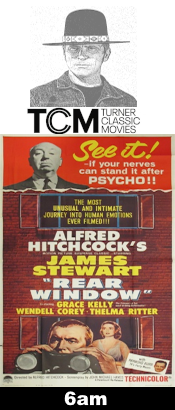
14 Crazy Facts About “Psycho”

Scott Weinberg and Mental_Floss present 14 Crazy Facts About Psycho.  Here are three of my favorites… [Beware of Spoilers!]

5. HITCHCOCK FINANCED THE FILM.
Paramount had all sorts of cold feet regarding the project, which prompted Hitchcock to both pay for the film out of his own pocket and forgo his (rather substantial) director’s fee in exchange for 60 percent ownership of the film. This highly uncommon arrangement put a whole lot of money in Hitchcock’s pocket. (Bad move, Paramount.) Plus the film doesn’t even belong to Paramount anymore; it’s been a Universal title since 1968.

12. LATE MOVIEGOERS WEREN’T ALLOWED IN.
Not only was Hitchcock intent on keeping the film under wraps until the last possible minute—he also instructed theaters to not allow anyone in once the film had started. And they did it!

14. THE MOVIE EARNED HITCHCOCK HIS FINAL OSCAR NOMINATION.
Psycho marked the fifth and final time that Hitchcock would earn an Oscar nomination for Best Director. (The Academy gave him the Irving G. Thalberg Memorial Award in 1968.) Yes, you read that right: Alfred Hitchcock never won an Oscar for directing. Let that sink in for a bit. [Hard to believe, isn’t it? – Craig]

13 Fascinating Facts About “The Thing”

James L. Menzies and Mental_Floss present 13 Fascinating Facts About The Thing.  Here are three of my favorites… [Beware of Spoilers!]

4. A DOUBLE AMPUTEE WAS USED TO CREATE THE FILM’S QUINTESSENTIAL SPECIAL EFFECT.
One of the most memorable scenes in the movie (often referred to as the “chest chomp”) occurs when Dr. Copper (Richard Dysart) attempts to revive Norris (Charles Hallahan) with a defibrillator. As he presses the paddles to his patient’s skin, Norris’ chest opens up and Copper’s forearms disappear into the cavity, where they are severed below the elbow by a set of jaws inside Norris’ chest.

In order to pull this off, special makeup effects designer Rob Bottin (known for his work onRobocop, Total Recall, Se7en, and Fight Club) found a man who had lost both of his arms below the elbow in an industrial accident. Bottin fit the man with two prosthetic forearms consisting of wax bones, rubber veins, and Jell-O. Then, for the wide-angle shot, he fit the man with a skin-like mask taken from a mold of Dysart’s face (à la Hannibal Lecter) and placed the ersatz arms into the chest cavity, where a set of mechanical jaws clamped down on them. As the actor pulled his arms away, the Jell-O arms severed below the elbows. The rest is practical effects history.

6. KURT RUSSELL ALMOST KILLED HIMSELF WITH A STICK OF DYNAMITE.
Russell threw an actual stick of dynamite during a scene toward the end of the film. He did not, however, anticipate it being so powerful. Russell was literally blown backwards after the device detonated; this take was left in the film.

13. AN ALTERNATE ENDING WAS FILMED, JUST IN CASE.
John Carpenter and editor Todd Ramsay shot and cut an alternate ending to the film that was never used. Ramsay was concerned that the bleak, ambiguous ending would not test well with audiences, so he suggested that Carpenter cover his bases and have a spare ending ready to go. They filmed an additional scene where lead character MacReady (Kurt Russell) is rescued and appears in a room where he is given a blood test to determine whether he has been assimilated, which he passes. Fortunately for fans of the film, this alternate finale was not needed as Carpenter stood firmly behind the movie he had made—ambiguous ending and all

16 Biting Facts About “Fright Night”

Jennifer M. Wood and Mental_Floss present 16 Biting Facts About Fright Night.  Here are three of my favorites…

2. PETER VINCENT MADE THE STORY CLICK.
It wasn’t until Holland conceived of the character of Peter Vincent, the late-night horror movie host played by Roddy McDowall, that he really found the story. While discussing the idea with a department head at Columbia Pictures, Holland realized what The Boy Who Cried Vampire would do: “Of course, he’s gonna go to Vincent Price!” Which is when the screenplay clicked. “The minute I had Peter Vincent, I had the story,” Holland told Dread Central. “Charley Brewster was the engine, but Peter Vincent was the heart.”

5. RODDY MCDOWALL DID NOT WANT TO PLAY THE PART LIKE VINCENT PRICE.
Once he was cast, Roddy McDowall made the decision that Peter Vincent was nothing like Vincent Price—specifically: he was a terrible actor. “My part is that of an old ham actor,” McDowall told Monster Land magazine in 1985. “I mean a dreadful actor. He had a moderate success in an isolated film here and there, but all very bad product. Basically, he played one character for eight or 10 films, for which he probably got paid next to nothing. ..”

16. VINCENT PRICE LOVED THE MOVIE.
Holland had the chance to meet Vincent Price one night at a dinner party at McDowall’s. And the actor was well aware that McDowall’s character was based on him. “I was a little bit embarrassed by it,” admitted Holland. “He said it was wonderful and he thought Roddy did a wonderful job. Thank God he didn’t ask why he wasn’t cast in it.”

17 Straightforward Facts About “The Sixth Sense”

Roger Cormier and Mental_Floss present 17 Straightforward Facts About The Sixth Sense.  Here are three of my favorites…

1. THE DISNEY EXECUTIVE WHO BOUGHT THE SCRIPT WAS FIRED BECAUSE OF IT.
Walt Disney Studios’ then-president David Vogel didn’t bother to consult with his superiors before paying $2.25 million for the rights to The Sixth Sense, and agreed to let Shyamalan direct the already-expensive film. Vogel’s boss was livid when he found out about the deal, and demanded that Vogel relinquish some of his power. When Vogel refused, he was canned.

6. DONNIE WAHLBERG LOST 43 POUNDS TO PLAY VINCENT GREY.
The former New Kid on the Block wanted to prove that he was serious about pursuing an acting career.

8. THE COLOR RED WAS SYMBOLIC.
Shyamalan explained that anything “tainted” from the ghost world or that had some connection to it was colored red in the movie, like the basement doorknob, or the dress of the killer mom.

28 Facts You Might Not Know About “The Munsters”


John Farrier and Neatorama present 28 Facts You Might Not Know About The Munsters Here are three of my favorites…

2. Although the first pilot episode was shot in color, the rest of the series was shot in black and white to save money. It certainly adds to the horror ambiance, don’t you think?

6. Grandpa was Lily’s father, but Al Lewis was a year younger than Yvonne De Carlo.

9. Al Lewis’s long prosthetic nose was eliminated after a few episodes because he kept getting it wet in his cups of coffee.

14 Things You Might Not Know About “Aliens”


Eric D Snider and Mental_Floss present 14 Things You Might Not Know About Aliens.  Here are three of my favorites…

1. CONAN THE DESTROYER HELPED IT GET MADE.
The movie, not the guy. Based on the strength of his script for The Terminator (then in pre-production), James Cameron was approached by 20th Century Fox to write an Alien sequel. But the outline he came up with for Alien II got a lukewarm reaction at Fox, and the idea was put on hold for the time being. Then, as luck would have it, the start date for The Terminator was pushed back nine months so that Arnold Schwarzenegger could make Conan the Destroyer, the sequel to his 1982 hit (in which Conan had been merely a Barbarian). This extra three-quarters of a year gave Cameron time to write three-quarters of a full screenplay for Alien II, not just an outline. (He also co-wrote Rambo: First Blood Part II during this time, by the way.) The Fox bosses liked what they read. Cameron was told that if The Terminator proved successful, he could write and direct the Alien sequel.

3. SIGOURNEY WEAVER WAS PAID $35,000 FOR THE FIRST FILM, AND $1 MILLION FOR THE SEQUEL.
James Cameron and Gale Anne Hurd (who became Mrs. James Cameron during pre-production) helped Weaver get what she deserved—first by refusing to make the film without her, and also by refusing to keep it a secret that she was the only person in consideration for the lead role. Fox especially didn’t like that second point, as it put Weaver’s agent in a very strong bargaining position. Sure enough, Weaver got a million bucks and a percentage of the profits. It got better for Weaver as the franchise went on, with $4 million for Alien 3 and $11 million for Alien: Resurrection.

9. IT’S THE ONLY ACTING THAT CARRIE HENN, WHO PLAYED YOUNG NEWT, EVER DID.
Henn was nine years old and living with her family at a U.S. Air Force base in England when casting agents found her. She loved the experience, remained friends with Sigourney Weaver afterward, was invited to the premiere of Alien 3 (even though she wasn’t in the movie) … and never acted again. Instead, she became a schoolteacher.

14 Haunting Facts About “Paranormal Activity”


Garin Pirnia
and Mental_Floss present 14 Haunting Facts About Paranormal Activity.  Here are three of my favorites…

1. PARANORMAL ACTIVITY IS THE MOST PROFITABLE FILM OF ALL TIME, BASED ON RETURN ON INVESTMENT.
Often compared to The Blair Witch Project because of its low-budget nature and huge grosses, 10 years after The Blair Witch Project’s release, the original Paranormal Activity ousted the earlier horror film as the most profitable movie, based on return on investment (ROI). The Blair Witch Project cost about $60,000 to make whereas Paranormal Activity’s initial budget was just $15,000. Blair Witch grossed $248.6 million worldwide, which comes out to a 414,233 percent return on investment. After grossing $65 million, it was calculated that Paranormal Activity made a 433,900 percent ROI. Of course that doesn’t factor in its final worldwide gross of $193 million (which, if you do the math on that total, works out to a 1,286,566 percent ROI).

2. OREN PELI HAD NEVER WORKED ON A MOVIE BEFORE PARANORMAL ACTIVITY—LET ALONE DIRECTED ONE.
His background was as a software developer, a skill that provided him with the technical know-how to shoot a low-tech movie. “I’ve always been very comfortable with computers and software, so one thing that’s made my life easier is the fact that I was very quickly able to figure out how to edit the movie, how to do the audio mixing, and the CGI that’s in the movie,” Peli told Moviefone in 2009. He used a home movie camera, filmed in his own house, hired unknown actors who helped with the production, and edited down 70 hours of footage.

9. THE MOVIE KICK-STARTED THE FOUND FOOTAGE GENRE.
Though 1999’s The Blair Witch Project was hardly the first found footage film (many say that distinction belongs to 1980’s Cannibal Holocaust), it generated new interest in the format. Still, audiences would have to wait until 2008’s Cloverfield, which was a modest hit, and another year for Paranormal Activity (which was filmed in 2006) to start seeing found footage films emerge as their own subgenre. To this day The Blair Witch Project remains the highest-grossing found footage film of all time, though.