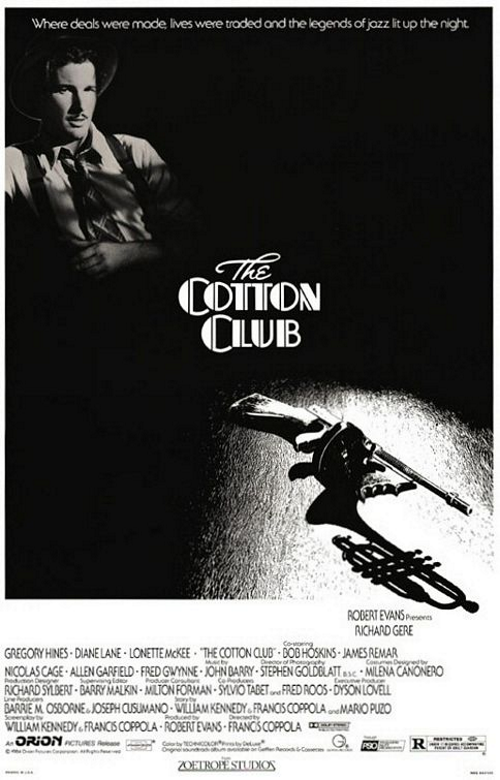
5 Screenwriting Lessons from Quentin Tarantino

James Paszko and Film Slate present 5 Screenwriting Lessons from Quentin Tarantino.
Source: Jeff Wamester.
Previews and Reviews that are Z's Views

James Paszko and Film Slate present 5 Screenwriting Lessons from Quentin Tarantino.
Source: Jeff Wamester.

Here is the finished piece of Sly as Barney Ross that Drew Moss did for me for pickup at HeroesCon. As always, Drew gives you more than you’d expect!
If you’d like to see more of Drew’s art, you can here. – Craig

Matthew Jackson and Mental Floss present 17 Bloody Facts About Friday the 13th. Here are three of my favorites…
1. THE ORIGINAL INSPIRATION WAS HALLOWEEN.
In 1978, producer and director Sean Cunningham was looking for a model on which to build a commercially successful film, and he found one in John Carpenter’s horror classic Halloween. The two films ultimately don’t share much other than very broad slasher tropes, but Cunningham says he “was very influenced by the structure of Carpenter’s film.”
7. SHELLEY WINTERS WAS THE FIRST CHOICE FOR MRS. VOORHEES.
For the now-iconic role of Mrs. Pamela Voorhees, Cunningham and company went in search of an actress with a recognizable name whose career was nevertheless on the decline, so she could be paid relatively little and the budget could stay low. Cunningham eventually made a list of actresses he was considering, and two-time Oscar winner Shelley Winters was his top priority. Winters wasn’t interested, and while fellow candidate and Oscar-winner Estelle Parsons actually negotiated to be in the film, she ultimately backed out. Cunningham also considered actresses Louise Lasser and Dorothy Malone right up until filming began, but ultimately the production wound up with Betsy Palmer in the role.
15. THE FINAL SCARE WAS SUPPOSEDLY NOT IN THE ORIGINAL SCRIPT.
The story of who invented the final scare in the film, in which a deformed Jason bursts out of the lake and grabs Alice (Adrienne King) from her canoe, is disputed. Victor Miller, Tom Savini, and uncredited screenwriter Ron Kurz all claim credit for it, Kurz because he claims to be the one who made Jason into a “creature,” and Savini because he claims the moment was inspired by a similar final scare in Carrie. Whatever the case, it left a lasting impression.

Garin Pirnia and Mental Floss present 15 Thrilling Facts About Basic Instinct. Here are three of my favorites…
1. THE SCRIPT SOLD FOR A RECORD $3 MILLION.
Back in the day, spec scripts could sell for millions of dollars. Joe Eszterhas joined that club when he sold Basic Instinct—a script that took him just 13 days to write—for $3 million in 1990. Eszterhas told The A.V. Club that the media liked to focus on a writer’s failures, which occurred when Eszterhas’ Showgirls tanked at the box office. “CBS Evening News came with a helicopter crew and found me on a beach in Florida and interviewed me about the money I got for Basic Instinct,” Eszterhas said. “The other thing that I don’t think was quite fair was that after that whole period, where scripts—mine and Shane Black’s and half a dozen other writers’ scripts—went for a lot of money, the media zeroed in on the box office for some of those scripts, and they always zeroed in on the failures … When Basic Instinct went on to earn $400 million worldwide, there were no stories that said, ‘[Executive producer] Mario Kassar paid three million bucks for this.’”
2. CATHERINE AND NICK WERE BASED ON REAL PEOPLE.
Before he became a multimillionaire screenwriter, Eszterhas was a police reporter for Cleveland’s The Plain Dealer. “I met a cop who just liked the action too much,” Eszterhas told Nerve. “He was always in the middle of shootings. He was a great cop on one level, but on another, you suspected he liked it too much. That’s what Nick Curran does in Basic Instinct. As Catherine says in the movie, he got too close to the flame. He loved the flame.”Tramell also comes from a person Eszterhas knew in Ohio, this time a go-go dancer in Dayton. One night he picked the stranger up and they went back to his hotel room to have some fun. “She reached into her purse, and she pulled out a .22 and pointed it at me,” he told Nerve. “She said, ‘Give me one reason why I shouldn’t pull this trigger.’ I said, ‘I didn’t do anything to hurt you. You wanted to come here, and as far as I know, you enjoyed what we just did.’ And she said, ‘But this is all guys have ever wanted to do with me, and I’m tired of it.’ We had a lengthy discussion before she put that gun down. Those two random characters are where those parts of Basic Instinct come from.”
3. MICHAEL DOUGLAS AND PAUL VERHOEVEN APPROACHED THE MOVIE AS IF IT WERE A DETECTIVE NOVEL.
Verhoeven wanted to make a modern version of a Hitchcock thriller—except with a lot more sex. “In traditional films, the killer lurks in a house and the victim walks into the kitchen, turns on the radio, makes coffee, opens a book, gets comfortable—and then the killer strikes,” he told The New York Times. “In this film, the killer hides—but on the bed. The situation is the same, but the two people are facing each other in bed, not the kitchen.”Douglas agreed with the film noir aspect of the movie. “Fatal Attraction was a picture close to home for a lot of people because you could identify with those characters,” he also told theTimes. “It was a reality tale, while Basic Instinct is like a detective novel that people like to read in the privacy of their homes. It’s almost Gothic. It’s certainly more dramatic. And the real question here is: Is anybody really worthy of redemption?”

Matthew Jackson and Mental Floss present 12 Great Facts About The Good, the Bad and the Ugly. Here are three of my favorites…
9. IT’S TECHNICALLY A PREQUEL.
Careful viewers of the “Dollars Trilogy” will note that, though it’s the final film, The Good, The Bad and The Ugly actually takes place prior to the other two films. Among the clues: Eastwood acquires his iconic poncho, worn in both A Fistful of Dollars and For a Few Dollars More, in the final minutes.
11. EASTWOOD TURNED DOWN A FOURTH FILM.
By the end of The Good, The Bad and The Ugly, Eastwood was done working with Leone—a famous perfectionist—and had resolved that he would form his own company and start making his own movies. Leone, on the other hand, wasn’t necessarily done with Eastwood. He even flew to Los Angeles to pitch him the role of “Harmonica” (ultimately played by Charles Bronson) in Once Upon a Time in the West. Eastwood wasn’t interested.
12. JOHN WAYNE WAS NOT A FAN OF EASTWOOD.
Before Leone’s Westerns hit America, heroic gunfighters were almost always portrayed as men who waited for the villain to draw their guns first, the idea being that these were men who wouldn’t kill unless they had to. Among these heroes was John Wayne, whose career was winding down just as Eastwood’s was heating up. According to Eastwood, director Don Siegel (who made several films with Eastwood, including Dirty Harry) once tried to get Wayne to be more like the “Dollars Trilogy” star during the filming of Wayne’s final film, The Shootist. Wayne, it turns out, was not a fan of Eastwood’s more ruthless Western style.

Ben Bussey over at What Culture takes a look at Sylvester Stallone’s 15 Biggest Movies – Ranked Worst To Best.
The list is based on box-office not adjusted for inflation which may cause some surprises — the original Rocky doesn’t make the cut. The list makes for fun reading so have at it.

Last September, I posted Hell’s Club is the coolest thing on the net right now. The editing choices on this video are amazing. Join me as we travel to…
… a place where all fictional characters meet. . Outside of time, Outside of all logic, This place is known as HELL’S CLUB, But this club is not safe…
Join me once again as we return for Hell’s Club 2: Another Night…

Dee Fish gave me her very cool take on Sly as Barney Ross at HeroesCon 2015. Gotta love it! You can see more of Dee’s art here.

Andrew LaSane and Mental Floss present 10 Hardcore Facts About New Jack City. Here are three of my favorites…
1. IT WAS MARIO VAN PEEBLES’S DIRECTORIAL DEBUT.
Mario Van Peebles—an actor and the son of filmmaker Melvin Van Peebles—has admitted that making his debut as a feature director with New Jack City was tough. He had directed episodes of shows like 21 Jump Street and Wiseguy, but the film was a different beast, especially in terms of the tone. “It’s tricky,” he told The Morning Call. “New Jack is a dangerous movie to make, I didn’t want to do a direct glorification of the Tone-Loc lifestyle. I had to be careful about that. I thought about the old Scarface movie, which was probably meant as a deterrent to crime because it depicts all the violence of that kind of lifestyle. But for kids who don’t have any way out, ‘Live Fast and Die Young’ is like a motto. For people with no opportunities, gangsters become role models.”
5. ICE T WAS LUKEWARM ON THE IDEA OF PLAYING AN UNDERCOVER NEW YORK CITY COP.
After he was given the script and realized that his character, Scotty Appleton, was a cop, Ice T was hesitant. His lifestyle and his music represented the exact opposite of what he would have to play on screen. “I started to survey all the people around me, people whose opinions I trusted the most,” Ice T wrote in Ice. “‘Yo, I got offered this movie role,’ I said over and over. ‘But here’s the thing: they want me to be the man. I thought my old crime partners might start laughing. Or snap my head off. But they all had the same response. They got these puppy faces, turned real quiet for for a moment, then asked me, ‘Word? Ice, could I be in the movie?'”
6. MARTIN LAWRENCE WAS THE ORIGINAL POOKIE.
Chris Rock’s portrayal of the drug addict Pookie earned him praise from Roger Ebert and other reviewers, but he was not the first choice for the role. In a recent interview about the legacy of New Jack City, screenwriter Barry Michael Cooper revealed that comedian Martin Lawrence had the better audition and had secured the part. “He’ll admit it himself, his audition wasn’t great, at all,” Cooper said of Chris Rock. “Martin Lawrence, he came in and killed that audition. The person taping had to shut the camera off; everybody was on the floor [laughing].”But shortly before production began, Lawrence’s mentor and fellow comedian Robin Harris passed away. “He didn’t take it well,” Cooper said. “He stepped out of the movie, and that’s when they gave the role to Chris Rock.” Lawrence later referenced the film in an episode of his sitcom, Martin, dressing like and quoting Snipes’ Nino Brown character while dragging around a stuffed dog.

Jennifer M. Wood and Mental Floss present 14 Flesh-Eating Facts About Cabin Fever. Here are three of my favorites…
6. THE SAME STUDIOS THAT PASSED ON PRODUCING THE FILM ENGAGED IN A BIDDING WAR FOR THE FINISHED PRODUCT.
Though Roth’s original plan for the film was to sell the script and have a studio produce it, no one was interested in buying it (hence the aforementioned eight-year process of getting it made). But a successful showing at the 2002 Toronto International Film Festival changed all that: the film sparked a bidding war, with Lionsgate ultimately emerging victorious. Roth was paid $3.5 million for the film, and promised $12 million in prints and advertising. Of the many studios competing to acquire Cabin Fever, most had already passed on producing it.
8. PETER JACKSON WAS A FAN.
After hearing about Cabin Fever from several of his The Lord of the Rings collaborators, Peter Jackson requested that a print be sent to him in New Zealand, where he was filming The Return of the King. Impressed by what he was seeing, Jackson shut down production on his own film—twice!—to screen Cabin Fever for his cast and crew. Eventually, Jackson invited Roth to The Lord of the Rings set, where he offered to supply Roth with a quote about the film for his production materials. It read: “Brilliant! Fantastic! Horror fans have been waiting years for a movie like Cabin Fever. I loved it!”
9. QUENTIN TARANTINO DECLARED ROTH “THE FUTURE OF HORROR.”
In a 2004 interview with Premiere, Quentin Tarantino talked at length about his admiration for Cabin Fever, and called Roth “the future of horror.” The admiration was mutual. Tarantino and Roth would go on to become good friends and regular collaborators. In addition to directing Thanksgiving, one of the fake trailers in the middle of Tarantino and Robert Rodriguez’s Grindhouse, and playing Dov in the film, Roth had a major role as Sergeant Donny Donowitz in Tarantino’s Inglourious Basterds (2009).

Andrew LaSane and Mental Floss present 10 Timely Facts About 48 Hrs. Here are three of my favorites…
3. NICK NOLTE AND EDDIE MURPHY WERE NOT THE STUDIO’S FIRST CHOICES.
According to The Telegraph, several actors turned down the roles of Detective Jack Cates and Reggie Hammond before Nick Nolte and Eddie Murphy signed on. Mickey Rourke, Clint Eastwood, and Jeff Bridges were reportedly offered the detective role, while Gregory Hines, Richard Pryor, Howard E. Rollins Jr., and Denzel Washington all ultimately passed on playing the convict.
5. MURPHY’S PERFORMANCE WAS INSPIRED BY BRUCE LEE.
Having never been in a serious role, Eddie Murphy did not know how to be angry on camera, so he mimicked actor and martial artist Bruce Lee. “There’s a scene in 48 Hrs. where I’m coming down the alley and there’s all this neon and I’m supposed to be intense, but I had no reference,” Murphy told Byron Allen in an interview for the 25th anniversary edition DVD ofEddie Murphy: Delirious. “So I was doing my Bruce Lee impression, and I still do it until this day. When I’m mad on screen if I pull my gun out, it may not look like Bruce Lee because I look nothing like him, but on the inside, my face, all the sh*t I’m doing with my eyes … it’s all my Bruce Lee impression.”
9. 48 HRS. LED TO ANOTHER SNL MILESTONE FOR MURPHY.
Having already been the youngest cast member years prior, Eddie Murphy was also the first Saturday Night Live cast member in history to host the show while he was still on it, but that was not the plan. On December 11, 1982, Nick Nolte was supposed to host, but he was sick and had to back out at the last second. “When Nick got here, and got off the plane, he vomited on my shirt,” Murphy said in his opening monologue, “and we realized Nick was too sick to do the show. And that’s too bad, because Nick was gonna be in some real great stuff tonight.” He added that because the audience came to see someone from the film, he was going to be the host, and he famously kicked off the episode with the line: “Live, from New York, it’s The Eddie Murphy Show!”

I’ve been a Christopher Mitten since I first discovered his art. When I saw Christopher was going to be at HeroesCon last year, I hoped I would be able to get a Stallone sketch from him. As you can see I was and I couldn’t be happier with it. I love the attitude and toughness Chris gave Carter.
You can see more of Chris’ art here, here, here and follow him on Twitter here.

Sanford Greene recently sat down with David Harper at Sktched to talk about his art, influences and new Power Man and Iron Fist series.

Roger Cormier and Mental_Floss present 10 Law-Abiding Facts About Raising Arizona. Here are three of my favorites…
3. KEVIN COSTNER AND RICHARD JENKINS AUDITIONED FOR THE FILM.
Kevin Costner auditioned three times to play H.I., only to see Nicolas Cage snag the role. Richard Jenkins had his first of many auditions for the Coens for Raising Arizona. He also (unsuccessfully) auditioned for Miller’s Crossing (1990) and Fargo (1996) before calling it quits with the Coens. In 2001, Joel and Ethan cast Jenkins in The Man Who Wasn’t There, even though he had never auditioned for it.
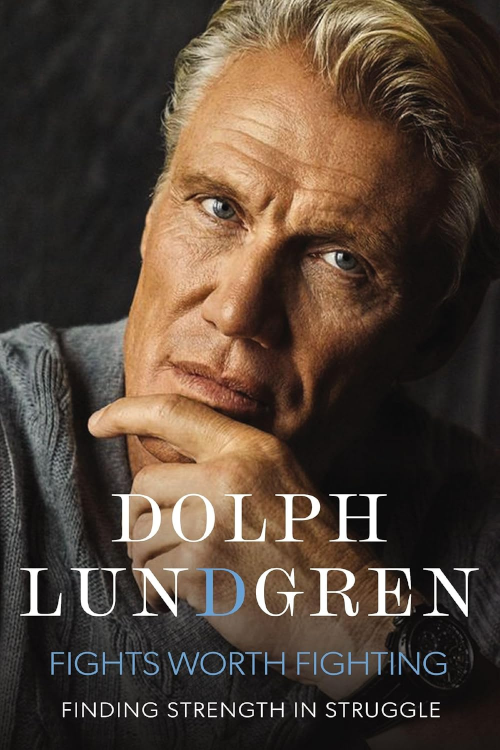
4. KATE CAPSHAW TURNED DOWN THE LEAD.
Kate Capshaw said no to playing Ed in Raising Arizona—and later regretted the decision. She also notably turned down the role of Diane Chambers on Cheers.
9. THE FILMMAKERS GOT EXPERIMENTAL WITH THEIR CAMERA TECHNIQUES.
Wanting to have as many options as possible in the editing room, the Coens and their cinematographer, Barry Sonnenfeld, decided at one point to have Cage run through the house while holding a camera towards himself. After seeing the results, they was decided it was too weird.

Janet Burns and Mental_Floss present 16 Earth-Shattering Facts About Independence Day. Here are three of my favorites…
2. THE FILM LOST ITS MILITARY SUPPORT DUE TO ITS AREA 51 REFERENCES.
In its roundup of insights from the Independence Day DVD commentary, Film School Rejectspoints out that the U.S. military had initially agreed to support the film’s production by offering greater access to military facilities and consultation from real-life officers, soldiers, and pilots. However, according to the film’s producer and co-writer Dean Devlin, the military withdrew its support after learning about the script’s multiple references to Area 51 being a hub for extraterrestrial projects.
5. THE COMPUTER VIRUS THAT SAVES THE DAY IS ALSO A REFERENCE TO THE WAR OF THE WORLDS.
In both the novel and film versions of The War of the Worlds, mankind’s biggest guns fail to take down Martian attackers. Instead, it’s tiny viruses in our atmosphere—mostly harmless to humans, but foreign to Martian immune systems—that finally do the job. In Independence Day, too, Bill Pullman’s presidential order to “nuke the bastards” doesn’t even make a dent in the aliens’ front, but a cunning (if confusing) computer virus manages to destroy the invaders at last.In the case of Independence Day’s viral “Hail Mary,” fans have raised criticism—and plenty of eyebrows—over the years regarding just how on Earth David Levinson (played by Jeff Goldblum) could have drummed up a computer virus that affects alien technology so quickly. Devlin offered some answers during a 2014 Reddit AMA:
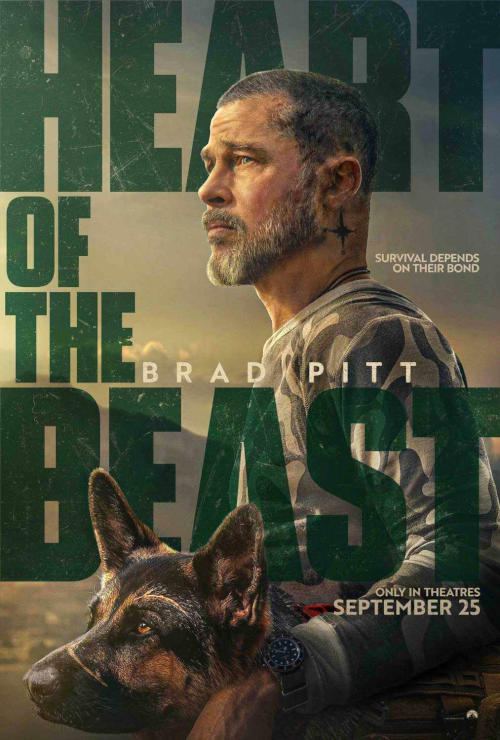
“Okay: what Jeff Goldblum’s character discovered was that the programming structure of the alien ship was a binary code. And as any beginning programmer can tell you, binary code is a series of ones and zeroes. What Goldblum’s character did was turn the ones into zeroes and the zeroes into ones, effectively reversing the code that was sent.”
Cracked notes that there was also a seven-minute scene that would’ve addressed this issue for viewers from the very beginning, and which suggests that modern computers in the Independence Day universe are descended from a reverse-engineered version of recovered alien tech courtesy Area 51. Unfortunately, that scene was cut from the final release of the film, only adding to viewers’ confusion.
11. MATTHEW PERRY DROPPED OUT OF THE FILM. BUT HIS DAD HAD A ROLE.
Film School Rejects reports that the role of Captain Jimmy “Raven” Wilder, which was eventually played by Harry Connick Jr., was originally offered to Matthew Perry. He pulled out before shooting began, though, making his father, John Bennett Perry, who played a Secret Service agent, the only Perry in the film.