43 Hidden Ghosts You (May) Have Missed in “The Haunting of Hill House”

Thanks to IMDb, here are 43 Hidden Ghosts You (May) Have Missed in The Haunting of Hill House.
Previews and Reviews that are Z's Views
Thanks to IMDb, here are 43 Hidden Ghosts You (May) Have Missed in The Haunting of Hill House.

Scott Beggs and Mental Floss present 10 Fascinating Facts About It Follows. Here are three of my favorites…
1. ITS TIME PERIOD DOESN’T FEEL REAL.
David Robert Mitchell, production designer Michael Perry, and costume designer Kimberly Leitz coordinated to throw us off-balance without us even realizing it. Almost none of the young characters use cell phones, but they exist—and Yara (Olivia Luccardi) has that clamshell e-reader. The vintage cars all look brand-new, but people also have cars from the 2010s. It’s presumably modern day, but all the TVs are from the 1980s, and all the movies the kids watch are classics. Characters also wear bathing suits or heavy winter coats on the same day without appearing too hot or cold. Essentially the movie takes place during a stretch of impossible weather during an unreal era, making it impossible for you to find your footing. (Craig – This is genius!)
7. ONE OF THE MONSTERS IS JAY AND KELLY’S FATHER.
The monster takes on the form of a middle-aged man when Jay and Kelly try to kill it at the pool. In an incredibly subtle moment, Jay refuses to tell Kelly (Lili Sepe) what the monster has taken the form of, but if you rewatch the movie, you’ll see that the middle-aged man is their father, who is featured in several family photographs in the house but completely absent from their lives. Some viewers theorize he killed himself, and others see his throwing appliances at her in the pool as a nod toward possible abuse, but Jay is definitely protecting her sister.
4. THE PLAN TO KILL THE MONSTER IS TERRIBLE. BUT THAT’S ON PURPOSE.
Jay and her friends plot to electrocute the monster in a pool even though they don’t know anything about what might weaken it, and they were warned directly that it’s not dumb. “It’s the stupidest plan ever!” Mitchell told Vulture. “It’s a kid-movie plan. It’s something that Scooby Doo and the gang might think of, and that was sort of the point. What would you do if you were confronted by a monster and found yourself trapped within a nightmare?”Mitchell specifically wanted to avoid the trope of the perfect nugget of information about the monster’s vulnerabilities magically dropping into the gang’s lap.

Rob Hunter and Film School Rejects present 22 Things We Learned from Joe Dante’s ‘Invasion of the Body Snatchers’ Commentary. Here are three of my favorites …
11. Sam Peckinpah, who has a small role in the film, was apparently very quiet on set. He can be seen in the basement at 37:32.
13. They disagree over when exactly Dr. Dan Kauffman (Larry Gates) became a pod person. Dante thinks he’s one for the first time when Miles and Becky arrive in their bathrobes, but McCarthy says he’s been one since the earlier car ride. “Hmm, interesting,” says Dante, clearly not believing him but choosing instead to be a gentleman and a fan.
16. Siegel once snuck into Wynter’s house and hid a pod prop beneath her bed. No one challenges her on the commentary to prove she’s still human.
This version of Invasion of the Body Snatchers is one of my favorite horror films. I fondly remember watching it many times over the years — with my favorite viewings being hosted by Sammy Terry late at night at my grandparents house.

Zack Sharf and IndieWire present The Most Popular Horror Films in America: New Study Reveals Each State’s Most Talked-About Title. Here they are (with my comments)…
Alabama: “Halloween” (A classic!)
Alaska: “Little Shop of Horrors” (Comedy over horror)
Arizona: “What Ever Happened to Baby Jane” (Arizona does have a lot of retirees)
Arkansas: “The Thing” (Now we’re talking!)
California: “The Orphanage” (Wonder if the latest border separations influenced this…)
Colorado: “The Shining” (When a movie is made in your state…)
Connecticut: “Pan’s Labyrinth” (Ok…)
Delaware: “The Birds” (Another classic!)
District of Columbia: “The Exorcist” (The movie that scares you most after watching it…)
Florida: “This Is the End” (Comedy over horror)
Georgia: “Get Out” (A modern day classic…)
Hawaii: “The Exorcist” (See District of Columbia)
Idaho: “The Birds” (See Delaware)
Illinois: “The House of the Devil” (Huh?)
Indiana: “Frankenstein” (My birth state goes with a classic!)
Iowa: “Evil Dead 2” (Groovy!)
Kansas: “Shaun of the Dead” (Comedy over horror)
Kentucky: “Evil Dead 2” (See Iowa)
Louisiana: “Get Out” (Interesting that GA and LA are both Southern States… “They’re on to us!”)
Maine: “The Host” (Surprised it wasn’t a Stephen King adaptation)
Maryland: “Blair Witch Project” (When a film is made in your state…)
Massachusetts: “The Silence of the Lambs” (Is SotL really a horror film?)
Michigan: “Near Dark” (Well, played Michigan.)
Minnesota: “The Silence of the Lambs” (See Massachusetts)
Mississippi: “Drag Me to Hell” (Seems redundant since you’re in Mississippi. – Just kidding!)
Missouri: “The Silence of the Lambs” (See Minnesota)
Montana: “Young Frankenstein” (Comedy over horror. How about A&C Meet Frankenstein?)
Nebraska: “King Kong” (A classic)
Nevada: “Shaun of the Dead” (See Montana)
New Hampshire: “Invasion of the Body Snatchers” (The original or the remake? The original.)
New Jersey: “The Silence of the Lambs” (Seems to be a state favorite. But is it really horror?)
New Mexico: “Bride of Frankenstein” (A well deserved classic.)
New York: “Psycho” (A modern – does the 60’s still count as modern? – classic.)
North Carolina: “Halloween” (John Carpenter’s classic – don’t accept substitutes.)
North Dakota: “Aliens” (A great movie!)
Ohio: “The Silence of the Lambs” (Ok. I get it. I give up. SotL is Horror!)
Oklahoma: “This is the End” (Comedy over horror.)
Oregon: “A Girl Walks Home Alone at Night” (Sounds like the start of a joke.)
Pennsylvania: “The Silence of the Lambs” (I’ve already conceded.)
Rhode Island: “The Love Witch” (Sounds like a 60’s drive-in movie)
South Carolina: “The Loved Ones” (The second feature to “The Love Witch” at the drive-in.)
South Dakota: “Cabin in the Woods” (Now we’re talking.)
Tennessee: “The Witch” (Ok.)
Texas: “Texas Chainsaw Massacre” (Another modern (?) classic.)
Utah: “Zombieland” (Comedy over horror)
Vermont: “The Exorcist” (Scariest movie ever.)
Virginia: “Drag Me to Hell” (Or Mississippi. – Again, I’m kidding!)
Washington: “Shaun of the Dead” (We like our horror played for laughs.)
West Virginia: “A Nightmare on Elm Street” (Pleasant nightmares!)
Wisconsin: “Shaun of the Dead” (See Washington.)
Wyoming: “The Babadook” (That’s the best you’ve got?)
I’m surprised ot a single state picked: Night of the Living Dead; 28 days later; or World War Z?

Johnny Hughes and Goliath present Things You Probably Never Knew About The Sopranos. Here are three of my favorites …
10. Mob Attention
The Sopranos was lauded for its authenticity but the show’s realistic depiction of mob activities attracted the attention of real-life gangsters. As writer and executive producer Terence Winter told Vanity Fair in a wide-reaching 2012 interview, one FBI agent told him that he’d heard real-life mobsters talking about the show over wire taps and that they were convinced The Sopranos writers had an informant on the inside because the show was too accurate.“We would hear back that real wiseguys used to think that we had somebody on the inside. They couldn’t believe how accurate the show was.” Fortunately, no hits were ever carried out on Chase, Winter, or the rest of The Sopranos creative team!
8. Paulie Was Based on the Actor Who Played Him
Paulie “Walnuts” Gualtieri is one of the many brilliant characters on the show. But as it turns out, he is actually very similar to the actor that portrays him – Tony Sirico. Funny yet also extremely dangerous and violent, Sirico was also a criminal with 28 arrests at the time he was cast (with 27 acting jobs). Not only was it a life of crime that made these two similar, but Sirico also states that he is also a neat-freak and lived at home with his mother. This was also true of his character, and contributed to some of the comedy in the show. Due to his eccentricities and OCD but also violent streak, it made Paulie one of the most memorable characters on the show and you can hear his voice simply by looking at a picture of him. This is largely down to Sirico’s brilliant portrayal of the familiar character.
6. James Gandolfini Paid Each Actor After Contract Disputes
Tony Soprano may not have been the nicest of people, but James Gandolfini clearly was. Following the conclusion of Season Four, tensions ran high between the cast and the studio as there were disputes over payment. This resulted in delays before Season Five, after a staged sit-in shut down the set. To ease tensions and get everybody back to work, James Gandolfini (who had been paid) split his bonus with all the cast members, seeing them earn $33,333 each. Whilst Tony is undoubtedly the star a key reason why The Sopranos is deemed such an incredible show is that it has many expertly written characters who all contribute to the story – making each one hugely valuable. This generous act from Gandolfini is just one of many stories of his kindness and generosity.

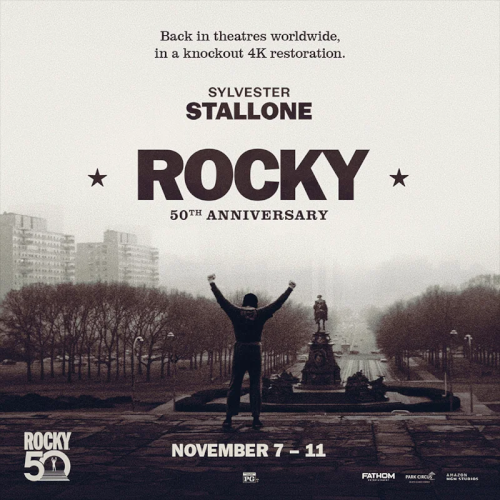
Here are 9 Things You (Probably) Didn’t Know About Rocky. My guess is that since you’re reading this here, you do know!
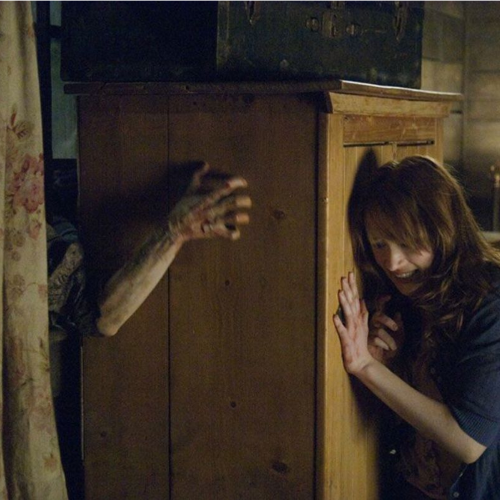
Scott Beggs and Mental Floss present 10 Twisted Facts About The Cabin in the Woods. If you haven’t seen The Cabin in the Woods, you’re in for a treat. It is one of the most unusual horror films in recent years. I loved how it was able to hit all of the expected genre cliches in a totally unexpected way. With that said, here are three of my favorite Twisted Facts About The Cabin in the Woods.
1. THE OPENING SCENE WAS MEANT TO CONFUSE AUDIENCES.
“Opening the movie with this scene is one of my favorite things that we accomplished,” co-writer/producer Joss Whedon said in the DVD commentary about the early sequence where Bradley Whitford and Richard Jenkins chit-chat in a hallway about childproofing cabinets and an office betting pool. They purposefully wanted people to think they’d sat down for the wrong movie and had to convince the studio that people wouldn’t walk out.
5. DREW GODDARD AND JOSS WHEDON MADE IT AS A “LOVING HATE LETTER.”
The reason The Cabin in the Woods works for horror fans and non-fans alike is that it hews closely to the classic rules for the genre to deliver the scares, but also mocks them mercilessly. Whedon saw it as both an exercise in how much fun they could have (they wrote it over a single weekend) and as a serious critique of a genre they loved that had descended under a wave of needless torture and stupid characters crafted solely to be killed in terrible ways.
8. THE FULL LIST OF MONSTERS INCLUDES A NOD TO SIN CITY.
There are too many baddies to name here (so here’s a list), but among the witches, sexy witches, mermen, and unicorns, there’s Kevin. He’s a kind-seeming dude who might show you where the movie section is in Best Buy but dismembers people during his time off. It’s possible that he’s a reference to the relaxed, quietly sadistic slasher played by Elijah Wood in the movie version of Sin City.

SyFy Wire presents Demolition Man: Everything You Didn’t Know.

Shark Tank, the show where regular folks pitch products to multi-millionaire investor “Sharks” is now in its tenth year. The series has presented hundreds of budding entrepreneurs and many of them were able to make deals earning well over $100 million of the Sharks’ cash.
But did you ever wonder which of the Sharks: Barbara Corcoran, Robert Herjavec, Kevin (“Mr. Wonderful”) O’Leary, Daymond John, Mark Cuban and Lori Greiner made the most profitable deals?
Gary Levin at USAToday recently posted ‘Shark Tank’ Exclusive: These are the 20 Best-Selling Products Ever Featured on the Show and the results weren’t even close.
I was a bit surprised how Lori Greiner dominated the best-selling items. While Kevin O’Leary may be Mr. Wonderful, Lori Greiner is definitely Ms. Profitable!

Jake Rossen and Mental Floss present 11 Fascinating Facts About Sam Elliott. I actually met Sam Elliott before he made the big time. He was in Daytona Beach during Spring Break to promote Lifeguard. Mr. Elliott was extremely down-to-Earth and easy to talk with. Who knew that Lifeguard would lead to the career he’s had? (And if you click over to the original post, you’ll learn it almost didn’t.) At any rate, here are three of my favorites…
HE PLAYED EVEL KNIEVEL IN AN UNSOLD TV PILOT.
After moving to Hollywood in the late 1960s, Elliott scored a small role in a big film: 1969’s Butch Cassidy and the Sundance Kid. (He’s glimpsed only fleetingly during a card game.) In 1974, he had the opportunity to be the featured star, portraying daredevil legend Evel Knievel in a CBS television pilot. The series never went into production but wound up airing as a one-off special that March. Elliott went on to guest star in several series, including Hawaii Five-0 and Gunsmoke, before landing a lead role in a feature, 1976’s Lifeguard.
HE GOT PROPOSITIONED. A LOT.
Going from audition to audition early in his career, Elliott told syndicated columnist Rex Reed in 1980 that the proverbial casting couch was real. “You cannot believe the casting couch stories I could tell you, man,” he said. “The clichés are all true. I’ve had propositions from men and women, and I’ve turned them all down. It’s probably hurt me, but I’m the one who has to live with that guilt. My conscience is clear, even though my career is still not setting the world on fire.”
HE DOESN’T REALLY GET THE FASCINATION WITH HIS MUSTACHE.
For most of his roles, Elliott sports a soup strainer of a mustache: Thick, plush, well-weathered. When he goes without—as in his turn as a villain on FX’s Justified—it can be a little disarming, in the same way Superman looks a little odd without his cape. But Elliott doesn’t quite understand the cult of hair around his facial style choices. “The whole mustache thing is a mystery to me,” he told Vanity Fair in 2017. “I’m working on this thing now, A Star is Born—somebody showed me on their cell phone one day that there was this contest online between me and [Tom] Selleck about who had the best mustache. It’s so bizarre.” (For the record, Elliott won’t comment on who has the better lip warmer.)
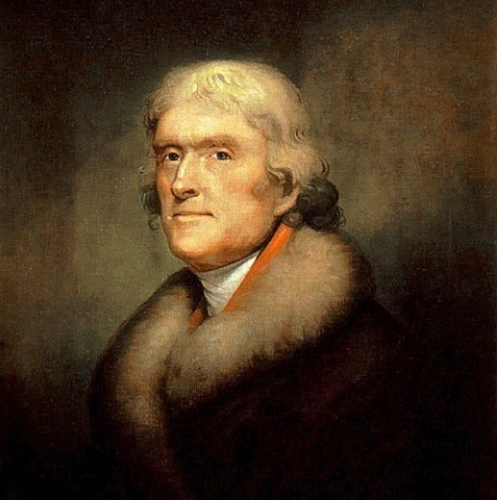
Jake Rossen and Mental Floss present 25 Things You Might Not Know About Thomas Jefferson. Here are three of my favorites…
2. HIS GREATEST WORK WAS A STUDY IN CONTRADICTION.
As a member of the Second Continental Congress and the “Committee of Five” (a group consisting of John Adams, Roger Sherman, Benjamin Franklin, Robert Livingston, and Thomas Jefferson brought together for this purpose), Jefferson was tasked with writing the Declaration of Independence, an argument against the 13 colonies being held under British rule. While the Declaration insisted that all men are created equal and that their right to liberty is inherent at birth, Jefferson’s plantation origins meant that he embraced the institution of slavery. In any given year, Jefferson supervised up to 200 slaves, with roughly half under the age of 16. He perpetuated acts of cruelty, sometimes selling slaves and having them relocated away from their families as punishment. Yet in a book titled Notes on the State of Virginia (which he began writing during his stint as governor and published in 1785), Jefferson wrote that he believed the practice was unjust and “tremble[d]” at the idea of God exacting vengeance on those who perpetuated it. Though Jefferson acknowledged slavery as morally repugnant—and also criticized the slave trade in a passage that was cut from the Declaration of Independence “in complaisance to South Carolina and Georgia”—he offered no hesitation in benefiting personally from it, a hypocrisy that would haunt his legacy through the present day.
11. HIS WIFE HAD A CURIOUS CONNECTION TO HIS MISTRESS.
Jefferson was married for just 10 years before his wife, Martha Wayles, died in 1782 at age 33 of unknown causes. Curiously, Jefferson’s involvement with his slave, Sally Hemings, was part of Martha’s convoluted family tree. Martha’s father, John Wayles, had an affair with Sally’s mother, Elizabeth Hemings—meaning most historians think Sally and Martha were half-sisters.
18. HE PROBABLY HAD A FEAR OF PUBLIC SPEAKING.
Without today’s methods of addressing the public—radio, television, and Twitter—Jefferson was largely free to succumb to his reported phobia of speaking in public. While working as a lawyer, he found himself unable to deliver orated arguments as eloquently as he could write them. When he did speak, it was apparently with a meek disposition. One listener to his inaugural address in 1801 described Jefferson’s speech as being in “so low a tone that few heard it.”
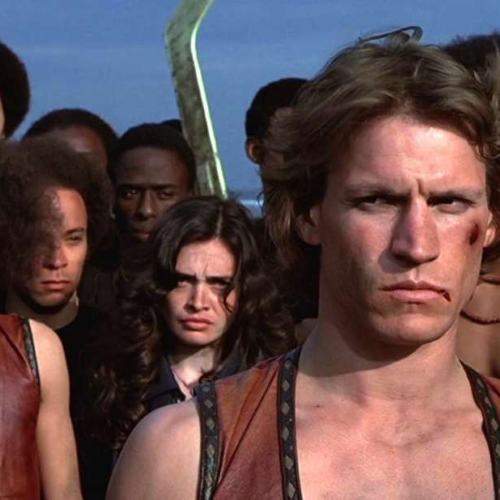
Paul Schrodt and Mental Floss present 15 Things to Look For the Next Time You Watch The Warriors. Here are three of my favorites…
8. THIS IS ONE LONG CHASE FROM A CHASE MASTER.
The Warriors is one of the more exceptional works from director Walter Hill, who earned a deserved reputation for his hard-boiled tough-guy movies made with elegance. While he’ll always be most famous for 48 Hrs., the hit starring Eddie Murphy and Nick Nolte, his other features like The Driver and The Long Riders are worth seeking out. In particular, The Driver, featuring Ryan O’Neal and Bruce Dern, perfected the car-chase move long before Ryan Gosling’s Drive liberally took inspiration from it.
9. YOU’RE WATCHING REAL GANG MEMBERS.
The real action in The Warriors kicks off with an impressively epic meeting of various gangs in the Bronx’s Van Cortlandt Park (though it was actually filmed in Riverside Park). Cyrus, the leader of the city’s most powerful gang, invites everyone in an attempt to forge an alliance and increase the gangs’ leverage over police, before being abruptly shot and killed. Hill refers to it as “our big production number.” In order to pull off the sequence, the filmmakers asked real gangs to be extras. So The Warriors feels legit for good reason.
2. IT’S NOT A VERY FAITHFUL ADAPTATION, THOUGH.
After being handed Yurick’s novel, director Walter Hill immediately had an idea for a fun movie. “I felt very strongly that it certainly was not a very realistic book, and I wanted to make it even less so,” he told Esquire. “I wanted to take it into a fantasy element, but at the same time add some contemporary flash.” The Warriors in the novel are actually the Coney Island Dominators, a black and Hispanic gang. In Hill’s cinematic rendering, the main crew is a diverse group of white and nonwhite misfits.

Matthew Jackson and Mental Floss present 10 Fascinating Facts About Double Indemnity. Not only is Double Indemnity one of my favorite noirs, it is one of my favorite films. Period. Speaking of favorites, here are three of my favorite Double Indemnity facts…
1. IT WAS INSPIRED BY A REAL MURDER.
Before he began making serious headway as a writer of fiction, Double Indemnity author James M. Cain worked as a journalist in New York, and it was there that he stumbled upon the real-life murder case of Albert Snyder, who was killed in 1927 by his wife, Ruth Brown Snyder, and her lover, a corset salesman named Henry Judd Gray. Before committing the murder, Brown took out a $100,000 life insurance policy on her husband, then tried to kill him several times, but was unsuccessful. She ultimately turned to Gray for help in the murder plot, and both were ultimately executed for the murder in 1928.Cain used the case as the inspiration for two of his earliest and most famous stories. His first novel, 1934’s The Postman Always Rings Twice, is about a man who falls in love with a beautiful woman and then helps her—unsuccessfully, at first—murder her older husband. The novel quickly made its way to Hollywood, where the Hays Production Code—which provided moral oversight for movie production—was just beginning to be strictly enforced, so the story languished without a film adaptation for years.
In the meantime, Cain wrote Double Indemnity, another story of a man swept up in a plot to murder his lover’s husband, this time with an insurance scam added. The story was serialized in the pages of Liberty magazine in 1936, but was first submitted as a potential Hollywood property in 1935. Double Indemnity finally made it to the screen in 1944, and The Postman Always Rings Twice followed with its own well-received film version in 1946. (It was remade in 1981 with Jack Nicholson and Jessica Lange, from a script by David Mamet.)
7. STUDIO EXECUTIVES HATED STANWYCK’S WIG.
Stanwyck’s performance in Double Indemnity was hailed as one of her best even in 1944, when critics and executives were finally seeing the completed film, but there was one complaint that kept going around, and that some viewers still notice: her hair. Though it may seem like an immovable part of the film now, the blonde wig Phyllis wears was a noticeable change to Stanwyck’s overall look at the time, and some viewers complained that it looked too cheap and fake. One executive at Paramount, after seeing some early footage, commented: “We hire Barbara Stanwyck and here we get George Washington.”Having Stanwyck go blonde for the film was Wilder’s idea, and while he told people for years that the wig was chosen to intentionally convey something showy and even trashy about Phyllis, he later admitted that was just the answer he made up after realizing he made a mistake with the choice of wig a bit too late.
“But after the picture is half-finished, after I shot for four weeks with Stanwyck, now I know I made a mistake. I can’t say, ‘Look tomorrow, you ain’t going to be wearing the blonde wig.’ I’m stuck … I can’t reshoot four weeks of stuff. I’m totally stuck. I’ve committed myself; the mistake was caught too late. Fortunately it did not hurt the picture. But it was too thick, we were not very clever about wig-making. But when people say, ‘My god, that wig. It looked phony,’ I answer ‘You noticed that? That was my intention. I wanted the phoniness in the girl, bad taste, phony wig.’ That is how I get out of it.”
8. THE ORIGINAL ENDING FEATURED NEFF’S EXECUTION.
Cain’s original novella ends with the two lovers committing suicide together, but since suicide was forbidden by the Production Code, Wilder and Chandler had to develop an alternate ending, and came up with the notion that Neff would shoot Phyllis after she wounds him, and he would then return to the insurance office to record his confession, only to be discovered by Barton Keyes, a claims adjuster and co-worker. The film famously ends with Walter collapsed on the floor, with Keyes lighting a cigarette for him as sirens approach outside, but the original script actually went further, showing Neff’s arrest and his eventual execution in a gas chamber. Wilder even shot the gas chamber ending, but cut it for two reasons: The PCA was concerned the details were too gruesome, and Wilder himself felt that it was ultimately unnecessary to the story.“I shot that whole thing in the gas chamber, the execution, when everything was still, with tremendous accuracy. But then I realized, look this thing is already over. I just already have one tag outside that office, when Neff collapses on the way to the elevator, where he can’t even light the match,” he recalled. “And from the distance, you hear the sirens, be it an ambulance or be it the police, you know it is over. No need for the gas chamber.”
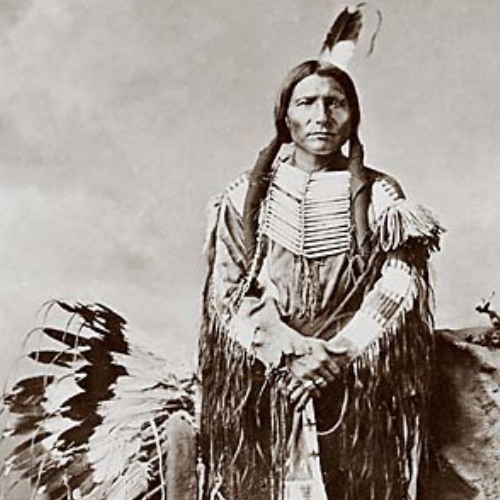
Lucas Reilly and Mental Floss present 12 Things to Know About Crazy Horse. Here are three of my favorites…
1. “CRAZY HORSE” WAS NOT HIS FIRST GIVEN NAME.
Born around 1840 to Lakota parents, Crazy Horse was originally named Cha-O-Ha, or Among the Trees. (His mother, however, insisted on calling him “Curly.”) When Cha-O-Ha reached maturity, he was given the name held by his father and grandfather—Ta-Sunko-Witko, or Crazy Horse.
9. HIS PERFORMANCE AT THE BATTLE OF THE LITTLE BIGHORN WAS LEGENDARY.
And we mean legendary—nobody is sure what, exactly, Crazy Horse did. But there are rumors. An Arapaho warrior named Water Man said Crazy Horse “was the bravest man I ever saw. He rode closest to the soldiers, yelling to his warriors. All the soldiers were shooting at him, but he was never hit.” Another Native American soldier said, “The greatest fighter in the whole battle was Crazy Horse.”
12. IF COMPLETED, THE CRAZY HORSE MEMORIAL COULD BE THE WORLD’S LARGEST SCULPTURE.
Under construction since 1948, the Crazy Horse Memorial was commissioned by Henry Standing Bear, the Oglala Lakota chief in the late 1930s, as a response to Mount Rushmore. Today, the memorial—built by a non-profit that refuses government funding—is still incomplete. When it is finished, the monument carved into the side of South Dakota’s Thunderhead Mountain will stand 563 feet high.
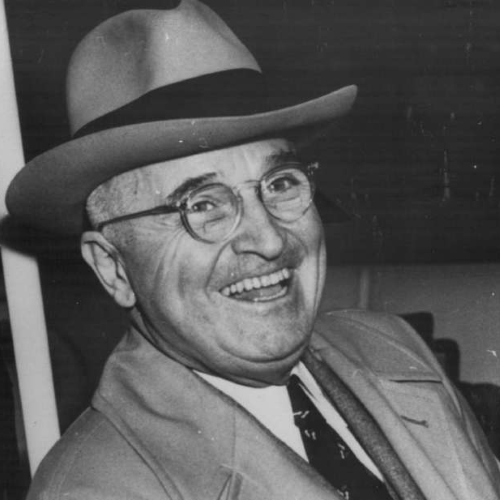
Jake Rossen and Mental Floss present 10 Things You May Not Know About Harry S. Truman. Here are three of my favorites…
1. THE “S” DOESN’T REALLY STAND FOR ANYTHING.
Truman was born in Lamar, Missouri on May 8, 1884 to mule trader and farmer John Anderson Truman and Martha Ellen Truman. After some deliberation, John and Martha realized they couldn’t decide on a middle name for their first child, so they settled on “S.” His maternal grandfather was named Solomon, while his paternal grandfather had a middle name of Shipp. “S” was his parents’ compromise. (And, since his S is a name of sorts rather than an initial, it can stand alone without a period, though stylistically, it’s most often seen with one.)
5. HE PUSHED FOR UNIVERSAL HEALTH INSURANCE.
Truman anticipated much of the contemporary debates over health care spending. Just seven months into office, he began advocating for care facilities in underrepresented rural areas and more public health services. He wanted Americans to pay monthly fees that would go toward health care that would cover costs if and when they fell ill. It would not be “socialized medicine,” he argued, since the doctors weren’t government employees. But the American Medical Association resisted, instead promoting private insurance. With Democrats losing power in the Senate and the House, Truman’s plans withered. He later referred to his failed attempt for national health insurance to be one of the biggest defeats of his presidency.
7. TWO ASSASSINS TRIED TO KILL HIM OUTSIDE THE WHITE HOUSE.
The morning of November 1, 1950 could have been the last of Truman’s life. Two members of the Puerto Rican National Party, Oscar Collazo and Griselio Torresola, traveled from the Bronx to Washington with plans to assassinate the president. They believed the move would bring attention to Puerto Rico’s struggle for independence. Both wielding guns, the two idled outside Blair House, the residence across the street from the White House where Truman and his family were staying during renovations. A gun fight ensued—a guard killed Torresola but later died of gunshot wounds himself. Collazo was shot but survived and later had his death sentence commuted to life imprisonment by Truman (President Carter would later commute that sentence, too, and Collazo was released in 1979). Truman was napping upstairs at the beginning of the altercation; he woke up, went to the window, and was shouted at to get down.