Category: Trivia

12 Surprising Facts About Bela Lugosi

Mark Mancini and Mental_Floss present 12 Surprising Facts About Bela Lugosi.  Here are three of my favorites…

4. UNIVERSAL DIDN’T WANT TO CAST HIM AS COUNT DRACULA.
The year 1927 saw Bela Lugosi sink his teeth into the role of a lifetime. A play based on the novel Dracula by Bram Stoker had opened in London in 1924. Sensing its potential, Horace Liveright, an American producer, decided to create an U.S. version of the show. Over the summer of 1927, Lugosi was cast as the blood-sucking Count Dracula. For him, the part represented a real challenge. In Lugosi’s own words, “It was a complete change from the usual romantic characters I was playing, but it was a success.” It certainly was. Enhanced by his presence, the American Dracula remained on Broadway for a full year, then spent two years touring the country.

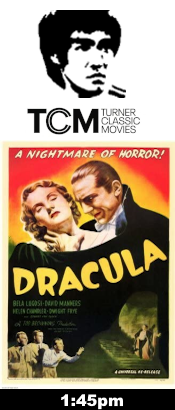
Impressed by its box office prowess, Universal decided to adapt the show into a major motion picture in 1930. Horror fans might be surprised to learn that when the studio began the process of casting this movie’s vampiric villain, Lugosi was not their first choice. At the time, Lugosi was still a relative unknown, which made director Tod Browning more than a little hesitant to offer him the job. A number of established actors were all considered before the man who’d played Dracula on Broadway was tapped to immortalize his biting performance on film.

6. HE TURNED DOWN THE ROLE OF FRANKENSTEIN’S MONSTER.
Released in 1931, Dracula quickly became one of the year’s biggest hits for Universal (some film historians even argue that the movie single-handedly rescued the ailing studio from bankruptcy). Furthermore, its astronomical success transformed Lugosi into a household name for the first time in his career. Regrettably for him, though, he’d soon miss the chance to star in another smash. Pleased by Dracula’s box office showing, Universal green-lit a new cinematic adaptation of Mary Shelley’s Frankenstein. Lugosi seemed like the natural choice to play the monster, but because the poor brute had few lines and would be caked in layers of thick makeup, the actor rejected the job offer. As far as Lugosi was concerned, the character was better suited for some “half-wit extra” than a serious actor. Once the superstar tossed Frankenstein aside, the part was given to a little-known actor named Boris Karloff.

Moviegoers eventually did get to see Lugosi play the bolt-necked corpse in the 1943 cult classic Frankenstein Meets the Wolf Man. According to some sources, he strongly detested the guttural scream that the script forced him to emit at regular intervals. “That yell is the worst thing about the part. You feel like a big jerk every time you do it!” Lugosi allegedly complained.

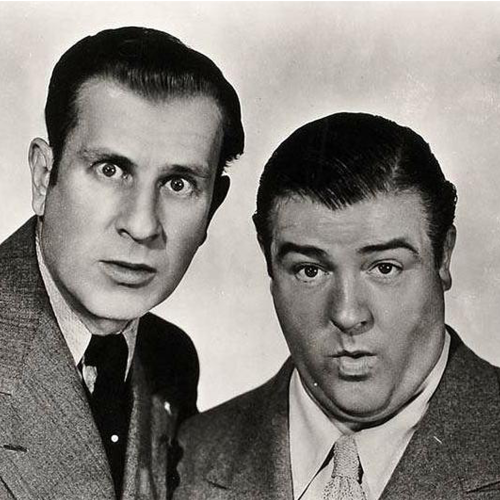
10. LUGOSI ALMOST DIDN’T APPEAR IN ABBOTT AND COSTELLO MEET FRANKENSTEIN—BECAUSE THE STUDIO THOUGHT HE WAS DEAD.
The role of Count Dracula in this 1948 blockbuster was nearly given to Ian Keith—who was considered for the same role in the 1931 Dracula movie. Being a good sport, Lugosi helped promote the horror-comedy by making a special guest appearance on The Abbott and Costello Show. While playing himself in one memorable sketch, the famed actor claimed to eat rattlesnake burgers for dinner and “shrouded wheat” for breakfast.

Aurora’s Monster Scenes Scandal!

When I was growing up most boys went through a model building phase.  Some kids liked cars others planes or ships, but I was always a fan of comic, movie, tv characters and monster models.

Aurora was the main company producing the model kits and in an effort to promote their product Aurora would hold…

…contests for custom kits, highlighting winners in monster magazines. By the 1960s, they had started noticing that a lot of submissions revolved around expansive, morbid scenarios: a mad scientist’s laboratory, or an execution motif. To Aurora, it was a clear indication that their consumers wanted context for their models… They began developing a line dubbed Monster Scenes. Using generic characters like the Victim, designers concocted elaborate scenarios that put the unfortunate captives in mortal peril.
What followed was a series of missteps…

  • Models featuring torture scenes
  • A Vampirella model that shipped unpainted and appeared nude
  • Labeling each box “Rated X for Excitement!”
  • and more

The model kits began shipping in 1971 and were an instant hit with kids, but parents and activist groups were up in arms even leading to a California law prohibiting the sale of torture toys.

If you’ve read this far you might want to check out Jake Rossen’s Nabisco’s X-Rated Toy Scandal of 1971 at Mental_Floss which provides a more in-depth look.


11 Fab Facts About The Beatles’ Revolver

Jeff Merron and Mental_Floss present 11 Fab Facts About The Beatles’ Revolver.  Here are three of my favorites…

7. IT WAS ALMOST TITLED ABRACADABRA.
All four Beatles liked that name, wrote Barry Miles in his Paul McCartney bio, Many Years From Now. Also considered: Four Sides of the Circle and Fat Man. Ringo, noting that the Rolling Stones had just come out with Aftermath, suggested After Geography. They finally settled on Revolver, because an album spins, man.

8. WITHOUT REVOLVER, THERE’D BE NO “BOHEMIAN RHAPSODY.”
Up until the spring of 1966, The Beatles had used a fairly conventional studio technique to make vocals sound richer: double tracking, in which the lead singer would simply record his vocals twice onto different tape tracks. But John Lennon hated doing this. So to accommodate him, EMI engineer Ken Townsend invented “automatic double tracking,” which allowed one performance to be recorded on two tape machines—with one delayed by about 100 milliseconds, automatically creating a nice, thick sound.

11. THEY NEVER PLAYED ANY PART OF THE ALBUM LIVE.
The Beatles were near the end of their touring days, but not quite. They began a 14-city North America circuit in Chicago on August 12, just four days after Revolver’s U.S. release. But they didn’t feel it was possible to reproduce the album’s technically sophisticated, studio-crafted songs on stage. The most recently recorded track that audiences heard was “Paperback Writer,” the number one hit single they had released on May 30, 1966. The Beatles’ last concert was on August 29, 1966, at Candlestick Park in San Francisco. But nobody outside the band knew it at the time.

13 Nostalgic Facts About American Graffiti

Eric D. Snider and Mental_Floss present 13 Nostalgic Facts About American Graffiti.  Here are three of my favorites…

3. CONTRARY TO POPULAR BELIEF, THERE IS NO ACTUAL CONNECTION BETWEEN AMERICAN GRAFFITI AND HAPPY DAYS.
Happy Days premiered five months after American Graffiti was released. It was set in the ’50s, had Ron Howard playing a teen very similar to his American Graffiti character, used “Rock Around the Clock” as its theme song, and even borrowed the American Graffiti font for the credits. You’d think that Happy Days was somehow a spin-off of the movie, but you’d be wrong. It actually began as an unsold pilot in 1971 and aired in 1972 as part of the anthology series Love, American Style. (Lucas watched it at some point when he was considering casting Howard in American Graffiti.) After the movie took off, and with ’50s nostalgia in high gear (Grease was burning up Broadway), ABC reconsidered the Happy Days pilot, ordered a series, and did everything they could to make it remind people of American Graffiti. It ran for 10 years and was one of the most popular sitcoms in TV history.

8. THE PRODUCER HAD TO BECOME MACKENZIE PHILLIPS’ LEGAL GUARDIAN FOR THE SHOOT.
Mackenzie Phillips was just 12 years old when she arrived to make the film, and though she had showbiz experience (her father, John Phillips, was in The Mamas & the Papas), neither she nor her parents realized that California law required her to have a guardian present. “They were almost going to have to recast me, but Gary Kurtz”—a producer on the film—”and his family said, ‘We’ll take her,'” Phillips said in 1999. ” So they went to the courts in San Francisco and got guardianship of me.” Phillips lived with the Kurtzes for the duration of the shoot and described it as a happy experience.

2. IT WAS SAVED FROM BECOMING A TV MOVIE BY THE GODFATHER.
Universal Pictures gave Lucas a budget of $600,000, or about $3.5 million in 2016 dollars, to make the movie—in other words, not very much. When Coppola came onboard as a producer shortly after the release of The Godfather, Universal gave Lucas another $175,000. Later, when the film was finished and had test-screened positively, Universal inexplicably wanted to drastically re-edit it and release it as a TV movie. Lucas objected but had no clout. Coppola, on the other hand—by this time an Oscar-winner—could make studio executives listen. He convinced them to do only a little bit of trimming (the deleted scenes were reincorporated for home video release) and to release the film theatrically.

Is This a Photo of the Alcatraz Prison Escapees?

The photo above is purported to be Clarence Anglin and John Anglin, two of the three convicts who escaped from Alcatraz prison in 1962.  This picture was reportedly taken in 1975 on a farm where they allegedly lived in Brazil.

The Alcatraz prison break is probably the most famous prison escape ever since it was thought to be impossible and the three convicts were never caught.  Of course the Clint Eastwood movie, Escape from Alcatraz, probably helped with public awareness a bit.

At any rate, if you’re interested you can see vintage photos of the convicts, their cells, escape route and more at  Could the Alcatraz Escapees Still Be Alive? Here Are Some of Historical Photos of The Great Escape from Alcatraz in 1962 at Vintage Everyday.

16 Things You May Not Know About Ringo Starr

Eddie Deenzen and Neatorama present 16 Things You May Not Know About Ringo Starr.  Here are three of my favorites…

10. In 1964, when the Beatles first came to America, Ringo was actually the most popular Beatle. At least he received the most fan mail of the four.

16. In 2015, Ringo was finally inducted into the Rock and Roll Hall of Fame (the Beatles had been inducted as a group in 1988). But now Ringo was (finally) elected on his own

3. Ringo was so sick as young boy, three times his doctors told his mother he wouldn’t survive the night. He was indomitable and did survive. Because of his incredible ability to survive, his grandfather’s nickname for him was “Lazarus.”

10 Facts About Jupiter That Will Blow Your Mind

Rebecca Harrington and Business Insider present 10 Facts About Jupiter That Will Blow Your Mind.  Here are three of my favorites…

  • Jupiter is twice as massive as all the other planets combined.


  • The planet has a swirling storm twice the width of Earth that’s raged for at least the last 150 years called the Great Red Spot.


  • As a gas giant, Jupiter is mostly made of hydrogen and helium, so its surface isn’t solid.

15 Not-So-Simple Facts About “Blood Simple”

Garin Pirnia and Mental_Floss present 15 Not-So-Simple Facts About Blood Simple.  Here are three of my favorites…

1. ITS TITLE WAS INSPIRED BY DASHIELL HAMMETT’S RED HARVEST.
“It’s an expression he used to describe what happens to somebody psychologically once they’ve committed murder,” Joel Coen told Time Out. “They go ‘blood simple’ in the slang sense of ‘simple,’ meaning crazy. But it’s left up to the audience to ponder the implications; they’re never spelled out in the film itself.”

3. THE COENS—AND MANY OF THE CAST AND CREW—HAD NEVER BEEN ON A FILM SET BEFORE.
Joel Coen admitted in My First Movie, “The first day of shooting on Blood Simple was the first time I’d ever been on a feature movie set in any capacity, even as a visitor.” Coen had previously worked as an assistant editor on horror films, including 1981’s The Evil Dead. Coen mentioned how Sonnenfeld would throw up after looking at the dailies, because he was so nervous working on the film. “Everyone was in the same boat,” Joel said. “The gaffer had never gaffered a feature. The sound guy, the mixer on the set, had never mixed a feature.”

4. THE COENS CHOSE TO MAKE A FILM NOIR BECAUSE OF THE GENRE’S PRACTICALITY.
The Coens liked hard-boiled fiction authors James M. Cain, Dashiell Hammett, and Raymond Chandler, and used them to their advantage in writing the script. “It’s certainly a genre that is entertaining, and we also picked it for very practical reasons,” Ethan said. “We knew we weren’t going to have a big budget. The financing would not allow it. We could build something on the genre and the appeal it has.”

“It’s also a genre that allows you to get by rather modestly in some ways,” Joel added. “You can limit the number of characters, put them into a confined set. There’s no need to go for large-scale effects or scatter them through the film, and those cost a lot of money. So it was a pragmatic decision that determined what film we would make.”

High Sierra (1941) / Z-View

High Sierra (1941)

Director:  Raoul Walsh

Screenplay: John Huston and W.R. Burnett from a novel by W.R. Burnett

Stars: Ida Lupino, Humphrey Bogart, Alan Curtis, Henry Hull and Cornell Wilde.

The Pitch: “Raoul Walsh. John Huston. WR Burnett. Ida Lupino. Bogart.”

Tagline: “The Blazing Mountain Manhunt for Killer ‘Mad-Dog’ Earle!”

The Overview:  Beware of Spoilers…

Roy Earl [Bogart] an infamous bank robber [think Dillinger] is sprung from prison by an old crime boss who wants Earl for a big robbery.  Obligated for his freedom, Earl drives west to check out the set up.

Once he meets up with his old boss, Earl discovers the robbery plan is good and the money is right, but his partners are young, inexperienced thugs looking to make a name for themselves… plus they have a woman [Lupino] with them and everyone knows women weaken legs and crime plans don’t work out.

Before it is over there will be a robbery, people killed, double-crosses and a manhunt for the “Mad Dog Killer” Roy Earl.

Rating: 4 of 5 stars.

11 Complicated Facts About “Shaft”

Kristin Hunt and Mental_Floss present 11 Complicated Facts About Shaft.  Here are three of my favorites…

1. A WHITE NEWSPAPER REPORTER CREATED SHAFT.
John Shaft made his debut in Shaft, a novel by Ernest Tidyman. Tidyman was a reporter for The Cleveland News, The New York Post, and The New York Times before he began writing the Shaft series, which included seven detective stories. Along with John D.F. Black, he adapted his first Shaft book into the screenplay for the first film. He would later go on to write the screenplays for The French Connection (1971) and High Plains Drifter (1973) as well as Shaft’s Big Score! (1972) and the Shaft TV series (1973-1974). His work earned him an NAACP Image Award.

3. SHAFT’S MUSTACHE WAS NON-NEGOTIABLE.
The Los Angeles fiasco was behind him, but Parks immediately faced another scare when he spied his star, Richard Roundtree, heading to the bathroom with a towel and razor. Producer Joel Freeman had asked him to get rid of his soon-to-be legendary mustache. Parks told Roundtree emphatically, “Shave it off and you’re out of a job.” And with that, the ‘stache stayed in the picture.

11. THERE’S A SHAFT COMIC BOOK SERIES.
There hasn’t been a new Shaft movie since the 2000 reboot starring Samuel L. Jackson, but Dynamite Entertainment began printing a Shaft comic book series in 2014. The comics are penned by David F. Walker, who also published the first Shaft novel in over 40 years this February. The latest comic series finds Shaft as a part-time consultant on a blaxploitation movie; Walker intended this meta subplot to be a commentary on “clueless producers who think they have their finger on the pulse of blackness.” And yes, that was an intended slam on the upcoming remake.

15 Out-of-this-World Facts About “Men in Black”

Garin Pirnia and Mental_Floss present 15 Out-of-this-World Facts About Men in Black.  Here are three of my favorites…

9. MEN IN BLACK IS THE HIGHEST-GROSSING ACTION BUDDY COMEDY OF ALL TIME.
Rush Hour 2 almost dethroned Men in Black from the top spot in 2001, but with a gross of $250 million, Men in Black held onto its position. 22 Jump Street comes in third, and Men in Black II and Men in Black 3 rank fourth and fifth on the list, respectively. On the sci-fi comedy chart, the Men in Black movies corner the top three positions.

11. WILL SMITH CAME UP WITH THE PLOT FOR MEN IN BLACK 3 WHILE FILMING MEN IN BLACK II.
One night while on the set of Men in Black II, Smith told Sonnenfeld his idea for a third film. “At the beginning, something has happened and Agent Kay is missing and I have to go back to the past to go try to save young Agent Kay,” Sonnenfeld recalled to CNN. “In doing so, myself and the audience find out all sorts of secrets about the world that we didn’t even know were out there.” All Sonnenfeld could muster was, “Can we just finish this one?” Over a decade later, the plot to Men in Black 3 did revolve around time travel and saving a young Agent Kay, played by Josh Brolin.

15. THE RAY-BAN GLASSES WORN IN THE MOVIE ALMOST DIDN’T GET A SHOUT OUT.
The sunglasses Smith and Jones sport in the film are Ray-Ban Predator II glasses. According to a 1997 article in Promo Magazine, a special coating was applied to the glasses to limit reflection, which meant removing the logo. Without the logo, nobody would know what type of glasses they were (Sonnenfeld edited out a previous line in the movie where Jones says “that’s why they call them Ray-Bans”). Ray-Ban tried to convince the studio to reinstate the logo, but they refused. After some coercing, Smith compromised and name dropped the company in the “Men in Black” song: “Black tie with the black attitude / New style, black Ray-Bans, I’m stunnin’, man.” The popularity of the movie and the song’s music video gave the $100 Predators a four- to fivefold increase in sales, and a boost to Ray-Ban’s entire catalog of shades.

10 Huge Facts About “Big Trouble in Little China”

Roger Cormier and Mental_Floss present 10 Huge Facts About Big Trouble in Little China.  Here are three of my favorites…

7. THE STUDIO DEMANDED THAT THE BEGINNING OF THE FILM  BE CHANGED.
Barry Diller felt that Jack Burton wasn’t heroic enough, so after production wrapped, Carpenter went back and shot an introductory scene where Egg Shen (Victor Wong) says Jack is a courageous man. Had Diller not said anything, the film would have begun with Jack driving. Carpenter didn’t necessarily want Burton to be seen as the hero; he wanted both leads to be considered the film’s heroes.

9. KURT RUSSELL WAS LED TO BELIEVE IT WOULD BE THE BIGGEST MOVIE OF 1986.
Russell had never, before or since, been asked by so many members of the press what it was like to be in the biggest movie of the year than when he was promoting Big Trouble in Little China. After the test screenings went really well, Russell said he “kept waiting to see ads and things that just didn’t happen.”

10. THE ROCK WANTS TO REMAKE IT, WITH CARPENTER.
Carpenter said he’s “ambivalent” about the idea. New movie or not, there’s been a comic book series that picks up from where the movie ended. And if you can find it, there was a Big Trouble in Little China video game released in 1986. A secret screen on the DVD contains images from it.

13 Thrilling Facts About The Original “House of Wax”

Mark Mancini and Mental_Floss present 13 Thrilling Facts About The Original House of Wax.  Here are three of my favorites…

8. IT COMES WITH AN INTERMISSION.
Prior to the late 1970s, “epic” films would often treat their viewers to a built-in bathroom break. Midway through screenings of Gone With the Wind and other, extra-long classics, the action would pause, the theater lights would brighten, and the word “Intermission” would appear onscreen. Ordinarily, this practice was reserved for movies with bladder-testing runtimes of two and a half hours or more. By comparison, House of Wax flies by with its breezy 88-minute runtime. Yet, unconventionally for a short picture, it contains an intermission. Why? Screening the 3D film required two projectors running simultaneously. The respite was necessary because it allowed theater employees to change both reels an hour into the movie.

9. A FUNCTIONING GUILLOTINE WAS USED IN THE CLIMAX.
Toward the end of the film, Igor gets into a big fight with Sue’s boyfriend, Scott, played by Paul Picerni. From the get-go, there’s no doubt about which one has the upper hand, as Igor seizes poor Scott and shoves his head under a guillotine in the museum’s French Revolution display. Luckily, the police arrive in time to rescue our hero, pulling him out of harm’s way seconds before the blade comes crashing down.

Just like his character, Picerni came dangerously close to getting his head chopped off, Louis XVI-style—because this guillotine was 100 percent real. Rather than film the scene in segments, de Toth wanted to shoot the whole thing in one take. With blithe nonchalance, he told Picerni to go and stick his head under the razor-sharp blade of this death device.

Naturally, Picerni objected. At a 2006 House of Wax Q&A, the star reminisced at length about the argument that followed. “I asked de Toth, ‘How are you going to control the blade?’ He said the property master was going to sit on top of the guillotine, holding the blade between his legs, then let it drop after my head was removed.” When the actor opined that this sounded dangerous, de Toth replied, “What are you, chicken sh*t?” In the end, Picerni agreed to do the scene in one take, on the condition that a metal bar be inserted under the blade to keep it from falling prematurely.

11. BELA LUGOSI ATTENDED THE PREMIERE—ALONG WITH A GUY IN A GORILLA SUIT.
Although the star of Universal’s Dracula (1931) did not appear in House of Wax, he did help promote it. The film’s world premiere was held at the Paramount Theater in Los Angeles on April 16, 1953. As a publicity stunt, Lugosi was invited to attend the big event. Clad in a vampire cape, he emerged from his limousine with a chain link leash, which was attached to an actor in an ape costume—a clear homage to the 1952 comedy Bela Lugosi Meets a Brooklyn Gorilla.