Category: Trivia

Promising Anti-Aging Drug Ready for Human Trial

I’ve always said, “If you can live long enough, you can live forever.”

A compound called nicotinamide mono nucleotide (NMN) has been shown to slow down the aging process and extend the lifespans of mice. We’re about to find out if it does the same thing to humans.

A planned clinical trial devised by researchers from Washington University in St. Louis and Keio University in Japan is set to test the effectiveness and safety of the compound. Starting next month, about 10 healthy people will be administered NMN to see if can improve bodily function and stave off the effects of aging. Should it work, it would become the first bona fide anti-aging intervention available on the market.

Can you imagine if this drug (or another like it) works on humans.  Our first thoughts are probably how cool it would be… but if we deleve a bit deeper, my guess is the drug would create more problems than it would solve.  Could we deal with the extra (longer living) mouths to feed?  Would there be enough jobs?  Who would get access to the pills?  Would the extra years be quality?

I guess if we live long enough, we’ll find the answers to those questions and more.

Source: Gizmodo.

13 Kooky Facts About “The Addams Family”

Stacy Conradt and Mental_Floss present 13 Kooky Facts About The Addams Family.  Here are three of my favorites…

3. JOHN ASTIN WAS ORIGINALLY CONSIDERED FOR LURCH.
Though John Astin auditioned for the role of the butler, it’s no wonder casting directors assigned him to Gomez, instead—the actor and the character apparently share a lot of similarities. “My brother said that Gomez is the clearest extension of my personality than anything else I’ve done,” Astin said. “That’s really who I am.”

5. LURCH WAS INTENDED TO BE MUTE.
But then actor Ted Cassidy ad-libbed the line, “You rang?” and Lurch was given a voice. He still wasn’t one for much conversation, but he did spit out a few words here and there—and even had a brief side career as a rock star.

12. THE NEW YORKER REFUSED TO RUN THE CARTOON WHEN THE SHOW CAME OUT.
Despite the fact that Charles Addams had been illustrating the creepy characters for The New Yorker since 1938, the esteemed publication didn’t want to be associated with the television show. Still, Addams was occasionally able to sneak them into other cartoons he drew for the magazine.


15 Solid Facts About “The Flintstones”

Garin Pernia and Mental_Floss present 15 Solid Facts About The Flintstones.  Here are three of my favorites…

4. THE FLINTSTONES DIDN’T COPY THE HONEYMOONERS.
It’s true that Fred was based on Jackie Gleason’s Honeymooners character Ralph Kramden, but Joe Barbera made him different. “So many people say, ‘Did you copy The Honeymooners?’ I said, ‘Well, if you compare The Flintstones to The Honeymooners, that’s the biggest compliment you can give me,” Barbera told Emmy TV Legends, “but The Honeymooners don’t have all the gags that we had in there,” including a Stoneway Piano and the Polarrock Camera.

7. PEBBLES WAS SUPPOSED TO BE A BABY BOY.
In 1962, during the show’s third season, the producers decided Fred and Wilma should have a child. Barbera told Emmy TV Legends the plan was for their child to be a boy, until Ideal Toy Company (the company that created the Rubik’s Cube and Betsy Wetsy) changed his mind. One day, Barbera received a call from the guy in charge of Flintstones merchandising. “He said, ‘Hey, I hear you’re having a baby on the show.’ I said, ‘Yeah,’” Barbera said. “He said, ‘Is it a boy or a girl?’ ‘What else, a boy. A chip off the old rock.’ He says, ‘That’s too bad. I have the ideal toy. If it was a girl, we could’ve made a hell of a deal.’ I said, ‘It’s is a girl.’” They sold three million dolls within the first couple of months.

8. MEL BLANC KEPT VOICING BARNEY DESPITE A HORRIBLE CAR ACCIDENT.
The Man of a Thousand Voices portrayed Barney Rubble, even following a devastating head-on car collision in 1961. Blanc didn’t let a 70-day hospital day deter him too much, and when he got out of the hospital, the cast and crew came to his home to record episodes. Blanc recounted the experience in his book, That’s Not All Folks, writing: “Tangles of wires were scattered all over the floor, and chairs and microphones were arranged around my hospital bed.”

The cast gathered around Blanc, and the producers talked to him through a built-in speaker. “Every couple of hours Joe would ask if I was too tired to carry on, but I insisted on completing the show,” Blanc wrote, saying that they recorded about 40 episodes in that manner. “Thankfully, by September, my doctors allowed me to sit up a bit, elevated by way of a pulley-cable system, to a semi-sitting position. It was no more than a few inches difference, but as I laughingly told my colleagues, ‘How nice is it to be able to look at your faces instead of at the damned ceiling.’”

Joe Kubert’s Cover for Superman vs Muhammad Ali

My guess is that nearly all of you have seen the cover above created by Neal Adams for the Superman vs Muhammad Ali treasury comic.

Seen it.  Owned it.  Old news, right?

Well, how many of you knew that Joe Kubert created the original cover (see below) Apparently Ali’s folks weren’t happy with The People’s Champ‘s likeness, so Neal Adams was brought in to do the book.

Source: David J. Spurlock.

11 Fun Facts About “My Three Sons”

Kara Kovalchik and Mental_Floss present 11 Fun Facts About My Three Sons.  Here are three of my favorites…

1. THE STAR MANAGED TO NEGOTIATE A SWEET SET OF WORKING HOURS FOR HIS SCHEDULE.
Fred MacMurray was a well-established film star when he was approached by executive producer Don Fedderson about starring in a TV series. MacMurray agreed with two conditions: one, that he would own a percentage of the show, and two, that he only would be required to work three months of each year. In reality, MacMurray was a dedicated family man, and after years of being away on movie sets had planned to retire early and spend the majority of his time at home with his wife and four-year-old twin daughters. But the money Fedderson offered him was too tempting to pass up—and would secure his children’s future—so he signed on to play the widowed patriarch on My Three Sons.

MacMurray’s “three month” stipulation meant that the writers had to have each season’s scripts ready in advance so that MacMurray could film all of his scenes in one fell swoop and have them edited into the various episodes of the series after the fact. Years later, several other actors caught on to this concept and agreed to star in a project only if it was filmed in “the MacMurray Method.”

4. BILL FRAWLEY CARRIED A GRUDGE … TO GREAT LENGTHS.
That there was no love lost between former I Love Lucy co-stars William Frawley and Vivian Vance was certainly no secret in Hollywood, but Frawley had been willing to set aside any personal differences when Desilu proposed a spin-off series starring Fred and Ethel Mertz. Vivian Vance absolutely refused, however, and Frawley never forgave her for denying him a steady paycheck.

“On the third season of our show, lo and behold, Lucy decided to do The Lucy Show and they were on the next stage over from ours,” Stanley Livingston recalled. “She probably picked that stage knowing Bill and Vivian would have to pass each other. When Bill saw Vivian, he’d yell some sort of obscenity at her. He got me to participate in a couple of his pranks. When she was doing a scene, he’d get us kids on the show to sneak in and knock over a stack of empty film cans or throw them like a Frisbee to make a big racket and ruin her scene so she’d have to do it again.”

8. THE SERIES CHANGED NETWORKS MIDWAY THROUGH ITS 12-YEAR RUN.
My Three Sons was effectively cancelled by ABC in 1964 because the network was bowing to pressure from rival networks and slowly converting their black-and-white prime time shows to color. All things considered, in their opinion the added expense of filming My Three Sons in color was not worth it, so they axed the show from their schedule. CBS, however, thought the series still had some legs so they picked it up for the fall 1965 season (and continued running it through 1972).

15 Chest-Bursting Facts About “Alien”

Kristen Hunt and Mental_Floss presents 15 Chest-Bursting Facts About Alien.  Here are three of my favorites…

1. IT WAS ORIGINALLY CALLED STAR BEAST.
When Dan O’Bannon was drafting the screenplay that would become Alien, he had a more unusual title: Star Beast. He didn’t like it, but struggled to find a better replacement until one late-night writing session. As he was typing dialogue in which the crew members discussed the alien, that word jumped out at him. He promptly ditched Star Beast for the more simplistic title, which he loved because it was a noun and an adjective.

5. RIPLEY WASN’T SUPPOSED TO BE A WOMAN.
O’Bannon and Shusett wrote the entire cast as men, but they left a note in the screenplay that “the crew is unisex and all parts are interchangeable for men or women.” Shusett admits they never dreamed of the lead being a woman, though. The producers made that call, believing a female Ripley would be more unique but also more palatable to their bankrollers. As Brandywine producer David Giler remembered, “Looking it over, [producer Walter Hill] and I thought, ‘Here’s this one character who’s not too interesting.’ And this studio—I hate to say this, but for very cynical reasons—this studio [20th Century Fox] is making Julia and Turning Point and they really believe in the return of the woman’s movie. [We’d] probably get a lot of points if we turn this character into a woman.”

12. THE ACTORS WERE GENUINELY SHOCKED BY THE CHESTBURSTER SCENE.
For the iconic scene where a chestburster shoots out of John Hurt’s torso, Scott wanted the best possible reaction from his cast. So he deliberately kept details hidden from all the actors, aside from Hurt. They knew a creature would emerge, they had seen the puppet, and they were more than a little suspicious of the raincoats they’d been given. But they had no idea what kind of gore was in store. Their reaction to the bloody burst is completely genuine. According to The Guardian, Yaphet Kotto (Parker) shut himself in his room right after the scene and wouldn’t talk to anyone.

14 Breathless Facts About Marilyn Monroe

Stacy Conradt and Mental_Floss present 14 Breathless Facts About Marilyn Monroe.  Here are three of my favorites…

2. SHE OFTEN REFERRED TO “MARILYN MONROE” IN THE THIRD PERSON.
Actor Eli Wallach once recalled that Monroe seemed to flip an inner switch and turn “Marilyn” on and off. He had been walking on Broadway with her one evening, totally incognito, and the next minute, she was swarmed with attention. “‘I just felt like being Marilyn for a minute,’” Wallach remembers her saying. Photographer Sam Shaw often heard her critiquing “Marilyn’s” performances in movies or at photo shoots, making comments like, “She wouldn’t do this. Marilyn would say that.”

5. SHE HAD A THING FOR INTELLECTUAL MEN.
Her marriage to writer Arthur Miller probably tells you that, but there’s more evidence. Monroe was once roommates with actress Shelley Winters, who said they made a list of men they wanted to sleep with, just for fun. “There was no one under 50 on hers,” Winters later reported. “I never got to ask her before she died how much of her list she had achieved, but on her list was Albert Einstein, and after her death, I noticed that there was a silver-framed photograph of him on her white piano.”

9. SHE HELPED ELLA FITZGERALD BOOK THE MOCAMBO CLUB.
The rumor has long circulated that Ella Fitzgerald was originally denied due to her race, but according to one biographer, race wasn’t the deterrent for nightclub owner Charlie Morrison; Eartha Kitt and Dorothy Dandridge had already played there. The problem was that Morrison didn’t believe Fitzgerald was glamorous enough for his patrons. A huge Fitzgerald fan, Monroe promised to be in the front row every night if Morrison would book her, guaranteeing massive amounts of press for the club. He agreed, and Monroe was true to her word. “After that, I never had to play a small jazz club again,” Fitzgerald said. “She was an unusual woman—a little ahead of her times. And she didn’t know it.”

10 Things You May Not Know About The Monkees

MeTV presents 10 Things You May Not Know About The Monkees.  Here are three of my favorites…

ONLY PETER TORK AND MICKY DOLENZ APPEAR IN EVERY EPISODE OF THE TV SHOW.
Don’t worry, the other two had good excuses. Davy Jones had to be written out of an episode so he could attend his sister’s wedding. Michael Nesmith missed three shoots due to a tonsillectomy, the birth of his son Jonathan and a family trip to Texas.

PAUL WILLIAMS AND STEPHEN STILLS AUDITIONED TO BE MONKEES.
More than 400 young actors and musicians auditioned for the four roles. Stephen Stills and Paul Williams were among those who did not make the cut, as were Danny Hutton (of Three Dog Night) and Harry Nilsson. The original idea was to cast an existing act, specifically the Lovin’ Spoonful. Both Stills and Spoonful frontman John Sebastian bristled at the idea of turning over their song publishing rights to the studio. Contrary to urban legend, Charles Manson did not audition.

MICKY DOLENZ AND MICHAEL NESMITH BOTH AUDITIONED TO PLAY THE FONZ ON ‘HAPPY DAYS.’
Hey, hey, we’re the Fonzies / People say we Fonzie around… There is no bigger “What If?” surrounding Happy Days than the potential casting of Arthur Fonzarelli. The creators were keen on Dolenz, and even Henry Winkler thought his chances were slim when he spotted this adorable pop star at an audition. But it came down to inches. Six of them. Dolenz was deemed to be too tall, towering over his costars. Nesmith also auditioned and was considered too tall. The 5′ 6″ Winkler fit the frame perfectly. Aaaaaayyyyy!

12 Facts About “The Outsiders” That Will Stay Gold

Jake Rose and Mental_Floss present 12 Facts About The Outsiders That Will Stay Gold.  Here are three of my favorites…

1. THE BOOK WAS WRITTEN BY A TEENAGER.
S.E. Hinton was Susan Eloise Hinton, a 15-year-old high school student in Tulsa who had grown bored with the trite plots of books targeted to her demographic. “Mary Jane wants to go to the prom with the football hero … didn’t ring true to my life,” Hinton told The New Yorkerin 2014. So she decided to write a more authentic look at teenage struggles. When she finished, she handed the manuscript to a friend’s mother, who had contacts at a book agent in New York. Editors suggested she go by “S.E.” so readers could infer a male author was responsible for the testosterone-heavy characters. It has sold more than 14 million copies.

4. COPPOLA KEPT THE “GREASERS” AWAY FROM THE “SOCS.”
In The Outsiders, the Curtis boys are part of a clique of “Greasers,” lower-income Tulsa residents in perpetual conflict with the socials, or “Socs,” the sweater-sporting affluent kids. To perpetuate that rift, Coppola divided the actors in Tulsa according to their fictional social status: the Socs got better rooms, more spending money, free room service, and leather-bound scripts.

8. HINTON HAS A CAMEO.
Although Coppola’s production company, Zoetrope, was so low on funds at the time of optioning The Outsiders that they could pay Hinton only $500 of her $5000 rights fee, the author was friendly with the director and agreed to shoot a cameo. Hinton appears in the scene where Dallas (Matt Dillon) is being looked after by a nurse. Hinton also had cameos in other adaptations of her work, including 1983’s Rumble Fish (which Coppola also directed) and 1982’s Tex.

13 Fast Facts About “Smokey and the Bandit”

Roger Cormier and Mental_Floss present 13 Fast Facts About Smokey and the Bandit.  Here are three of my favorites…

1. IT WAS BASED ON A REAL COORS BANQUET BEER PROBLEM.
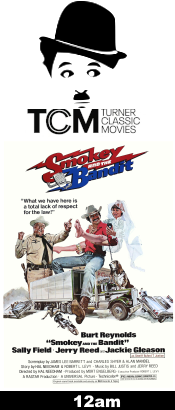
While Needham was in Georgia working as Reynolds’ stunt double in Gator (1976), the driver captain on the set brought some Coors beer from California and brought a couple of cases to Needham’s hotel room. After he noticed that the maid kept stealing the beers from the fridge, he remembered a TIME magazine article from 1974 about how Coors was unavailable east of the Mississippi River, because the beer was not pasteurized and needed constant refrigeration, and couldn’t legally be sold outside of 11 western and southwestern U.S. states. Which made him realize that, “bootlegging Coors would make a good plotline for a movie.”

10. GLEASON ENJOYED “HAMBURGERS” ON SET.
Gleason would often ask his assistant Mal for a “hamburger,” which was code for a glass of bourbon.|

13. ALFRED HITCHCOCK WAS A BIG FAN OF THE FILM.
His daughter Patricia revealed that every Wednesday her father would screen films on the lot in his office. The last one he ever screened was Smokey and the Bandit, his favorite film of his last few years.

13 behind-the-Scenes Facts About Shark Tank

Jake Rossen and Mental_Floss present 13 behind-the-Scenes Facts About Shark Tank.  Here are three of my favorites…

2. CONTESTANTS CAN SPEND OVER AN HOUR IN FRONT OF THE SHARKS.
While product pitches are typically aired in 10-minute segments, business owners are often hashing out details with the Sharks for an hour or more. “The first time, I was in there 45 minutes,” says Aaron Marino, who appeared in a season four episode with his Alpha M image consultation business and will appear a second time in this season’s finale on May 20. “The second time was an hour, hour-and-a-half. When you get into the minutiae of business numbers, they cut a lot of that stuff out.”

8. EVERYONE HAS TO SEE A PSYCHIATRIST.
Once entrepreneurs are done filming, they’re immediately whisked off-set and into a meeting with a show-appointed psychiatrist for an off-air evaluation. “They just want to work through how you’re feeling,” says Bandholz. “I’ve heard from other contestants that they can be devastated by their performance, or by what the appearance might mean for their business. It’s a very intense emotional roller coaster.”

9. MOST OF THE ON-AIR DEALS DON’T GO THROUGH.
While contestants who accept an offer from one or more of the Sharks seem to have it made, it’s little more than a handshake deal. Owing to the due diligence process, Hale estimates that more than two-thirds of deals that are agreed upon in the show fall through. “It’s more like a first date,” he says. “You go back and find things you don’t like. Sometimes the deal terms change.”

16 Things You Might Not Know About Rambo

Sean Hutchinson and Mental_Floss present 16 Things You Might Not Know About Rambo.  Here are three of my favorites…

 4. RAMBO DOESN’T ACTUALLY KILL ANYONE IN THE FIRST MOVIE.
Despite his notorious reputation for shooting first and asking questions later, Rambo doesn’t actually do anyone in in First Blood—he only severely wounds the people trying to hunt and harm him. This was a conscious effort on Stallone’s part in his script to change the character into an underdog from the character in the book who, due to his PTSD, goes on a wild killing rampage, which Stallone felt would alienate the audience.

The one character who does die is Deputy Galt, who tracks Rambo through the mountains in a helicopter. Galt, who attempts to shoot Rambo with a rifle, loses his balance and falls from the helicopter after Rambo merely throws a rock toward it to defend himself.
Like the book, Rambo himself was to die at the end of the movie at the hands of Colonel Trautman. The scene where Rambo is killed was filmed, but was scrapped after test audiences hated the fact that it seemed to imply the only way for veterans returning home to cope was by dying.

5. KIRK DOUGLAS WAS SUPPOSED TO PLAY COLONEL TRAUTMAN.
The veteran movie star actually made it to set and appeared in early advertisements for First Blood, but left the production when he demanded the right to rewrite the script. Douglas favored the ending of the book, and felt that Rambo should die in the end. The actor gave the filmmakers an ultimatum: if the production didn’t let him do what he wanted with the script he’d quit. Kotcheff and Stallone wanted to leave the door open for the possibility for Rambo to live or die at the end of the movie, so they let Douglas quit.

Actor Richard Crenna was then cast with a single day’s notice to fill Douglas’ shoes as Rambo’s mentor and father figure, Colonel Trautman. Crenna would reprise his role in two more Rambo movies before he passed away in 2003. He is the only actor besides Stallone to appear in multiple Rambo movies.

The unused alternate ending of First Blood, in which Trautman shoots and kills Rambo, can be seen briefly in the dream sequence in the fourth film, Rambo.

2. HE’S BASED ON A REAL-LIFE WAR HERO.
Morrell first thought of writing a book about a decorated war hero struggling to assimilate back to civilian life when he read about the real-life exploits of World War II soldier Audie Murphy. Murphy was the most decorated American soldier in World War II, earning every possible U.S. military decoration for valor as well as five separate decorations from foreign countries including France and Belgium.

Following the war, Murphy starred as himself in the film adaptation of his own autobiography,To Hell and Back, and would go on to have a film career, appearing in 44 feature films. Murphy—who later suffered from severe post-traumatic stress disorder, which also inspired Morrell’s characterization of Rambo—tragically died in a plane crash in 1971. The Canadian-born Morrell decided to update his novel to the post-Vietnam era due to the political and cultural climate he saw as a grad student at Penn State in the late 1960s.

Morrell would go on to write the novelizations of the second and third Rambo movies. Since he had Rambo die at the end of the first book he had to retroactively change that to have his hero alive and well in the subsequent books.

Source: David Morrell.

15 Facts About “Twister”

Roger Cormier and Mental_Floss present 15 Facts About Twister.  Here are three of my favorites…
5. BOTH HELEN HUNT AND JAN DE BONT WALKED AWAY FROM OTHER MOVIES TO WORK ON THIS ONE.
Helen Hunt (Dr. Jo Harding) passed up working with John Travolta in John Woo’s Broken Arrow (1996). After more than six months of pre-production, de Bont left his Godzilla (1998 version) directing gig because of studio feuds over the budget and immediately agreed to direct Twister instead.
9. THE TORNADO SOUNDS ARE MADE UP OF VARIOUS ANIMAL NOISES.
According to Variety, an altered recording of a camel’s moan helped create the storm sounds. It was reported elsewhere that a lion’s growl and a tiger’s snarl were remixed as tornado audio.

14. BILL PAXTON THINKS THEY MADE THE “PEPSI LITE” VERSION OF THE MOVIE.
“I’d love to direct a sequel to that movie,” Paxton said. “I’ve always felt like there was a Jaws version of that movie. I always felt like we did the Pepsi Lite version of that movie.”

11 Terrifying Facts About “The Hills Have Eyes”

Matthew Jackson and Mental_Floss present 11 Terrifying Facts About The Hills Have Eyes.  Here are three of my favorites…

1. IT WAS BASED ON A TRUE STORY.
According to writer/director Wes Craven, The Hills Have Eyes was inspired by the story of Sawney Bean, the head of wild Scottish clan who murdered and cannibalized numerous people during the Middle Ages. Craven heard the story of the Bean clan, and noted that the road near where they lived was believed to be haunted because people kept disappearing while traveling on it. He adapted the story to instead be about a group of wild people in the American West, and The Hills Have Eyes was born.

8. MICHAEL BERRYMAN CONSTANTLY FACED HEATSTROKE.1-
Berryman, who became a horror icon thanks to this film, was apparently game for just about anything Craven and company wanted him to do, though he personally told the producers he was born with “26 birth defects.” Among those birth defects was a lack of sweat glands, which meant that the intense desert heat was particularly hazardous to his health. He soldiered on, though, even in intense action sequences.

“We always had to cover him up as soon as we finished these scenes,” Craven recalled.

11. IT STARTED AN INTERESTING CHAIN OF HORROR HOMAGES.
The Hills Have Eyes is admired by fellow horror filmmakers, so much so that one of them—Evil Dead director Sam Raimi—chose to pay homage to it in a strange way. In the scene in which Brenda is quivering in bed after having been brutalized by Pluto and Mars, a ripped poster for Steven Spielberg’s Jaws is visible above her head. Raimi saw it as a message.

“I took it to mean that Wes Craven … was saying ‘Jaws was just pop horror. What I have here isreal horror.’”

As a joking response to the scene, Raimi put a ripped poster for The Hills Have Eyes in his now-classic film The Evil Dead (1981). Not to be outdone, Craven responded by including a clip from The Evil Dead in his classic A Nightmare on Elm Street (1984).