Category: Trivia

15 Thrilling Facts About “Basic Instinct”

Garin Pirnia and Mental Floss present 15 Thrilling Facts About Basic Instinct. Here are three of my favorites…

1. THE SCRIPT SOLD FOR A RECORD $3 MILLION.
Back in the day, spec scripts could sell for millions of dollars. Joe Eszterhas joined that club when he sold Basic Instinct—a script that took him just 13 days to write—for $3 million in 1990. Eszterhas told The A.V. Club that the media liked to focus on a writer’s failures, which occurred when Eszterhas’ Showgirls tanked at the box office. “CBS Evening News came with a helicopter crew and found me on a beach in Florida and interviewed me about the money I got for Basic Instinct,” Eszterhas said. “The other thing that I don’t think was quite fair was that after that whole period, where scripts—mine and Shane Black’s and half a dozen other writers’ scripts—went for a lot of money, the media zeroed in on the box office for some of those scripts, and they always zeroed in on the failures … When Basic Instinct went on to earn $400 million worldwide, there were no stories that said, ‘[Executive producer] Mario Kassar paid three million bucks for this.’”

2. CATHERINE AND NICK WERE BASED ON REAL PEOPLE.
Before he became a multimillionaire screenwriter, Eszterhas was a police reporter for Cleveland’s The Plain Dealer. “I met a cop who just liked the action too much,” Eszterhas told Nerve. “He was always in the middle of shootings. He was a great cop on one level, but on another, you suspected he liked it too much. That’s what Nick Curran does in Basic Instinct. As Catherine says in the movie, he got too close to the flame. He loved the flame.”

Tramell also comes from a person Eszterhas knew in Ohio, this time a go-go dancer in Dayton. One night he picked the stranger up and they went back to his hotel room to have some fun. “She reached into her purse, and she pulled out a .22 and pointed it at me,” he told Nerve. “She said, ‘Give me one reason why I shouldn’t pull this trigger.’ I said, ‘I didn’t do anything to hurt you. You wanted to come here, and as far as I know, you enjoyed what we just did.’ And she said, ‘But this is all guys have ever wanted to do with me, and I’m tired of it.’ We had a lengthy discussion before she put that gun down. Those two random characters are where those parts of Basic Instinct come from.”

3. MICHAEL DOUGLAS AND PAUL VERHOEVEN APPROACHED THE MOVIE AS IF IT WERE A DETECTIVE NOVEL.
Verhoeven wanted to make a modern version of a Hitchcock thriller—except with a lot more sex. “In traditional films, the killer lurks in a house and the victim walks into the kitchen, turns on the radio, makes coffee, opens a book, gets comfortable—and then the killer strikes,” he told The New York Times. “In this film, the killer hides—but on the bed. The situation is the same, but the two people are facing each other in bed, not the kitchen.”

Douglas agreed with the film noir aspect of the movie. “Fatal Attraction was a picture close to home for a lot of people because you could identify with those characters,” he also told theTimes. “It was a reality tale, while Basic Instinct is like a detective novel that people like to read in the privacy of their homes. It’s almost Gothic. It’s certainly more dramatic. And the real question here is: Is anybody really worthy of redemption?”

13 Arresting Facts About “Cops”

Jake Rosen and Mental Floss present 13 Arresting Facts About Cops. Here are three of my favorites…

6. THE SUSPECTS NEED TO GIVE THEIR PERMISSION TO APPEAR ON THE SHOW.
Contrary to popular belief, being arrested doesn’t absolve anyone of his or her right to not be filmed for a national television show. Producers on Cops have to get releases signed by arrestees and suspects. If they’re already handcuffed, the crew can follow them to jail and get them to sign there. Langley has said that proper timing is key when it comes to getting their permission—during a fight is a problem—and estimated that 95 percent of everyone filmed signs a waiver to appear. According to Langley, they simply want to be on television.

8. THE CREW HAS HAD TO JUMP IN.
The official Cops crew policy is that camera and microphone operators are there only to observe: They’re not allowed to interfere with anything going on. The exception, Langley says, is if an officer’s life is in danger. In one instance, a suspect was about to secure an officer’s weapon when the sound man put down his gear and jumped in; another show staffer administered CPR to a woman in need. He was a paramedic; the officer didn’t know the technique.

1. JOHN LANGLEY THOUGHT OF THE IDEA DURING A COCAINE BUST.
The producer was in charge of a crew covering a real-life drug raid for a 1983 documentary called Cocaine Blues when inspiration struck: He thought it would be a good idea to have a no-frills chronicle of the everyday experiences of police officers. While the concept (then titledStreet Beat) was simple, no one shared Langley’s enthusiasm. He was repeatedly told no show without a narrator, music, or plot could succeed.

12 Great Facts About “The Good, the Bad and the Ugly”

Matthew Jackson and Mental Floss present 12 Great Facts About The Good, the Bad and the Ugly. Here are three of my favorites…

9. IT’S TECHNICALLY A PREQUEL.
Careful viewers of the “Dollars Trilogy” will note that, though it’s the final film, The Good, The Bad and The Ugly actually takes place prior to the other two films. Among the clues: Eastwood acquires his iconic poncho, worn in both A Fistful of Dollars and For a Few Dollars More, in the final minutes.

11. EASTWOOD TURNED DOWN A FOURTH FILM.
By the end of The Good, The Bad and The Ugly, Eastwood was done working with Leone—a famous perfectionist—and had resolved that he would form his own company and start making his own movies. Leone, on the other hand, wasn’t necessarily done with Eastwood. He even flew to Los Angeles to pitch him the role of “Harmonica” (ultimately played by Charles Bronson) in Once Upon a Time in the West. Eastwood wasn’t interested.

12. JOHN WAYNE WAS NOT A FAN OF EASTWOOD.
Before Leone’s Westerns hit America, heroic gunfighters were almost always portrayed as men who waited for the villain to draw their guns first, the idea being that these were men who wouldn’t kill unless they had to. Among these heroes was John Wayne, whose career was winding down just as Eastwood’s was heating up. According to Eastwood, director Don Siegel (who made several films with Eastwood, including Dirty Harry) once tried to get Wayne to be more like the “Dollars Trilogy” star during the filming of Wayne’s final film, The Shootist. Wayne, it turns out, was not a fan of Eastwood’s more ruthless Western style.

10 Hardcore Facts About “New Jack City”

Andrew LaSane and Mental Floss present 10 Hardcore Facts About New Jack City. Here are three of my favorites…

1. IT WAS MARIO VAN PEEBLES’S DIRECTORIAL DEBUT. 
Mario Van Peebles—an actor and the son of filmmaker Melvin Van Peebles—has admitted that making his debut as a feature director with New Jack City was tough. He had directed episodes of shows like 21 Jump Street and Wiseguy, but the film was a different beast, especially in terms of the tone. “It’s tricky,” he told The Morning Call. “New Jack is a dangerous movie to make, I didn’t want to do a direct glorification of the Tone-Loc lifestyle. I had to be careful about that. I thought about the old Scarface movie, which was probably meant as a deterrent to crime because it depicts all the violence of that kind of lifestyle. But for kids who don’t have any way out, ‘Live Fast and Die Young’ is like a motto. For people with no opportunities, gangsters become role models.”

5. ICE T WAS LUKEWARM ON THE IDEA OF PLAYING AN UNDERCOVER NEW YORK CITY COP.
After he was given the script and realized that his character, Scotty Appleton, was a cop, Ice T was hesitant. His lifestyle and his music represented the exact opposite of what he would have to play on screen. “I started to survey all the people around me, people whose opinions I trusted the most,” Ice T wrote in Ice.  “‘Yo, I got offered this movie role,’ I said over and over. ‘But here’s the thing: they want me to be the man. I thought my old crime partners might start laughing. Or snap my head off. But they all had the same response. They got these puppy faces, turned real quiet for for a moment, then asked me, ‘Word? Ice, could I be in the movie?'”

6. MARTIN LAWRENCE WAS THE ORIGINAL POOKIE.
Chris Rock’s portrayal of the drug addict Pookie earned him praise from Roger Ebert and other reviewers, but he was not the first choice for the role. In a recent interview about the legacy of New Jack City, screenwriter Barry Michael Cooper revealed that comedian Martin Lawrence had the better audition and had secured the part. “He’ll admit it himself, his audition wasn’t great, at all,” Cooper said of Chris Rock. “Martin Lawrence, he came in and killed that audition. The person taping had to shut the camera off; everybody was on the floor [laughing].”

But shortly before production began, Lawrence’s mentor and fellow comedian Robin Harris passed away. “He didn’t take it well,” Cooper said. “He stepped out of the movie, and that’s when they gave the role to Chris Rock.” Lawrence later referenced the film in an episode of his sitcom, Martin, dressing like and quoting Snipes’ Nino Brown character while dragging around a stuffed dog.

14 Flesh-Eating Facts About “Cabin Fever”

Jennifer M. Wood and Mental Floss present 14 Flesh-Eating Facts About Cabin Fever.  Here are three of my favorites…

6. THE SAME STUDIOS THAT PASSED ON PRODUCING THE FILM ENGAGED IN A BIDDING WAR FOR THE FINISHED PRODUCT.
Though Roth’s original plan for the film was to sell the script and have a studio produce it, no one was interested in buying it (hence the aforementioned eight-year process of getting it made). But a successful showing at the 2002 Toronto International Film Festival changed all that: the film sparked a bidding war, with Lionsgate ultimately emerging victorious. Roth was paid $3.5 million for the film, and promised $12 million in prints and advertising. Of the many studios competing to acquire Cabin Fever, most had already passed on producing it.

8. PETER JACKSON WAS A FAN.
After hearing about Cabin Fever from several of his The Lord of the Rings collaborators, Peter Jackson requested that a print be sent to him in New Zealand, where he was filming The Return of the King. Impressed by what he was seeing, Jackson shut down production on his own film—twice!—to screen Cabin Fever for his cast and crew. Eventually, Jackson invited Roth to The Lord of the Rings set, where he offered to supply Roth with a quote about the film for his production materials. It read: “Brilliant! Fantastic! Horror fans have been waiting years for a movie like Cabin Fever. I loved it!”

9. QUENTIN TARANTINO DECLARED ROTH “THE FUTURE OF HORROR.”
In a 2004 interview with Premiere, Quentin Tarantino talked at length about his admiration for Cabin Fever, and called Roth “the future of horror.” The admiration was mutual. Tarantino and Roth would go on to become good friends and regular collaborators. In addition to directing Thanksgiving, one of the fake trailers in the middle of Tarantino and Robert Rodriguez’s Grindhouse, and playing Dov in the film, Roth had a major role as Sergeant Donny Donowitz in Tarantino’s Inglourious Basterds (2009).

11 Last Meals of the Rich and Famous

Eddie Deezen and Mental Floss present 11 Last Meals of the Rich and Famous [and 9 Honorable Mentions].  Using just the meals presented, here are the three I would pick…

8. ERNEST HEMINGWAY
By the time he reached his 60s, Hemingway was suffering from severe depression. Several electroshock therapy treatments had left him in a frazzled condition. After a failed suicide attempt in the spring of 1961 at his home in Idaho, Hemingway tried again on July 2 by putting a shotgun to his head. First, though, he ate his favorite meal: New York strip steak, baked potato, caesar salad, and a glass of Bordeaux.

Marilyn Monroe Selections from a Mexican buffet that had been delivered to her Brentwood home

Frank Sinatra A grilled cheese sandwich

What If You Fell Out of a Plane Without a Parachute?

In 2007, Travis Pastrana jumped out of a plane with no parachute as part of a stunt promoting Red Bull.  In short order, Pastrana’s friends caught up to him and he finished the plummet to earth strapped to his friend in a tandem chute.  Still, how crazy is that?

But…

Could you survive if you fell out of an airplane without a chute and no assistance?

Marshall Brain at How Things Work say you have a chance in Brain’s article What If You Fell Out of a Plane Without a Parachute?

10 Law-Abiding Facts About “Raising Arizona”

Roger Cormier and Mental_Floss present 10 Law-Abiding Facts About Raising Arizona.  Here are three of my favorites…

3. KEVIN COSTNER AND RICHARD JENKINS AUDITIONED FOR THE FILM.
Kevin Costner auditioned three times to play H.I., only to see Nicolas Cage snag the role. Richard Jenkins had his first of many auditions for the Coens for Raising Arizona. He also (unsuccessfully) auditioned for Miller’s Crossing (1990) and Fargo (1996) before calling it quits with the Coens. In 2001, Joel and Ethan cast Jenkins in The Man Who Wasn’t There, even though he had never auditioned for it.

4. KATE CAPSHAW TURNED DOWN THE LEAD.
Kate Capshaw said no to playing Ed in Raising Arizona—and later regretted the decision. She also notably turned down the role of Diane Chambers on Cheers.

9. THE FILMMAKERS GOT EXPERIMENTAL WITH THEIR CAMERA TECHNIQUES.
Wanting to have as many options as possible in the editing room, the Coens and their cinematographer, Barry Sonnenfeld, decided at one point to have Cage run through the house while holding a camera towards himself. After seeing the results, they was decided it was too weird.

16 Earth-Shattering Facts About “Independence Day”

Janet Burns and Mental_Floss present 16 Earth-Shattering Facts About Independence Day.  Here are three of my favorites…

2. THE FILM LOST ITS MILITARY SUPPORT DUE TO ITS AREA 51 REFERENCES.
In its roundup of insights from the Independence Day DVD commentary, Film School Rejectspoints out that the U.S. military had initially agreed to support the film’s production by offering greater access to military facilities and consultation from real-life officers, soldiers, and pilots. However, according to the film’s producer and co-writer Dean Devlin, the military withdrew its support after learning about the script’s multiple references to Area 51 being a hub for extraterrestrial projects.

5. THE COMPUTER VIRUS THAT SAVES THE DAY IS ALSO A REFERENCE TO THE WAR OF THE WORLDS.
In both the novel and film versions of The War of the Worlds, mankind’s biggest guns fail to take down Martian attackers. Instead, it’s tiny viruses in our atmosphere—mostly harmless to humans, but foreign to Martian immune systems—that finally do the job. In Independence Day, too, Bill Pullman’s presidential order to “nuke the bastards” doesn’t even make a dent in the aliens’ front, but a cunning (if confusing) computer virus manages to destroy the invaders at last.

In the case of Independence Day’s viral “Hail Mary,” fans have raised criticism—and plenty of eyebrows—over the years regarding just how on Earth David Levinson (played by Jeff Goldblum) could have drummed up a computer virus that affects alien technology so quickly. Devlin offered some answers during a 2014 Reddit AMA:

“Okay: what Jeff Goldblum’s character discovered was that the programming structure of the alien ship was a binary code. And as any beginning programmer can tell you, binary code is a series of ones and zeroes. What Goldblum’s character did was turn the ones into zeroes and the zeroes into ones, effectively reversing the code that was sent.”

Cracked notes that there was also a seven-minute scene that would’ve addressed this issue for viewers from the very beginning, and which suggests that modern computers in the Independence Day universe are descended from a reverse-engineered version of recovered alien tech courtesy Area 51. Unfortunately, that scene was cut from the final release of the film, only adding to viewers’ confusion.


11. MATTHEW PERRY DROPPED OUT OF THE FILM. BUT HIS DAD HAD A ROLE.
Film School Rejects reports that the role of Captain Jimmy “Raven” Wilder, which was eventually played by Harry Connick Jr., was originally offered to Matthew Perry. He pulled out before shooting began, though, making his father, John Bennett Perry, who played a Secret Service agent, the only Perry in the film.

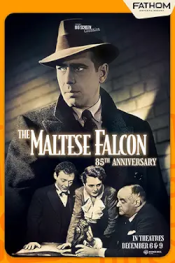
13 Mysterious Facts About “The Maltese Falcon”

Eric D. Snider and Mental_Floss present 13 Mysterious Facts About The Maltese Falcon.  Here are three of my favorites…

2. IT WOULDN’T EXIST IF HIGH SIERRA HADN’T BEEN A HIT.
John Huston, son of popular stage and screen actor Walter Huston, was a successful scriptwriter for Warner Bros. in the late 1930s, earning Oscar nominations for Dr. Ehrlich’s Magic Bullet (1940) and Sergeant York (1941). When he asked the Warners for a shot at directing, they agreed (and even let him choose the project himself), but only if his next script was a hit. That was High Sierra, starring Humphrey Bogart, directed by Raoul Walsh, and released in January 1941. Fortunately for Huston, it was a success, and the Warners kept their word. The Maltese Falcon, also starring Bogart, was shot that summer and released in the fall. It was the first of five movies Huston and Bogart would make together.

4. HUMPHREY BOGART’S ICONIC RAPID-FIRE DELIVERY WAS THE RESULT OF A STUDIO NOTE.
Detective Sam Spade had a lot of speeches, which the Warners felt tended to slow things down. They asked Huston to pick up the pace by having Bogart (and the others) talk faster. Huston, eager to please on his first film, took the note to heart and instructed everyone accordingly. When the film was a hit, the rat-a-tat pace became one of the hallmarks of film noir.

5. IT GOT AWAY WITH USING AN OBJECTIONABLE WORD, PROBABLY BECAUSE THE CENSORS WEREN’T COOL ENOUGH TO KNOW IT.
Sam Spade uses the word “gunsel” three times in reference to Wilmer, the hitman who works for Kasper Gutman, a.k.a. the Fat Man. Hammett used the same word in his novel, but only after his editor objected to the word he used first: “catamite,” which is a young man kept by an older man for sexual purposes. While Hammett’s novel identified Cairo (Peter Lorre’s character) as a homosexual and hinted at it for Wilmer and Gutman, this term was considered too explicit. Hammett replaced it with “gunsel,” which his editor assumed meant “gunslinger” or some such. But it didn’t. Gunsel—from the Yiddish word for “little goose,” and passed along in American hobo culture—was merely a synonym for “catamite,” but was too new to be familiar. Hammett got away with it in the book, and it slipped past the Production Code censors when it popped up in the screenplay. Because of Hammett’s usage, the word came to take on “gunman” as a secondary meaning. But make no mistake, it wasn’t Wilmer’s possession of a firearm that Sam Spade was referring to.

15 Incorruptible Facts About “The Shield”

Roger Cormier and Mental_Floss present 15 Incorruptible Facts About The Shield.  Here are three of my favorites…

1. THE CO-CREATOR OF LOST THOUGHT THE NETWORK WOULD CHANGE THE PILOT.
Damon Lindelof, co-creator of Lost and The Leftovers, remembered reading Shawn Ryan’s pilot script for The Shield and always waiting for Vic Mackey to become an Andy Sipowicz-type, or “a good guy despite his gruff exterior.” Instead, he read the ending where Mackey murdered an Internal Affairs rat in cold blood. “And when I read that, I thought to myself, ‘Shawn Ryan will never get this ending on the air,’” Lindelof recalled to the Chicago Tribune in 2008. (Spoiler alert: Lindelof was wrong.)

4. ERIC STOLTZ WAS OFFERED THE LEAD.
Eric Stoltz was offered the lead role and—and almost took it.

5. FX EXECUTIVES WERE NOT SOLD ON MICHAEL CHIKLIS.
The network knew Chiklis for his even-tempered roles in The Commish (1991-1995) andDaddio (2000). Against his agents’ advice, Chiklis took six months off from acting and lost 57 pounds. For his The Shield audition, he shaved his head. “When I heard his name mentioned, I thought he was wrong for the role,” Kevin Reilly, FX’s then-president of entertainment told The New York Times. “I knew him as a soft, cuddly guy physically and emotionally. He came in with this shaved head and his biceps, and he just chewed through the scene. He blew us away.’

13 Riotous Facts About “V for Vendetta”

Roger Cormier and Mental_Floss present 13 Riotous Facts About V for Vendetta.  Here are three of my favorites…

3. ANDY AND LANA WACHOWSKI WROTE A SCRIPT FOR V FOR VENDETTA BEFORE THEY WORKED ON THE MATRIX TRILOGY.
The Wachowskis acquired the rights to V for Vendetta in the mid-1990s, then promptly wrote their own screenplay. After directing the three Matrix films, the Wachowskis weren’t interested in returning to directing right away, but they did make alterations to their Vendetta script, including moving the story forward in time and making Evey older.

5. ALAN MOORE DECLINED TO WATCH THE FILM, OR BE CREDITED ON IT.
Moore had read the screenplay and considered it “rubbish.” Moore believed DC Comics and the film industry had knowingly stolen from him. Conversely, David Lloyd praised the movie moments after he had seen it for the first time, declaring it a “fantastic representation” of the work they did, according to McTeigue.

4. IT WAS JAMES MCTEIGUE’S DIRECTORIAL DEBUT.
James McTeigue was first assistant director on the Matrix movies, as well as on Star Wars Episode II: Attack of the Clones (2002), and was picked by the Wachowskis to take charge. “A lot of the filmmaking process is about trust, and at the point that those guys said, ‘We want you to direct it,’ they were about trusting me to go off and give it the vision it needed to be directed with, so they kind of left me alone,” said McTeigue. “They were there if I needed them, and sometimes I’d go, ‘Hey, what do you think about this?’ and they’d put their two cents worth in, and I could either take it on board or leave it at the door.”

20 Things We Learned from the “Street Kings” Commentary

Rob Hunter and Film School Rejects present 20 Things We Learned from the Street Kings Commentary.  Here are three of my favorites…

5.  Keanu Reeves did all of his own stunts.

11. He [Director David Ayer] recalls reading the script and being happily surprised by the turn where Ludlow’s vengeance mission against Det. Washington (Terry Crews) is interrupted by the two shooters sent to kill him. “I was caught unawares, and as a writer I’m supposed to catch this stuff ahead of time.”

16. The foot chase was filmed in a gang area, but they never had any problems during the shoot. “We were really open with the community, and we had an open set. We didn’t have security guards telling people to keep away. We let the kids in the neighborhood sort of walk through the set and look at the equipment and let people talk to us, and Keanu’s really open and really gracious and likes to hang out and talk to people. He’s not one of those guys who hides out in his trailer between takes.”

11 Lucky Facts About “Dirty Harry”

Matthew Jackson and Mental_Floss present 11 Lucky Facts About Dirty Harry.  Here are three of my favorites…

2. FRANK SINATRA WAS SET TO STAR.
The idea that anyone but Clint Eastwood could play Harry Callahan seems strange, but a number of other stars were considered for the title role first, among them Steve McQueen, Robert Mitchum, and Frank Sinatra. Sinatra was actually attached to the film at one point, but pulled out because of an injury to his hand. So Eastwood stepped in, and the rest is history.

7. EASTWOOD DID HIS OWN STUNTS.
For the scene in which Harry chases down Scorpio, who has kidnapped a busload of children, the character is required to leap from a trestle bridge onto the top of the moving bus. If you watch the scene carefully, you’ll notice that it’s not a stuntman making the leap. Eastwood did it himself.

8. EASTWOOD DIRECTED ONE SCENE HIMSELF.
During one night of shooting, Siegel had to miss work because of the flu, leaving the production without a director. So Eastwood took over. The scene in which Harry confronts a suicidal man on the roof of a building was directed by Eastwood.