Category: Trivia

What If You Fell Out of a Plane Without a Parachute?

In 2007, Travis Pastrana jumped out of a plane with no parachute as part of a stunt promoting Red Bull.  In short order, Pastrana’s friends caught up to him and he finished the plummet to earth strapped to his friend in a tandem chute.  Still, how crazy is that?

But…

Could you survive if you fell out of an airplane without a chute and no assistance?

Marshall Brain at How Things Work say you have a chance in Brain’s article What If You Fell Out of a Plane Without a Parachute?

10 Law-Abiding Facts About “Raising Arizona”

Roger Cormier and Mental_Floss present 10 Law-Abiding Facts About Raising Arizona.  Here are three of my favorites…

3. KEVIN COSTNER AND RICHARD JENKINS AUDITIONED FOR THE FILM.
Kevin Costner auditioned three times to play H.I., only to see Nicolas Cage snag the role. Richard Jenkins had his first of many auditions for the Coens for Raising Arizona. He also (unsuccessfully) auditioned for Miller’s Crossing (1990) and Fargo (1996) before calling it quits with the Coens. In 2001, Joel and Ethan cast Jenkins in The Man Who Wasn’t There, even though he had never auditioned for it.
4. KATE CAPSHAW TURNED DOWN THE LEAD.
Kate Capshaw said no to playing Ed in Raising Arizona—and later regretted the decision. She also notably turned down the role of Diane Chambers on Cheers.

9. THE FILMMAKERS GOT EXPERIMENTAL WITH THEIR CAMERA TECHNIQUES.
Wanting to have as many options as possible in the editing room, the Coens and their cinematographer, Barry Sonnenfeld, decided at one point to have Cage run through the house while holding a camera towards himself. After seeing the results, they was decided it was too weird.

16 Earth-Shattering Facts About “Independence Day”

Janet Burns and Mental_Floss present 16 Earth-Shattering Facts About Independence Day.  Here are three of my favorites…

2. THE FILM LOST ITS MILITARY SUPPORT DUE TO ITS AREA 51 REFERENCES.
In its roundup of insights from the Independence Day DVD commentary, Film School Rejectspoints out that the U.S. military had initially agreed to support the film’s production by offering greater access to military facilities and consultation from real-life officers, soldiers, and pilots. However, according to the film’s producer and co-writer Dean Devlin, the military withdrew its support after learning about the script’s multiple references to Area 51 being a hub for extraterrestrial projects.

5. THE COMPUTER VIRUS THAT SAVES THE DAY IS ALSO A REFERENCE TO THE WAR OF THE WORLDS.
In both the novel and film versions of The War of the Worlds, mankind’s biggest guns fail to take down Martian attackers. Instead, it’s tiny viruses in our atmosphere—mostly harmless to humans, but foreign to Martian immune systems—that finally do the job. In Independence Day, too, Bill Pullman’s presidential order to “nuke the bastards” doesn’t even make a dent in the aliens’ front, but a cunning (if confusing) computer virus manages to destroy the invaders at last.

In the case of Independence Day’s viral “Hail Mary,” fans have raised criticism—and plenty of eyebrows—over the years regarding just how on Earth David Levinson (played by Jeff Goldblum) could have drummed up a computer virus that affects alien technology so quickly. Devlin offered some answers during a 2014 Reddit AMA:

“Okay: what Jeff Goldblum’s character discovered was that the programming structure of the alien ship was a binary code. And as any beginning programmer can tell you, binary code is a series of ones and zeroes. What Goldblum’s character did was turn the ones into zeroes and the zeroes into ones, effectively reversing the code that was sent.”

Cracked notes that there was also a seven-minute scene that would’ve addressed this issue for viewers from the very beginning, and which suggests that modern computers in the Independence Day universe are descended from a reverse-engineered version of recovered alien tech courtesy Area 51. Unfortunately, that scene was cut from the final release of the film, only adding to viewers’ confusion.


11. MATTHEW PERRY DROPPED OUT OF THE FILM. BUT HIS DAD HAD A ROLE.
Film School Rejects reports that the role of Captain Jimmy “Raven” Wilder, which was eventually played by Harry Connick Jr., was originally offered to Matthew Perry. He pulled out before shooting began, though, making his father, John Bennett Perry, who played a Secret Service agent, the only Perry in the film.

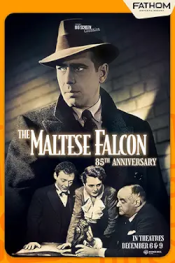
13 Mysterious Facts About “The Maltese Falcon”

Eric D. Snider and Mental_Floss present 13 Mysterious Facts About The Maltese Falcon.  Here are three of my favorites…

2. IT WOULDN’T EXIST IF HIGH SIERRA HADN’T BEEN A HIT.
John Huston, son of popular stage and screen actor Walter Huston, was a successful scriptwriter for Warner Bros. in the late 1930s, earning Oscar nominations for Dr. Ehrlich’s Magic Bullet (1940) and Sergeant York (1941). When he asked the Warners for a shot at directing, they agreed (and even let him choose the project himself), but only if his next script was a hit. That was High Sierra, starring Humphrey Bogart, directed by Raoul Walsh, and released in January 1941. Fortunately for Huston, it was a success, and the Warners kept their word. The Maltese Falcon, also starring Bogart, was shot that summer and released in the fall. It was the first of five movies Huston and Bogart would make together.

4. HUMPHREY BOGART’S ICONIC RAPID-FIRE DELIVERY WAS THE RESULT OF A STUDIO NOTE.
Detective Sam Spade had a lot of speeches, which the Warners felt tended to slow things down. They asked Huston to pick up the pace by having Bogart (and the others) talk faster. Huston, eager to please on his first film, took the note to heart and instructed everyone accordingly. When the film was a hit, the rat-a-tat pace became one of the hallmarks of film noir.

5. IT GOT AWAY WITH USING AN OBJECTIONABLE WORD, PROBABLY BECAUSE THE CENSORS WEREN’T COOL ENOUGH TO KNOW IT.
Sam Spade uses the word “gunsel” three times in reference to Wilmer, the hitman who works for Kasper Gutman, a.k.a. the Fat Man. Hammett used the same word in his novel, but only after his editor objected to the word he used first: “catamite,” which is a young man kept by an older man for sexual purposes. While Hammett’s novel identified Cairo (Peter Lorre’s character) as a homosexual and hinted at it for Wilmer and Gutman, this term was considered too explicit. Hammett replaced it with “gunsel,” which his editor assumed meant “gunslinger” or some such. But it didn’t. Gunsel—from the Yiddish word for “little goose,” and passed along in American hobo culture—was merely a synonym for “catamite,” but was too new to be familiar. Hammett got away with it in the book, and it slipped past the Production Code censors when it popped up in the screenplay. Because of Hammett’s usage, the word came to take on “gunman” as a secondary meaning. But make no mistake, it wasn’t Wilmer’s possession of a firearm that Sam Spade was referring to.

15 Incorruptible Facts About “The Shield”

Roger Cormier and Mental_Floss present 15 Incorruptible Facts About The Shield.  Here are three of my favorites…

1. THE CO-CREATOR OF LOST THOUGHT THE NETWORK WOULD CHANGE THE PILOT.
Damon Lindelof, co-creator of Lost and The Leftovers, remembered reading Shawn Ryan’s pilot script for The Shield and always waiting for Vic Mackey to become an Andy Sipowicz-type, or “a good guy despite his gruff exterior.” Instead, he read the ending where Mackey murdered an Internal Affairs rat in cold blood. “And when I read that, I thought to myself, ‘Shawn Ryan will never get this ending on the air,’” Lindelof recalled to the Chicago Tribune in 2008. (Spoiler alert: Lindelof was wrong.)

4. ERIC STOLTZ WAS OFFERED THE LEAD.
Eric Stoltz was offered the lead role and—and almost took it.
5. FX EXECUTIVES WERE NOT SOLD ON MICHAEL CHIKLIS.
The network knew Chiklis for his even-tempered roles in The Commish (1991-1995) andDaddio (2000). Against his agents’ advice, Chiklis took six months off from acting and lost 57 pounds. For his The Shield audition, he shaved his head. “When I heard his name mentioned, I thought he was wrong for the role,” Kevin Reilly, FX’s then-president of entertainment told The New York Times. “I knew him as a soft, cuddly guy physically and emotionally. He came in with this shaved head and his biceps, and he just chewed through the scene. He blew us away.’

13 Riotous Facts About “V for Vendetta”

Roger Cormier and Mental_Floss present 13 Riotous Facts About V for Vendetta.  Here are three of my favorites…

3. ANDY AND LANA WACHOWSKI WROTE A SCRIPT FOR V FOR VENDETTA BEFORE THEY WORKED ON THE MATRIX TRILOGY.
The Wachowskis acquired the rights to V for Vendetta in the mid-1990s, then promptly wrote their own screenplay. After directing the three Matrix films, the Wachowskis weren’t interested in returning to directing right away, but they did make alterations to their Vendetta script, including moving the story forward in time and making Evey older.

5. ALAN MOORE DECLINED TO WATCH THE FILM, OR BE CREDITED ON IT.
Moore had read the screenplay and considered it “rubbish.” Moore believed DC Comics and the film industry had knowingly stolen from him. Conversely, David Lloyd praised the movie moments after he had seen it for the first time, declaring it a “fantastic representation” of the work they did, according to McTeigue.

4. IT WAS JAMES MCTEIGUE’S DIRECTORIAL DEBUT.
James McTeigue was first assistant director on the Matrix movies, as well as on Star Wars Episode II: Attack of the Clones (2002), and was picked by the Wachowskis to take charge. “A lot of the filmmaking process is about trust, and at the point that those guys said, ‘We want you to direct it,’ they were about trusting me to go off and give it the vision it needed to be directed with, so they kind of left me alone,” said McTeigue. “They were there if I needed them, and sometimes I’d go, ‘Hey, what do you think about this?’ and they’d put their two cents worth in, and I could either take it on board or leave it at the door.”

20 Things We Learned from the “Street Kings” Commentary

Rob Hunter and Film School Rejects present 20 Things We Learned from the Street Kings Commentary.  Here are three of my favorites…

5.  Keanu Reeves did all of his own stunts.

11. He [Director David Ayer] recalls reading the script and being happily surprised by the turn where Ludlow’s vengeance mission against Det. Washington (Terry Crews) is interrupted by the two shooters sent to kill him. “I was caught unawares, and as a writer I’m supposed to catch this stuff ahead of time.”
16. The foot chase was filmed in a gang area, but they never had any problems during the shoot. “We were really open with the community, and we had an open set. We didn’t have security guards telling people to keep away. We let the kids in the neighborhood sort of walk through the set and look at the equipment and let people talk to us, and Keanu’s really open and really gracious and likes to hang out and talk to people. He’s not one of those guys who hides out in his trailer between takes.”

11 Lucky Facts About “Dirty Harry”

Matthew Jackson and Mental_Floss present 11 Lucky Facts About Dirty Harry.  Here are three of my favorites…

2. FRANK SINATRA WAS SET TO STAR.
The idea that anyone but Clint Eastwood could play Harry Callahan seems strange, but a number of other stars were considered for the title role first, among them Steve McQueen, Robert Mitchum, and Frank Sinatra. Sinatra was actually attached to the film at one point, but pulled out because of an injury to his hand. So Eastwood stepped in, and the rest is history.

7. EASTWOOD DID HIS OWN STUNTS.
For the scene in which Harry chases down Scorpio, who has kidnapped a busload of children, the character is required to leap from a trestle bridge onto the top of the moving bus. If you watch the scene carefully, you’ll notice that it’s not a stuntman making the leap. Eastwood did it himself.

8. EASTWOOD DIRECTED ONE SCENE HIMSELF.
During one night of shooting, Siegel had to miss work because of the flu, leaving the production without a director. So Eastwood took over. The scene in which Harry confronts a suicidal man on the roof of a building was directed by Eastwood.

5 Things You Didn’t Know About Josephine Baker

Ethan Trex and Mental_Floss present 5 Things You Didn’t Know About Josephine Baker.  Here are three of my favorites…

1. SHE WAS A SPY.
When World War II rocked her adopted France, Baker didn’t simply move to a more peaceful country. Instead, she stuck around and did her part for the war effort. Since she had initially publicly supported Mussolini’s invasion of Ethiopia, the Axis powers mistakenly thought she was “one of them,” and Baker took full advantage of this misconception.

In fact, her fame made her the perfect spy. When Baker would travel Europe while touring, she obviously had to carry large quantities of sheet music with her. What customs officials never realized, though, was that a lot of this music actually had secret messages written on it in invisible ink. Fawning immigration officials never thought to take too close a look at the diva’s luggage, so she could sneak all sorts of things in and out of countries. On some occasions, Baker would smuggle secret photos of German military installations out of enemy territory by pinning them to her underwear.

This invaluable intelligence work eventually helped Baker rise to the rank of lieutenant in the Free French Air Force, and when the war was over she received both the Croix de Guerre (a first for an American woman) and the Medal of the Resistance in 1946.

2. A DUEL WAS FOUGHT IN HER NAME.
Lots of stars have devoted fans, but how many would be willing to fight a duel for their favorite diva? In 1928, a Hungarian cavalry officer and an Italian count did just that in Budapest. According to a contemporary account from Time, “the ogling and attentions of Hungarian Cavalry Captain Andrew Czlovoydi became too fervently gallant to be stomached by La Baker’s manager, Count Pepito di Albertini.” Rather than just ask Czlovoydi to knock it off, the Count took the reasonable step of challenging the soldier to a sword-fighting duel.

Fittingly, the two duelers met in a cemetery for their showdown while Baker cheered on the Count from a perch atop a tombstone. According to Time, the two men battled with swords for a solid 10 minutes before the Count took a light blow to the shoulder. At that point, Baker intervened and forced the two men to set aside their differences.

3. IN HER FORTIES AND FIFTIES, SHE ADOPTED A DOZEN CHILDREN.
Celebrities adopting children from underprivileged backgrounds may be old news at this point, but what Baker did in the 1950s is still shocking and fascinating. In an effort to combat racism and provide an example for the rest of the world to follow, Baker started adopting orphans from all corners of the world.

Baker started by adopting two Japanese children, and kept going until she had assembled a family of 12 children from a variety of countries and ethnicities. Baker dubbed them “the Rainbow Tribe,” and lived with the children in her chateau in southwestern France.

As part of her efforts, Baker also turned the chateau into a sort of resort/theme park with a multicultural theme, but it didn’t catch on quite as well as Epcot did. By 1968, the operation was hemorrhaging money, and Baker’s creditors had to sell the mansion out from under her.

11 Transformative Facts About “The Fly”

Andrew LaSane and Mental_Floss present 11 Transformative Facts About The Fly.  Here are three of my favorites…

1. IT WAS PRODUCED BY MEL BROOKS.
Known as a master of comedy, Mel Brooks is also a fan of the horror genre. Producer Stuart Cornfeld convinced the reluctant studio to distribute the film if he could find the money to make it, and Mel Brooks was the first person he went to for help (the two had previously collaborated on David Lynch’s The Elephant Man in 1980). It was Brooks who encouraged Cronenberg to take the movie as far as he wanted. “[Brooks] said ‘I want you to go all the way. Let yourself go, and don’t hold back.’ There were no restraints,” Cronenberg recalled. “They were willing to lose that percentage of the audience that would have liked the love interest stuff, but couldn’t take the horror.”

2. BROOKS CAME UP WITH THE FILM’S MOST FAMOUS LINE.
“Be afraid, be very afraid” is a quote that many people have heard, but not everyone knows comes from The Fly. Cronenberg revealed in a commentary track that the iconic line was invented by Mel Brooks while discussing how characters should react to the early stages of Seth Brundle’s transformation. The quote also became one of the film’s taglines.

5. JEFF GOLDBLUM AND GEENA DAVIS WERE A COUPLE.
Goldblum was the one who campaigned for then-girlfriend Geena Davis to co-star in the film as journalist/love interest Veronica Quaife, a.k.a. Ronnie. Goldblum admits in a special features documentary that he became jealous of her scenes with actor John Getz and had to be told to leave the set because of his emotional attachment. Their relationship also affected the way they performed the roles. “The problem really in working with a couple who were so close and had been together for quite some time was that Geena, who was an adept mimic, she would basically do Jeff,” Cronenberg said in his commentary track. “She was like Jeff in her linguistic rhythm, her speech rhythm, and her body language because Jeff has a very strange and infectious way of speaking and moving …one of the things we had to do was to disconnect Geena and Jeff for the sake of the movie.”

21 Things We Learned from the “Tropical Thunder” Commentary

Rob Hunter and Film School Rejects present 21 Things We Learned from the Tropical Thunder Commentary.  Here are three of my favorites…

9. Downey’s promise to himself — or, Osisris’ promise that he makes in the film — was that he doesn’t “drop character till I done a DVD commentary.” He commits to it here and is a man of his word.

19. “This moment,” says Stiller, “I wasn’t really expecting even when we shot it.” He’s referring to Tom Cruise‘s shift into dance moves after Les Grossman (Cruise) explains to Peck how they’re going to make an insurance claim against Tugg’s death. “I don’t think anybody was really expecting that he was going to go to that place.”

21. Downey finally drops the Osiris voice as the character does the same onscreen, but it’s clear he’s not keen on saying goodbye. “This is Lincoln Osiris signing off forever now. Thank you people. Thanks for letting me float with you. I love you ladies and gentlemen. Man, it’s hard to let go.” He then pauses briefly… and begins speaking in Kirk Lazarus’ Australian accent.

15 Fun Facts About “Everybody Loves Raymond”

Roger Cormier and Mental_Floss present 15 Fun Facts About Everybody Loves Raymond.  Here are three of my favorites…

6. RAY IS OLDER THAN HIS “OLDER” BROTHER.
Brad Garrett, who played Ray’s older brother Robert, was 36 when the series first aired. Romano was a few months shy of his 39th birthday.

4. PETER BOYLE WAS PERFECTLY ANGRY AT HIS AUDITION FOR FRANK.
Peter Boyle had trouble just getting into the studio lot. He then couldn’t find a parking space. Then he went into the wrong building. By the time he reached Romano and show creator/showrunner Philip Rosenthal he was, in his own words, “enraged”—and perfectly in character for Frank Barone. The topper of it all was that, according to Romano, the CBS President was going to give Boyle the gig anyway.

12. THE SHOW MADE ROMANO THE HIGHEST PAID ACTOR ON TELEVISION.
Romano made $1.7 to 1.8 million per episode during the last two seasons of Raymond, surpassing Kelsey Grammer’s $1.6 million per episode salary for Frasier at the time.

10 Mind-Blowing Facts About “Scanners”

Tara Aquino and Mental_Floss present 10 Mind-Blowing Facts About Scanners.  Here are three of my favorites…

4. CRONENBERG SHOT TWO ENDINGS TO SCANNERS.
According to Michael Ironside, who played Darryl Revok, he and Stephen Lack filmed a less exciting version of the ending. “With one ending, we had this psycho-battle between my brother and I and it didn’t work, we shot it right up until Christmas and sent the script to [special effects wizard] Dick Smith in New York and asked him what he could come up with in terms of cutting edge makeup,” Ironside explained. “You know, something that would give us a more memorable battle and a different ending. Dick then came up with the idea of the exploding heads and that was a very collaborative thing.”

5. ACCORDING TO LACK, THE SCANNERS SCRIPT WASN’T EVEN WRITTEN WHILE FILMING.
It’s no surprise that Cronenberg allegedly called Scanners his most frustrating film to make. In addition to delays in filming, the script wasn’t even completed when production commenced. “Not only was Scanners not rehearsed, but it wasn’t written,” Lack told Film Comment. “David was coming in with pink, blue, and yellow pages for the day for the version of the script that we were doing, and he was working on it right there. As a result I had to deal with the dialogue in such a way that I was not reacting to things, because the information hadn’t been given to my character in the linear progression of the story. If you chop it up and look at it, 50 percent of my dialogue is not an assertion of anything but rather a question: ‘You called me a Scanner, what does that mean?’ ‘You’re part of an organization, who are you?’ Everything is a freaking question!”

6. MICHAEL IRONSIDE WORE DUSTIN HOFFMAN’S EYES FROM LITTLE BIG MAN IN A CRUCIAL SCENE.
Scanners was all about making its special effects work at all costs, which is why Ironside’s story about his peculiar eyes at the end of the film fits in perfectly. “There’s a scene … where I’m set on fire and my head comes up and those scleras they put on your eyes, they had scratched all my corneas,” Ironside recalled. “So the contact lenses they had made for me to change my eye color didn’t fit properly because my eyes had been scratched. Dick Smith happened to have with him Dustin Hoffman’s eyes from Little Big Man and they were actually oversized, and you wouldn’t normally do this because they have to be fitted, but when you see me come out from under that coat at the end of Scanners, those blue eyes of mine are Dustin Hoffman’s from Little Big Man.”

10 Facts About “Invasion of the Body Snatchers”

Mark Mancini and Mental_Floss present 10 Facts About Invasion of the Body Snatchers.  Here are three of my favorites…

1. IT’S BASED ON A MAGAZINE SERIAL.
In November and December of 1954, Collier’s magazine ran a three-part series that would come to be called “the year’s most original story of suspense.” Written by Jack Finney, The Body Snatchers wowed producer Walter Wanger, who began negotiating the story’s movie rights before he’d even read part two.

5. ORIGINALLY, THE MOVIE WAS SUPPOSED TO BE A LOT FUNNIER.
“I felt that pods growing into a likeness of a person would strike the characters as preposterous,” Siegel recalled. “I wanted to play it that way, with the characters not taking the threat seriously.” Hoping to offset the scares, he filmed a number of comedic scenes, which were later cut out by Allied Artists, the film’s distributor. “In their hallowed words, ‘horror films are horror films and there’s no room for humor,’” Siegel explained. “I translated [this] to mean that in their pod brains there was no room for humor.”

8. THE PROLOGUE AND EPILOGUE WERE LAST-MINUTE ADDITIONS.
Allied Artists didn’t just cut a few jokes here and there; the studio also insisted on a completely different ending. Originally, the movie was going to close with a shot of Dr. Bennell watching hopelessly as truckloads of pods drive out into the distance. Wanting to end the film on a more hopeful note, Allied Artists came up with a slightly happier conclusion. Over his strong objections, Siegel was told to film a new intro and a new final scene (“I reluctantly consented,” he said.) The revamped opening puts Bennell in a police station, where he tells the story as anextended flashback. After the famous “You’re next!” sequence, his tale ends and, after a while, the authorities begin to believe him.