Category: Trivia

36 Things We Learned from the “Top Gun” Commentary

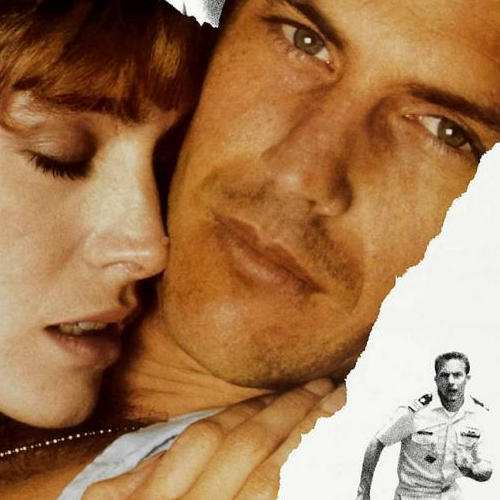
Rob Hunter and Film School Rejects present 36 Things We Learned from the Top Gun Commentary.  Here are three of my favorites

15. The advisors agree that a person can’t give themselves a call sign. Pettigrew recalls one poor fellow who did just that with the call sign “‘Shark,’ so of course he was known as ‘Minnow’ for the rest of his Navy career.”
19. The earlier shot of Maverick and Goose flying upside down just a few feet above a MiG is obviously unrealistic, but McCabe does share that American pilots were known to “communicate” back and forth with their Soviet counterparts. They weren’t flipping each other the bird though. “It was always very positive,” and included holding up vodka and Playboy magazines. “They’re doing their job, we’re doing our job, we don’t set the policy, we just execute it.”
27. The elevator scene between Charlie and Maverick was shot five months after production wrapped when they decided the characters’ relationship needed to be strengthened. McGillis is wearing a hat because her hair was different due to filming on a different movie, and even Cruise’s hair is noticeably longer. “Kelly had lost like 60 pounds and Tom was actually shooting Color of Money,” says Scott, so they had to shoot the scene in Chicago. They did some pick-ups for the love scene then as well.

20 Fun Facts About “I Love Lucy”

Kara Kovalchik and Mental_Floss present 20 Fun Facts About I Love Lucy Here are three of my favorites

1. CBS DIDN’T THINK AMERICANS WOULD BUY THAT LUCY WAS MARRIED TO A “FOREIGN” MAN.
When CBS approached Lucille Ball with the offer of turning her popular radio show My Favorite Husband into a television show, she was agreeable with one condition: that her real-life husband, Desi Arnaz, would be cast in the role of her spouse (played on the radio by Richard Denning). The network balked—there was no way that American viewers would accept average housewife Liz Cooper (her character’s name on the radio series) being married to a “foreign” man with an indecipherable accent. Never mind the fact that Lucy and Desi had been married more than a decade; such a “mixed” marriage was unbelievable.

3. THE SHOW BROKE GROUND IN SEVERAL WAYS, SIMPLY BECAUSE THE ARNAZES WOULDN’T MOVE TO NEW YORK.
Lucille and Desi wanted to work in Los Angeles, near their home and their new baby daughter Lucie. But in 1951 the majority of television shows were broadcast from New York, and that’s where sponsor Philip Morris wanted their show to originate as well. In those days the U.S. wasn’t wired for television from coast-to-coast; shows broadcast live could only be transmitted so far. As a result, such shows were preserved on kinescopes (a movie camera aimed at a TV monitor that recorded the show in negligible quality) and shipped to distant stations.

Philip Morris objected to I Love Lucy being performed in California and the kinescopes sent to New York; their biggest cigarette market was up and down the east coast and they wanted the best TV picture quality for that area. Desi Arnaz suggested that the show be filmed with three cameras, like a stage play, which would provide the same quality picture for every market. But multi-cameras had never been used on a situation comedy before, and there were many obstacles involved, not the least of which was accommodating a live studio audience (Desi knew that Lucille worked best when she got immediate audience feedback).

Desi hired legendary cinematographer Karl Freund to help solve the dilemma, and along with writer-producer Jess Oppenheimer and director Marc Daniels, they built a set, and the necessary filming equipment was strategically placed. CBS balked at the additional expense involved in this undertaking, so Arnaz struck a deal: he and Lucille would take a large cut in their salaries and their company, Desilu Productions, would retain ownership of the films in exchange. The enduring high quality of the 35 millimeter film was part of the reason that I Love Lucy became so popular in rerun syndication, and Desilu’s 100 percent ownership of the series made Lucille and Desi the first millionaire TV stars.

9. DESI ARNAZ HAD LIFTS IN HIS SHOES (AND HIS LOVESEAT).
Arnaz listed his height as 5’11” in most official biographies, but those who worked with him knew that in reality he was 5’9” and wore four-inch lifts in his shoes. Lucille Ball stood 5’7” in her stocking feet, and when she wore heels she seemed to tower over her husband. Desi Arnaz Jr. would later explain to an interviewer that his father “was a Cuban with a Latin male’s pride,” which is why it was important to him to be taller than his wife. A dual-purpose, subtle additional cushion (undetectable by the viewing audience) was added to the Ricardo’s loveseat so that Ricky would be taller than Lucy while seated, and would also give him the extra boost needed to gracefully rise from a sitting position up onto his elevator shoes.

16 Thrilling Facts About the Bourne Movies

Roger Cormier and Mental_Floss present 16 Thrilling Facts About the Bourne Movies Here are three of my favorites

3. BRAD PITT, SYLVESTER STALLONE, AND RUSSELL CROWE COULD HAVE BEEN BOURNE.
Pitt was offered the part, ultimately turning it down to work on Spy Game. Liman met with Crowe and Stallone, too. Matt Damon was the actor Liman thought best understood what he wanted to do with the material.

8. LIMAN INSTRUCTED DAMON TO WALK LIKE A BOXER.
Damon said it really helped in finding his character. He spent six months learning boxing for the first movie, in addition to six months of martial arts training, and hundreds of hours of gun training.

9. THE MARTIAL ARTS STYLE USED IS CALLED KALI.
In Kali, one uses the energy of his or her opponent against them. Liman figured that’s what Bourne would use.

11 Magical Facts About “I Dream of Jeannie”

Sarene Leeds and Mental_Floss present 11 Magical Facts About I Dream of Jeannie.  Here are three of my favorites

1. BARBARA EDEN DIDN’T LIKE THAT JEANNIE AND TONY NELSON GOT MARRIED.
The palpable sexual tension between Hagman’s astronaut character and the mischievous genie who lived under the same roof for the first four seasons of the series was what kept the series exciting—the objectification of Eden’s character notwithstanding. Here was a midriff-baring beauty, willing and able to fulfill her master’s every wish and command, and he still managed to keep her out of his bedroom for most of Jeannie’s run. By 1969, the sexual revolution was well under way, and it was time for Tony and Jeannie to get together. Except, as we all know, that kind of creative decision usually sounds the death knell for a TV show, and I Dream of Jeannie was no different. The characters tied the knot during the 1969-1970 season, which ended up being the series’ last.

In an interview with the Today show’s Willie Geist earlier this year (video above), Eden made no bones about her feelings regarding the Nelson marriage: “It ruined the show,” she said. “Because [Jeannie] wasn’t human … She thought she was, and [Tony] knew she wasn’t … I think it broke credibility.”

2. THE FAMILIAR-SOUNDING JEANNIE THEME SONG DIDN’T EXIST UNTIL THE SECOND SEASON.
You know the tune: Matthew Broderick did an unforgettable 12-second dance to it in Ferris Bueller’s Day Off. But the bouncy riff that will always be synonymous with I Dream of Jeannie didn’t first appear until the series’ second season, when a new, in-color animated opening sequence was introduced. The first season, which was filmed in black and white, tried a couple of different openers: First there was the expository one that brought the audience up to speed on how Jeannie and Tony met; eventually, the exposition was dropped for this jazzy, albeit abbreviated, animated sequence.

8. I DREAM OF JEANNIE HAD A FUN LITTLE CONNECTION WITH FELLOW NBC SITCOM THE MONKEES.
While The Monkees only lasted two seasons, it had a sweet brother-sister-type relationship with I Dream of Jeannie while it was on the air, as they were both on NBC and shared the same music supervisor, Don Kirshner. About midway through the fall 1966, in The Monkees episode “The Spy Who Came in From the Cool,” Davy Jones rubs a small table lamp (see above video, 14:10). In true Jeannie fashion, a beautiful harem-costumed genie (not Barbara Eden) emerges from a puff of smoke and assures her “master” that she will help him. A bemused Jones remarks, “Imagine that—wrong show!”

The following year, in the Jeannie episode “Jeannie, the Hip Hippie” (see above), Jeannie puts together a rock band featuring Tommy Boyce and Bobby Hart, who penned some of The Monkees’ most famous songs. At one point, an instrumental version of one of the duo’s biggest hits for the band, “Last Train to Clarksville,” can be heard. Plus, Hart is holding a copy of The Monkees’ first album in one scene.

10 Vigilant Facts About “The Boondock Saints”

Emily Becker and Mental_Floss present 10 Vigilant Facts About The Boondock Saints.  Here are three of my favorites

1. THE SCRIPT WAS INSPIRED BY SEVERAL REAL-LIFE EVENTS.
Writer-director Troy Duffy based the story for The Boondock Saints on things he saw when he was working as a bartender in Los Angeles, including watching a drug dealer steal money from a dead body. The film also opens with the story of Kitty Genovese, a young woman who was murdered in Queens in 1964 and whose story has become a bit of an urban legend after it was widely (but inaccurately) reported that, despite her cries for help and dozens of witnesses, no one came to her rescue.

3. TROY DUFFY WAS HIS OWN BIGGEST OBSTACLE IN GETTING THE FILM MADE.
Like most artists, Duffy had a very clear vision for the film. This led to some contentious meetings with potential collaborators, including getting into an argument with Ewan McGregorover the death penalty during their first meeting. Duffy’s volatile personality ended up costing him his deal with Miramax, leading him to have to shop the film around to other distributors. Eventually, the film was picked up by Franchise Pictures, despite the negative chatter now surrounding both Duffy and his movie.

9. A THIRD FILM IS PRETTY MUCH CONFIRMED.
When asked whether a third film might be coming during a Reddit AMA last December, Norman Reedus, who played Murphy MacManus (and, more famously, is The Walking Dead’s Daryl Dixon), responded, “Yeah it’s on. In the works, happening.” Though no official announcement of it has been made, that hasn’t stopped some outlets from reporting on what it might look like.

17 Super Facts About “The Incredibles”

Roger Cormier and Mental_Floss present 17 Super Facts About The Incredibles.  Here are three of my favorites

9. IT WAS THE FIRST PIXAR MOVIE COMPRISED ONLY OF CG HUMAN BEINGS.
Copies of the medical school text Gray’s Anatomy were given to the digital sculptors to help them figure out how the human body moves. Live action footage of Pixar animators walking was also used.

14. THE “A113” EASTER EGG DEFINITELY MADE IT IN.
“A113′ is a classroom number at the California Institute of the Arts, where Bird and several others in the animation industry learned about graphic design and character animation. Bird was the first person to purposely drop in an “A113” reference, when he did so on the 1987 TV show Amazing Stories. It has since been in every episode of The Simpsons Bird worked on (Bird was a creative consultant and director on the series from 1989 to 1998 and directed the “Do the Bartman” music video), as well as every Pixar film. In The Incredibles, Mr. Incredible has a meeting in Conference Room A113, and he’s later held on Level A1, Cell Block 13 on the island.

11. BIRD DIDN’T REALIZE THAT HE RESEMBLED THE VILLAIN UNTIL IT WAS TOO LATE.
The writer-director admitted if he had noticed the resemblance earlier in the process, he would have asked to change Syndrome’s look.

17 Bankable Facts About “The Color of Money”

Roger Cormier and Mental_Floss present 17 Bankable Facts About The Color of Money Here are three of my favorites

5. JACKIE GLEASON PASSED ON MAKING A CAMEO.
Gleason famously played Minnesota Fats in The Hustler, and his character played a big part in the book version of The Color of Money. “We desperately wanted the character to return,”Newman told The New York Times, ”but every time we put him in, it seemed like we were trying to glue an arm on a man and make it stick.” Added Scorsese: ”We finally presented a script to Gleason with Fats in. But he felt it was an afterthought.” As such, Gleason passed.

14. SCORSESE GOT THE IDEA FOR GOODFELLAS WHILE SHOOTING  THE COLOR OF MONEY.
In a rare moment of downtime, “I read a review of [Nicholas Pileggi’s] Wiseguy when I was directing The Color of Money, and it said something about this character Henry Hill having access to many different levels of organized crime because he was somewhat of an outsider,”Scorsese told Rolling Stone. “He looked a little nicer. He was able to be a better frontman and speak a little better. I thought that was interesting, because you could get a cross section of the layers of organized crime—from his point of view, of course. So I got the book, started reading it and was fascinated by the narrative ability of it.”

15. DAVID GEFFEN WAS UPSET OVER THE SOUNDTRACK.
Robbie Robertson put the soundtrack together, which is best known for featuring Eric Clapton and Robertson’s “It’s in the Way That You Use It” and Warren Zevon’s “Werewolves of London.” Geffen would not allow Robertson permission to use his own voice at any point on the album, because he felt that the singer’s first solo record was being delayed on account of his work on the soundtrack. The Band performer still managed to get music from the likes of Clapton, Don Henley, B.B. King, Robert Palmer, and Willie Dixon.

14 Colorful Facts About “Reservoir Dogs”

Eric D. Snider and Mental_Floss present 14 Colorful Facts About Reservoir Dogs.  Here are three of my favorites

11. A MISTAKE LED TO ONE OF THE FILM’S MYSTERIES.
In the climactic showdown, Joe’s pointing a gun at Mr. Orange (on the floor, already dying), Mr. White is pointing a gun at Joe, and Nice Guy Eddie (Joe’s son, played by Chris Penn) is pointing a gun at Mr. White. Joe shoots Orange, White shoots Joe, Eddie shoots White … butfour gunshots are heard, and everyone who wasn’t already on the ground ends up that way. So who shot Nice Guy Eddie? (You can find T-shirts asking that question.) The only logical answer, and the way it was supposed to have played out, is that Mr. White did. He shot Joe, then shot Eddie at the same time Eddie was shooting him. But according to Chris Penn, when they filmed it, the squib on Keitel’s (Mr. White’s) body went off slightly prematurely, Keitel went down as he fired his second shot (which looks like it’s still aimed at Joe), and then Penn’s squib exploded as planned. Penn noticed right away that it was ambiguous, but Tarantino decided to leave it that way.

4. IT WENT THROUGH SEVERAL CASTING PERMUTATIONS.
In the early stages, Tarantino was going to play Mr. Pink himself, with producer Lawrence Bender as Nice Guy Eddie. Steve Buscemi was later considered for Nice Guy Eddie, but ended up playing Mr. Pink, a role for which Michael Madsen (Mr. Blonde) auditioned. Samuel L. Jackson and Ving Rhames both almost played Holdaway (the cop Tim Roth works with in flashbacks). Robert Forster, who later appeared in QT’s Jackie Brown, auditioned for the part of Joe, which went to Lawrence Tierney.

5. THERE WERE SOME UNUSUAL OFFERS FROM PRODUCERS.
While searching for producers to finance the film and save them from having to make it themselves on a minuscule budget, Tarantino and Bender fielded several offers that sounded good but had a catch to them. One producer offered $1.6 million, but only if the ending was changed so that everyone who was dead came back to life, the whole thing having been a hoax or a con of some kind. Another offered $500,000 … but only if his girlfriend could play Mr. Blonde. (Bender said it was such a bizarre idea that he and Tarantino actually considered it.)

Good Grief! 18 Beloved Facts About Peanuts

Shaunacy Ferro and Mental_Floss present Good Grief! 18 Beloved Facts About Peanuts Here are three of my favorites

2. THERE ARE 17,897 STRIPS. 
They ran between 1950 and 2000, each one drawn by Schulz. Schulz died from colon cancer at age 77, the day before the last original strip ran.

3. SCHULZ DIDN’T CHOOSE THE NAME.
Charlie Brown first appeared as a character in a comic strip called Li’l Folks, but when Schulz approached the United Feature Syndicate about a publishing deal in 1950, the syndication service thought the name was too close to two other comics it ran at the time, and changed itto Peanuts. Schulz never liked the new moniker; he thought it “made it sound too insignificant.”

14. CHARLIE BROWN’S HEAD IS REALLY HARD TO DRAW.
When asked about the hardest character trait to ink, Paige Braddock, the creative director of Charles M. Schulz Creative Associates, admitted that Charlie Brown’s noggin is the most complicated piece to pull off. “It is nearly impossible to get right when you first start working with the characters, and if it is off in the least, it really stands out,” she says in The Art and Making of the Peanuts Movie. Braddock is currently responsible for the look of all Peanuts-related products.

10 Operatic Facts About “Bohemian Rhapsody”

Kara Kovalchik and Mental_Floss present 10 Operatic Facts About Bohemian Rhapsody Here are three of my favorites

1. FREDDIE MERCURY STARTED WRITING IT IN 1968.
“Bohemian Rhapsody”, or “Bo Rhap” as it is known by Queen fans, had its beginnings in 1968 when Freddie Mercury was a student at London’s Ealing Art College. He’d come up with an opening line—“Mama, just killed a man”—but no melody. Because of the Old West feel (in his mind) to the lyric, he referred to his work in progress as “The Cowboy Song.”

6. PROMOTING THE SONG PROVED PROBLEMATIC.
After it was decided to release “Bohemian Rhapsody” as a single, the band was faced with a bit of a dilemma: At the time in England, it was traditional for bands to appear on shows like Top of the Pops to promote their latest hits. But Queen was scheduled to begin a tour soon, plus (as Brian May admitted) they’d feel self-conscious miming to the operatic section. They solved the problem by filming a promotional film, or “pop promo” as it was called in the industry lingo of the time, that could be shown not only on UK music shows, but also around the world in other markets, such as American Bandstand.

10. A BLUE VINYL PRESSING OF THE SONG IS WORTH MORE THAN $5000.
The Holy Grail in terms of Queen collectibles is a 7-inch limited edition of “Bohemian Rhapsody” that was pressed in blue vinyl. In the summer of 1978, EMI Records won the Queen’s Award To Industry For Export Achievement (that’s “Queen” as in Her Majesty Elizabeth II). The label’s primary reason for sales in far-reaching territories that lacked manufacturing facilities was Queen, as in the band. To celebrate their prestigious award, EMI pressed 200 copies of “Bohemian Rhapsody” in blue vinyl, each of which was hand-numbered. Numbers one through four went to the band members, of course, while other low-numbered copies were given to friends and family members. Bona fide copies from this original pressing currently sell for upwards of $5000.

The Best Cities for Surviving the Zombie Apocalypse

Ok, so the zombie apocalypse breaks out… where do you go?

Kiona Smith-Strickland and Gizmodo might have the answers in These Are the Best Cities for Surviving the Zombie Apocalypse.  The worst cities are also listed.

Neither my home town [Port Orange, Florida] nor my birth town [Terre Haute, Ind.] made the best cities for survival list.  Of course they also managed to stay off the worst cities list as well.  So I do have that going for me.

7 of the Creepiest Coincidences in Movie History

Hollywood.com provides us with 7 of the Creepiest Coincidences in Movie History.  I thought this was the creepiest of the bunch…

3. Poltergeist
In the classic horror film, Poltergeist, there’s a poster hanging above Robbie’s bed that reads “1988 Superbowl XXII”

You’d expect a little kid to a have a football poster up in his room, but what makes this weird is the fact Poltergeist was released in 1982, but Superbowl XXII wouldn’t be played for another six years.

So why did they use a poster from a future game? Well, no one really knows, but on January 31, 1988, the day Superbowl XXII was held, Heather O’Rourke (the actress who played Robbie’s younger sister) became violently ill. She passed away the next day at Rady Children’s Hospital in San Diego, less than five miles away from Jack Murphy Stadium where Super Bowl XXII was played.

12 Fiendishly Fun Facts About “The Munsters”

Kara Kovalchik and Mental_Floss present 12 Fiendishly Fun Facts About The Munsters.  Here are three of my favorites

2. THE CHOICE OF MONSTER CHARACTERS WAS STRICTLY INTENTIONAL (AND ROYALTY-FREE).
Universal Studios owned Universal Television, which owned The Munsters. Universal Studios also owned the copyrights to most of the classic monsters, including Dracula, the Wolf Man, and Frankenstein’s monster. The studio had been running their old classic horror films on television since the 1950s and found that there was still an impressive audience for these decades-old monster movies. When Connelly and Mosher pitched their series idea, CBS executives knew that they had one advantage that ABC lacked with The Addams Family: the ability to use the Universal monster characters. The Munsters regularly topped The Addams Family in the ratings, mainly because of the instant identifiability of (and built-in fan base for) Dracula, Frankenstein’s bride, et al.

10. HERMAN’S COSTUME WAS A PERSONAL TORTURE CHAMBER FOR FRED GWYNNE.
Even though Gwynne would eventually reminisce that Herman was one of his favorite characters, the time he spent on The Munsters set was often fairly miserable, thanks to the various devices necessary to transform him into the lovable Frankenstein monster. On his feet he wore asphalt paver’s boots with four-inch soles, and his thighs, arms, and torso were covered in 40 pounds of foam rubber padding. He contended with back pain daily caused by the weight of the suit and inflexibility of the shoes. His head was fitted with a foam latex piece to flatten the top of his head and then he had to endure two hours in the makeup chair. He perspired freely under the heavy costume and hot studio lights and lost 10 pounds in one month despite consuming gallons of lemonade between takes. The producers eventually rented a compressed air tank and would poke the nozzle inside Gwynne’s collar to blow cool air on him.

11. THE COSTUME HAD ONE BENEFIT: IT EXCUSED GWYNNE FROM PERSONAL APPEARANCES.
As The Munsters gained popularity, its stars received more and more requests to appear at various functions. The producers, of course, sent the actors out as often as possible since such appearances not only promoted the show, they also propelled the sales of the variousMunsters merchandise that saturated the market at the time. Only Fred Gwynne was able to relax on his days off (for the most part), since the time and expense required to get him into character outweighed the publicity value of cutting ribbons at supermarket openings. One of the rare times he played Herman in public was alongside Al Lewis in the 1964 Macy’s Thanksgiving Day Parade. Gwynne confessed to TV Guide that he’d been taking slugs from a bottle of whiskey the entire time, because he “had to get bombed so I could say ‘hello’ to the little kiddies for 40 blocks.”

13 Foreboding Facts About “The Omen”

Stacy Conradt and Mental_Floss present 13 Foreboding Facts About The Omen.  Here are three of my favorites

9. GREGORY PECK AND RICHARD DONNER HAD ONE ARGUMENT DURING FILMING.
Peck wanted to angrily smash a bunch of stuff during the scene where Robert finds out his wife has died. Donner disagreed; he wanted to cut in on Thorn well after the discovery, not in the moment. According to Donner, he and Peck argued about the scene for an entire day before Peck told him, “You’re wrong. I’m right. But you’re the director, and therefore I have to do it your way.” After the scene was shot, Peck reviewed the dailies and conceded that Donner had been right about how to film Thorn’s reaction.

11. THE MOVIE CAME WITH A TERRIFYING AD CAMPAIGN.
To promote the movie, gloom-and-doom posters and promotional materials went up all over the U.S. They contained uplifting messages such as:

  • “Good morning. You are one day closer to the end of the world.”
  • “Remember … you have been warned.”
  • “It is a warning foretold for thousands of years. It is our final warning. It is The Omen.


12. THE PRODUCTION MAY HAVE BEEN CURSED.
Like many other horror movies, some spooky things happened to the cast and crew that made them wonder if they had angered some higher power. Here are just a few of the incidents:

  • Peck, writer David Seltzer, and executive producer Mace Neufeld were on planes that were struck by lightning or had a near-miss.

  • The crew had planned to charter a plane to get some aerial shots, but had to switch at the last minute due to a scheduling conflict. The original plane ended up crashing, killing everyone on it.

  • Director Richard Donner’s hotel was bombed by the IRA the day after they shot the safari park scene.

  • A zookeeper at the safari park was killed in the lion area, which also happened the day after filming.

  • The stuntman standing in for Peck was attacked by Rottweilers during the graveyard scene; they managed to bite through the protective gear he was wearing.

  • After the film wrapped, special effects director John Richardson and his assistant, Liz Moore, moved on to the film A Bridge Too Far. While filming in the Netherlands, the duo was in a serious car accident. Richardson survived, but Moore was decapitated. This was especially eerie since Richardson was responsible for the infamous decapitation scene in The Omen.