Category: Trivia

15 Must-Watch Facts About “The Ring”

Roger Cormier and Mental_Floss present 15 Must-Watch Facts About The Ring.  Here are three of my favorites

2. THE DIRECTOR FIRST SAW RINGU ON A POOR QUALITY VHS TAPE, WHICH ADDED TO ITS CREEPINESS.
Gore Verbinski had previously directed MouseHunt. He said the first time he “watched the original Ringu was on a VHS tape that was probably seven generations down. It was really poor quality, but actually that added to the mystique, especially when I realized that this was a movie about a videotape.” Naomi Watts struggled to find a VHS copy of Ringu while shooting in the south of Wales. When she finally got a hold of one she watched it on a very small TV alone in her hotel room. “I remember being pretty freaked out,” Watts said. “I just saw it the once, and that was enough to get me excited about doing it.”

6. THE TWO WEREN’T SURE IF THE MOVIE WAS GOING TO BE SCARY ENOUGH.
After shooting some of the scenes, and not having the benefit of seeing what they’d look like once any special effects were added, Henderson and Watts worried that the final result would not be scary enough. “There were moments when Naomi and I would look at each other and say, ‘This is embarrassing, people are going to laugh,'” Henderson told the BBC.” You just hope that somebody makes it scary or you’re going to look like an idiot!”

11. CHRIS COOPER WAS CUT FROM THE MOVIE.
Cooper played a child murderer in two scenes which were initially meant to bookend the film. He unconvincingly claimed to Rachel that he found God in the beginning, and in the end she gave him the cursed tape. Audiences at test screenings were distracted that an actor they recognized disappears for most of the film, so he was cut out entirely.

10 Amorphous Facts About “The Blob”

Mark Mancini and Mental_Floss present 10 Amorphous Facts About The Blob.  Here are three of my favorites

6. ITS THEME SONG CRACKED THE BILLBOARD TOP 40.

Titled “Beware of the Blob,” this catchy anthem spent three weeks on the Billboard charts,peaking at #33. The song was co-written by Burt Bacharach, who also penned such hits as “Raindrops Keep Fallin’ on my Head” and “What’s New Pussycat?” Thus far, Bacharach’s career has included six Grammy and three Oscar wins. Mack David—his partner on The Blob—was a seasoned vet, too (and eight-time Oscar nominee) who’d written lyrics for Disney’sCinderella (1950), among many other films.

7. ED MCMAHON CAN BE HEARD DURING THE MOVIE THEATER SCENE.

When the throbbing invertebrate descends upon an unsuspecting cinema, the audience is watching a genuine, real-life thriller flick. Daughter of Horror (a.k.a. Dementia) was released in 1955 and features narration from Johnny Carson’s future Tonight Show sidekick. Keep your ears open for McMahon’s familiar voice near the beginning of the clip above.

5. LEADING MAN STEVE MCQUEEN CHEATED HIMSELF OUT OF A HUGE PAYCHECK.
Despite a handful of television roles—including a guest appearance on the NBC series Tales of Wells Fargo—Steve McQueen (credited here as Steven McQueen) had yet to establish himself as Hollywood’s favorite bad boy. So Harris got him for a bargain price. After taking on the lead role (his first) in The Blob, McQueen was offered a choice: $3000 upfront or 10 percent of the film’s gross profits; he didn’t hesitate in opting for the former. At the time, McQueen was in dire financial straits and didn’t have much faith in The Blob’s box office prospects. He’d soon regret that call. Within a month of its release, The Blob had earned $1.5 million and went on to snag $12 million (nearly $97 million in today’s dollars) domestically.

13 Judicious Facts About “To Kill a Mockingbird”

Eric D. Snider and Mental_Floss present 13 Judicious Facts About To Kill a Mockingbird Here are three of my favorites

1. ROCK HUDSON ALMOST PLAYED ATTICUS FINCH.
Universal Pictures offered the role to Rock Hudson when the project was first being developed, and the actor was prepared to take it. Things stalled, however, when the film’s producer, Alan J. Pakula, wanted an even bigger star: Gregory Peck. Universal basically said, “Well, sure! If you can get Gregory Peck, we’ll not only agree to it, we’ll finance the movie!” And that’s what happened. Sorry, Rock.

3. GREGORY PECK WANTED TO CHANGE THE TITLE.
He wasn’t the only person who felt the phrase “to kill a mockingbird” didn’t accurately reflect the content of the story. He was the most influential, though, and he pushed for a change before he’d even read the screenplay. Lee’s literary agent, Annie Laurie Williams, was furious at the suggestion, and wrote to the publisher (who naturally wanted the bestselling book’s title to carry over) to assure him that Peck “has been signed to play the part of Atticus, but has no right to say what the title of the picture will be.” Mulligan and Pakula publicly stated that the title would remain intact, and Peck dropped the subject.

8. THERE’S A REASON THE MOVIE FOCUSES MORE ON ATTICUS THAN THE BOOK DOES, AND THAT REASON IS NAMED GREGORY PECK.
After seeing a rough cut of the film early in the summer of 1962, Peck sent a memo to his agent and to Universal execs listing 44 problems he had with it. What it boiled down to was that the children had too much screen time, Atticus not enough. “Atticus has no chance to emerge as courageous or strong,” Peck wrote. He said in a later memo, “In my opinion, the picture will begin to look better as Atticus’ story line emerges, and the children’s scenes are cut down to proportion.” Universal wanted the star to be happy, but Mulligan and Pakula’s contract had stipulated they’d get final cut. Still, they made more changes to appease Peck, deleting some of the children’s scenes in favor of Peck’s. In the end, the trial occupies some 30 percent of the film, despite being only about 15 percent of the book

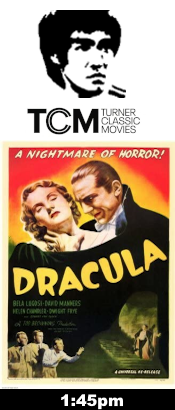
10 Blood-Curdling Facts About Dracula

Joy Lanzendorfer and Mental_Floss present 10 Blood-Curdling Facts About Dracula.  Here are three of my favorites

2. VAMPIRES SHARE A HISTORY WITH FRANKENSTEIN.
In 1816, on a gloomy day in Lake Geneva, Lord Byron proposed a ghost story contest that led to Mary Shelley writing Frankenstein. It was also the birth of The Vampyre by John Polidori, he first-ever vampire story written in English. Polidori was Byron’s personal physician and he may have based his aristocratic bloodsucker on his patient—which would make Lord Byron the basis for the bulk of vampire depictions that followed. (Other accounts say that Polidori stole a fragment of fiction that Byron wrote and used it in his story.) In any case, The Vampyreinfluenced Varney the Vampire, a popular penny dreadful from the 1840s, and Carmilla, a novella about a lesbian vampire from the 1870s, and, of course, Stoker.

3. STOKER STARTED WRITING DRACULA RIGHT AFTER JACK THE RIPPER.
Stoker began Dracula in 1890, two years after Jack the Ripper terrorized London. The lurid atmosphere these crimes produced made their way into Stoker’s novel, which was confirmed in the 1901 preface to the Icelandic edition of Dracula. Stoker’s reference links the two frightening figures in such a way that raises more questions than provides answers, but no doubt confirms the terrifying real-life influence on his fictional world.

9. IT WAS ALMOST CALLED THE UNDEAD.

Amandajm, Wikimedia Commons // Public Domain

The working title of the novel was The Dead Un-Dead, which was later shortened to The Undead. Then, right before it was published, Stoker changed the title once more to Dracula. What’s in a name? Well, it’s tough to say. Upon release, Dracula got good reviews, but it was slow to sell, and by the end of his life, Stoker was so poor that he had to ask for a compassionate grant from the Royal Literary Fund. The Gothic tale didn’t become the legend it is today until film adaptations began popping up during the 20th century.

13 Epic Facts About “Once Upon a Time in America”

Eric D. Snider and Mental_Floss present 13 Epic Facts About Once Upon a Time in America Here are three of my favorites

1. SERGIO LEONE TURNED DOWN THE GODFATHER TO MAKE IT. 
By his own account, Once Upon a Time in America was Leone’s pet project, the one he devoted most of his adult life to making. He became interested in the story while he was making 1968’s Once Upon a Time in the West , and was so fixated on it that when Paramount approached him a few years later to make The Godfather, he politely declined. If he’d known it would take another 12 years to get Once Upon a Time in America produced anyway, maybe he would have accepted. But then where would Francis Ford Coppola be?

8. NOBODY HAS EVER SEEN LEONE’S COMPLETE VERSION.
After the nine-month shoot, Leone had eight to 10 hours’ worth of material. He trimmed it down to six hours, hoping to release it in two three-hour parts, but the producers were having none of that. So he reduced it to 269 minutes—four and a half hours—but it still wasn’t enough. He chopped out another 40 minutes, and this 229-minute version is what premiered at the 1984 Cannes Film Festival and subsequently played in European theaters.

American distributors butchered the film even more, cutting out another 90 minutes and rearranging the scenes into chronological order (no more flashbacks), which rendered the movie incomprehensible. The American version flopped, of course, and Leone was devastated. A Martin Scorsese-led effort to restore Leone’s original version resulted in a 251-minute cut playing at Cannes in 2012, but some 18 minutes were still missing due to legal issues over who owned the missing scenes. The 251-minute version is now available on Blu-ray and DVD. Someday, perhaps the complete version will be restored.

12. LEONE WAS A PERFECTIONIST. 
Leone and De Niro had their different approaches, but one thing they had in common was perfectionism. According to one of the screenwriters, Leone did 35 takes of a large (and expensive) crowd scene, only to insist on one more because he noticed a kid in the crowd looking directly at the camera.

Aaugh! 10 Facts About “It’s the Great Pumpkin, Charlie Brown!”

Jake Rosen and Mental_Floss present Aaugh! 10 Facts About It’s the Great Pumpkin, Charlie Brown!  Here are three of my favorites

1. THE FUTURE OF ANIMATED PEANUTS SPECIALS DEPENDED ON IT.
Mendelson and animator Bill Melendez had very high aspirations for A Charlie Brown Christmas. When they screened it prior to its premiere, however, they felt it didn’t live up to its potential—and CBS agreed. The network said it was the last Peanuts special they would buy. But after it delivered huge ratings, CBS changed their mind and asked for more. When the two delivered another hit—the baseball-themed Charlie Brown All-Stars—they thought they had earned the network’s confidence.

Instead, CBS told them they needed a special that could run every year, like A Charlie Brown Christmas. If Mendelson couldn’t provide it, they told him they might not pick up an option for a fourth show. Despite Schulz and his collaborators being annoyed by the network’s abrasive attitude, they hammered out a story with a seasonal clothesline that could be rerun in perpetuity.

3. IT WAS THE FIRST TIME LUCY SNATCHED THE FOOTBALL FROM CHARLIE BROWN.
In animated form, anyway. When Schulz, Mendelson, and Melendez were brainstorming scene ideas for the special, talk turned to the fact that Lucy’s habit of pulling the football away from Charlie Brown had never been seen in animation. They also decided it would be a good time to introduce Snoopy’s World War I Flying Ace. The joke had appeared in the strip, but Mendelson thought it would work even better in motion. He was right: the sequence with Snoopy in a doghouse dogfight is one of the most memorable in the Peanuts animated canon.

8. THE ORIGINAL AIRINGS WERE SLIGHTLY DIFFERENT.

Production costs for the early Charlie Brown specials were subsidized by television sponsors Coca-Cola and Dolly Madison snack cakes: the brands appear at the beginning and end of the broadcast. The Coke “bug” appeared for several years before getting phased ou

16 Fun Facts About “Look Who’s Talking”

Roger Cormier and Mental_Floss present 16 Fun Facts About Look Who’s Talking.  Here are three of my favorites

3. THREE STUDIOS PASSED ON THE FILM.
Warner Bros., Disney, and Orion Pictures all passed on the idea before Tri-Star took a shot.

11. AUDIENCES IN DIFFERENT COUNTRIES HEAR DIFFERENT BABY VOICES.
Foreign countries had their own celebrities voicing baby Mikey. It was Travolta’s idea.

15. IT INSPIRED THE TV SHOW BABY TALK AND THE E*TRADE BABY.
ABC’s Baby Talk, featuring Tony Danza as the voice of the little one, wasn’t as successful as the movie; star Scott Baio called it a “nightmare.” The E*Trade baby endorsed the financial company from 2008 to 2014.

10 Deliberate Facts About “12 Angry Men”

Eric D. Snider and Mental_Floss present 10 Deliberate Facts About 12 Angry Men.  Here are three of my favorites

2. IT’S THE ONLY FILM HENRY FONDA EVER PRODUCED. 
The actor saw the TV production and felt strongly that it would make a great movie. Unable to find any producers willing to take a risk on it (a serious, single-room drama in a time when colorful widescreen epics were in fashion), Fonda teamed up with the writer, Reginald Rose,to produce it themselves. Fonda wound up hating the experience—not the acting side, which he loved (and he was always very proud of the film), but the business side. He hated having to worry about financial and logistical details, and couldn’t stand watching himself in the daily rushes (which producers, but not necessarily actors, are expected to do).

5. IT USES CAMERA TRICKS TO INCREASE THE TENSION.
The problem with making a film set entirely in one room is that it’s bound to get boring, visually speaking (unless it’s a very interesting room, which a jury room is not). Lumet also realized he couldn’t have his characters moving around very much, meaning most of the “action” would involve sitting around a table. So he had the camera move a lot instead. He and his cinematographer, Boris Kaufman (who won an Oscar in 1955 for On the Waterfront), also devised some photographic methods of amplifying the movie’s tone. Lumet wrote: “I shot the first third of the movie above eye level, shot the second third at eye level, and the last third from below eye level. In that way, toward the end, the ceiling began to appear. Not only were the walls closing in, the ceiling was as well. The sense of increasing claustrophobia did a lot to raise the tension of the last part of the movie.”

8. LUMET WAS ONLY THE THIRD PERSON TO GET A BEST DIRECTOR NOMINATION FOR HIS DEBUT FILM.
Orson Welles had been nominated for Citizen Kane, and Delbert Mann had actually won forMarty. About 20 directors have since been Oscar-nominated for their debuts. (Six have won.)

13 Futuristic Facts About “The Fifth Element”

Eric D. Snider and Mental_Floss present 13 Futuristic Facts About The Fifth Element.  Here are three of my favorites

1. LÉON: THE PROFESSIONAL HELPED IT GET MADE. 
Mad Frenchman Luc Besson had five features under his belt when he started working on The Fifth Element in 1992. But his respectable track record wasn’t enough to pull in the kind of financial backing he needed for a futuristic sci-fi adventure. So after some pre-production work (including meeting with designers; see below), he put The Fifth Element aside and—in the course of 11 months—wrote and directed Léon: The Professional, starring Jean Reno, 13-year-old Natalie Portman, and future The Fifth Element villain Gary Oldman. Léon‘s strong showing ($45 million worldwide, on a $16 million budget) gave the people who controlled the purse strings more confidence in Besson’s ability to make The Fifth Element a success, and the project was put back on track.

2. BESSON KIND OF WISHES IT HAD TAKEN EVEN LONGER TO GET IT MADE. 
He explained to The Playlist: “I was a little bit frustrated because I made the film right before all the new effects arrived. So when I did the film it was all blue screen, six hours, dots on the wall, takes forever to do one shot. Now, basically, you put the camera on your shoulder and then you run and then you add a couple of dinosaurs and spaceships.” He said he’d love the chance to make another futuristic sci-fi film—maybe even a sequel to The Fifth Element—now that technology has made it easier.

4. IT BORROWED SOME IDEAS FROM PLATO.
Maybe you knew this, but Luc Besson didn’t. He conceived The Fifth Element as a teenager in the 1970s, taking the four classical elements (earth, water, wind, and fire) and combining them to make a fifth (life). Turns out that a lot of ancient people had already come up with the same basic concept, including the Greek philosopher. Besson said, “When my father came across Plato’s writings on the subject, he came to me with the book and said, ‘Do you know that your movie is a remake?’ I read it, and was amazed to see the similarities between what Plato had written and what I had put into the script”

14 “Dark Shadows” Facts with Bite

Jake Rosen and Mental_Floss present 14 Dark Shadows Facts with Bite.  Here are three of my favorites

1. BARNABAS COLLINS WAS AN AFTERTHOUGHT.
Creator Dan Curtis—who would later conceive of The X-Files predecessor Kolchak: The Night Stalker and the classic TV movie Trilogy of Terror—originally had in mind a dramatic series about the strange residents of Collinsport, Maine, as viewed from the perspective of newly-arrived governess Victoria Winters. Though mystical elements—like ghosts—were present, they were subtle and slow to materialize. When the show premiered June 27, 1966, viewers found its characters as impenetrable as Winters did; Variety called it a “yawn.”

Hoping to improve ratings with a classic horror movie trope—a vampire—Curtis introduced Collins, a brooding bloodsucker tortured by his condition. Originally intended to be a fleeting character who would be staked in the heart after a three-week run, he became so popular with viewers (ratings saw a 62 percent increase) that the show was saved from the guillotine.

6. BARNABAS DIDN’T TALK MUCH WHILE FANGED.
Dampened vocally by the fangs he had to wear, Frid also told the Gazette of some production trickery: Collins was rarely filmed talking in them. “My words come out slushy when I wear them, so they have to cut away from me when I talk,” he said. Frid would spit out the fangs, deliver the dialogue, then stuff them back in when the camera returned to him.
10. IT’S THE ONLY SOAP TO SPAWN THREE FEATURE FILMS.
It’s a testament to Dark Shadows‘ rabid following that the series birthed two feature films with the original cast—virtually unheard of for a soap opera of any era. Curtis directed 1970’sHouse of Dark Shadows, which covered much of the same ground as the series but morphedCollins into more of an antagonist. While a feature budget meant actors actually had the privilege of doing more than one take, reviews were mixed.

After the series ended in 1971, Curtis wanted to continue the story with another film. Night of Dark Shadows was released that same year, but Frid declined to participate. Curtis opted for more of a haunted house theme instead, with the show’s cast popping up in different roles. It’s been alleged MGM cut 30 minutes from the finished film, obliterating some plot and character details. In its released form, reviewers found it “dull,” “monotonous,” and “a bore.” (Tim Burton’s 2012 feature, starring Johnny Depp as Collins, didn’t fare much better.)
26 Things We Learned from the “An American Werewolf in London” Commentary

Rob Hunter and Film School Rejects present 26 Things We Learned from the An American Werewolf in London Commentary.  Here are three of my favorites

9. Landis threatened to relocate the film to Paris after British Actors’ Equity balked about Dunne’s role not going to a member. The director actually went so far as to scout locations in France, but Equity backed down and allowed Dunne. Had he moved the production Landis already planned to re-title the film An American Werewolf in Paris. We really dodged a bullet there huh?

20. Dunne wonders why the film never used Warron Zevon’s “Werewolf of London” song, but they still don’t know. Naughton does recall that the filmmakers asked Cat Stevens for permission to use “Moonshadow” only to be told no “because he believed that werewolves really existed.”

26. They recall telling Landis that the lack of silver bullets used to kill David meant this could become a franchise. The director told them in no uncertain terms that there would be no sequel.