Category: Trivia

13 Futuristic Facts About “The Fifth Element”

Eric D. Snider and Mental_Floss present 13 Futuristic Facts About The Fifth Element.  Here are three of my favorites…

1. LÉON: THE PROFESSIONAL HELPED IT GET MADE. 
Mad Frenchman Luc Besson had five features under his belt when he started working on The Fifth Element in 1992. But his respectable track record wasn’t enough to pull in the kind of financial backing he needed for a futuristic sci-fi adventure. So after some pre-production work (including meeting with designers; see below), he put The Fifth Element aside and—in the course of 11 months—wrote and directed Léon: The Professional, starring Jean Reno, 13-year-old Natalie Portman, and future The Fifth Element villain Gary Oldman. Léon‘s strong showing ($45 million worldwide, on a $16 million budget) gave the people who controlled the purse strings more confidence in Besson’s ability to make The Fifth Element a success, and the project was put back on track.

2. BESSON KIND OF WISHES IT HAD TAKEN EVEN LONGER TO GET IT MADE. 
He explained to The Playlist: “I was a little bit frustrated because I made the film right before all the new effects arrived. So when I did the film it was all blue screen, six hours, dots on the wall, takes forever to do one shot. Now, basically, you put the camera on your shoulder and then you run and then you add a couple of dinosaurs and spaceships.” He said he’d love the chance to make another futuristic sci-fi film—maybe even a sequel to The Fifth Element—now that technology has made it easier.

4. IT BORROWED SOME IDEAS FROM PLATO.
Maybe you knew this, but Luc Besson didn’t. He conceived The Fifth Element as a teenager in the 1970s, taking the four classical elements (earth, water, wind, and fire) and combining them to make a fifth (life). Turns out that a lot of ancient people had already come up with the same basic concept, including the Greek philosopher. Besson said, “When my father came across Plato’s writings on the subject, he came to me with the book and said, ‘Do you know that your movie is a remake?’ I read it, and was amazed to see the similarities between what Plato had written and what I had put into the script”

14 “Dark Shadows” Facts with Bite
Jake Rosen and Mental_Floss present 14 Dark Shadows Facts with Bite.  Here are three of my favorites…

1. BARNABAS COLLINS WAS AN AFTERTHOUGHT.
Creator Dan Curtis—who would later conceive of The X-Files predecessor Kolchak: The Night Stalker and the classic TV movie Trilogy of Terror—originally had in mind a dramatic series about the strange residents of Collinsport, Maine, as viewed from the perspective of newly-arrived governess Victoria Winters. Though mystical elements—like ghosts—were present, they were subtle and slow to materialize. When the show premiered June 27, 1966, viewers found its characters as impenetrable as Winters did; Variety called it a “yawn.”

Hoping to improve ratings with a classic horror movie trope—a vampire—Curtis introduced Collins, a brooding bloodsucker tortured by his condition. Originally intended to be a fleeting character who would be staked in the heart after a three-week run, he became so popular with viewers (ratings saw a 62 percent increase) that the show was saved from the guillotine.

6. BARNABAS DIDN’T TALK MUCH WHILE FANGED.
Dampened vocally by the fangs he had to wear, Frid also told the Gazette of some production trickery: Collins was rarely filmed talking in them. “My words come out slushy when I wear them, so they have to cut away from me when I talk,” he said. Frid would spit out the fangs, deliver the dialogue, then stuff them back in when the camera returned to him.

10. IT’S THE ONLY SOAP TO SPAWN THREE FEATURE FILMS.
It’s a testament to Dark Shadows‘ rabid following that the series birthed two feature films with the original cast—virtually unheard of for a soap opera of any era. Curtis directed 1970’sHouse of Dark Shadows, which covered much of the same ground as the series but morphedCollins into more of an antagonist. While a feature budget meant actors actually had the privilege of doing more than one take, reviews were mixed.

After the series ended in 1971, Curtis wanted to continue the story with another film. Night of Dark Shadows was released that same year, but Frid declined to participate. Curtis opted for more of a haunted house theme instead, with the show’s cast popping up in different roles. It’s been alleged MGM cut 30 minutes from the finished film, obliterating some plot and character details. In its released form, reviewers found it “dull,” “monotonous,” and “a bore.” (Tim Burton’s 2012 feature, starring Johnny Depp as Collins, didn’t fare much better.)

26 Things We Learned from the “An American Werewolf in London” Commentary

Rob Hunter and Film School Rejects present 26 Things We Learned from the An American Werewolf in London Commentary.  Here are three of my favorites…

9. Landis threatened to relocate the film to Paris after British Actors’ Equity balked about Dunne’s role not going to a member. The director actually went so far as to scout locations in France, but Equity backed down and allowed Dunne. Had he moved the production Landis already planned to re-title the film An American Werewolf in Paris. We really dodged a bullet there huh?

20. Dunne wonders why the film never used Warron Zevon’s “Werewolf of London” song, but they still don’t know. Naughton does recall that the filmmakers asked Cat Stevens for permission to use “Moonshadow” only to be told no “because he believed that werewolves really existed.”

26. They recall telling Landis that the lack of silver bullets used to kill David meant this could become a franchise. The director told them in no uncertain terms that there would be no sequel.

‘THE GODFATHER’: A HISTORICAL CURIOSITY THAT PROVED INSTRUMENTAL FOR OUR FILMMAKING EDUCATION AND APPRECIATION

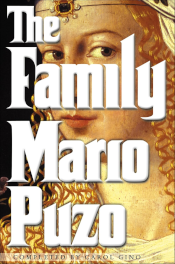
Those are Francis Ford Coppola’s notes from a page of Mario Puzo’s novel The Godfather.  If you’re a fan of The Godfather movies and love behind-the-scenes materials, then you’ll absolutely love Cinephilia and Beyond’s ‘THE GODFATHER’: A HISTORICAL CURIOSITY THAT PROVED INSTRUMENTAL FOR OUR FILMMAKING EDUCATION AND APPRECIATION.

If you click over, plan to stay a while because there are a treasure trove of Godfather items waiting.

13 Fascinating Facts About “Miller’s Crossing”

Matthew Jackson and Mental_Floss present 13 Fascinating Facts About Miller’s Crossing.  Here are three of my favorites…

2. THE COEN BROTHERS TURNED DOWN BATMAN TO MAKE MILLER’S CROSSING.
After Raising Arizona’s success established them as more than one-hit indie film wonders, the Coens had some options with regard to what project they could tackle next. Reportedly, their success meant that they were among the filmmakers being considered to make Batman for Warner Bros. Of course, the Coens ultimately decided to go the less commercial route, and Tim Burton ended up telling the story of The Dark Knight on the big screen.

8. GABRIEL BYRNE HAD TO CONVINCE THE COENS TO LET HIM KEEP HIS IRISH ACCENT.
Though he was an Irish native playing a lieutenant to an Irish mobster, the Coens did not originally want Gabriel Byrne to use his own accent in the film. Byrne argued that his dialoguewas structured in such a way that it was a good fit for his accent, and after he tried it, the Coens agreed. Ultimately, both Byrne and Finney used Irish accents in the film.

11. JON POLITO HAD TO CONVINCE THE COENS TO CAST HIM IN A DIFFERENT ROLE.
When Polito read the Miller’s Crossing script, he loved it and immediately wanted to audition for the role of Johnny Caspar. The Coens had different ideas, and were considering the 39-year-old actor for the role of Caspar’s enforcer, Eddie Dane, instead. The role of Caspar was originally supposed to go to an actor in his mid-50s, but Polito was adamant.

“Anyway, I said I won’t read for anything but Johnny Caspar,” Polito told The A.V. Club. “’And tell them that they’re gonna have to come back to me cause I’m gonna play Johnny.’”

The Coens ultimately gave in, and Polito was cast. They must have liked what they saw, too, because they ended up casting him in four more films after that.

13 Spooky Facts About “The Monster Squad”

Mark Mancini and Mental_Floss present 13 Spooky Facts About The Monster Squad.  Here are three of my favorites…

3. THE CREATURE DESIGNERS WORKED HARD TO AVOID LEGAL PROBLEMS WITH UNIVERSAL.
First and foremost, The Monster Squad is an affectionate tribute to Universal’s iconic horror movies of the 1930s, ‘40s, and ‘50s. Nevertheless, the studio passed on producing the film, which was ultimately picked up by TriStar. This forced The Monster Squad’s visual effects team to get creative.

“Although we were doing a movie that was a takeoff on the Universal classics,” said legendary monster creator Stan Winston, “… none of our designs infringed on the original designs of the Universal characters. There were subtle changes; we had to be sure that nothing about them could be considered a copyright infringement of a design.” Which is why Dracula has no Lugosi-esque widow’s peak, Frankenstein monster’s neck bolts have migrated to his temples, and Wolfman has pointy ears and a face that Dekker describes as “more lupine” than what Universal had come up with.

8. DUNCAN REGEHR BEAT OUT LIAM NEESON FOR THE ROLE OF DRACULA.
In 1986, Liam Neeson was still a relative unknown and, like many struggling actors, decided to try out for a horror movie. Apparently, he nailed his audition with a superb take on the Count. “We thought for sure we [were] going to hire this guy,” producer Jonathan Zimbert revealed inMonster Squad Forever. “Then Duncan came in and was not only as brilliant, but he was terrifying also.” Twenty years later, Wizard magazine named Regehr the “greatest Dracula of all time” for his chilling performance in The Monster Squad.

12. THE MOVIE SPENT JUST TWO WEEKS IN THEATERS.
Released on August 14, 1987, The Monster Squad was both a commercial and critical flop.Vincent Camby of The New York Times called it “a silly attempt to cross breed an Our Gangcomedy with a classic horror film, which usually means that both genres have reached the end of the line.” After a two-week theatrical run, the movie was pulled. However, it slowly built a following via video rentals and cable broadcasts.

Today, The Monster Squad commands a dedicated fan base. When the cast and crewreunited for a special two-night showing at Austin’s Alamo Drafthouse Cinema in 2006, both screenings sold out. As Dekker once put it, “It took 20 years for the movie to find its audience.”

13 Facts About L. Frank Baum’s Wonderful Wizard of Oz

Joy Lanzendorfer and Mental_Floss present 13 Facts About L. Frank Baum’s Wonderful Wizard of Oz.  Here are three of my favorites…

1. BAUM FRAMED THE PENCIL HE USED TO WRITE THE NOVEL.
L. Frank Baum—former chicken rancher, traveling salesman, and theater manager—had already published two successful children’s books when he started The Wonderful Wizard of Oz in 1898. He finished the book in October 1899. He must have been proud of his work, for he framed the pencil stub and hung it on the wall of his study. On the attached paper he scrawled, “With this pencil I wrote the manuscript of The Emerald City.”

2. HE GOT THE NAME “OZ” FROM HIS FILING CABINET.
At first, Baum had trouble coming up with a name for the magical land Dorothy visits. Then one day he found himself looking at the filing cabinet in his study. There were three drawers marked “A to G,” “H to N,” and “O to Z.” And so Oz was born.

9. THE BOOK SOLD OUT IN TWO WEEKS.
Full distribution began in August. According to the publisher, the first printing of 10,000 copies sold out in two weeks, followed by a second printing of 15,000 and a third printing of 10,000. In November, there was a fourth printing of 30,000 and in January, a fifth printing of 25,000. That’s 90,000 books in the first six months. The Wonderful Wizard of Oz remained a bestseller for two years.

The Other Frankenstein Monster: The Strange Fate of Glenn Strange

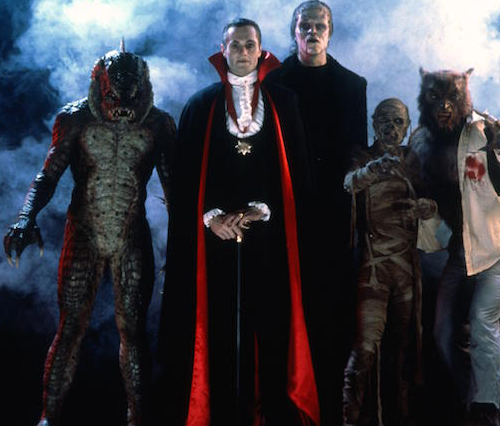
Quick, name the famous actor in the photo above who played Frankenstein.

Nope, it’s not Boris Karloff.  Try again.  No, he’s not Lon Chaney, Jr..  Try again.  No, it’s not Bela Lugosi either.  The actor playing Frankenstein in the photo above is Glenn Strange.

Although Glenn Strange played the Frankenstein monster three times (tying Karloff’s record), most folks seldom think of Glenn Strange when they think of Frankenstein.  In a career that spanned over 300 roles in 43 years, Strange was best known as Sam the Bartender on Gunsmoke.

If you’ve read this far, you’ll enjoy the short piece by Jim Knipfel titled The Other Frankenstein Monster: The Strange Fate of Glenn Strange at Den of Geek.

11 Expert Facts About “Leon: The Professional”

Tara Aquino and Mental_Floss present 11 Expert Facts About Leon: The Professional.  Here are three of my favorites…

1. NATALIE PORTMAN’S PARENTS WERE COMPLETELY AGAINST HER PLAYING MATHILDA.
It was an extremely complicated role for an 11-year-old: Not only would she have to deal with a broken home and violence, but she’d also have to deal with the unwanted sexualization of a young girl. In Starting Young, a documentary about Portman that’s included on the 10th anniversary DVD edition of Léon, the actress admits that after she read the script, she was so moved to tears by the film that she knew she had to have the role. Her parents weren’t as convinced. “My parents were like, ‘There is no way you’re doing this movie. This is absolutely inappropriate for a child your age … and I was like, ‘This is the greatest thing I’ve ever read! You’re gonna ruin my life!’” she shares in the doc. “[I] was basically just fighting with them so much.”

4. PORTMAN’S PARENTS ARE THE REASON WHY MATHILDA QUITS SMOKING IN THE FILM.
As per the agreement Portman’s parents outlined with Besson, the actress was allowed five fake cigarettes in her hand during the entire film shoot, and she was never allowed to inhale a single one of them. If you pay close attention to her character, you’ll see that she only puts the cigarette to her lips, but never blows smoke out. Additionally, her parents demanded that her character quit smoking at some point in the movie. In the film, Léon scolds Mathilda for smoking, and later you see her throwing her unfinished cigarette away when she’s alone.

10. BESSON HAS SHUT DOWN RUMORS THAT A SEQUEL IS IN THE WORKS.
So stop asking. During his press tour for Lucy, Besson told The Guardian, “You can’t imagine how many people ask me for a Léon sequel. Everywhere I go they ask me. If I was motivated by money, I would have done it a long time ago. But I don’t feel it.”

In an earlier interview with Cinema Blend, Besson elaborated on the topic, saying, “Natalie is old now, she’s a mother … It’s too late. If I got an idea tomorrow about a sequel, of course I would do it. But I never came up with something strong enough. I don’t want to do sequels for money; I want to do a sequel because it’s worth it. I want it to be as good or better than the original.”

11 Things You May Not Know About John Lennon

Eddie Deezen and Mental_Floss present 11 Things You May Not Know About John Lennon.  Here are three of my favorites…

9. HE WAS ORIGINALLY SUPPOSED TO SING LEAD ON THE BEATLES’ FIRST SINGLE, 1962’S “LOVE ME DO.”
Lennon sang lead on a great majority of the early Beatles songs, but Paul McCartney took the lead on their very first one. The lead was originally supposed to be Lennon, but because he had to play the harmonica, the lead was given to McCartney instead.

10. “ALL YOU NEED IS LOVE” WAS THE BEST LYRIC HE EVER WROTE.
A friend once asked Lennon what was the best lyric he ever wrote. “That’s easy,” replied Lennon, “All you need is love.”

11. THE LAST PHOTOGRAPHER TO SNAP HIS PICTURE WAS PAUL GORESH.
Ironically (and sadly), Lennon was signing an album for the person who was to assassinate him a few hours later when he was snapped by amateur photographer Paul Goresh on December 8, 1980.

Lennon obligingly signed a copy of his latest album, Double Fantasy, for Mark David Chapman. Later that same day, Lennon returned from the recording studio and was gunned down by Chapman, the same person for whom he had so kindly signed his autograph.

Morbidly, a photographer sneaked into the morgue and snapped a photo of Lennon’s body before it was cremated the day after his assassination. Yoko Ono has never revealed the whereabouts of his ashes or what happened to them.

$2 Billy the Kid Photo Expected to Bring $5 Million at Auction

In 2010, Randy Guijarro purchased the vintage photo above for two bucks. Guijarro is a collector of old photos and the shot of some folks in the wild west playing croquet would make a nice addition to his collection.

It was recently confirmed that one of the croquet players in the photo is none other than Billy the Kid and the other folks playing are the Kid’s gang known as the Lincoln County Regulators.

The photo has been verified to be legit and is going to auction.  Guijarro’s two buck purchase could bring in as much as five million dollars.

I’m not sure which surprises me more…

  1. The fact that someone recognized that the small figure in the photo was Billy the Kid.
  2. That a two dollar purchase is going to bring in millions.
  3. Billy the Kid, the notorious killer was playing croquet.

Source: People.

14 Unusual Ways McDonalds Did Business in the ’60s

Jake Rosen and Mental_Floss present 14 Unusual Ways McDonalds Did Business in the ’60s.  Here are three of my favorites…

1. THEY DIDN’T HIRE WOMEN.
Fast-service restaurants in the ‘40s and ‘50s were renowned for their carhops—perky young women who delivered trays of food to parked automobiles. But franchise founders Maurice and Richard McDonald held a negative opinion about these jobs: They felt it created an atmosphere where families would be uncomfortable visiting a burger stand populated by obnoxious teen boys ogling employees. They eliminated the carhop position, expecting customers to instead approach windows on foot. Subsequent owner Ray Kroc held firm to the no-women policy: “We don’t hire female help,” he told the Associated Press in 1959. The freeze lasted until franchise operators began insisting on a gender-balanced staff in the mid-to-late-‘60s. Even then, Kroc ruled that female employees be “flat-chested” and not work the grill since they didn’t possess the “stamina” for such intensive labor.

6. THEY DIDN’T WANT BUSINESS FROM DIRTY HOBOS.
Family was a key selling point for McDonald’s. Time and again, spokespeople for the chain reinforced the idea of creating an environment parents would be comfortable in. The companytold press that new locations were scouted based on the number of church steeples, schools and residential streets nearby, not foot traffic. McDonald’s, Kroc said, didn’t want to cater to “transients.”

9. YOU COULDN’T SIT DOWN.
With an average transaction time of just 50 seconds, McDonald’s didn’t really have the time or resources to put into washing dishes. Virtually all locations in the early ‘60s amounted to front counters and drive-in windows: There was no place to sit down inside the restaurant itself until 1962, when a Denver, Colo. location became the first to offer stools.

15 Fun Facts About “Meet the Parents”

Roger Cormier and Mental_Floss present 15 Fun Facts About Meet the Parents .  Here are three of my favorites…

2. JIM CARREY CAME UP WITH THE NAME “FOCKER.”
At one point in the film’s development, Jim Carrey was set to star as Greg, with Steven Spielberg directing. It was during this back and forth that Carrey came up with the idea that the main character’s last name should be “Focker.” After Carrey and Spielberg moved on, the studio offered the project to Austin Powers director Jay Roach.

7. THE IDEA FOR THE LIE DETECTOR CAME FROM DE NIRO.
While researching a role, De Niro read up on polygraphers. He then talked about what he had read to Roach at a pre-shoot dinner. “At that point, there was no lie detector scene in the script,” Roach told Entertainment Weekly. “But after hearing all this, I thought, ‘Oh, this has to be in our movie.’ Now it’s become the central image of all the ads, the trailers, everything.” Jack Byrnes being ex-CIA was in the script from the very beginning.

14. YOU CANNOT SEE GREG’S AIRPLANE RANT ON AN AIRPLANE.
If you happen to be watching Meet the Parents on an airplane, you won’t see the airplane scene. It was cut out of the in-flight version.

15 Awfully Big Facts About “The Mary Tyler Moore Show”

Kara Kovalchik and Mental_Floss present 15 Awfully Big Facts About The Mary Tyler Moore Show.  Here are three of my favorites…

4. GAVIN MACLEOD AUDITIONED FOR THE ROLE OF LOU GRANT.
Allan See started losing his hair at age 18, while he was studying drama at New York’s Ithaca College. By the time he graduated he was pretty much bald, which limited his roles as an actor. He changed his name to Gavin MacLeod and maintained a fairly steady career playing heavies, thanks to his bald pate and bulky physique. MTM co-founder Grant Tinker invited MacLeod to audition for the role of Lou Grant, which he did, but afterward he asked to read for the role of Mary’s co-worker, Murray Slaughter. He thought he could bring more to the affable Murray character than the gruff and imposing Lou. The producers agreed with him after Ed Asner tested for the role of Mary’s boss.

6. TED KNIGHT WAS LIVING PAYCHECK-TO-PAYCHECK WHEN HE WAS CAST AS TED BAXTER.
The second choice for the role of the anchorman was Lyle Waggoner, but he was happily ensconced on The Carol Burnett Show and had no desire to leave a successful series for an untested one. Jennifer Aniston’s father, John, read for the part of Ted and was called back twice, but the producers were not quite sure he was “the one.” Producer Dave Davis happened to see Ted Knight performing in a local production of the Broadway comedy You Know I Can’t Hear You When the Water’s Running and reported to the rest of the team that Knight was hilarious and that they should have him read for the role of Ted Baxter.

Even though the silver-haired Knight was a far cry from the hunky heartthrob-type they originally had in mind, Knight came to the audition wearing an anchorman-style blue blazer he had purchased from a thrift store with part of his rent money and impressed them with his booming voice and comedic chops. During that brief reading, he brought some layers to the anchorman character (cocky and arrogant on the outside, but secretly vulnerable and very human) that impressed the MTM staff and inspired some new newsroom story ideas for the show.

14. MARY REALLY DID HAVE TO STRUGGLE TO KEEP A STRAIGHT FACE DURING THE “CHUCKLES BITES THE DUST” EPISODE.
Often listed as one of the best sitcom episodes, this entry touched on a dark subject: the death of WJM children’s show host Chuckles the Clown. (He’d been dressed as Peter Peanut to serve as Grand Marshall of a circus parade and a rogue elephant tried to shell him.) Mary was supposed to remain grim and mournful while the rest of the newsroom made jokes about his unusual demise, but during every rehearsal she continually cracked up whenever Mr. Fee-Fi-Fo (one of Chuckles’ many characters) was mentioned. She recalled in her autobiography that the insides of her cheeks were almost raw from biting them so hard to keep from laughing during the actual taping of the episode.