Category: Trivia

15 Peachy Facts About “Face Off”
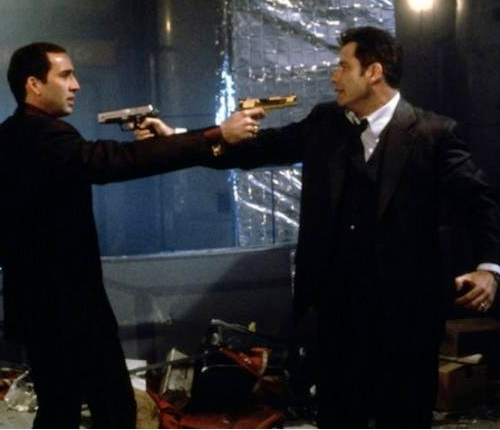
Eric D. Snider and Mental_Floss present 15 Peachy Facts About Face Off.  Here are three of my favorites…

2. IT WAS WRITTEN WITH STALLONE AND SCHWARZENEGGER IN MIND.
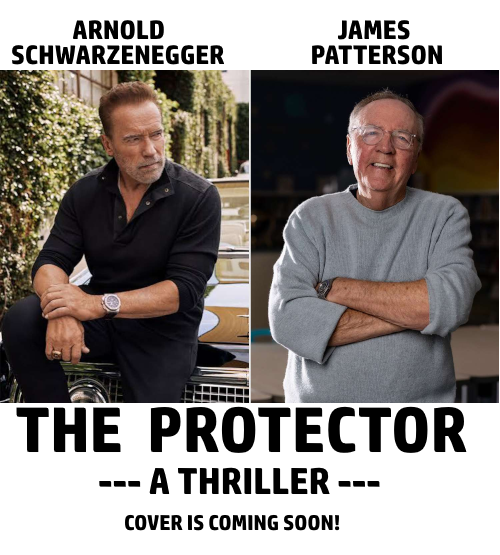
Separately, they were among the top action stars of the day (the day being the early ’90s), so teaming them up was an irresistible idea. Moreover, they were both really famous, and as Colleary once said, “The movie doesn’t work unless the actors have a well-established persona” so audiences can appreciate them impersonating each other. (Editorial note: there’s no way Schwarzenegger and Stallone could have imitated one another’s mannerisms as well as Cage and Travolta do.) The two didn’t make Face/Off, but they did eventually make Escape Plan, in which they escape from a futuristic, off-the-grid, middle-of-the-ocean prison very much like the one in Face/Off.

12. THE JOKE ABOUT TRAVOLTA’S “RIDICULOUS CHIN” WAS TRAVOLTA’S OWN IDEA.
He said, “Nic [Cage]’s character is such an egomaniac. He loves himself—the way he talks, acts, walks, everything about himself. So, we just figured that it follows that he would hate being in my body, having my face. So I added a lot of lines where he makes fun of the way I look—like ‘this ridiculous chin,’ things like that.”

6. THE EPILOGUE, WHERE THE ARCHERS ADOPT CASTOR TROY’S ORPHANED SON, ALMOST DIDN’T HAPPEN.
It was part of the writers’ original story and survived all of their many rewrites, but Paramount didn’t think audiences would like an ending where the hero adopts his enemy’s son. Woo’s alternate idea was for the film to end with some ambiguity about whether or not Eve Archer had her real husband back. When a test audience found that unsatisfying—and, moreover, wanted to know what happened to Castor Troy’s kid—the studio ponied up the money to get the necessary cast members back to film the original ending. According to Werb, “The next time we tested, the numbers went through the roof. There was spontaneous and thunderous applause at the end.”
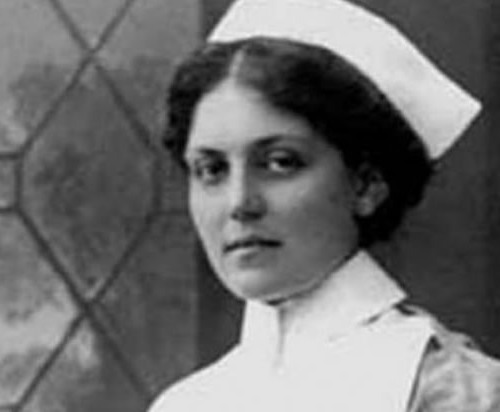
Violet Jessop – The Luckiest Unlucky Person or the Unluckiest Lucky Person?

If you ever saw Violet Jessop (the lady pictured above) as a passenger on a ship with you, you’d probably want to disembark and get your money back.  Ms. Jessop was on board three ships that suffered major accidents (two which sank and resulted in many fatalities).

In 1911, Ms. Jessop was working as a stewardess on the RMS Olympic which was the longest ship in the world.  On September 20th the Olympic collided with the HMS Hawke.  Despite major damage and the flooding of two compartments the Olympic made it back to port.

In 1912, Ms. Jessop was again working as a stewardess, this time on the RMS Titantic‘s initial and ill-fated voyage. As the Titanic was sinking after hitting an iceberg,  Ms. Jessop was ordered into a life boat and given a small child to hold. Both Ms. Jessop and the child survived when the lifeboat occupants were picked up by the RMS Carpathia.  The child was claimed by a woman who also survived.

In 1916, Ms. Jessop was working as a stewardess for the British Red Cross on the ship Britannic.  On November 21st, the Britannic either struck a sea mine or was torpedoed by a German sub.  There are conflicting theories but no one disputes that the Britannic quickly sank with the loss of thirty souls.  Ms. Jessop survived by jumping from a lifeboat that was being sucked into the ship’s propellers.

Violet Jessop – was she the luckiest unlucky person or the unluckiest lucky person?

10 Facts You (Probably) Didn’t Know About The Beatles

and Neatorama present 10 Facts You (Probably) Didn’t Know About The Beatles. Here are three of my favorites…

2) Most “takes” on a Beatles song.
The Beatles were known as perfectionists in the studio, often recording dozens of takes on a specific song. The Beatle song with the most attempted takes was actually never released by the Beatles.

“Not Guilty,” a George Harrison song, took 102 takes, before it was ultimately rejected for the Beatles 1968 album The Beatles.

5) Strange Beatles products sold.

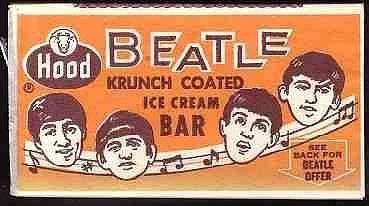
After the Beatles landed in America in 1964, Beatle products (both licensed and unlicensed) flooded the markets. Beatle t-shirts, wigs, books, hats, guitars, wallpaper, notebooks, board games, were just a few of the successful Beatle-related products sold on the market. In one city, Beatle bedsheets were sold from slicing up the sheets the boys had slept on. Beatle pillowcases were sold in the same manner. Beatle razor stubble and Beatle bathwater were attempted too.

One enterprising salesman in New York supposedly made a profit selling bottles of “Beatle Breath.”

10) John and Paul once composed the score for a ballet.

In 1963, John Lennon and Paul McCartney actually composed the score for a ballet- for the first and only time in their careers. The ballet was called Mods and Rockers.

It opened on December 18, 1963 and ran through January 11, 1964 at the Prince Charles Theater in London. Even by this early point in their careers, the Sunday Times declared John and Paul “the greatest composers since Beethoven.”

16 Hardcore Facts About “Full Metal Jacket”

Roger Cormier and Mental_Floss present 16 Hardcore Facts About Full Metal Jacket. Here are three of my favorites…

2. VINCENT D’ONOFRIO GAINED 70 POUNDS TO PLAY LEONARD “GOMER PYLE” LAWRENCE.
In addition to the weight gain, D’Onofrio also shaved his head for the role, and was surprised by how much it affected him. ”It changed my life,” D’Onofrio told The New York Times in 1987. ”Women didn’t look at me; most of the time I was looking at their backs as they were running away. People used to say things to me twice, because they thought I was stupid.” To this day, it’s the most weight any actor has ever gained for a movie role.

5. ARNOLD SCHWARZENEGGER AND BRUCE WILLIS TURNED DOWN ROLES.
Schwarzenegger claimed he was too busy to play Animal Mother (the part that eventually went to Adam Baldwin). Bruce Willis was offered a part two days before he was to start shooting the first six episodes of Moonlighting, so he had to say no, too. Denzel Washington wanted in, but didn’t like that Kubrick didn’t send out a script beforehand to audition.
9. JOKER HAD A NAME.
It was J.T. Davis. In 1961, Specialist James T. Davis was the first recorded American battlefield casualty in Vietnam.

14 Facts About “Flashdance”

Garin Pirnia and Mental_Floss present 14 Facts About Flashdance.  Here are three of my favorites…

8. KEVIN COSTNER AUDITIONED TO PLAY NICK HURLEY.
Costner, who didn’t become famous until the mid-1980s, auditioned for the role of Nick Hurley, Alex’s boss and love interest in the film. Lyne paid Costner $200 to lie in bed with Beals, but it apparently didn’t work for him as the part went to Michael Nouri. In a strange twist of fate, prior to auditioning for Flashdance, Costner starred in an Apple commercial directed by Lyne. The commercial aired a few months after the film was released and has an uncanny resemblance to Flashdance: Costner on a bike, with a brown pit bull running beside him.

12. THE STUDIO WASN’T BANKING ON A HIT.
Lyne told Entertainment Weekly how Paramount thought the movie would be a flop. “In the two weeks before Flashdance came out, I literally couldn’t get anybody on the phone,” he said. “It was like everybody had run for the hills because they thought it was gonna be a total disaster. I didn’t know either. Paramount sold at least a quarter of their interest in the film in those two weeks. In other words, they saw the film, and thought, ‘Well, this is gonna go down the toilet.’” Luckily for Paramount and Lyne, the film opened to a healthy $4 million gross, which would be almost $10 million today. The film remained in the top 10 weekend box office for 15 weeks straight.

2. THE SONG “MANIAC” WAS ORIGINALLY COMPOSED FOR THE 1980 HORROR FILM MANIAC.
Michael Sembello and Dennis Matkosky’s original lyrics for “Maniac” were as follows: “He’s a maniac, maniac that’s for sure / He will kill your cat and nail him to the door.”

“That direction obviously wasn’t going to work,” Sembello told Song Facts. “Phil Ramone, producer of the soundtrack, [had] the vision to see the potential of the song, [and] asked us to change it to the present concept of a girl possessed with the passion of a gift for dance.” Which is how the far less gruesome lines “She’s a maniac, maniac on the floor / And she’s dancing like she’s never danced before” came about. “Without Phil it would not have happened,” says Sembello.
15 Fun Facts About “Weird Science”

Eric D. Snider and Mental_Floss present 15 Fun Facts About Weird Science.  Here are three of my favorites…
9. THE SCENE WHERE GARY TALKS LIKE AN OLD AFRICAN-AMERICAN BLUESMAN WAS INSPIRED BY RICHARD PRYOR.
Hall recounted in an interview that he and John Hughes would “watch Richard Pryor movies on the weekend. And we would imitate this character called Mudball that Richard Pryor would do. And so it was really just a product of being Richard Pryor fans that John said, ‘Hey, why don’t we create this scene where you go into a bar and do that?’”

11. IT TAKES ITS TITLE FROM A 1950S COMIC BOOK, BUT OTHER SIMILARITIES ARE COINCIDENTAL.
EC Comics published 22 issues of Weird Science between 1950 and 1953, alongside more popular anthology titles like Tales from the Crypt. Hollywood mega-producer Joel Silver got the rights to all the old EC stuff in the ’80s, and Hughes was in his office one day when boxes of the comics were being delivered and unpacked. Seeing the title Weird Science, and thinking of a beautiful woman he and Silver had seen earlier that day, Hughes said, “What if two kids figure out a way to make that girl that was in the commissary?” This is according to Silver’s recollection, anyway. “I already had rights to the EC books, so that’s how I convinced them to let me have the title.” Now, there was a story in an issue of Weird Science that bore a superficial resemblance to Hughes’ idea—“Made of the Future,” in which a man builds a wife from a kit he got on a trip to the year 2150.

13. BILL PAXTON GOT HIS CHARACTER’S DISTINCTIVE MILITARY-STYLE HAIRCUT WITHOUT HUGHES’ PERMISSION.
His first day on the set, “I told [the film’s makeup artist] I wanted to do a haircut that was really intense,” Paxton told The AV Club in 2012. “He’s the one who suggested the flattop, but long on the sides and slicked back. And he was afraid he was going to lose his job to cut it like that without having it approved by the producer or the director, but I said, ‘Just do it.’” Fortunately, Hughes loved it, along with everything else Paxton brought to the character.

13 Interesting Facts About M. Night Shyamalan Movies

Hollywood.com recently posted 13 Interesting Facts About M. Night Shyamalan Movies.  Here are three of my favorites…

1. Sixth Sense was inspired by an episode of Are You Afraid of the Dark?.

M. Night Shyamalan
GIPHY/Hollywood Pictures

According to M. Night, the film is based on the episode “The Tale of the Dream Girl”, where the premise was: the lead characters are being ignored by the friends/family and don’t understand that they are dead until the end of the episode.

5. M. Night wrote the screenplay for Unbreakable with Bruce Willis and Samuel L. Jackson in mind.

Touchstone Pictures

He always anticipated the two actors agreeing to do the film. This was also their fourth film together, after Loaded Weapon 1 (1993), Pulp Fiction (1994), and Die Hard: With a Vengeance (1995).

6. The Happening is the only movie of his in which M. Night does not physically appear.

GIPHY/20th Century Fox

He’s the voice of Joey, who calls out to Alma a few times in the film.

7. All of his films are set in, or very close to, Philadelphia.


Every Message Left on Jim Rockford’s Answering Machine


The Rockford Files always opened with a message left on Rockford’s answering machine.  The message (unrelated to the episode) “…invited the viewer to return to the quirky, down-on-his-luck world of Jim Rockford.”

Here’s a favorite:

“Jim, It’s Norma at the market. It bounced. You want us to tear it up, send it back, or put it with the others?”

Now thanks to That Eric Alper we can listen and download every message used.

33 Things We Learned From Joe Carnahan’s The Grey Commentary


Rob Hunter and Film School Rejects present 33 Things We Learned From Joe Carnahan’s The Grey Commentary.  Here are three four of my favorites…

11. The scene with Ottway waking up in the snow was shot in minus twenty degrees. “See Liam’s face, how red that is, there is no makeup on him,” says Carnahan. “They kept saying ‘you can’t put Liam in the snow, you can’t put Liam in the snow,’ but Liam went in the snow.” Barton says Carnahan and the guys complained so much about how cold it was, but the editing room was probably 75 degrees which was also pretty tough. “There was some days the espresso machine was jammed,” adds Hellmann.

13. Carnahan’s wife told him she thinks Ottway was the lone survivor and the rest were simply facets of his personality. “I thought that was really novel until ten other people, all women, said the same thing to me. I thought my god that’s an interesting little trend.” Barton recalls hearing her say that and thinking “Holy crap, what a great thing to say. We had never thought of that.”

21. The high-pitched howl emanating from the woods as the men scramble to start a fire after being chased by the wolves was actually made by Quentin “Rampage” Jackson. They recorded him and modified it some, but he’s the source.

****SPOILER ALERT****

33. The post-credits shot, a remnant of their attempts to capture Ottway’s fight with the wolves, was included for purely artistic reasons on Carnahan’s part. “It certainly, to me, doesn’t answer any questions,” says Barton, “in a good way.” Carnahan adds that a lot of people don’t seem to realize that’s the back of Neeson’s head resting on the wolf’s slowly breathing form.

15 Fun Facts About “City Slickers”


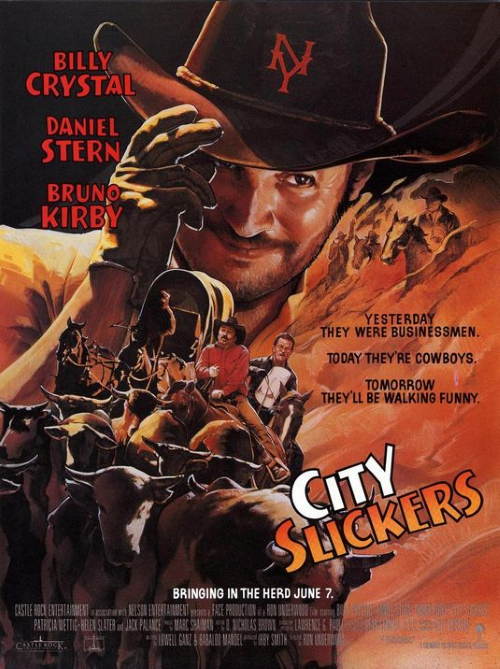
Roger Cormier and Mental_Floss present 15 Fun Facts About City Slickers. Here are three of my favorites…

1. JACK PALANCE WAS BILLY CRYSTAL’S ORIGINAL CHOICE TO PLAY CURLY.

When Crystal first came up with the seed of the idea for City Slickers, he immediately thought of Jack Palance as the crusty bad guy with the heart of gold. He thought of him because the first movie he had ever seen was the 1953 movie Shane, where Palance played the bad guy. The actor left a lasting impression on Crystal, who was seven years old at the time of his first movie-going experience. Because his father produced jazz concerts, Billy saw Shane seated on Billie Holiday’s lap.

5. CHARLES BRONSON WAS ANGRY OVER BEING ASKED TO PLAY CURLY.

Jack Palance initially turned down the role of Curly, as he was committed to another project. So Crystal offered the part to Charles Bronson, who was not pleased. He cursed Crystal out because “I’m dead on page 64!” Palance, of course, ended up taking the role (and the rest is history).

6. PALANCE GOT INTO AN ARGUMENT WITH THE DIRECTOR ON THE FIRST DAY OF SHOOTING.

The veteran actor yelled at Ron Underwood over his first direction, but everything went smoothly after that. When Crystal asked what had happened, Palance explained that he always gets nervous on his first day of shooting. Sure enough, Tim Burton told a similar story about Palance snapping at him on his first day of shooting on Batman over how he was told to walk out of a bathroom, with Burton admitting that the incident scared him “to death—I literally saw white and left my body.”

Celebrity Phobias

A phobia is defined as…

…a type of anxiety disorder, usually defined as a persistent fear of an object or situation in which the sufferer commits to great lengths in avoiding, typically disproportional to the actual danger posed, often being recognized as irrational.

Common phobias are a fear of public speaking, spiders, snakes, heights, dogs, thunder or lightening, flying and so on.

Eddie Deezen takes a look a celebrity phobias in his piece, “Hey, What Are You Afraid Of” at Neatorama.

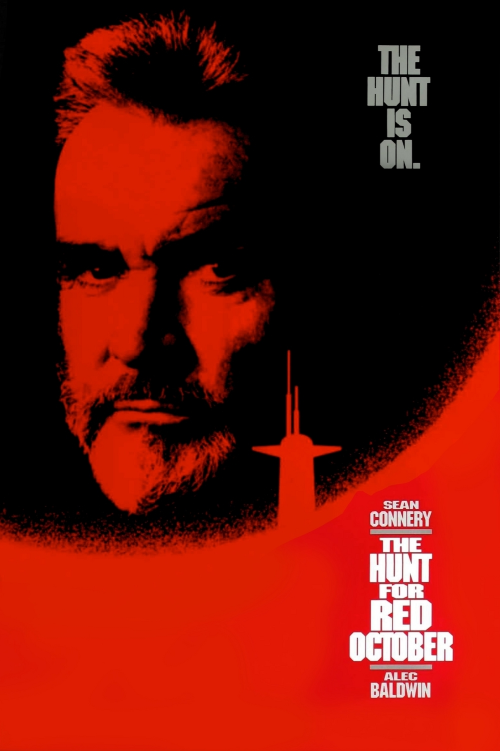
14 Deep Facts About “The Hunt for Red October”


Eric D Snider and Mental_Floss present 14 Deep Facts About The Hunt for Red October. Here are three of my favorites…

1. Even though the novel had been a bestseller, nobody wanted to make the movie.

Tom Clancy’s book is a complicated story with a lot of technical jargon, which made Hollywood executives antsy. It also made the movie hard to summarize. “In Hollywood, because of time constraints, very few people in a position to say yes to a project like this read the book,” admitted producer Mace Neufeld. “They generally read the reader’s report. [And] this book doesn’t condense well into two or three pages.” Neufeld got the project off the ground by getting a Paramount executive to read the novel—not just the book report—and see for himself how cinematic it could be.

3. Sean Connery was a last-minute replacement.

The film had been under production for two weeks when word came that Klaus Maria Brandauer (Out of Africa), the Austrian actor who’d been signed to play the rogue Soviet sub commander Marko Ramius, couldn’t do it after all because of a prior commitment. Connery took the part instead, needing only one day for rehearsal. Coincidentally, he and Brandauer had acted together in 1983’s Never Say Never Again and would reunite again for 1990’s The Russia House, which was shot shortly after The Hunt for Red October.

9. Alec Baldwin wanted to return for the sequels but was edged out when Paramount learned they could get Harrison Ford.

It’s complicated, and there are at least two sides to every story, but here’s the gist: While negotiations with Baldwin were still ongoing, Paramount allegedly offered the part to Ford, who was a bigger box office draw and to whom the studio owed money anyway because of a previous project that had fallen through. Baldwin had been dithering over the specifics of his deal, and now a Paramount executive used that indecision to force his hand: either commit right now to an open-ended contract for Patriot Games and whatever came next, or the offer would be withdrawn. Not wanting to give up a chance to appear in A Streetcar Named Desire on Broadway, Baldwin left Jack Ryan behind.

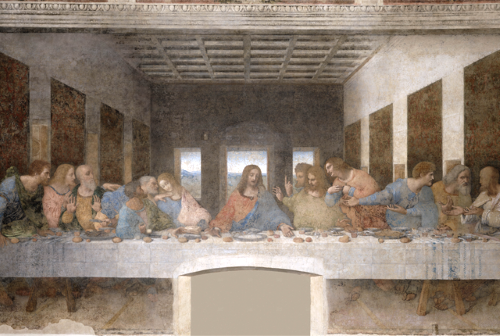
15 Things You Should Know About “The Last Supper”

Kristy Puchko and Mental_Floss present 15 Things You Should Know About The Last Supper.  Here are three of my favorites…

2. The Last Supper captures a climactic moment.

Everyone knows the painting depicts Jesus’ last meal with his apostles before he was captured and crucified. But more specifically, da Vinci wanted to capture the instant just after Jesus reveals that one of his friends will betray him, complete with reactions of shock and rage from the apostles. In da Vinci’s interpretation, the moment also takes place just before the birth of the Eucharist, with Jesus reaching for the bread and a glass of wine that would be the key symbols of this Christian sacrament.

6. Very few of da Vinci’s original brushstrokes remain.

Although the painting itself was beloved, da Vinci’s tempera-on-stone experiment was a failure. By the early 16th century, the paint had started to flake and decay, and within 50 years, The Last Supper was a ruin of its former glory. Early restoration attempts only made it worse.

Vibrations from Allied bombings during World War II further contributed to the painting’s destruction. Finally, in 1980, a 19-year restoration effort began. The Last Supper was ultimately restored, but it lost much of its original paint along the way.

3. You won’t find it in a museum.

Although The Last Supper is easily one of the world’s most iconic paintings, its permanent home is a convent in Milan, Italy. And moving it would be tricky, to say the least. Da Vinci painted the religious work directly (and fittingly) on the dining hall wall of the Convent of Santa Maria delle Grazie back in 1495.