Category: History

27 Things You Might Not Know About Theodore ‘Teddy’ Roosevelt
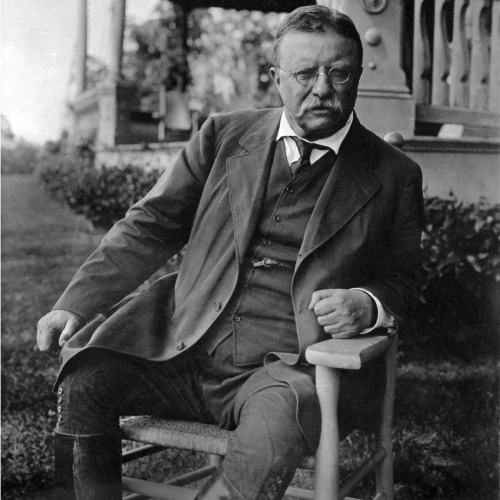
Jake Rossen and Mental Floss present 27 Things You Might Not Know About Theodore ‘Teddy’ Roosevelt.  Here are three of my favorites and some thoughts about each…

1. HE WENT FROM WIMP TO WARRIOR.

Born on October 27, 1858, Roosevelt—often called “Teedie” or “Teddy” by friends—was a frail kid, prone to illness, asthma, and lacking physical strength. Despite his modest build, he was an avid outdoors enthusiast, and sometimes carried his fascination with wildlife indoors by practicing taxidermy. At 14, his family went on a tour of Egypt, and he traveled with his somewhat macabre tools of the trade, including arsenic. As a teen, Roosevelt put his stuffed birds aside and decided to become aggressive in his physical routine, training in gymnastics and weightlifting. Later, he would practice both boxing and judo. The intense interest he showed in combat sports made him a fitness advocate for the rest of his life.
Craig’s Thoughts:  His love of taxidermy before he was even in his teens makes me think of someone who would grow up to be a serial killer, not the President of the United States.

25. HE GAVE A SPEECH IMMEDIATELY AFTER BEING SHOT.

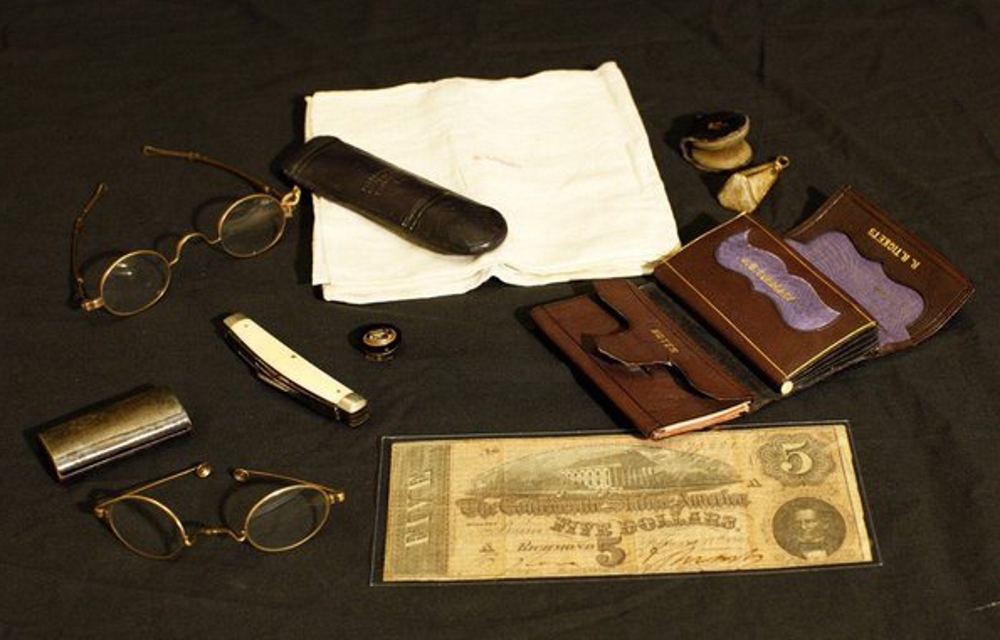
Roosevelt’s reputation as a “bull moose,” his term to describe anyone made of sturdy stuff, was never on better display than October 14, 1912, when the former president was giving a speech in Milwaukee and announced he had just been shot by a would-be assassin named John Schrank. A shocked crowd looked on as Roosevelt revealed a bloody shirt and a stack of prepared remarks with a bullet hole in them (above; you can see both the papers and the shirt at the Theodore Roosevelt Birthplace National Historic Site in New York City). Roosevelt spoke for 90 minutes before allowing his aides to take him to a hospital. The bullet had lodged itself near his ribs and would remain there for the rest of his life.
Craig’s Thoughts: This probably more than anything else would have been enough to give TR the reputation as a tough guy.  But when you add it to the fact that he went west as a young man (Shades of Horace Greeley) and made his living as a cowboy; that he volunteered to serve in the army, that he distinguished himself in battle, that he was a decorated war hero, that he boxed (and continued to spar at the age of 50, losing sight in one eye in the process), that he was an avid outdoorsman, then you have to admit that Teddy Roosevelt was a legitimate tough guy.

9. HE WAS A MASSIVE ENVIRONMENTALIST.

A lover of the outdoors, Roosevelt made protecting the natural wonder of American territory a priority. Over his tenure in the White House, he reserved 200 million acres of land for national forests and wildlife refuges; previous presidents combined had only done a fifth of that. “We have become great because of the lavish use of our resources and we have just reason to be proud of our growth,” he said in 1908. “But the time has come to inquire seriously what will happen when our forests are gone, when the coal, the iron, the oil and the gas are exhausted, when the soils have been still further impoverished and washed into the streams, polluting the rivers, denuding the fields, and obstructing navigation.

“These questions do not relate only to the next century or to the next generation. It is time for us now as a nation to exercise the same reasonable foresight in dealing with our great natural resources that would be shown by any prudent man in conserving and widely using the property which contains the assurance of well-being for himself and his children.”
Craig’s Thoughts:  I love that TR had the foresight and love of nature enough to work to preserve our natural resources for future generations.

Why Frank Miller Is Revisiting the World of 300 With His New Xerxes

Abraham Riesman recently spoke with Frank Miller to discover why Why Frank Miller Is Revisiting the World of 300 With His New Xerxes.  Here are a few tidbits…

Did you go back and reread 300 in preparation for Xerxes? I know a lot of creators don’t like looking at their old work.
Oh, I have to refer to it. I’m very, very proud of 300. I look at it and I don’t think, Well, what would I do differently? I simply accept it as what it is. It was very much a product of the time I did it, but it was the best story I ever had my hands on, and I did my very best by it.

But the Athenians can hold their own in the battlefield. Honestly, in junior high, I mostly just learned about them as paragons of democracy and culture.
They were brilliant in battle and they were a culture that succeeded on every level. The Spartans, essentially, became so culturally paranoid that they kind of ceased to exist because they didn’t read. They built for war while the Athenians built for progress. What we have from the Greeks is basically Athenian: the art, the learning, the culture, the sense of democracy.

Any interview with Frank Miller is worth a read especially when it contains (more) preview art.

Miller & Wheeler’s “Cursed” Picked Up by Netflix!


About a week ago it was announced that Frank Miller will provide the art and team with writer Thomas Wheeler for Cursed, a young adult novel that…

…tells the story of King Arthur from the point of view of Nimue, the 16-year-old girl who first wielded Excalibur and ultimately became the Lady of the Lake.

Although the book won’t be out until 2019, Netflix has decided to pick it up as a series!  For full details check out Netflix Orders TV Series ‘Cursed’ From Frank Miller & Tom Wheeler Based On Book Reimagining King Arthur Legend at Deadline.com.

“The Terror” Trailer is Finally Here!

In 2007, I wrote about The Terror by Dan Simmons.  Here’s what I said then:
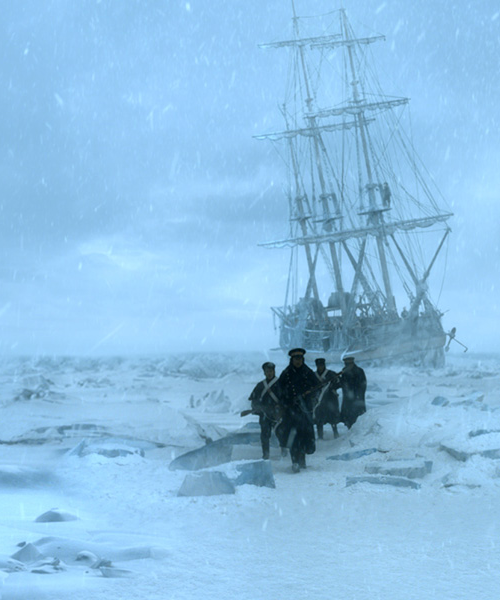
The Terror by Dan Simmons is a novelization of the true doomed 1840s Franklin expedition to find a Northwest passage. History tells us there were no survivors and the men died from exposure, starvation and worse. Simmons’ story combines all of the interesting historical details and adds a new menace, a creature which feeds on men. The Terror was a national best seller. Stephen King listed it as one of his favorite books of the year. Who am I to argue with Stephen King?

Then in July of 2016 I posted

AMC has greenlit 10 hour long episodes to air in 2017 with Ridley Scott and David W. Zucker serving as Executive Producers and David Kajganich on board to write and take the reins as showrunner.  This is a project worth keeping an eye on.

You can imagine my thrill at seeing this…

10 Things You Should Know About the Donner Party

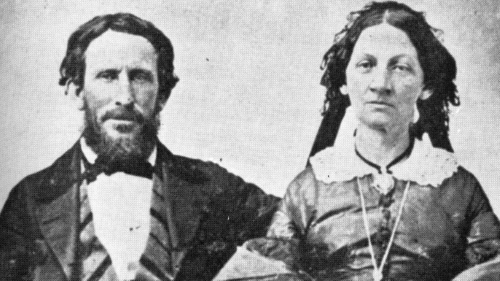
James and Margaret Reed, Donner Party members. (Credit: Public Domain)

In 1846, the Donner brothers led a wagon train of pioneers heading to California.  Caught in the Sierra Mountains in one of the worst winters ever recorded, the settlers were forced to hunker down.  As their food and supplies ran out, and over half of the party died, most of the survivors were forced to resort to cannibalism.

Evan Andrews and History.com present 10 Things You Should Know About the Donner Party.  Here are three of my favorites…

2.  They fell behind schedule after taking an untested shortcut.
After reaching Wyoming, most California-bound pioneers followed a route that swooped north through Idaho before turning south and moving across Nevada. In 1846, however, a dishonest guidebook author named Lansford Hastings was promoting a straighter and supposedly quicker path that cut through the Wasatch Mountains and across the Salt Lake Desert. There was just one problem: no one had ever traveled this “Hastings Cutoff” with wagons, not even Hastings himself. Despite the obvious risks—and against the warnings of James Clyman, an experienced mountain man—the 20 Donner Party wagons elected to break off from the usual route and gamble on Hastings’ back road. The decision proved disastrous. The emigrants were forced to blaze much of the trail themselves by cutting down trees, and they nearly died of thirst during a five-day crossing of the salt desert. Rather than saving them time, Hasting’s “shortcut” ended up adding nearly a month to the Donner Party’s journey.

7.  Not all of the emigrants engaged in cannibalism.
As their supplies dwindled, the Donner emigrants stranded at Truckee Lake resorted to eating increasingly grotesque meals. They slaughtered their pack animals, cooked their dogs, gnawed on leftover bones and even boiled the animal hide roofs of their cabins into a foul paste. Several people died from malnutrition, but the rest managed to subsist on morsels of boiled leather and tree bark until rescue parties arrived in February and March 1847. Not all of the settlers were strong enough to escape, however, and those left behind were forced to cannibalize the frozen corpses of their comrades while waiting for further help. All told, roughly half of the Donner Party’s survivors eventually resorted to eating human flesh.

9.  One rescuer singlehandedly led nine survivors out of the mountains.
Perhaps the most famous of the Donner Party’s saviors was John Stark, a burly California settler who took part in the third relief party. In early March 1847, he and two other rescuers stumbled upon 11 emigrants, mostly kids, who been left in the mountains by an earlier relief group. The two other rescuers each grabbed a single child and started hoofing it back down the slope, but Stark was unwilling to leave anyone behind. Instead, he rallied the weary adults, gathered the rest of the children and began guiding the group singlehandedly. Most of the kids were too weak to walk, so Stark took to carrying two of them at a time for a few yards, then setting them down in the snow and going back for others. He continued the grueling process all the way down the mountain, and eventually led all nine of his charges to safety. Speaking of the incident years later, one of the survivors credited her rescue to “nobody but God and Stark and the Virgin Mary.”
Mutiny on the Bounty (1935) / Z-View

Mutiny on the Bounty (1935)

Director: Frank Lloyd

Screenplay: Talbot Jennings & Jules Furthman and Carey Wilson based on the book by Charles Nordhoff        and James Norman Hall

Stars:  Charles Laughton, Clark Gable and Franchot Tone

The Pitch: “Let’s turn Robert C. O’Brien’s novel into a movie!”

Tagline: Clark Gable as the daring mutineer in the screen’s most exciting adventure story!

The Overview:  Beware of Spoilers…

The classic tale of Fletcher Christian’s mutiny against the sadistic Captain Bligh!

Rating:

How Much Did McDonald’s Cost in 1972?

Me-TV did a quiz about the cost of McDonald’s food in 1972.  Sadly, the quiz isn’t available any longer, so you can’t test your knowledge of Mickey-D’s way back when.

As you can see above, I got six out of ten correct.  Not great, but not too bad.  We didn’t eat out much when I was a kid.  A McDonald’s hamburger and shake was a real treat.  The cost seems pretty cheap by today’s prices but you have to remember minimum wage was $1.60 an hour in 1972.

9 Things You May Not Know About the Declaration of Independence

Elizabeth Harrison and History.com present 9 Things You May Not Know About the Declaration of Independence.  Here are three of my favorites…

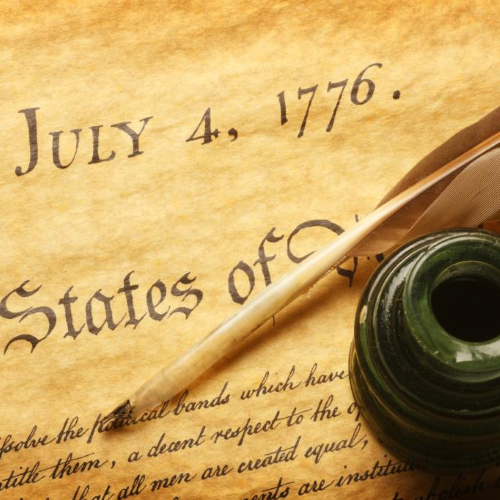
1. The Declaration of Independence wasn’t signed on July 4, 1776.
On July 1, 1776, the Second Continental Congress met in Philadelphia, and on the following day 12 of the 13 colonies voted in favor of Richard Henry Lee’s motion for independence. The delegates then spent the next two days debating and revising the language of a statement drafted by Thomas Jefferson. On July 4, Congress officially adopted the Declaration of Independence, and as a result the date is celebrated as Independence Day. Nearly a month would go by, however, before the actual signing of the document took place. First, New York’s delegates didn’t officially give their support until July 9 because their home assembly hadn’t yet authorized them to vote in favor of independence. Next, it took two weeks for the Declaration to be “engrossed”—written on parchment in a clear hand. Most of the delegates signed on August 2, but several—Elbridge Gerry, Oliver Wolcott, Lewis Morris, Thomas McKean and Matthew Thornton—signed on a later date. (Two others, John Dickinson and Robert R. Livingston, never signed at all.) The signed parchment copy now resides at the National Archives in the Rotunda for the Charters of Freedom, alongside the Constitution and the Bill of Rights.

8. The Declaration of Independence spent World War II in Fort Knox.
On December 23, 1941, just over two weeks after the Japanese attack on Pearl Harbor, the signed Declaration, together with the Constitution, was removed from public display and prepared for evacuation out of Washington, D.C. Under the supervision of armed guards, the founding document was packed in a specially designed container, latched with padlocks, sealed with lead and placed in a larger box. All told, 150 pounds of protective gear surrounded the parchment. On December 26 and 27, accompanied by Secret Service agents, it traveled by train to Louisville, Kentucky, where a cavalry troop of the 13th Armored Division escorted it to Fort Knox. The Declaration was returned to Washington, D.C., in 1944.

3. When news of the Declaration of Independence reached New York City, it started a riot.
By July 9, 1776, a copy of the Declaration of Independence had reached New York City. With hundreds of British naval ships occupying New York Harbor, revolutionary spirit and military tensions were running high. George Washington, commander of the Continental forces in New York, read the document aloud in front of City Hall. A raucous crowd cheered the inspiring words, and later that day tore down a nearby statue of George III. The statue was subsequently melted down and shaped into more than 42,000 musket balls for the fledgling American army.