Category: History

10 Things You May Not Know About Richard Nixon

Cristopher Klein and History.com present 10 Things You May Not Know About Richard Nixon.  Here are three of my favorites

1. Lee Harvey Oswald may have plotted to assassinate Nixon.
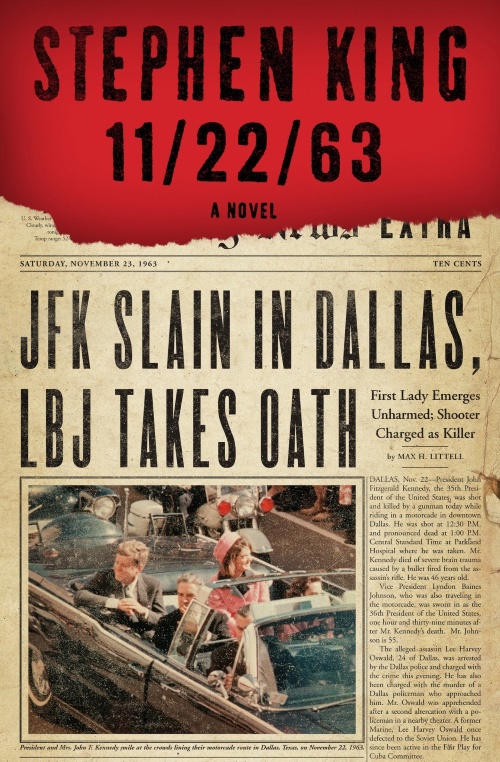
In the early morning of November 22, 1963, Richard Nixon rode through Dallas to the airport to fly home after attending a Pepsi-Cola board meeting. Nixon saw the preparations for the motorcade that hours later would carry John F. Kennedy, the man who defeated him for the presidency three years prior, on the streets of the city’s downtown. After Nixon landed in New York, he learned that Kennedy had been gunned down in that motorcade. In a further coincidence, the wife of Lee Harvey Oswald testified to the Warren Commission that in April 1963 the alleged assassin read a local newspaper report, tucked a pistol in his belt, and told her, “Nixon is coming. I want to go and have a look.” After locking him in a bathroom, Oswald’s wife convinced him to turn over his gun. The account was puzzling, since Nixon was not in Dallas in April 1963 and no newspaper mentioned any visit.

3. Community theater brought Richard and Pat Nixon together.
Nixon first encountered his future first lady as a leading lady in 1938 when both auditioned for the Whittier Community Players production of “The Dark Tower.” The amateur theater production led to a romance between Nixon and Thelma Catherine Ryan, nicknamed “Pat” by her father because she was born on the eve of St. Patrick’s Day. Foreshadowing their later lives, the couple wed in the presidential suite of the Mission Inn in Riverside, California, on June 21, 1940.  [Richard Nixon as an actor?  Or interested in acting?  I would have never guessed. – Craig]

6. Nixon was an avid bowler.
One of Nixon’s favorite pastimes in the White House was bowling. He’d even bowl a few frames dressed in his suit. In addition to using the alley in the adjacent Old Executive Office Building, Nixon had another one-lane alley built in the basement beneath the North Portico entrance to the White House.

11 Strange Habits of Geniuses

Mental_Floss presents 11 Strange Habits of Geniuses.  Here are three of my favorites

7. EDGAR ALLAN POE WROTE ON SCROLLS.
Edgar Allan Poe often wrote on thin strips of paper, which he glued together and rolled into scrolls for easier storage. He felt the medium better contributed to a work’s flow than a regular old manuscript (and, presumably, looked spookier).

8. DA VINCI AND TESLA SHUNNED EIGHT-HOUR SLEEP SCHEDULES.
Leonardo da Vinci and Nikola Tesla adhered to alternative sleep schedules. Leonardo was said to have followed the polyphasic cycle, which means he took multiple short naps every 24 hours. Meanwhile, Tesla only rested two hours a day.

10. BEN FRANKLIN TOOK “AIR BATHS.”
Before he began the day’s work, Benjamin Franklin would spend up to an hour taking naked “air baths” at his open window.

18 Uncovered Facts About “JFK”

Roger Cormier and Mental_Floss present 18 Uncovered Facts About JFK.  Here are three of my favorites

4. COSTNER MET GARRISON’S REAL ENEMIES.
The actor met both Garrison’s fans and his critics. “I wanted Costner to get both sides, to witness the hatred and extremism that Jim engenders and as an actor to look into the eyes of his enemies and know what he was up against back then,” explained Stone. “These were tough people and they’d come in a parade in front of Costner with their New Orleans accent saying that Jim’s a snake—that he liked boys and was angry that Shaw stole his lover and a lot worse.”

11. COSTNER INSISTED THAT JOHN CANDY NOT BE CUT.
John Candy was “devastated” when he heard his role as lawyer Dean Andrews was being cut from JFK, so Costner intervened. Stone wrote a letter to Candy apologizing for considering taking his nervous, sweaty character out of the movie.

10. WAYNE KNIGHT AND STONE CLASHED OVER HIS ACCENT.
Wayne Knight (Seinfeld‘s Newman) used an accent he heard growing up in northwest Georgia for his audition as Numa Bertel, which Stone loved. But Knight discovered upon meeting the real, New Orleans-born Bertel that he didn’t sound like that at all. Knight insisted on using Bertel’s real accent in the film, though it took a while to convince Stone. “He’s rough trade, that man,” Knight told The A.V. Club of Stone.

The Day When Three NASA Astronauts Staged a Strike in Space

The astronauts above are Jerry Carr, Ed Gibson and William Pogue.  In 1973, they manned the Skylab 4 mission.  Scheduled for an 84 day mission, the astronauts were assigned 16 hour work days every single day.

Other astronauts on the ground team, including the commanders of the previous two Skylab missions, advised NASA that the plans were unreasonable. None of the three astronauts on the Skylab 4 mission had been in space before, but NASA hadn’t factored in any time for them to become acclimated to conditions aloft. They were plainly overscheduled.

Things went sideways from the start.  William Pogue became debilitatingly sick with nausea acclimatizing to space.  The team decided not to inform Mission Control of Pogue’s illness only to find out that ground control was eavesdropping on all that went on.

After the space crew received a scolding for withholding information things went from bad to worse.  The crew fell behind on the work schedule and the 16 hour days were beginning to wear them down physically and mentally.  They asked NASA for some time off to recharge and for more workable schedule.  Skylab Commander Jerry Carr argued to NASA:

“We would never work 16 hours a day for 84 straight days on the ground, and we should not be expected to do it here in space.”

NASA wouldn’t budge so the Skylab Astronauts simply turned off all communications with ground control and took a full day to relax and recharge.

Needless to say, this did not sit well with Mission Control, but what could they do?

Nothing.

The following day the Skylab 4 astronauts contacted NASA, who at that point were much more agreeable to a modified schedule.

You can read the full story at The Los Angeles Times in Michael Hiltzik’s The Day When Three NASA Astronauts Staged a Strike in Space.

“In Cold Blood” (1967) written & directed by Richard Brooks, starring Robert Blake, Scott Wilson and John Forsythe / Z-View

In Cold Blood (1967)

Director: Richard Brooks

Screenplay: Richard Brooks (based on Truman Capote’s book of the same name)

Stars: Robert Blake, Scott Wilson and John Forsythe

The Pitch: “Let’s make a movie based on the best-selling book In Cold Blood!”

The Tagline: “Written for the screen and directed by Richard Brooks.”


The Overview:  Beware of Spoilers…

Dick Hickcock [Scott Wilsion] and Perry Smith [Robert Blake Perry] have a plan to steal $10,000 cash from a rich farmer’s safe and then high-tail it to Mexico where they will live out their days safe from extradition.  The two ex-cons violate their parole and drive through the night to Holcomb, Kansas where according to one of Hickcock’s past cellmates, a fortune sits in the Cutter safe.

 The only thing Hickcock and Smith find at the Cutter house are Mr. Cutter, Mrs. Cutter and their two teenage children.  Hickcock and Smith place the family members in separate rooms, tie them up and search for the safe.  There is no safe, no fortune and just a little over forty dollars in cash in the house. Hickcock and Smith brutally kill the Cutter family and then head back towards Kansas City.

The discovery that the Cutter family was brutally murdered makes national news and as the investigation grows, Hickcock and Smith decide to head to Mexico.  They pass bad checks, pawn the items they buy and use the money to get across the border.  It isn’t long before they’re low on cash and decide to go to Vegas to raise more. In Vegas  Hickcock and Smith are picked up on a parole violation.

The cops interrogate them separately.  Neither admits to knowing anything about the Cutter family murders.  As the evidence begins to pile up, Hickcock suddenly tries to pin the murders on SmithSmith then turns on Hickcock and the case is made.  A trial, a death sentence and the gallows are all that Hickcock and Smith have left to look forward to.  Sadly, one is left with the feeling that either man alone would not have committed the murders.

Wilson (probably best known to folks as Hershel from The Walking Dead) and Blake (probably best known as the crazy old celebrity acquitted of killing his second wife in 2005) are excellent as the leads.  Robert Brooks deserves kudos for his screenplay and direction.

Watch for cameos by: Will Geer [Grandpa from The Waltons] and music by Quincy Jones!

Award Nominations:

Academy Awards –

  • Best Director
  • Best Cinematography
  • Best Original Music Score
  • Best Adapted Screenplay

Rating:

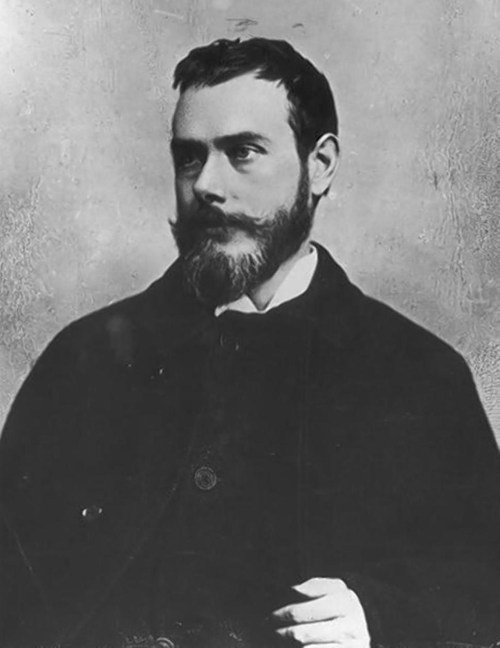
Jack the Ripper Identified as Poet Francis Thompson

The famous poet Francis Thompson was the even more infamous Jack the Ripper.  Twenty years of research has led Richard Patterson to this conclusion.  Patterson sites some of the evidence that identifies Thompson as the Ripper:
Thompson

… had surgical experience and hinted at his double life in some of his poems…

…kept a dissecting knife under his coat…

…was taught a rare surgical procedure that was found in the mutilations of more than one of the Ripper victims…

For the full story check out The New York Daily News: Jack the Ripper’s Real Identity.

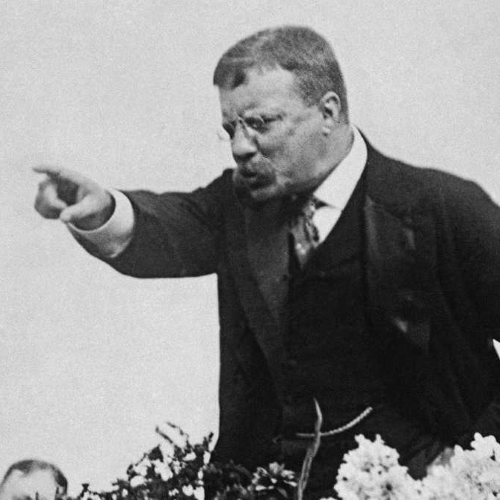
10 Things You May Not Know About Teddy Roosevelt

Christopher Klein and History.com present 10 Things You May Not Know About Teddy Roosevelt.  Here are three of my favorites

His mother and his first wife died on the same day.

On Valentine’s Day in 1884, Roosevelt’s mother passed away from typhoid fever. One floor above in the same house, his first wife, Alice, died less than 12 hours later from Bright’s disease and complications from giving birth to the couple’s first child just two days before. “The light has gone out of my life,” Roosevelt wrote in his diary that night.

He won the Nobel Peace Prize.

The man famed for his exploits at San Juan Hill during the Spanish-American War and “Big Stick” diplomacy captured the 1906 Nobel Peace Prize for his role in mediating the Treaty of Portsmouth, which ended the Russo-Japanese War. Roosevelt was the first American to capture the award, and he used the prize money to fund a trust to promote industrial peace.

A boxing accident left him virtually blind in one eye.

Roosevelt boxed for Harvard University’s intramural lightweight championship and continued to spar recreationally during his political career. During his days in the White House, he regularly put up his dukes against former professional boxers and other sparring partners until a punch from a young artillery officer smashed a blood vessel and left him nearly blind in his left eye.

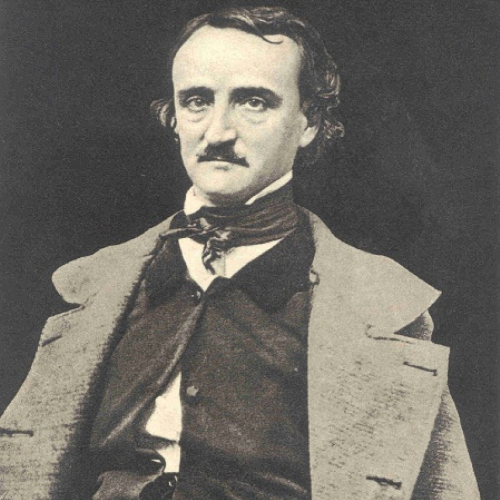
9 Mournful Facts About Edgar Allan Poe’s “The Raven”

Joy Lanzendorfer and Mental_Floss present 9 Mournful Facts About Edgar Allan Poe’s The Raven Here are three of my favorites

1. AS POE WAS WRITING THE POEM, HIS WIFE WAS DEATHLY ILL. 
When Poe was writing “The Raven,” his wife, Virginia, was suffering from tuberculosis. It was a weird marriage—Virginia was Poe’s first cousin and only 13 years old when they married—but there’s no doubt that Poe loved her deeply. Having lost his mother, brother, and foster mother to tuberculosis, he knew the toll the disease would take. “The Raven” is a poem written by a man who’d lost many loved ones, and was soon expecting to lose one more.

6. “THE RAVEN” WAS AN IMMEDIATE HIT.
After Graham’s Magazine rejected the poem, Poe published it in The American Review under the pseudonym “Quarles.” In January 1845, it came out in The New York Mirror under Poe’s real name. Around the country, it was reprinted, reviewed, and otherwise immortalized. It soon became so ubiquitous, it was used in advertising.

And then there were the parodies. Within a month after “The Raven” came out, there was a parody poem, “The Owl,” written by “Sarles.” Others soon followed, including “The Whippoorwill,” “The Turkey,” “The Gazelle,” and “The Parrot.” You can read many of themhere. Abraham Lincoln found one parody, “The Polecat,” so hilarious that he decided to look up “The Raven.” He ended up memorizing the poem.

7. “THE RAVEN” MADE POE INTO A CELEBRITY …
Poe was soon so recognizable that children followed him in the street, flapping their arms and cawing. Then he’d turn around and say, “nevermore!” and they would run away, shrieking. Trying to capitalize off this fame, he gave lectures that included dramatic readings of the poem. They were apparently something to see. His lecture was “a rhapsody of the most intense brilliancy … He kept us entranced for two hours and a half,” said one attendee. Yet another said that Poe would turn down the lamps and recite “those wonderful lines in the most melodious of voice.” Another said, “To hear him repeat ‘The Raven,’ which he does very quietly, is an event in one’s life.”

25 “Titanic” Facts You Never Knew

Hollywood.com presents 25 Titanic Facts You Never Knew Here are three of my favorites

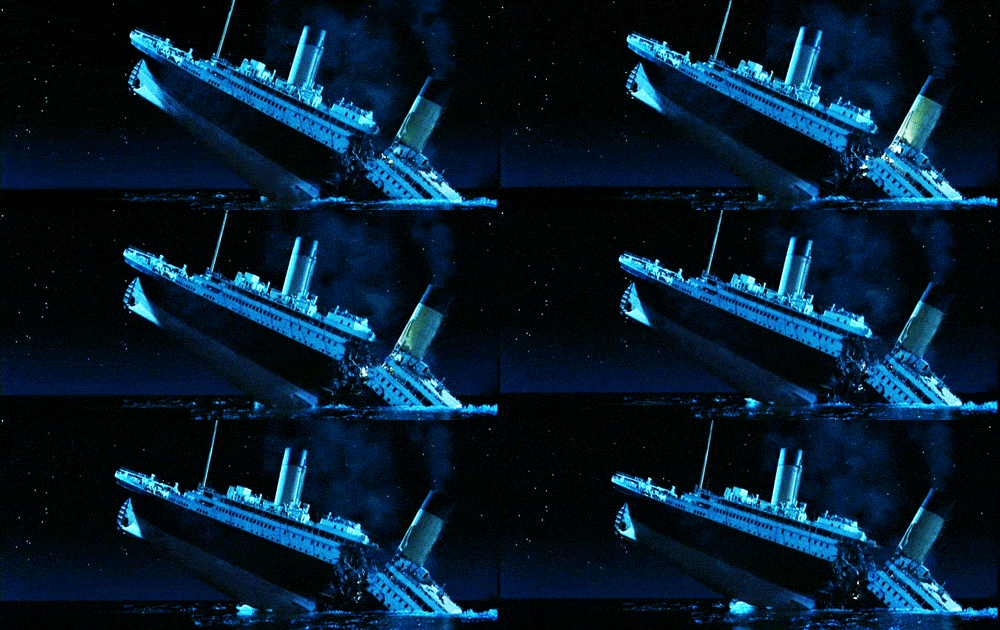
1. The movie features 2 hours and 40 minutes of scenes set in 1912. This is the exact amount of time the Titanic took to sink.

GIPHY/Peculiargroove.Tumblr.Com

The film also has 37 seconds between the iceberg warning and the actual collision, which is the same amount of time that transpired in real life.

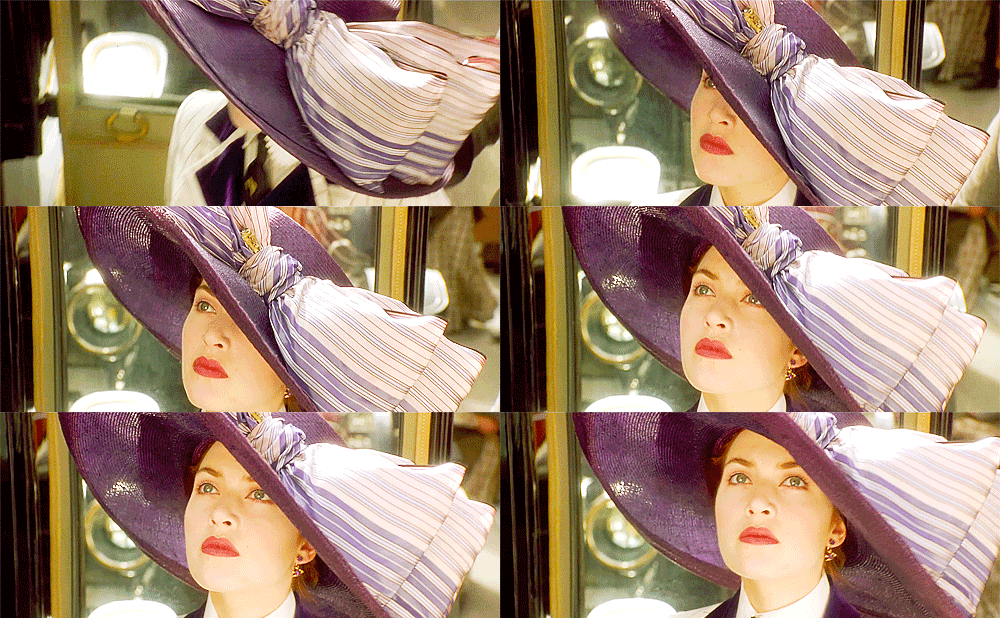
3. It was the first movie to receive two Academy Award nominations for the same character.

GIPHY/Fyeah80s-90s.Tumblr.Com

Both Kate Winslet and Gloria Stuart were nominated (Best Actress and Best Supporting Actress, respectively) for playing the role of Rose. The next time two actors were nominated for playing the same role was 2001’s Iris, also starring Winslet.

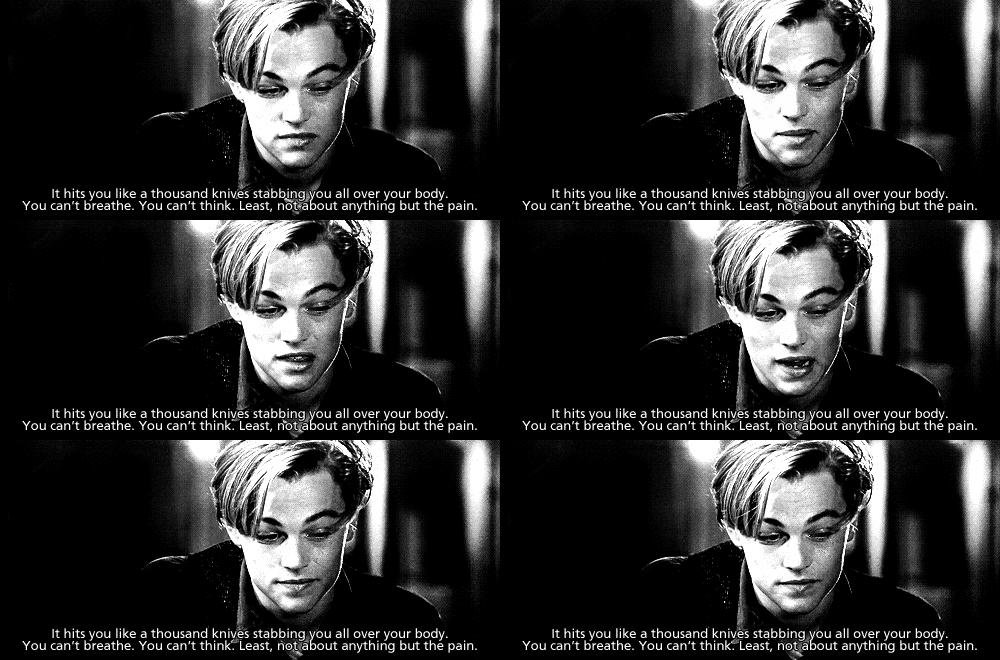
8. And Jack’s ice-fishing story is a Titanic survivor’s quote about the North Atlantic water.

Secretwithinsecrets.Tumblr.Com

He was dissuading Rose not to jump off the back of the boat, in the scene where they meet.

$2 Billy the Kid Photo Expected to Bring $5 Million at Auction

In 2010, Randy Guijarro purchased the vintage photo above for two bucks. Guijarro is a collector of old photos and the shot of some folks in the wild west playing croquet would make a nice addition to his collection.

It was recently confirmed that one of the croquet players in the photo is none other than Billy the Kid and the other folks playing are the Kid’s gang known as the Lincoln County Regulators.

The photo has been verified to be legit and is going to auction.  Guijarro’s two buck purchase could bring in as much as five million dollars.

I’m not sure which surprises me more…

  1. The fact that someone recognized that the small figure in the photo was Billy the Kid.
  2. That a two dollar purchase is going to bring in millions.
  3. Billy the Kid, the notorious killer was playing croquet.

Source: People.

14 Unusual Ways McDonalds Did Business in the ’60s

Jake Rosen and Mental_Floss present 14 Unusual Ways McDonalds Did Business in the ’60s.  Here are three of my favorites

1. THEY DIDN’T HIRE WOMEN.
Fast-service restaurants in the ‘40s and ‘50s were renowned for their carhops—perky young women who delivered trays of food to parked automobiles. But franchise founders Maurice and Richard McDonald held a negative opinion about these jobs: They felt it created an atmosphere where families would be uncomfortable visiting a burger stand populated by obnoxious teen boys ogling employees. They eliminated the carhop position, expecting customers to instead approach windows on foot. Subsequent owner Ray Kroc held firm to the no-women policy: “We don’t hire female help,” he told the Associated Press in 1959. The freeze lasted until franchise operators began insisting on a gender-balanced staff in the mid-to-late-‘60s. Even then, Kroc ruled that female employees be “flat-chested” and not work the grill since they didn’t possess the “stamina” for such intensive labor.

6. THEY DIDN’T WANT BUSINESS FROM DIRTY HOBOS.
Family was a key selling point for McDonald’s. Time and again, spokespeople for the chain reinforced the idea of creating an environment parents would be comfortable in. The companytold press that new locations were scouted based on the number of church steeples, schools and residential streets nearby, not foot traffic. McDonald’s, Kroc said, didn’t want to cater to “transients.”

9. YOU COULDN’T SIT DOWN.
With an average transaction time of just 50 seconds, McDonald’s didn’t really have the time or resources to put into washing dishes. Virtually all locations in the early ‘60s amounted to front counters and drive-in windows: There was no place to sit down inside the restaurant itself until 1962, when a Denver, Colo. location became the first to offer stools.