9 Mournful Facts About Edgar Allan Poe’s “The Raven”
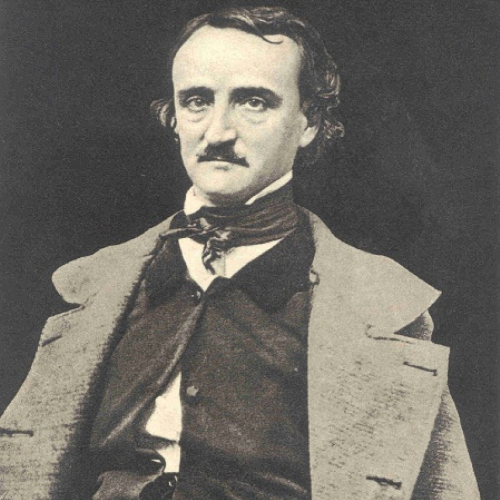
Joy Lanzendorfer and Mental_Floss present 9 Mournful Facts About Edgar Allan Poe’s The Raven. Here are three of my favorites…
1. AS POE WAS WRITING THE POEM, HIS WIFE WAS DEATHLY ILL.
When Poe was writing “The Raven,” his wife, Virginia, was suffering from tuberculosis. It was a weird marriage—Virginia was Poe’s first cousin and only 13 years old when they married—but there’s no doubt that Poe loved her deeply. Having lost his mother, brother, and foster mother to tuberculosis, he knew the toll the disease would take. “The Raven” is a poem written by a man who’d lost many loved ones, and was soon expecting to lose one more.6. “THE RAVEN” WAS AN IMMEDIATE HIT.
After Graham’s Magazine rejected the poem, Poe published it in The American Review under the pseudonym “Quarles.” In January 1845, it came out in The New York Mirror under Poe’s real name. Around the country, it was reprinted, reviewed, and otherwise immortalized. It soon became so ubiquitous, it was used in advertising.And then there were the parodies. Within a month after “The Raven” came out, there was a parody poem, “The Owl,” written by “Sarles.” Others soon followed, including “The Whippoorwill,” “The Turkey,” “The Gazelle,” and “The Parrot.” You can read many of themhere. Abraham Lincoln found one parody, “The Polecat,” so hilarious that he decided to look up “The Raven.” He ended up memorizing the poem.
7. “THE RAVEN” MADE POE INTO A CELEBRITY …
Poe was soon so recognizable that children followed him in the street, flapping their arms and cawing. Then he’d turn around and say, “nevermore!” and they would run away, shrieking. Trying to capitalize off this fame, he gave lectures that included dramatic readings of the poem. They were apparently something to see. His lecture was “a rhapsody of the most intense brilliancy … He kept us entranced for two hours and a half,” said one attendee. Yet another said that Poe would turn down the lamps and recite “those wonderful lines in the most melodious of voice.” Another said, “To hear him repeat ‘The Raven,’ which he does very quietly, is an event in one’s life.”