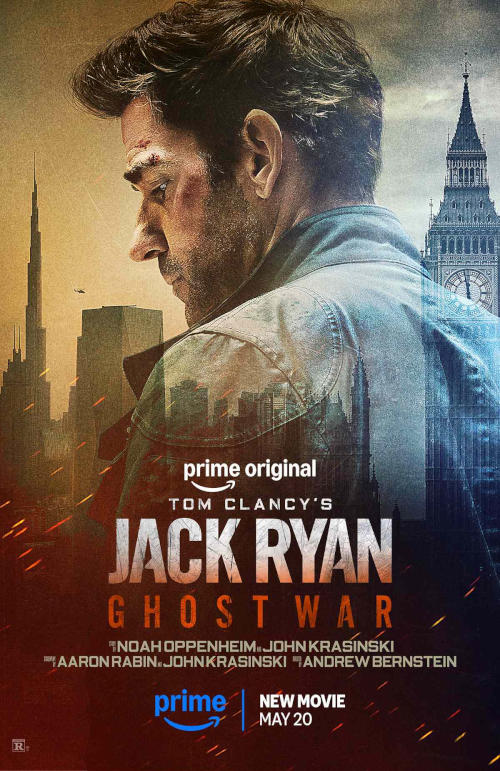
“The Last Ship” Season Three Trailer is Here!
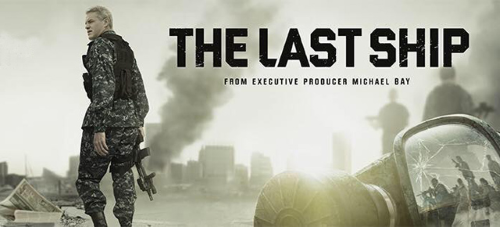
The Last Ship season three trailer is here!
Previews and Reviews that are Z's Views
The Last Ship season three trailer is here!
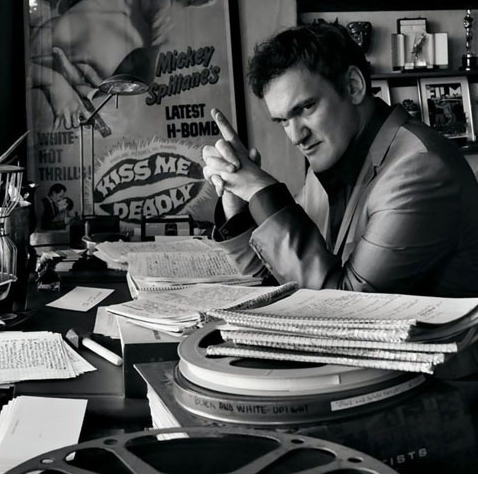
James Paszko and Film Slate present 5 Screenwriting Lessons from Quentin Tarantino.
Source: Jeff Wamester.

Twilight Zone: “Showdown with Rance McGrew ” [Season 3, Episode 20]
Original Air Date: February 2, 1962
Director: Christian Nyby
Writer: Rod Serling based on an idea by Frederic L. Fox
Starring: Larry Blyden, Arch Johnson and Robert Cornthwaite.
The Overview: Beware of Spoilers…
Rance McGrew [Blyden] is the star of a 1950’s western series. Each week McGrew outdraws and out smarts the likes of Billy the Kid, Jesse James and other outlaws. The reality is that McGrew is terrible with a gun, afraid to do his own stunts and a prima dona.
When McGrew suddenly finds himself transported to the past and face to face with the real Jesse James, he knows that there will be no second takes.
Rating:

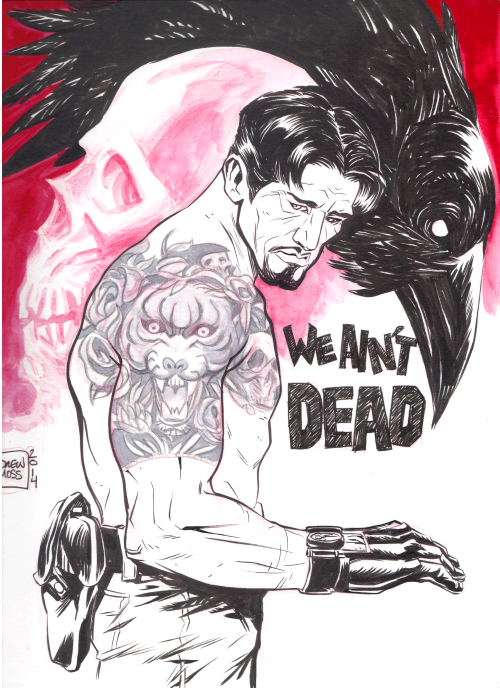
Here is the finished piece of Sly as Barney Ross that Drew Moss did for me for pickup at HeroesCon. As always, Drew gives you more than you’d expect!
If you’d like to see more of Drew’s art, you can here. – Craig

Vintage Everyday presents 13 Things You May Not Know About Bonnie and Clyde. Here are three of my favorites…
3. Bonnie was an honor student and a poet.
During her school days, Bonnie excelled at creative writing and penning verses. While she was imprisoned in 1932 after a failed hardware store burglary, she penned a collection of 10 odes that she entitled “Poetry from Life’s Other Side,” which included “The Story of Suicide Sal,” a poem about an innocent country girl lured by her boyfriend into a life a crime. Two weeks before her death, Bonnie gave a prescient poem to her mother entitled “The Trail’s End” that finished with the verse:“Some day they’ll go down together;
And they’ll bury them side by side,
To a few it’ll be grief—
To the law a relief—
But it’s death for Bonnie and Clyde.”
1. Bonnie died wearing a wedding ring—but it wasn’t Clyde’s.
Six days before turning 16, Bonnie married high school classmate Roy Thornton. The marriage disintegrated within months, and Bonnie never again saw her husband after he was imprisoned for robbery in 1929. Soon after, Bonnie met Clyde, and although the pair fell in love, she never divorced Thornton. On the day Bonnie and Clyde were killed in 1934, she was still wearing Thornton’s wedding ring and had a tattoo on the inside of her right thigh with two interconnected hearts labeled “Bonnie” and “Roy.”
9. Bonnie and Clyde remained close to their families, even on the run.
In fact, it was their predictable pattern of stopping to visit family that aided the team of Texas Rangers and deputies who ambushed and killed them.
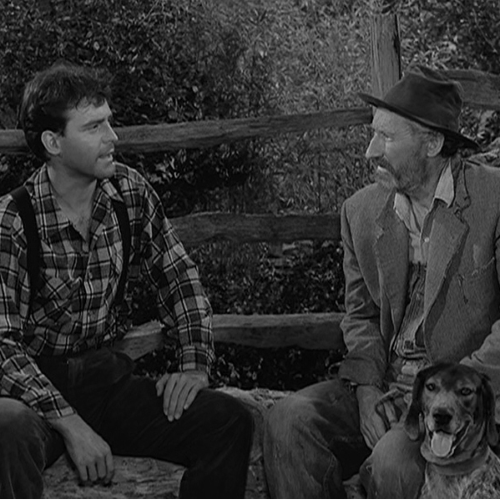
Twilight Zone: “The Hunt” [Season 3, Episode 19]
Original Air Date: January 26, 1962
Director: Harold D. Schuster
Writer: Earl Hamner, Jr.
Starring: Arthur Hunnicutt, Jeanette Nolan and Robert Foulk.
The Overview: Beware of Spoilers…
An elderly man takes his old dog hunting one evening. When they return the following day, no one can see them and his wife is in mourning. Although the old man and the dog have died they are about to go on a journey that will take them through the Twilight Zone.
Rating:

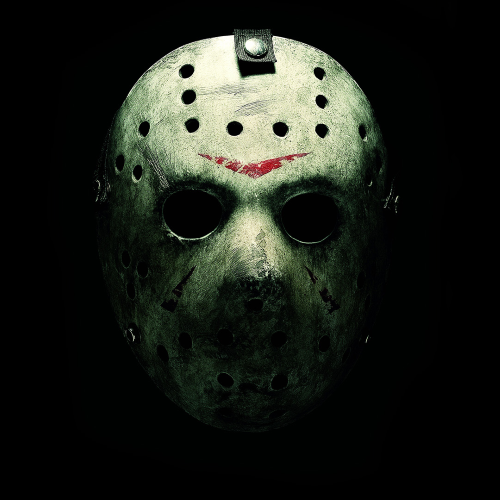
Matthew Jackson and Mental Floss present 17 Bloody Facts About Friday the 13th. Here are three of my favorites…
1. THE ORIGINAL INSPIRATION WAS HALLOWEEN.
In 1978, producer and director Sean Cunningham was looking for a model on which to build a commercially successful film, and he found one in John Carpenter’s horror classic Halloween. The two films ultimately don’t share much other than very broad slasher tropes, but Cunningham says he “was very influenced by the structure of Carpenter’s film.”
7. SHELLEY WINTERS WAS THE FIRST CHOICE FOR MRS. VOORHEES.
For the now-iconic role of Mrs. Pamela Voorhees, Cunningham and company went in search of an actress with a recognizable name whose career was nevertheless on the decline, so she could be paid relatively little and the budget could stay low. Cunningham eventually made a list of actresses he was considering, and two-time Oscar winner Shelley Winters was his top priority. Winters wasn’t interested, and while fellow candidate and Oscar-winner Estelle Parsons actually negotiated to be in the film, she ultimately backed out. Cunningham also considered actresses Louise Lasser and Dorothy Malone right up until filming began, but ultimately the production wound up with Betsy Palmer in the role.
15. THE FINAL SCARE WAS SUPPOSEDLY NOT IN THE ORIGINAL SCRIPT.
The story of who invented the final scare in the film, in which a deformed Jason bursts out of the lake and grabs Alice (Adrienne King) from her canoe, is disputed. Victor Miller, Tom Savini, and uncredited screenwriter Ron Kurz all claim credit for it, Kurz because he claims to be the one who made Jason into a “creature,” and Savini because he claims the moment was inspired by a similar final scare in Carrie. Whatever the case, it left a lasting impression.
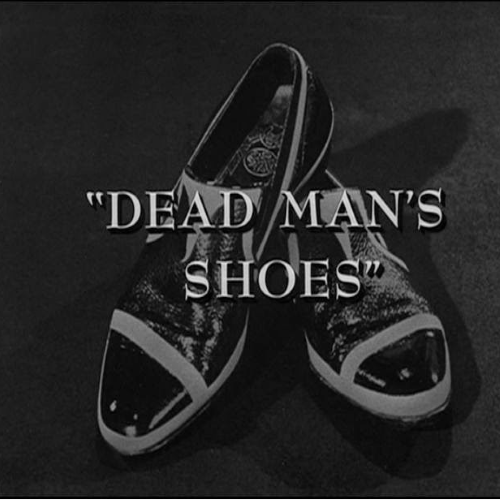
Twilight Zone: “Dead Man’s Shoes” [Season 3, Episode 18]
Original Air Date: January 19, 1962
Director: Montgomery Pittman
Writer: Charles Beaumont
Starring: Warren Stevens, Richard Devon and Joan Marshall.
The Overview: Beware of Spoilers…
A homeless man witnesses a gangland killing and before the police arrives steals the dead man’s shoes. Once he has the shoes on, he gains the dead man’s memories and decides on revenge.
Rating:

Garin Pirnia and Mental Floss present 15 Thrilling Facts About Basic Instinct. Here are three of my favorites…
1. THE SCRIPT SOLD FOR A RECORD $3 MILLION.
Back in the day, spec scripts could sell for millions of dollars. Joe Eszterhas joined that club when he sold Basic Instinct—a script that took him just 13 days to write—for $3 million in 1990. Eszterhas told The A.V. Club that the media liked to focus on a writer’s failures, which occurred when Eszterhas’ Showgirls tanked at the box office. “CBS Evening News came with a helicopter crew and found me on a beach in Florida and interviewed me about the money I got for Basic Instinct,” Eszterhas said. “The other thing that I don’t think was quite fair was that after that whole period, where scripts—mine and Shane Black’s and half a dozen other writers’ scripts—went for a lot of money, the media zeroed in on the box office for some of those scripts, and they always zeroed in on the failures … When Basic Instinct went on to earn $400 million worldwide, there were no stories that said, ‘[Executive producer] Mario Kassar paid three million bucks for this.’”
2. CATHERINE AND NICK WERE BASED ON REAL PEOPLE.
Before he became a multimillionaire screenwriter, Eszterhas was a police reporter for Cleveland’s The Plain Dealer. “I met a cop who just liked the action too much,” Eszterhas told Nerve. “He was always in the middle of shootings. He was a great cop on one level, but on another, you suspected he liked it too much. That’s what Nick Curran does in Basic Instinct. As Catherine says in the movie, he got too close to the flame. He loved the flame.”Tramell also comes from a person Eszterhas knew in Ohio, this time a go-go dancer in Dayton. One night he picked the stranger up and they went back to his hotel room to have some fun. “She reached into her purse, and she pulled out a .22 and pointed it at me,” he told Nerve. “She said, ‘Give me one reason why I shouldn’t pull this trigger.’ I said, ‘I didn’t do anything to hurt you. You wanted to come here, and as far as I know, you enjoyed what we just did.’ And she said, ‘But this is all guys have ever wanted to do with me, and I’m tired of it.’ We had a lengthy discussion before she put that gun down. Those two random characters are where those parts of Basic Instinct come from.”
3. MICHAEL DOUGLAS AND PAUL VERHOEVEN APPROACHED THE MOVIE AS IF IT WERE A DETECTIVE NOVEL.
Verhoeven wanted to make a modern version of a Hitchcock thriller—except with a lot more sex. “In traditional films, the killer lurks in a house and the victim walks into the kitchen, turns on the radio, makes coffee, opens a book, gets comfortable—and then the killer strikes,” he told The New York Times. “In this film, the killer hides—but on the bed. The situation is the same, but the two people are facing each other in bed, not the kitchen.”Douglas agreed with the film noir aspect of the movie. “Fatal Attraction was a picture close to home for a lot of people because you could identify with those characters,” he also told theTimes. “It was a reality tale, while Basic Instinct is like a detective novel that people like to read in the privacy of their homes. It’s almost Gothic. It’s certainly more dramatic. And the real question here is: Is anybody really worthy of redemption?”
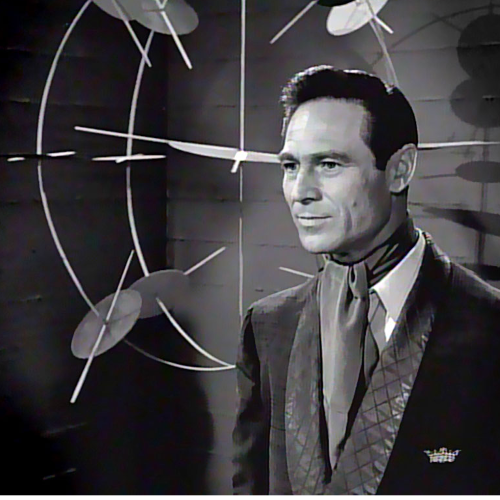
Twilight Zone: “One More Pallbearer” [Season 3, Episode 17]
Original Air Date: January 5, 1962
Director: Lamont Johnson
Writer: Rod Serling
Starring: Joseph Wiseman, Katherine Squire and Trevor Bardette.
The Overview: Beware of Spoilers…
Paul Radin [Wiseman] is a very wealthy but very petty man. He lures three people from his past to his private bunker hoping to get an apology from them for perceived wrongs. Radin has set up an elaborate prank – that there is about to be a nuclear war – and their apologies will allow them to stay safe with him in his bunker.
As expected in the Twilight Zone – things often don’t work out as planned.
Rating:
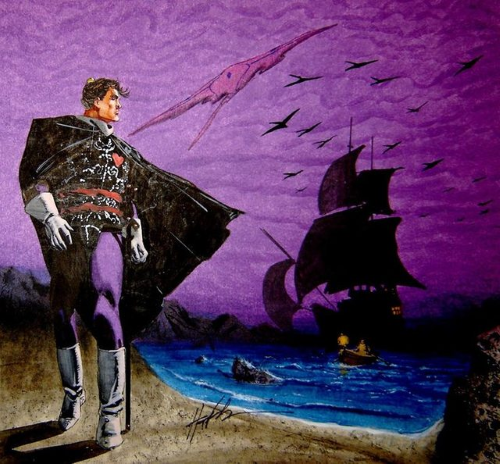
Howard Chaykin is the subject of an excellent interview with Tripwire Magazine.
Jake Rosen and Mental Floss present 13 Arresting Facts About Cops. Here are three of my favorites…
6. THE SUSPECTS NEED TO GIVE THEIR PERMISSION TO APPEAR ON THE SHOW.
Contrary to popular belief, being arrested doesn’t absolve anyone of his or her right to not be filmed for a national television show. Producers on Cops have to get releases signed by arrestees and suspects. If they’re already handcuffed, the crew can follow them to jail and get them to sign there. Langley has said that proper timing is key when it comes to getting their permission—during a fight is a problem—and estimated that 95 percent of everyone filmed signs a waiver to appear. According to Langley, they simply want to be on television.
8. THE CREW HAS HAD TO JUMP IN.
The official Cops crew policy is that camera and microphone operators are there only to observe: They’re not allowed to interfere with anything going on. The exception, Langley says, is if an officer’s life is in danger. In one instance, a suspect was about to secure an officer’s weapon when the sound man put down his gear and jumped in; another show staffer administered CPR to a woman in need. He was a paramedic; the officer didn’t know the technique.
1. JOHN LANGLEY THOUGHT OF THE IDEA DURING A COCAINE BUST.
The producer was in charge of a crew covering a real-life drug raid for a 1983 documentary called Cocaine Blues when inspiration struck: He thought it would be a good idea to have a no-frills chronicle of the everyday experiences of police officers. While the concept (then titledStreet Beat) was simple, no one shared Langley’s enthusiasm. He was repeatedly told no show without a narrator, music, or plot could succeed.

Twilight Zone: “Nothing in the Dark” [Season 3, Episode 16]
Original Air Date: January 5, 1962
Director: Lamont Johnson
Writer: George Clayton Johnson
Starring: Gladys Cooper, Robert Redford and R.G. Armstrong.
The Overview: Beware of Spoilers…
An old woman is afraid Death will take her if she leaves her apartment. She has food delivered and never opens the door until no one is around. Death has come calling before but she never lets him in. When a police officer is shot and left to die outside her door she is faced with a dilemma…
Rating:

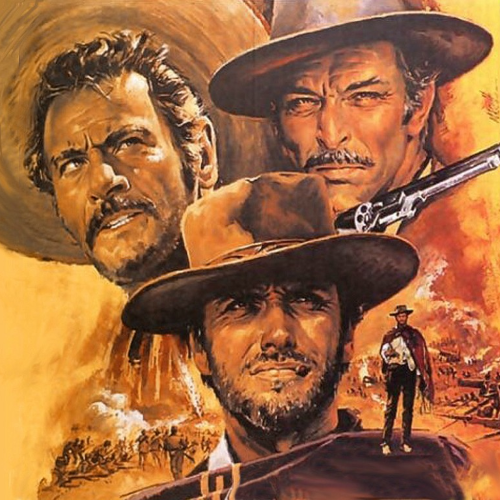
Matthew Jackson and Mental Floss present 12 Great Facts About The Good, the Bad and the Ugly. Here are three of my favorites…
9. IT’S TECHNICALLY A PREQUEL.
Careful viewers of the “Dollars Trilogy” will note that, though it’s the final film, The Good, The Bad and The Ugly actually takes place prior to the other two films. Among the clues: Eastwood acquires his iconic poncho, worn in both A Fistful of Dollars and For a Few Dollars More, in the final minutes.
11. EASTWOOD TURNED DOWN A FOURTH FILM.
By the end of The Good, The Bad and The Ugly, Eastwood was done working with Leone—a famous perfectionist—and had resolved that he would form his own company and start making his own movies. Leone, on the other hand, wasn’t necessarily done with Eastwood. He even flew to Los Angeles to pitch him the role of “Harmonica” (ultimately played by Charles Bronson) in Once Upon a Time in the West. Eastwood wasn’t interested.
12. JOHN WAYNE WAS NOT A FAN OF EASTWOOD.
Before Leone’s Westerns hit America, heroic gunfighters were almost always portrayed as men who waited for the villain to draw their guns first, the idea being that these were men who wouldn’t kill unless they had to. Among these heroes was John Wayne, whose career was winding down just as Eastwood’s was heating up. According to Eastwood, director Don Siegel (who made several films with Eastwood, including Dirty Harry) once tried to get Wayne to be more like the “Dollars Trilogy” star during the filming of Wayne’s final film, The Shootist. Wayne, it turns out, was not a fan of Eastwood’s more ruthless Western style.
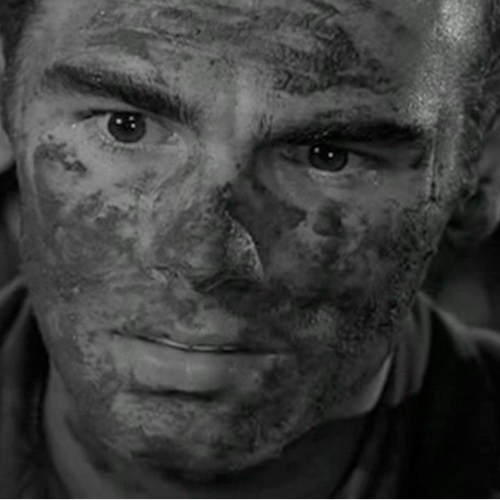
Twilight Zone: “A Quality of Mercy” [Season 3, Episode 15]
Original Air Date: December 29, 1961
Director: Buzz Kulik
Writer: Rod Serling from an idea by Sam Rolfe
Starring: Dean Stockwell, Albert Salmi, Rayford Barnes and Leonard Nimoy.
The Overview: Beware of Spoilers…
World War II is days from ending. A ragged group of battle-weary soldiers on the front line get a new Lieutanant [Stockwell] who hopes to make a name for himself no matter the cost to his men.
Rating: