Bruce Lee vs Batman!
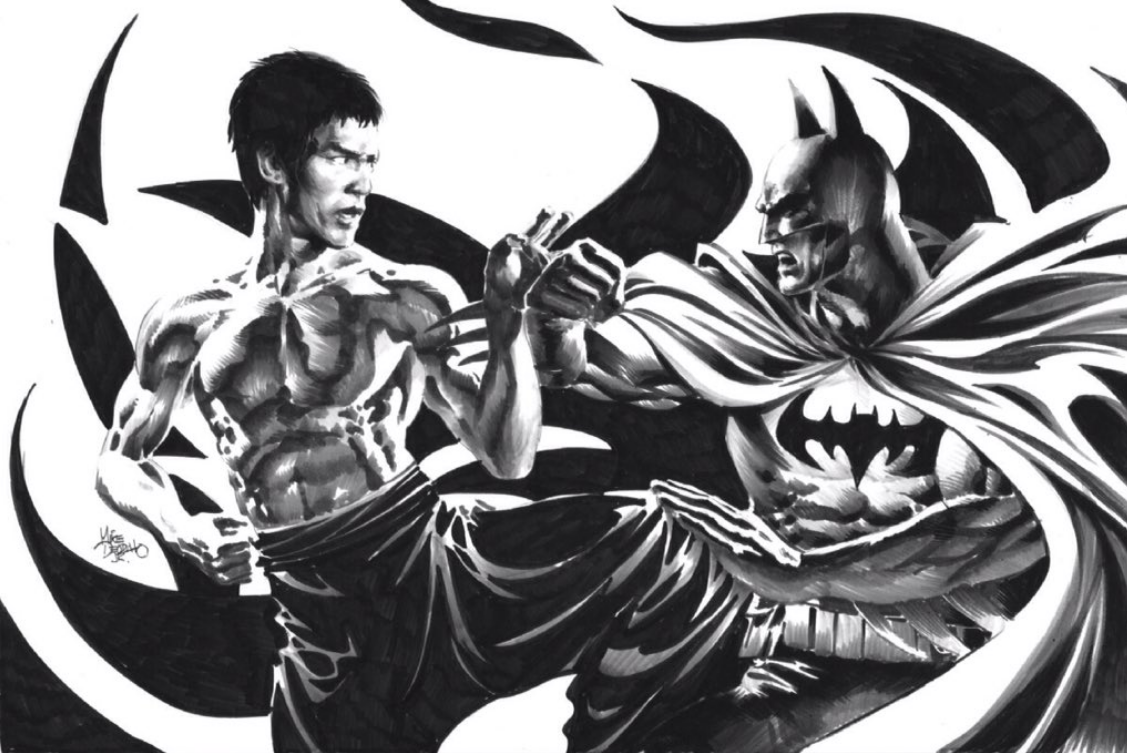
So who’s your money on?
Click on the photo to get a Roman Colosseum-sized view of Mike Deodato’s art!
Source: @AstroZombie78
“The Looking Glass” Poster & Trailer are Here!

Looking Glass starring Nicholas Cage doesn’t look half bad. (And don’t let me hear one of you wiseguys say, “You’re right. It looks all bad.”)
“The Hurricane Heist” Poster & Trailer are Here!

From time to time you’ll hear me speak about drive-ins and the types of movies that could be seen at ’em. Hurricane Heist looks like it would have been the second feature on a triple bill. Not the re-released major movie, but the action film being pushed along.
That’s not necessarily a bad thing.
“The Ritual” Poster & Trailer are Here!
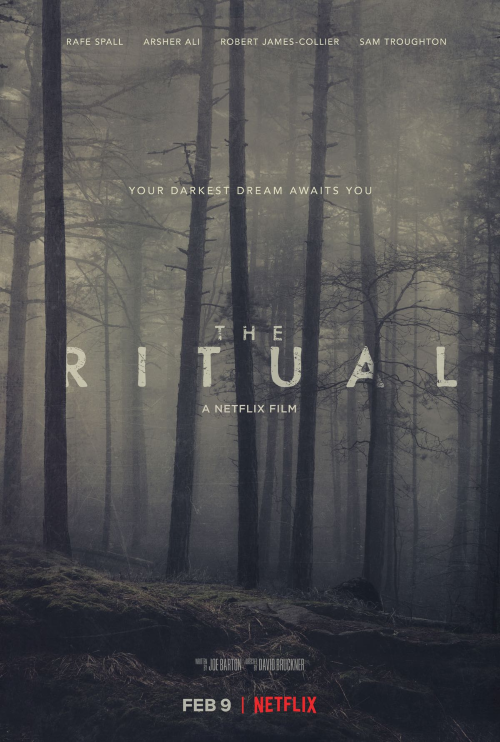
The Ritual poster and trailer have piqued my interest, but I’m not sold yet. Check out the video below and decide if you are.
“The Cured” Poster & Trailer are Here!

The Cured poster and trailer are here with a new twist on zombies.
The Arcade Game Cyclone is Designed to Maximize Taking Your Money
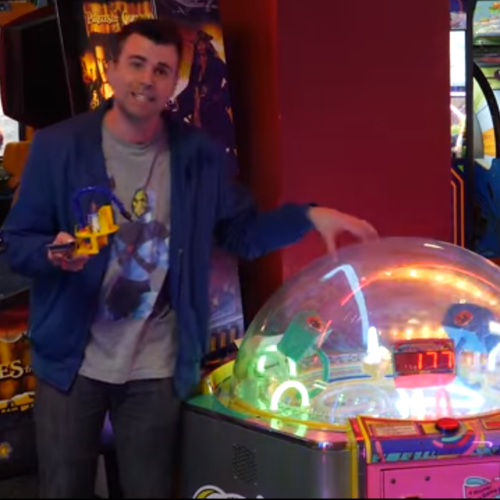
I’ll bet most of us have played or allowed our kids to play the arcade game Clyclone. It’s the one that has a light speeding around a dome. You press a button to stop the light and if it stops directly in front of you, you win.
As it turns out, the game is rigged. There’s no skill involved and it is designed to make you think you’re close to winning so you’ll keep playing. Check out the video below for full details.
Gene Roddenberry’s Original Pitch for “Star Trek”

Don Kaye and SyfyWire posted Firsts: Gene Roddenberry’s Original Pitch for Star Trek that will be of interest to fans. Here are just a few things I found interesting…
-
The first captain of what became known as the U.S.S. Enterprise was not Christopher Pike or James Kirk, but Robert April.
-
Spock was originally conceived as “probably half Martian,” with a reddish complexion, semi-pointed ears, and a “Satanic” look.
-
Dr. Phillip “Bones” Boyce was the doctor not Leonard McCoy.
-
A shuttlecraft was used to take folks from the ship to other planet surfaces. There was no transporters… no “Beam me up, Scotty.”
-
There were no phasers for the crew. They were originally going to carry rifles and pistols that fired either bullets, tranquilizer pellets, or explosive projectiles.
Thanks to Miguel Lopez for the heads-up.
Rare “Horses” Poster Starring Sly Stallone & John Herzfeld!

Last week Sly Stallone posted on his Instagram the art by Tom Jung for the very first Rocky poster. This week Sly posted the poster above for a student film that he and John Herzfeld made during their days at the University of Miami. Sly describes Horses as…
…a silent film about a cowboy and Indian that were resurrected in today’s modern society.
Sadly, Horses was never released. Happily, Herzfeld went on to have a long career as a writer, director, actor and producer. Sly didn’t do bad for himself either. ; )
Sly posts a lot of cool updates on his Sly Stallone Instagram.
Den of Thieves (2018) / Z-View

Den of Thieves (2018)
Director: Christian Gudegast
Screenplay: Christian Gudegast and Paul Scheuring
Stars: Gerard Butler, Jordan Bridges, Pablo Schreiber, Evan Jones,O’Shea Jackson Jr., 50 Cent, Cooper Andrews and Michael Bisping.
The Pitch: “Think The Shield meets Heat!”
Tagline: None.
The Overview: Beware of Spoilers…
Big Nick Flannagan (Butler) leads a LA Sheriff’s office strike force on the trail of an elite team of thieves who’ve staged several bank robberies executed with military precision. Flannagan’s team considers themselves a gang with badges and they’re not above doing whatever it takes to solve cases. When they find themselves head-to-head with thieves that are their equals it becomes clear that a final showdown is looming.
Den of Thieves is more than just a good guys vs bad guys or heist movie. I really liked it and the 2 hours and 20 minutes flew by. Everyone with me felt the same. It was interesting in that the most likable character wasn’t Big Nick Flannagan, yet, like The Shield‘s Vic Mackey, you find yourself pulling for him. Den of Thieves hits all the right notes and has a great twist ending that I won’t spoil. I have a feeling that Den of Thieves will be one that I like even better on subsequent viewings.

Rating:

Bruce Lee “The Big Boss” Poster by Jock
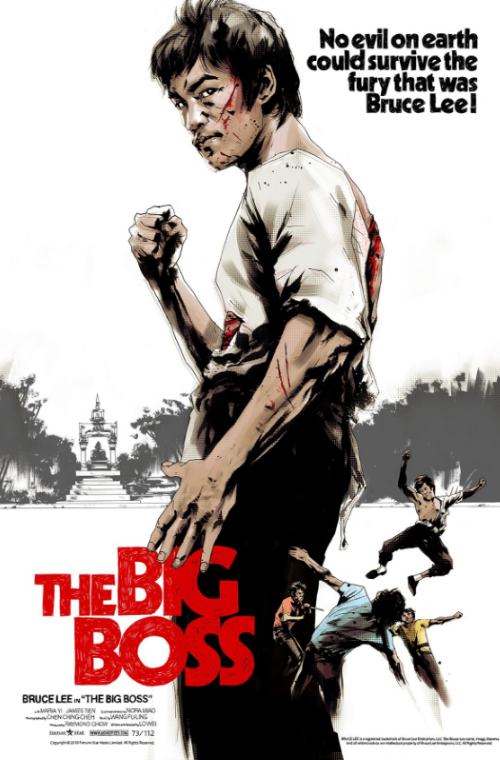
This Big Boss print by Jock is a thing of beauty. If you like this, you might want to check out The Art of Jock.
New Romero Zombie Film and Web Series!
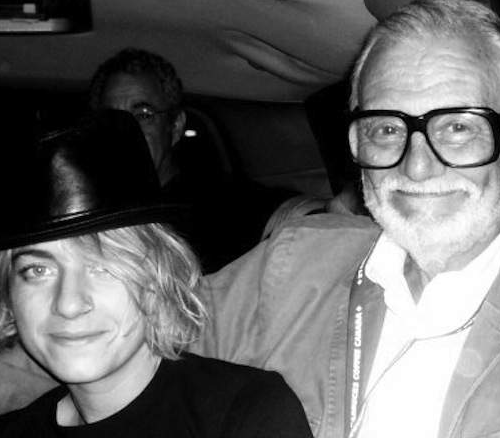
Tina Romero, George Romero’s daughter, has two horror-related projects in the works…
The first is a web series she is creating in collaboration with horror icon, Tom Savani and Robert Tinnell (who wrote and produces the series). Actor Jason Baker described the web series by saying…
“Imagine Oldboy shot as a silent film starring Lon Chaney Sr. It’s violent…”
This sounds interesting. More info about the web series can be found at Bloody Disgusting: First Details On Horror Web Series Directed By Tom Savini and George Romero’s Daughter.
Tina’s second project is a feature titled Queens of the Dead. Here’s Tina…
“Queens of the Dead is a fusion of two huge parts of my world: zombies and Gay nightlife. It’s a tribute to my father as well as my entrée into the genre he grandfathered. I can’t say too much yet, but what I can tell you is that this film will have all the hallmarks of a George A. Romero classic: farce, politics, heroes, ********, and most importantly, herds of silly and slow moving walkers that you can’t help but love. But I’m doing it Tina-style, and bringing the glitter, choreography, queers & queens.”
For more details check out Bloody Disgusting: Tina Romero, George Romero’s Daughter, Directing Queens of the Dead.
As we’ve previously reported, Cameron Romero, George Romero’s son is working on his own zombie feature, Rise of the Dead.
Dorothy Malone – R.I.P.
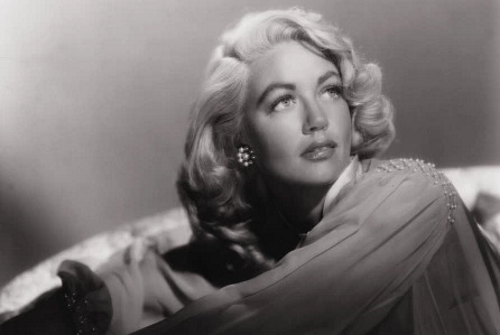
Dorothy Malone, Oscar winner as best supporting actress for her 1956 performance in Written on the Wind has died at age 92. Malone is probably best known for her starring role in the 1960s TV series Peyton Place. Visitors here might remember her for her last role as Sharon Stone’s friend in Basic Instinct. 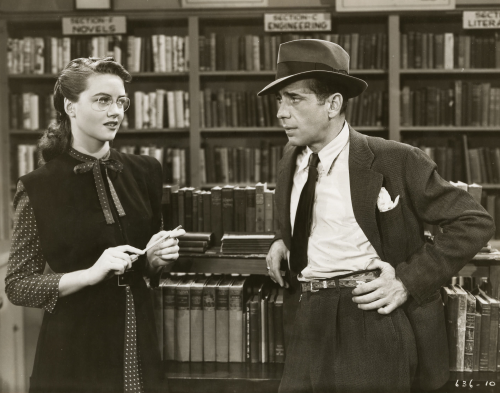
Dorothy Malone played in over 100 roles on film and tv, but I’ll always best remember her small role with Humphrey Bogart in The Big Sleep. In a scene lasting less than 4 minutes, Malone made a huge impact. I’ll bet Bogart returned to the Acme Bookstore after solving the case. I know I would have. Check out the scene and see if you don’t agree.
Sly Stallone Posts Rare 1st “Rocky” Poster Art by Tom Jung
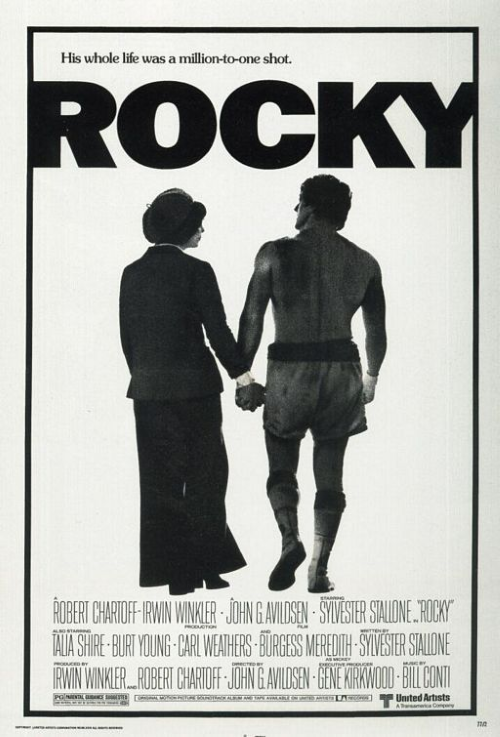
For my money, the Rocky poster above is perfection. Everything from the tagline (“His whole life was a million-to-one shot”) to the black and white photography of a fighter and his woman looking at each other surrounded by stark white (nothing else in their world matters) with their backs to the viewer. The big, bold ROCKY. I love this poster. It’s a classic.
And it might not have been used if they’d gone with the first Rocky poster ever made!
Sly Stallone posted on his Instagram the art by Tom Jung below saying…
Very very very rare! Believe it or not this was the first poster ever made for the first ROCKY… Hand drawn.! This is the ONLY one in existence !!!!
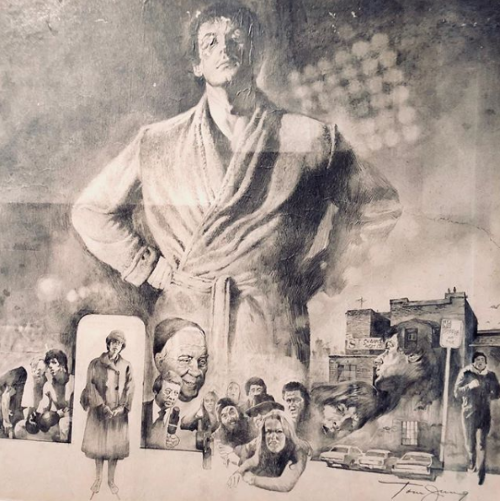
Sly posts a lot of cool updates on his Sly Stallone Instagram. Click on the link here and see what else Sly had to say about the Tom Jung art.
Frank Stallone also regularly updates his Frank Stallone Instagram.
Paul Gulacy’s Original Art is Groovy
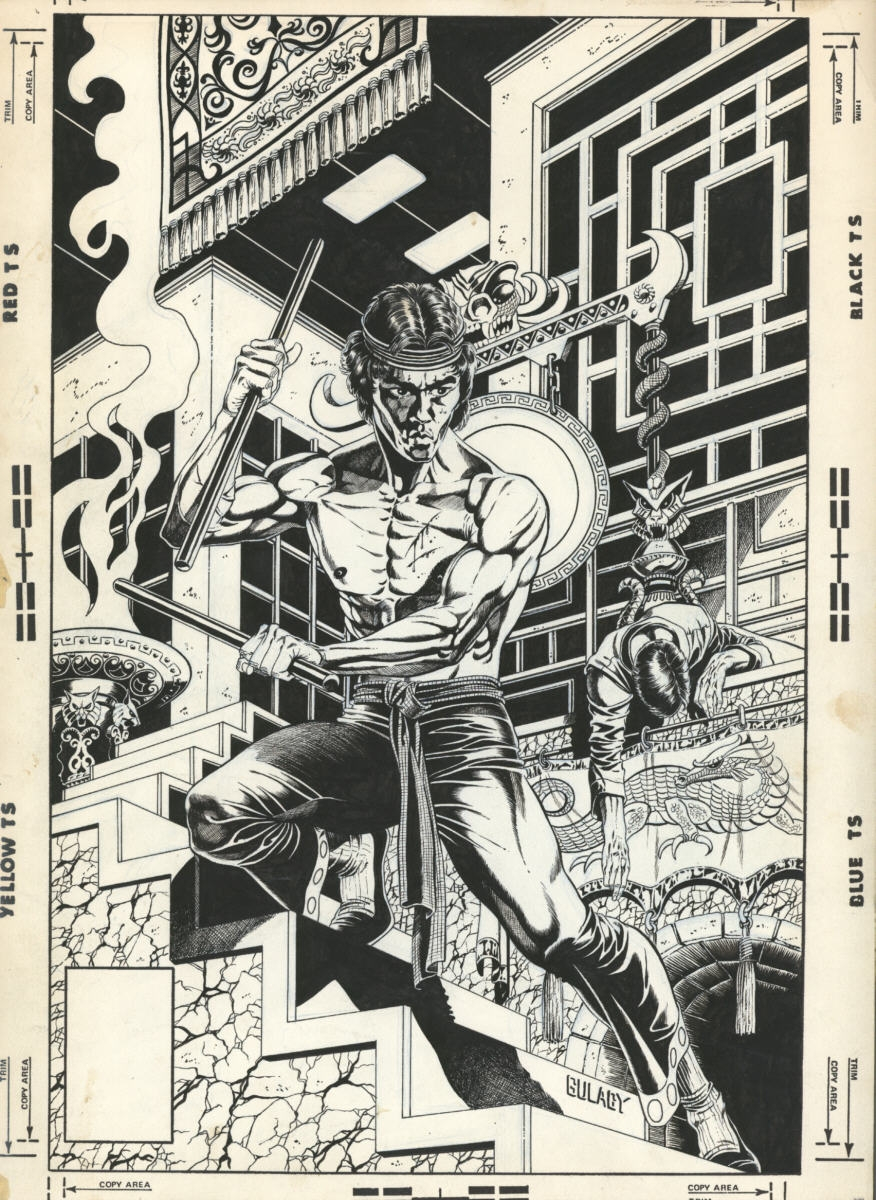
Diversions of the Groovy Kind posted Peerless Paul Gulacy Original Art and it is worth a look. If you click over (and you should) you’ll see Paul’s black and white originals for Master of Kung Fu, Morbius the Living Vampire and a Logan’s Run cover.