Kristina Killgrove and Mental_Floss present 13 Mummified Facts about Ötzi the Iceman. Here are three of my favorites…
5. HE HOLDS THE RECORD FOR OLDEST TATTOOS IN THE WORLD.
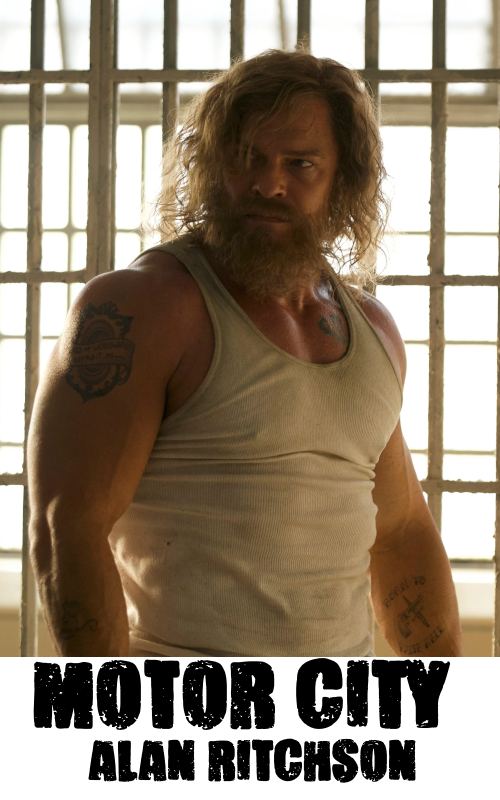
The mummy boasts 61 different tattoos, and they are the oldest physical evidence of tattooing in the world. While the Iceman does not have “MOM” on his biceps or a butterfly on his lower back, his tattoos are still quite interesting. They were made by scratching his skin and rubbing charcoal in the fresh wound, resulting in groups of lines or crosses. It has also been suggested that their placement over joints may have been an attempt to treat pain. As the oldest tattooed person ever found, Ötzi holds a Guinness World Record.
7. HE WAS AN EARLY ADOPTER OF TECHNOLOGY.
Ötzi’s field kit held a surprising number of different tools. There was a copper-bladed axe, which marks him as high status; a flint dagger and its tree-fiber sheath; and a bow made out of a yew tree. His quiver, fashioned out of deer hide with hazel wood supports, contained two finished arrows and a dozen unfinished shafts. He had a net for catching rabbits and birds, as well as a marble disc with a hole in the middle for hanging or carrying dead fowls. He also carried cylindrical containers made of birch bark—a kind of Copper Age Tupperware that kept charcoal embers hot for hours so he could quickly make a fire. His teeth were worn particularly on the left side, meaning he may have used his mouth to help work leather. The Iceman’s hair also revealed high levels of arsenic, suggesting he was a pro at smelting ores to make copper.
8. HE WAS A CHALCOLITHIC RAMBO.
Ötzi was short and stocky, around 5’2” tall and 135 lbs, with strong legs. In 2003, an early study of DNA from Ötzi and his belongings claimed to find blood from four different individuals—there was some on his dagger, on his goatskin coat, and on one of the arrows. This finding was never published, though, and has not been replicated since. But other evidence for combat exists in the form of two injuries. Several right-sided rib fractures had healed before death. Shortly before his death, Ötzi was struck in the head. A protein analysis of his brain reveals some healing, particularly in the form of blood clots—but those could have caused a stroke or embolism. The Iceman also suffered a long, deep stab wound to his right hand. Based on the stage of healing evident from the wound tissue, it occurred between 3 to 8 days before his death. And of course, the arrow lodged in his left shoulder was likely the ultimate cause of death. In short, Ötzi was a hunter and a fighter.