Quentin Tarantino Video Interview

If you’re a Quentin Tarantino fan you’ll enjoy the interview with him below!
Previews and Reviews that are Z's Views
If you’re a Quentin Tarantino fan you’ll enjoy the interview with him below!

The Big Heat is one of my all-time favorite movies. It was directed by Fritz Lang. The screenplay was by Sydney Boehm based on the Saturday Evening Post serial and 1953 novel by William P. McGivern. The film stars Glenn Ford, Gloria Grahame, Jocelyn Brando (Marlon’s sister) and Lee Marvin. Carolyn Jones even has a small role.
It’s a great film. I just wish it had a great poster to match.

Mark Mancini and Mental_Floss present 10 Back-And-Forth Facts About Abbott and Costello. Here are three of my favorites…
1. LOU COSTELLO WAS ONCE AN AMATEUR BOXER.
As a young competitor, Louis Cristillo fought in 12 matches under the alias “Lou King.” With 11 victories and one draw, Cristillo’s boxing career was off to an impressive start—until his father abruptly forced him into an early retirement. A multi-sport athlete, Cristillo could also light up a basketball court, despite his below-average height of 5’ 5”. In fact, he was once reportedly crowned Paterson, New Jersey’s foul shot champion.Athleticism would help Cristillo earn his first few Hollywood gigs. While struggling to become an actor during the late 1920s, he appeared as a stunt double in a handful of films, most notably The Trail of ’98 (1928). Unfortunately, Cristillo was seriously injured during that shoot and decided to move back east, where he planned on taking voice lessons. Since “talkies” were rising in popularity, this seemed like a smart move but Cristillo’s modest personal fortune only got him as far as St. Joseph, Missouri. It was there that he got his first taste of live theater and developed the bumbling persona he retained throughout his career. During this time, Cristillo chose yet another stage name: Lou Costello (a nod to silent film actress Helene Costello).
5. IN 1942, THEY RAISED $85 MILLION FOR AMERICA’S WAR EFFORT.
On their own dime, Abbott and Costello toured 78 cities in 34 days, with the proceeds funding Uncle Sam’s war bonds and stamps. En route, they were treated like national heroes—the good people of Lincoln even made them both honorary admirals in the fictitious Nebraska Navy.6. COSTELLO HATED THE SCRIPT FOR ABBOTT AND COSTELLO MEET FRANKENSTEIN.
Between 1940 and 1956, Abbott and Costello made nearly 40 movies together. By 1948, sheer overexposure weakened their popularity with filmgoers, who began to tire of their antics. Then along came this blockbuster horror-comedy, which rejuvenated the duo’s cinematic career and launched several genre-mixing follow-ups, including Abbott and Costello Meet the Invisible Man (1951), Abbott snf Costello Meet Dr. Jekyll and Mr. Hyde(1953), and Abbott & Costello Meet the Mummy (1955).However, Costello almost derailed Abbott and Costello Meet Frankenstein during pre-production. At one point, he barged into producer Robert Arthur’s office and claimed “My [five-year-old] daughter could write a better script than this. You’re not serious about making it, are you?” Arthur eventually calmed Costello by promising to hire the star’s favorite director, Charles Barton.

My best bud and artist extraordinaire, John Beatty sat down for a podcast interview for the Riley and Kimmy Show and you can listen to it here.
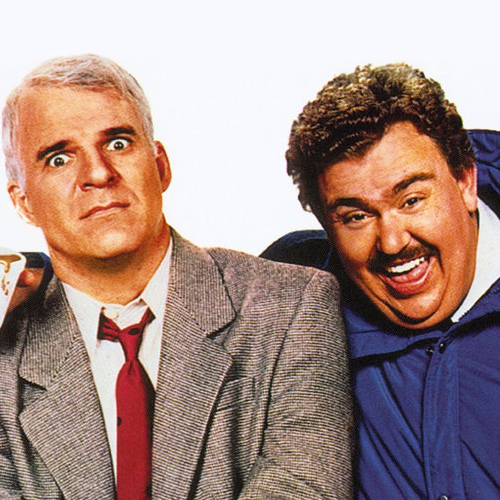
Roger Cormier and Mental_Floss present 14 Moving Facts About Planes, Trains and Automobiles. Here are three of my favorites…
1. JOHN HUGHES ONCE HAD A HELLISH TRIP TRYING TO GET FROM NEW YORK CITY TO CHICAGO.
Before he became a screenwriter, Hughes used to work as a copywriter for the Leo Burnett advertising agency in Chicago. One day he had an 11 a.m. presentation scheduled in New York City on a Wednesday, and planned to return home on a 5 p.m. flight. Winter winds forced all flights to Chicago to be canceled that night, so he stayed in a hotel. A snowstorm in Chicago the next day continued the delays. The plane he eventually got on ended up being diverted to Denver. Then Phoenix. Hughes didn’t make it back until Monday. Experiencing such a hellish trip might explain how Hughes managed to write the first 60 pages of Planes, Trains and Automobiles in just six hours.13. IN THE ORIGINAL ENDING, DEL FOLLOWED NEAL ALL THE WAY HOME.
Hughes decided during the editing process that instead, John Candy’s character would be “a noble person” and finally take the hint from Martin’s character, and let Neal return home alone, before Neal has a change of heart and finds Del again.14. IN THE SCENE WHERE NEAL THINKS ABOUT DEL ON THE TRAIN, MARTIN DIDN’T KNOW THE CAMERA WAS ON.
In order to get the new ending he wanted, Hughes and editor Paul Hirsch went back to look for footage they previously didn’t think would be used. Hughes had kept the cameras rolling in between takes on the Chicago train, without his lead’s knowledge, while Martin was thinking about his next lines. Hughes thought Martin had a “beautiful expression” on his face in that unguarded moment.
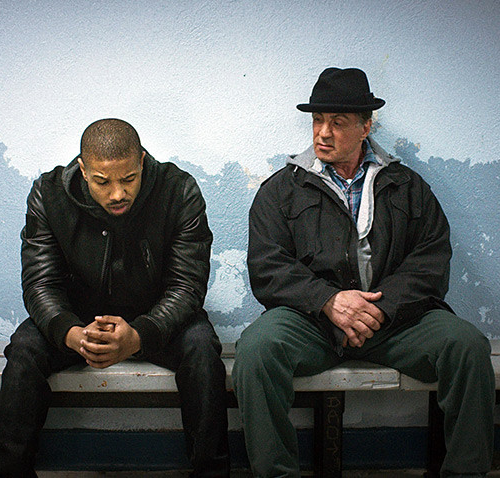
What a week Sly Stallone is having! I know we’re covering him quite a bit this week, and I hope you’re enjoying the ride. If not, things will get back to normal [well, as normal as ever around here] soon enough.
This morning we have 8 Reasons Sylvester Stallone Should Win an Oscar for Creed by Ben Travers at Indiewire. Normally, I would list my top three favorite reasons from the article.
Not today… because I agree with every single one.

Alex Maidy and JoBlo.com present the Top Ten Action Movie Stars of All Time.
Using just their list, here are my top five [and where they placed at JoBlo]…
Overall, their list wasn’t bad. They definitely got #1 right, but are there others who should have made the Top 10 but didn’t?
Off the top of my head I’m thinking of Charles Bronson, Vin Diesel, Dwayne Johnson [perhaps it is too early in Diesel and Johnson’s career], Harold Lloyd, Jean Claude Van Damme… others?

Robert Rodriguez is a true Sylvester Stallone fan. Recently Sly sat down with Rodriguez for an episode of The Director’s Chair and…
Rodriguez was so impressed with Stallone’s insight and honestly that he wanted to make the episode available for free to everyone. You can watch it on the …
Capone from Ain’t It Cool News had a chance to interview Rodriguez about Sly’s appearance on The Director’s Chair and their interview should be required reading for anyone who checks in here.

Roger Cormier and Mental_Floss present 16 Hard-Hitting Facts About the Rocky Movies. Here are three of my favorites…
3. ADRIAN WAS ALMOST PLAYED BY SUSAN SARANDON.
Stallone and the producers decided that she was “too sexy.” Cher was also considered. Bette Midler was offered the role but turned it down. Carrie Snodgress had in fact won the part, until her agent asked for too much money. Talia Shire auditioned at the last minute to save the day.7. CHARLIE CHAPLIN AND ELVIS PRESLEY WERE FANS OF THE FIRST MOVIE.
Chaplin wrote to Stallone that Rocky reminded the silent film star of a character he used to play. Stallone regretted turning down Chaplin’s invitation to visit him in Switzerland after the director died a few months later. Similarly, Stallone turned down Elvis’ offer to watch Rocky with him in Memphis months before The King passed away.16. ROCKY’S TURTLES CUFF AND LINK OUTLIVED A COUPLE OF THE CHARACTERS.
The female red-eared sliders that appeared in 2006’s Rocky Balboa are the same turtles from the original 1976 picture.

I’m looking forward to American Crime Story: The People vs O.J. Simpson. You see, I’m holding out hope that they’ll get it right this time.

Eric Beetner was the recent subject of a Q&A with MysteryPeople. Beetner talks about writing, editing, Rumrunners and the forthcoming prequel Leadfoot. If that doesn’t convince ya to click over, you’ve never read any of Beetner’s crime stories. [For shame.]
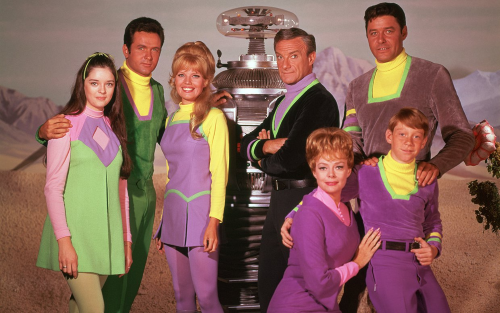
Bryan Reesman and Mental_Floss present 11 Far Out Facts About Lost in Space. Here are three of my favorites…
1. THE ORIGINAL UNAIRED PILOT SET A DARKER TONE. IT ALSO COST $600,000.
The original pilot “No Place To Hide”—which cost $600,000, or $4.5 million in today’s dollars—was a more straight up sci-fi tale that did not include either Dr. Smith or the Robot in the cast. The Space Family Robinson saga—inspired by a comic book with that title from Gold Key Comics that began in 1962—started with their 1997 mission going awry thanks to a meteor shower, and the Jupiter 2 crash landing on a seemingly barren planet with harsh weather conditions and inhabited by dangerous cyclops giants. It was pretty impressive for the day and hinted at a more intense show than the one that ultimately aired. We still love the series, but this episode—unseen until early last decade—promised many more dramatic possibilities.2. THE JUPITER 2 COST MORE THAN THE ENTERPRISE.
The cost of the Robinson family’s Jupiter 2 spacecraft was $350,000 ($2.6 million today), more than the Enterprise on Star Trek, which began airing when Lost In Space started its second season. Of course, a major difference is that the Jupiter 2 was a smaller ship, so we saw every chamber in it, whereas the Enterprise was a larger wessel (as Pavel Chekov would say) with many unseen nooks and crannies. It was all about scale.7. GUY WILLIAMS RETIRED FROM ACTING AFTER LOST IN SPACE.
The man who was famed for playing Zorro on TV between 1957 and 1961 and Dr. John Robinson from 1965 to 1968 decided to retire from the spotlight at the young age of 44 following the cancellation of Lost In Space. He later moved to Argentina, where he was reportedly beloved and where he lived until his death in 1989.

Buster Keaton: The Art of the Gag is well worth a look for anyone interested in comedy or movie history.
Source: Mark Evanier.
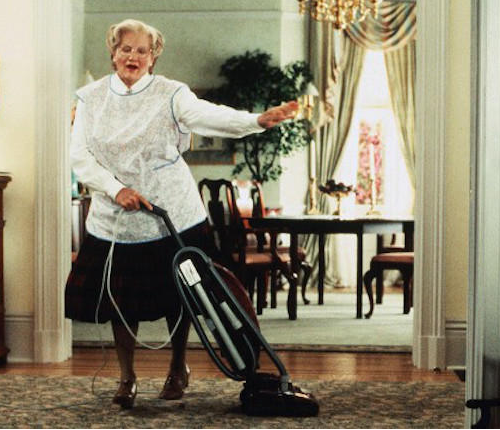
Roger Cormier and Mental_Floss present 16 Sure Facts About Mrs. Doubtfire. Here are three of my favorites…
3. THEY WENT THROUGH PHOTOGRAPHS OF OLD WOMEN.
Director Chris Columbus claimed that he and his fellow filmmakers looked through “hundreds and hundreds” of photographs until finding a 1940s-era English woman to base Mrs. Doubtfire’s look on.7. CHUCK JONES SUPERVISED THE OPENING ANIMATION.
Jones was the iconic animator of Looney Tunes and Merrie Melodies cartoons for Warner Bros. The full five minutes of Pudgy Parakeet and Grunge the Cat was released as a DVD feature.8. COLUMBUS USED MULTIPLE CAMERAS SIMULTANEOUSLY TO CAPTURE THE CAST WHEN WILLIAMS IMPROVISED.
The director mostly shot one or two takes of each scene as it was written in the script before shooting something Williams made up. Columbus said the resulting footage gave him the option of cutting a PG, PG-13, R, or NC-17 version of the movie. (He ended up going with the PG-13 version.)

Jeff Wells and Mental_Floss present 18 Epic Facts About Dances with Wolves. Here are three of my favorites…
1. IT STARTED AS A NOVEL THAT NOBODY WANTED TO PUBLISH.
Inspired by books he’d read about the Plains Indians, screenwriter Michael Blake (who died earlier this year) pitched Costner on the idea for Dances with Wolves. Costner told Blake, whom he’d met in a Los Angeles acting class, to write a novel instead of a screenplay, reasoning that a novel could generate studio interest more effectively than a cold script. So Blake spent months writing and sleeping on friends’s couches (including Costner’s). “I wrote the entire book in my car, really,” Blake said in a behind-the-scenes feature. Once finished, Blake submitted Dances with Wolves, to numerous publishers, all of whom passed on his manuscript. Finally, after more than 30 rejections, a small publisher called Fawcett accepted it.2. IT BECAME THE FILM THAT NO STUDIO WANTED TO FINANCE.
Turned down by American studios, Costner looked abroad for help, eventually securing startup funds from a handful of foreign investors. With only a fraction of the movie’s $15 million budget secured, he began filming. Orion Pictures eventually stepped in with $10 million, but Dances with Wolves ended up going more than $3 million over budget. Costner covered the overage out of his own pocket.18. THERE’S A SEQUEL.
A sequel to the book, that is. In 2001, Blake published The Holy Road, which continues the story of John Dunbar, now a full-fledged Sioux warrior, as he tries to protect his tribe from encroachment by white settlers. Critics praised the novel for the ways it portrayed westward expansion and the plight of Native Americans without coming off heavy-handed. There have been rumblings about a possible miniseries, but nothing is confirmed at this time.