9 Things You May Not Know About the Warren Commission

Evan Andrews and History.com present 9 Things You May Not Know About the Warren Commission.  Here are three of my favorites…

Earl Warren suppressed key evidence from the Commission.

Chief Justice Earl Warren was a close friend of the Kennedy family, and his personal attachment may have interfered with his duties to the Commission. In one of the most infamous episodes of the investigation, Warren denied his fellow Commission members access to Kennedy’s autopsy photos because he deemed them too disturbing. He later refused to allow the Commission to interview certain witnesses whom Lee Harvey Oswald may have known in Mexico, and even tried to block an interview with first lady Jackie Kennedy because he didn’t want to invade her privacy.

The Commission secretly interviewed Fidel Castro.

Many believed that Fidel Castro might have conspired in Kennedy’s murder, and it turns out that the Cuban dictator personally proclaimed his innocence in an off-the-record interview with the Warren Commission. According to journalist Philip Shenon, at one point in the investigation, Commission lawyer William Coleman met face to face with Castro on a fishing boat off the coast of Cuba. During a three-hour exchange, Castro repeatedly denied having any involvement in the assassination. No notes were taken during the secret rendezvous, and only Earl Warren and one other investigator were ever made aware of it.

The FBI and the CIA intentionally misled the Commission.

The FBI and the CIA had monitored Lee Harvey Oswald in the months before the assassination, but both agencies later tried to downplay their knowledge of him to the Warren Commission. Oswald had once even left a threatening note for an FBI agent at the Bureau’s office in Dallas. Fearful of catching blame for not preventing the assassination, the FBI later destroyed the note and even removed the agent’s name from a typewritten transcript of Oswald’s address book provided to the Warren Commission. Congressman Hale Boggs would later say that FBI Director J. Edgar Hoover “lied his eyes out” to the Commission’s investigators.

Evidence also suggests that the CIA had Oswald under surveillance when he made a trip to Mexico in September 1963 and visited the Cuban and Soviet embassies, but the agency repeatedly denied any connection to the alleged shooter. The CIA also neglected to inform the Commission about its many covert operations in Cuba—including several schemes to assassinate Fidel Castro—even though those revelations might have helped shape the investigation.

13 Fascinating Facts About “Natural Born Killers”

Roger Cormier and Mental_Floss present 13 Fascinating Facts About Natural Born Killers.  Here are three of my favorites…

1. QUENTIN TARANTINO WROTE THE ORIGINAL SCRIPT.
It was titled Mickey and Mallory and focused more on the media than on Mickey Knox and Mallory Wilson. He sold the rights to the movie for $10,000 because he was unable to get it made himself (this was before Pulp Fiction). Tarantino ended up getting a story credit forNatural Born Killers, while Richard Rutowski, Oliver Stone, and David Veloz each got a screenwriting credit.

3. MICHAEL MADSEN ALMOST TOOK THE LEAD.
Michael Madsen was considered for the lead role of Mickey: “Oliver Stone wanted me, but the studios offered him an extra $20 million to cast Woody Harrelson,” Madsen told The Guardian.

11. MICKEY AND MALLORY DIE IN THE ALTERNATE ENDING.
The killers survive in the final version because Oliver Stone believed that the 1990s were a time when the bad guys got away with it.

13 Things You Might Not Know About “Modern Family”

Roger Cormier and Mental_Floss present 13 Things You Might Not Know About Modern Family.  Here are three of my favorites…

2. CRAIG T. NELSON WAS OFFERED THE ROLE OF JAY PRITCHETT.
Like many things in Hollywood, Nelson’s decision to pass on the project came down to money. “I really wanted to do Modern Family,” Nelson said. “I really liked the script and I liked the people. I just said, ‘You know what? I’ve been doing this too long.’ We’re in the middle of a cutback here, ladies and gentlemen, in Hollywood and salaries have gone way, way down … I just felt disrespected to tell you the truth.” The next year, Nelson signed on for Parenthood.

5. FIZBO THE CLOWN WAS A REAL CHARACTER ERIC STONESTREET PLAYED AS A CHILD.
Stonestreet began dressing up as Fizbo when he was nine years old (his dream was to be a clown in the circus). By the time he was 11, he was performing at kids’ birthday parties. “It was my way then as a young man to express my desire to entertain and perform,” he told The Kansas City Star. “I didn’t know what I was saying then was that I wanted to be an actor. I had parents, fortunately, who didn’t think I was weird. They thought it was funny and cute and encouraged me to do it. And I had a grandma who would make my costumes.” He doesn’t know where the name Fizbo came from.

7. SOFIA VERGARA THOUGHT ED O’NEILL SPOKE SPANISH.
Sofia Vergara watched Married … with Children growing up in Colombia, where the voices were dubbed into Spanish. She didn’t realize that it wasn’t Ed O’Neill saying Al Bundy’s lines in Spanish, and was surprised to find that he couldn’t speak her native language when they first met. “He had a very sexy Antonio Banderas voice, the guy who was dubbing him,” said Vergara.

34 Things We Learned from the “Used Car” Commentary

Rob Hunter and Film School Rejects present 34 Things We Learned from the Used Car Commentary.  Here are three of my favorites…

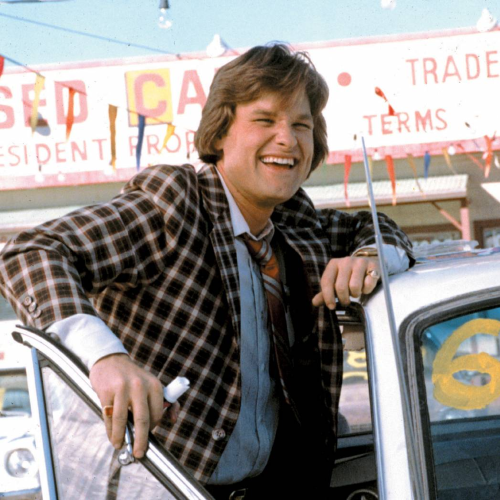
6. Russell remembers Steven Spielberg visiting the set a few times which prompts Gale to point out that the idea for the film came while he (Gale) and Zemeckis were working on the script for Spielberg’s 1941. “[John] Milius told us this story that he and Spielberg wanted to do someday about used car salesmen outside of Las Vegas. He wanted to put George Hamilton in it…

7. The Fuchs brothers were originally going to be played by different actors, but after Jack Warden turned down the role of Roy Fuchs someone suggested making them twins and having one actor play both.

11. Joe Flaherty’s character was originally going to be played by John Candy, but they got a call after rehearsals and costume fittings had already begun. Apparently Candy’s agent had double-booked him onto two films filming at the same time — possibly Stripes? — so they had to replace him.

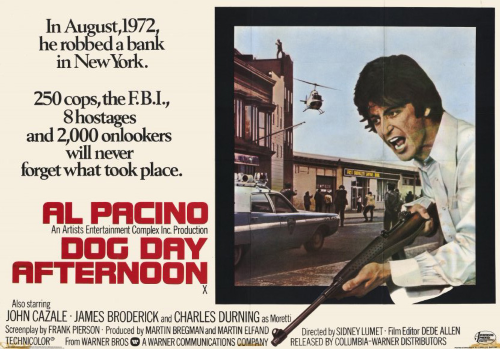
13 Fascinating Facts About “Dog Day Afternoon”

Eric D. Snider and Mental_Floss present 13 Fascinating Facts About Dog Day Afternoon.  Here are three of my favorites…

2. THE REAL BANK ROBBER LOOKED A LOT LIKE AL PACINO.
Fluge’s magazine article described John Wojtowicz as “a dark, thin fellow with the broken-faced good looks of an Al Pacino or Dustin Hoffman,” so naturally the screenplay found its way into both actors’ hands. (Pacino was Lumet’s first choice, but Hoffman was reportedly approached when Pacino, seeking to take a brief break from movies, initially turned it down.) We see a bit more De Niro in Wojtowicz than Pacino or Hoffman, but Pacino was a good fit, too.

9. THEY LOST A DAY’S WORK BECAUSE OF PACINO’S MUSTACHE.
One of the things the actor did as a means of getting into character was grow a mustache—not because the real robber had one, but because the character was gay, and in the mid-’70s, many gay men had mustaches. In Lumet’s words, however, Pacino’s mustache “looked terrible.” And after the first day of filming, Pacino agreed. Watching the footage, Pacino told Lumet, “The mustache has got to go,” and asked if he could shave it and redo that day’s work. Lumet agreed, and the mustache was gone—as was a day’s worth of footage.

10. IT’S THE ONLY TIME LUMET EVER INCORPORATED IMPROVISATION INTO ONE OF HIS MOVIES.
Sidney Lumet’s first film was 1957’s 12 Angry Men. He made 20 more between that and Dog Day Afternoon (and 22 more afterward), and by his own account, he never used improv. “I don’t like actors to improvise, to use their own language,” he said in the Dog Day AfternoonDVD commentary. “They are not going to come up with something … better than a really talented writer who has done months of work on something.”

But as Lumet and the cast rehearsed Dog Day Afternoon—especially the parts where the robbers and bank employees are just sitting around killing time—someone asked about the possibility of improv, and Lumet realized it could be useful for helping the actors bond, as well as making the characters’s interactions feel more natural. With screenwriter Frank Pierson present, Lumet let the actors improvise in rehearsal; recorded it; and ended up adding some of their conversations to the script (which won the film’s only Oscar, by the way).

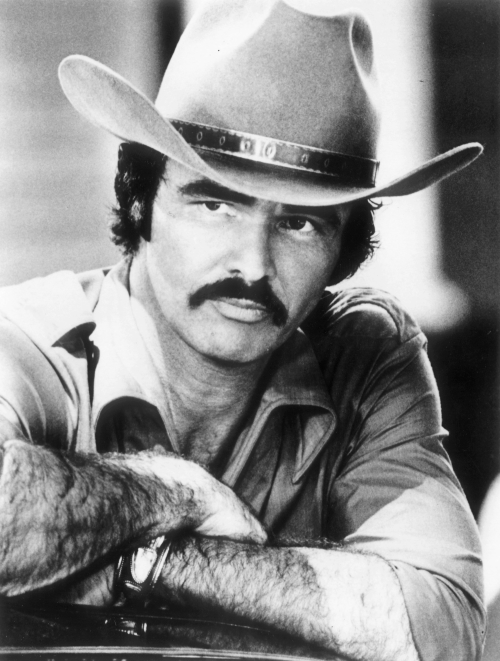
10 Surprising Facts About Burt Reynolds

James L. Menzies and Mental_Floss present 10 Surprising Facts About Burt Reynolds.  Here are three of my favorites…

1. HE TURNED DOWN SOME MAJOR ROLES.
Over the course of a near-60-year career, one is bound to pass on some prime roles. And Reynolds has turned down a lot, including (by his own admission in the video above) Han Solo in Star Wars, R.P. McMurphy in One Flew Over the Cuckoo’s Nest, Edward Lewis in Pretty Woman, and John McClane in Die Hard. Although he doesn’t regret that final one: “I don’t regret turning down anything Bruce Willis did,” Reynolds told Piers Morgan.

More notably, and perhaps more regrettably, Reynolds turned down a chance to play James Bond in 1969. As Reynolds explains it: “In my infinite wisdom, I said to [producer] Cubby Broccoli, ‘An American can’t play James Bond. It just can’t be done.’ And they really tried to talk me into it. It was a 10-minute discussion. Finally they left. Every night, I wake up in a cold sweat.”
5. HE HAD AN IMPROMPTU PIE FIGHT WITH MARC SUMMERS ON THE TONIGHT SHOW.

Burt Reynolds had just finished up his segment as a guest on The Tonight Show with Jay Lenoin 1994 and had shifted over to make way for the next guest, TV show host Marc Summers (Double Dare, Unwrapped). Reynolds became visibly irritated with Summers for, ostensibly, turning his back on him while he was speaking to Leno. Summers then made the comment to Reynolds, “I’m still married, by the way.” This jab precipitated a water fight between the two combatants: Reynolds dumped his mug on Summers’s lap, Summers retaliated, so on and so forth. The donnybrook culminated in a rather violent pie fight followed by a very awkward hug.

“This was not a bit,” Summers explained. “I didn’t know what to expect. He was going through a divorce with Loni Anderson at the time and he was angry … He hugged me and said, ‘I only did that because I really like you.’ You wait to get on The Tonight Show your whole life. You’re sitting next to Burt Reynolds. He drops water on your crotch then you get into a pie fight!”

6. HE (TICKED) OFF ELMORE LEONARD.
Reynolds was a longtime admirer of writer Elmore Leonard. After reading Leonard’s novel,Stick, Reynolds decided that he wanted to direct and star in the film version. Things did not go well.

After watching Reynolds’s first cut of the film, the studio pushed back its release date and forced him to re-shoot the second half of the movie, much to the actor/director’s dismay. “I turned in my cut of the picture and truly thought I had made a good film,” Reynolds told theLos Angeles Times. “Word got back to me quickly that the [studio] wanted a few changes … I gave up on the film. I didn’t fight them. I let them get the best of me.”

The biggest blow came from Elmore Leonard. “Leonard saw the film the day he was interviewed for a Newsweek cover and told them he hated it,” Reynolds shared. “After his comment, every critic attacked the film and he wouldn’t talk to me. When I reshot the film, I was just going through the motions. I’m not proud of what I did, but I take responsibility for my actions. All I can say—and this is not in way of a defense—is if you liked the first part of Stick, that’s what I was trying to achieve throughout.”