Stunt Woman Gladys Ingle
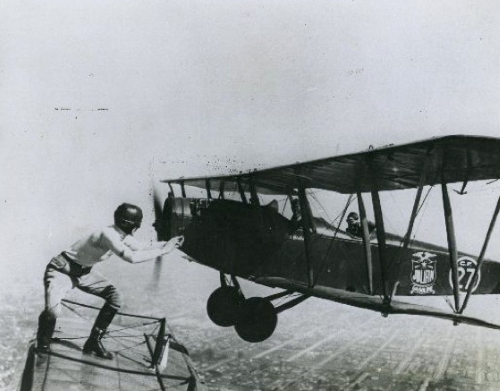
Until recently I had never heard of Gladys Ingle of the 13 BLACK CATS. In the video below Ingle changes planes in mid-air to replace a missing wheel.
Previews and Reviews that are Z's Views
Until recently I had never heard of Gladys Ingle of the 13 BLACK CATS. In the video below Ingle changes planes in mid-air to replace a missing wheel.
Two famous sayings come to mind for this morning’s post…
A reporter once asked Stephen King why he writes such scary stories. King answered, “It is because I have the heart of a small boy… and I keep it in a jar on my desk.”
The second quote is when a person in love tells his/her lover: “I give you my heart.”
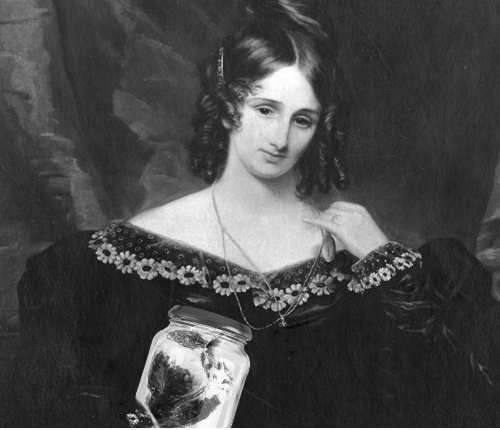
It seems that Frankenstein author Mary Shelley took the second quote literally. After her husband died Shelley…
…kept the heart in a silken shroud, and is said to have carried it with her nearly everywhere for years. In 1852, a year after she died, Percy’s heart was found in her desk. It was wrapped in the pages of one of his last poems, Adonais…
Source: Mental_Floss.

Erin McCarthy and Mental_Floss present 8 Tips for Beating a Claw Machine.
Truth be told, I didn’t think that claw machines could be beat… or maybe I was just thinking of Baron Von Raschke.

And without further adieu… or any adieu, I present Post Modern Jukebox featuring Sarah Reich.

Jake Rossen and Mental_Floss present Halt Citizen! 15 Facts About Robocop. Here are three of my favorites…
7. Weller Refused to Answer to His Real Name.
According to co-star Miguel Ferrer, Weller instructed the producers to issue a memo to the cast and crew advising that no one should refer to him by his real name: he preferred to be called by his character’s name, Murphy, or “Robo.” Ferrer went on to say that, having known Weller for years prior to the film, he enjoyed greeting him with “Hey, Pete.” Weller ignored him.3. Stan Lee Turned It Down.
In 1984, Neumeier decided to see if he could spin the RoboCop script into a comic book to use as a launching pad for a feature. He ran the idea by Stan Lee; before Lee could commit one way or the other, he and Neumeier attended an early screening of The Terminator, which also had a humanoid as the main character. An impressed Lee told the writer, “Boy, you’re never going to top that!” and passed.11. Some of the Actors Got Unsolicited Stunt Pay.
Kurtwood Smith and Ray Wise had been standing in such close proximity to a building explosion that the production—without any sense of humor—paid both men for “stunt work,” which amounted to roughly $400 apiece for the scene. But the actors didn’t feel their pay justified the risk to their life: neither was aware the explosion would be that big, and Smith’s coat ended up catching on fire.
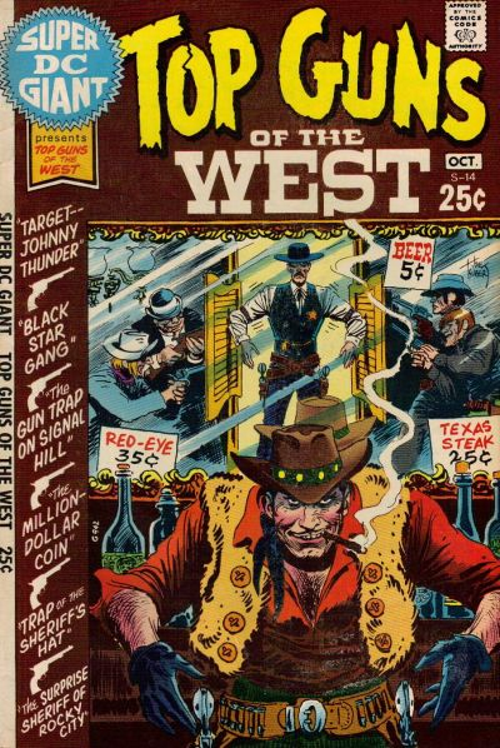
Diversions of the Groovy Kind is a regular stop on my daily website visits. You’ll always find something cool like this post of Super Giant DC covers.
My favorite of the bunch is Joe Kubert’s Top Guns of the West shown above. What kid wouldn’t want to pick up that comic to find out how the outgunned marshal gets his man?
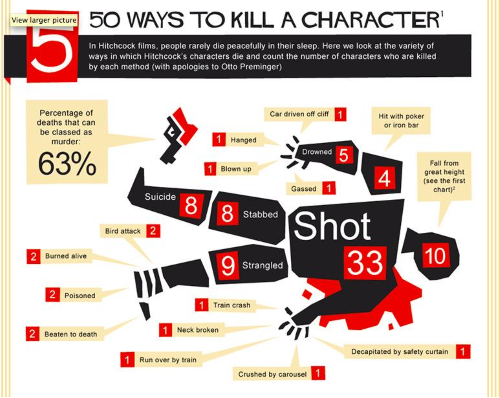
Greg Chan created the chart above which shows the various ways that people die in Alfred Hitchcock films.
You have a better than 60% chance of being murdered if you die in a Hitchcock film which is about the same odds if you live in Detroit.
Click here if you’d like to see a bigger version of the chart.
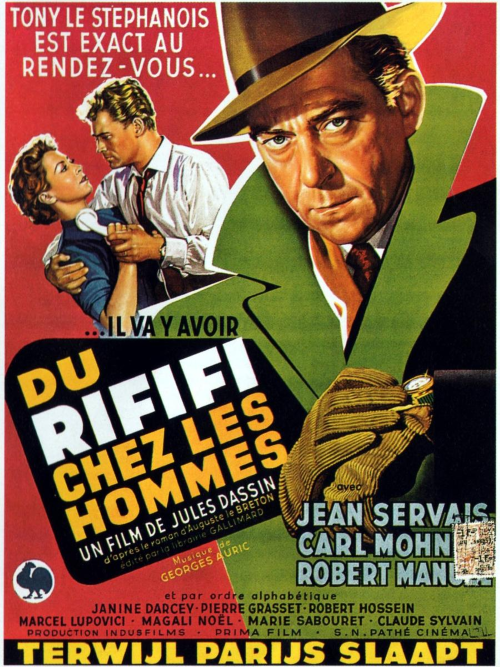
The Playlist has news that should make ever fan of crime stories happy…
Rialto Pictures will be bringing the first ever digital restoration of “Rififi” to theaters this fall, and we have the exclusive trailer below. While the film’s setup may be standard —a crew of thieves plot one last job— the execution is anything but. The film’s centerpiece heist sequence, running a half-hour long and presented in nearly complete silence, is still one for the ages and has arguably never been topped. Meanwhile, Dassin brings a coolness of touch and eye for style for elevates “Rififi” far beyond its noir aesthetics.
Hopefully Rififi will show within driving distance!
Eli Roth’s The Green Inferno looks pretty intense and scary.
My bet is it will be pretty gory too. Intense and scary I can take.
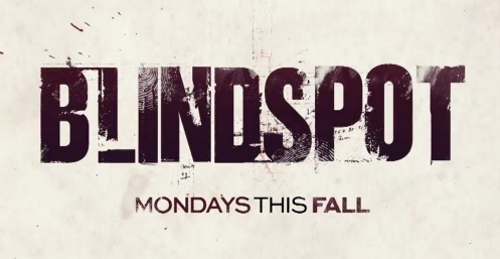
The trailer below for Blindspot has moved it to my must-see tv list.
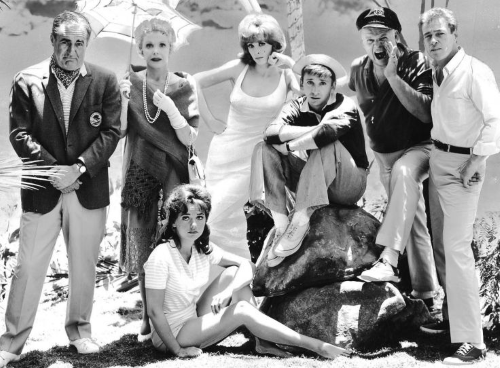
Kara Kovalchik and Mental_Floss present 15 Fateful Facts About Gilligan’s Island. Here are three of my favorites (and this was one of the hardest to get down to top three )…
5. THE ASSASSINATION OF JFK DELAYED PRODUCTION ON THE SERIES.
The pilot for the series was filmed over several days in November of 1963 on the island of Kauai in Hawaii. The last day of shooting was scheduled for November 23, 1963 in Honolulu Harbor for the scenes showing the S.S. Minnow embarking on its fateful three-hour tour. Late in the morning on November 22, a crew member ran to the set and announced that he’d just heard on the radio that President John F. Kennedy had been shot. As Lyndon Johnson was sworn in as President, it was announced that all military installations (including Honolulu Harbor) would be closed for the next two days as a period of mourning. Filming was delayed by several days as a result, and in the opening credits—as the Minnow cruises the harbor—the American flag can be seen flying at half-mast in the background.
2. GILLIGAN’S FIRST NAME IS WILLY.
After getting a green light from CBS for the pilot, Schwartz went about assembling his cast. He chose the name of the bumbling first mate—Gilligan—from the Los Angeles telephone directory. Gilligan’s first name was never mentioned during the series, but according to Schwartz’s original notes, it was intended to be “Willy.” Yet Bob Denver always insisted that “Gilligan” was the character’s first name. “Almost every time I see Bob Denver we still argue,” Schwartz once admitted. “He thinks Gilligan is his first name, and I think it’s his last name. Because in the original presentation, it’s Willy Gilligan. But he doesn’t believe it, and he doesn’t want to discuss it. He insists the name is Gilligan.”7. DAWN WELLS STILL GETS PAID FOR GILLIGAN’S ISLAND.
All of the actors signed contracts that guaranteed them a certain amount of money per original episode plus a residual payment for the first five repeats of each episode. This was a pretty standard contract in 1965, when as a rule most TV shows were only rerun during the summer months as a placeholder between seasons.Even though the word “syndication” wasn’t yet a standard term in the TV production glossary, Dawn Wells’ then-husband, talent agent Larry Rosen, advised her to ask for an amendment to that residual clause in her contract, and the producers granted it, never thinking the series would be on the air nearly 50 years later. As a result, the estate of the late Sherwood Schwartz (who reportedly pocketed around $90 million during his lifetime from his little microcosm-on-an-island show) and Dawn Wells are the only two folks connected to the show who still receive money from it.
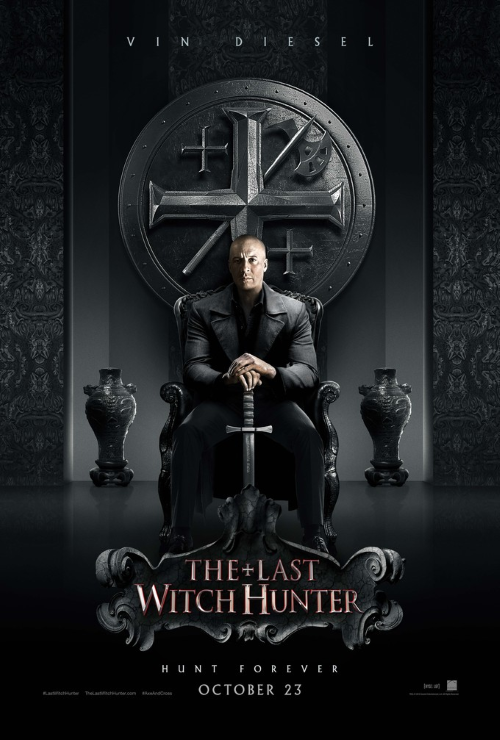
Although I’m a Vin Diesel fan, I’m not picking up a real positive vibe from The Last Witch Hunter.
Check out a larger version of the poster above and a different take as well at AICN.
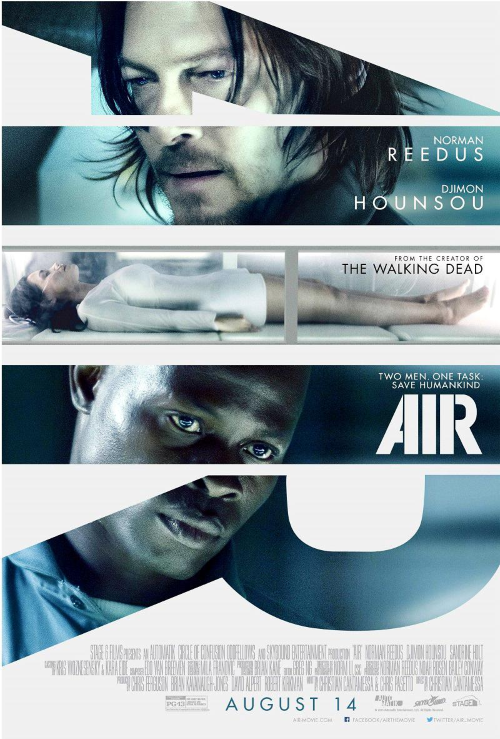
Here’s the poster and trailer for Air starring Norman Reedus and Djimon Hounsou.
Despite the popularity of Reedus, Air is getting just a limited theatrical release along with video on demand. I’d watch it.
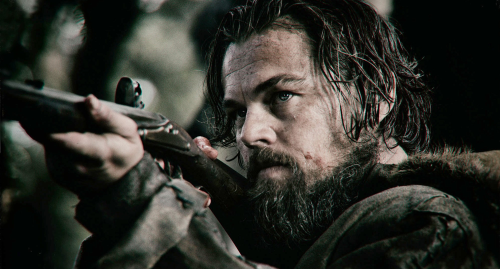
Here’s trailer for The Revenant directed by Alejandro G. Iñárritu and starring Leonardo DiCaprio, Tom Hardy, Domhnall Gleeson, Will Poulter and Lukas Haas.
I’m in.