11 Director’s Cuts That Changed a Movie’s Plot
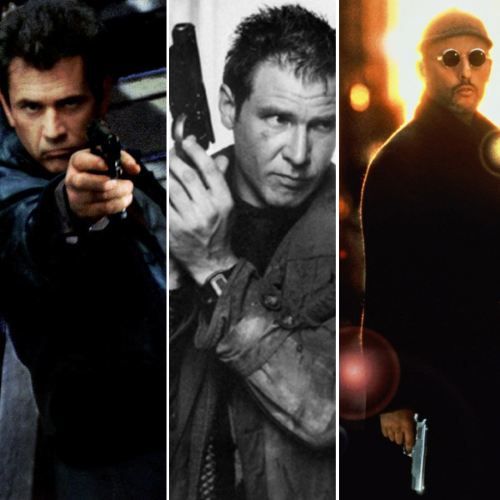
Jason Plautz and Mental Floss present 11 Director’s Cuts That Changed a Movie’s Plot. Here are three of my favorites with my thoughts…
5. PAYBACK (1999)
In the theatrical release of this Mel Gibson film, almost the entire third act differs from director Brian Helgeland’s original vision, which was unresolved until the release of a 2006 director’s cut. The most notable change, however, comes at the very end of the movie. In the theatrical release, Gibson’s character kills two top mob figures, then drives off happily with the female lead, Rosie, and his dog. In Helgeland’s version, Gibson is shot in a train station showdown. Rather than driving off happily with Rosie, she picks him up while he is bleeding and his fate is left up in the air.
Craig’s thoughts: I love the fact that both versions of the film are available. I have and am a fan of both. Gibson’s theatrical version is more audience-friendly, and Helgeland’s more noir. It’s great that we can have both. Special note – I love the opening sequence that shows how Parker comes back from near-dead to get the cash and items needed to take his revenge.
1. BLADE RUNNER (1982)
Blade Runner has actually gone through many iterations. There was the theatrical cut released in 1982 with a “happy ending” shoehorned in by the studio. Both director Ridley Scott and star Harrison Ford hated it, and Ford has even confessed that he wasn’t giving it his all when recording a voiceover that he called “not an organic part of the film.” Then came the “directors cut” in 1992 that Scott also disowned.
Finally, Warner Bros. worked with Scott in 2007 to release the Final Cut of Blade Runner, the only version over which Scott had complete control. It contained several changes (particularly to the score) and new scenes, but perhaps the most significant was the confirmation—or close to it—that Ford’s character Deckard actually was a replicant. Instead of the “happy ending” that shows Deckard and Rachel driving through a beautiful landscape, Scott’s ending is more ambiguous and simply shows them leaving Deckard’s apartment. Plus the appearance of an origami unicorn in front of Deckard’s door hints that he is, in fact, a replicant (a similar calling card had been used earlier in the film to denote replicants). In interviews about the new release, Scott confirmed that Deckard was a replicant in his version, although Ford said he believed the character was human.
Craig’s thoughts: I saw Blade Runner during its initial theatrical release. I liked it. Didn’t love it. Over the years I’ve seen so many different versions. Some Blade Runner fans get pretty upset arguing if Deckard is a replicant or not. I don’t have a strong opinion either way, although if he is, it creates a more shocking ending.
6. LÉON: THE PROFESSIONAL (1994)
In the original film, the relationship between the hitman Léon and his 12-year-old neighbor Mathilda was already a little dicey, what with the two of them collaborating on a series of murders. But the directors cut adds a whole new level of discomfort. In it, Mathilda—played by Natalie Portman in her film debut—is shown to be far more involved in the assassinations of a crew of drug dealers. She also sexually propositions Léon and plays a game of Russian roulette to force Léon to say that he loves her. Those scenes were in the original European release, but were cut because producers were concerned about how American audiences would react.
Craig’s thoughts: I wonder how Leon would play in our current climate. Having a child become a professional assassin would be a tough sale and definitely not politically correct. I’m glad the sexually suggestive scenes were cut. I think the idea of Leon being a paternal influence is much more interesting than the alternative.