14 Fun Facts About “‘O Brother, Where Art Thou?”

Roger Cormier and Mental_Floss present 14 Fun Facts About ‘O Brother, Where Art Thou?  Here are three of my favorites

1. IT WAS ORIGINALLY INSPIRED BY THE WIZARD OF OZ.

Joel Coen revealed as much at the 15th anniversary reunion. “It started as a ‘three saps on the run’ kind of movie, and then at a certain point we looked at each other and said, ‘You know, they’re trying to get home—let’s just say this is The Odyssey. We were thinking of it more asThe Wizard of Oz. We wanted the tag on the movie to be: ‘There’s No Place Like Home.’”
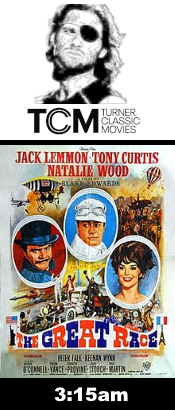
3. THE TITLE IS FROM A PRESTON STURGES CLASSIC.

Sullivan’s Travels (1941) was a Hollywood satire about a comedy director who wanted to make a serious, epic drama, travels the country to research it, and discovers the world is better off laughing. The movie the character wanted to make was titled O Brother, Where Art Thou?.

8. THE MUSIC BECAME AN UNEXPECTEDLY HUGE HIT.

For the movie’s music—and even before they’d finished the script—the Coens turned to musician/producer T Bone Burnett, whom they had worked with on The Big Lebowski  in 1998. Along with singer-songwriter Gillian Welch, Burnett found the songs for the movie. Its soundtrack—which combined original and traditional bluegrass, country, gospel, blues, and folk music—was the first movie soundtrack to win the Grammy for Album of the Year since 1994. More than eight million copies of the album were sold.

14 Empowering Facts About “9 to 5”

Jennifer M. Wood and Mental_Floss present 14 Empowering Facts About 9 to 5.  Here are three of my favorites

2. IT WAS ORIGINALLY INTENDED TO BE A DRAMA.

Though it’s ranked number 74 on the American Film Institute’s list of the 100 Funniest American Movies of All Time, 9 to 5 didn’t start out as a comedy. “At first we were going to make a drama,” Fonda explained. “But any way we did it, it seemed too preachy, too much of a feminist line. I’d wanted to work with Lily [Tomlin] for some time, and it suddenly occurred to [producer] Bruce [Gilbert] and me that we should make it a comedy. It remains a ‘labor film,’ but I hope of a new kind, different from The Grapes of Wrath or Salt of the Earth. We took out a lot of stuff that was filmed, even stuff the director, Colin Higgins, thought worked but which I asked to have taken out. I’m just super-sensitive to anything that smacks of the soapbox or lecturing the audience.”

3. IT WAS A BLACK COMEDY BEFORE IT WAS A BROAD COMEDY.

“I had written a very dark comedy in which the secretaries actually tried to kill the boss, although they tried to kill him in sort of funny ways,” screenwriter Patricia Resnick told Rolling Stone. “Originally, Jane had been concerned that would be too dark. I screened an old Charlie Chaplin film called Monsieur Verdoux for her. In it, Chaplin’s wife is blind and he has a child. He’s kind of a Blackbeard, he romances a series of woman through the course of the movie and murders them in order to get money and support his family. It is a comedy, but at the end they hang him. I turned to Jane at the end of the movie and tears were rolling down her cheeks—but she was concerned the women wouldn’t be sympathetic enough. I said, ‘He really killed all these women and you’re crying. I just want them to try! They won’t be successful.’ And she said OK. But then when Colin came in, he was very influenced by Warner Bros. cartoons and things like that, and so their attempts to kill him became the fantasy scenes, and he made it a much broader comedy.”

8. PARTON WOULD ONLY STAR IN THE FILM IF SHE COULD WRITE THE THEME SONG.

Parton may have been a Hollywood newcomer, but she was savvy. She agreed to take the part in 9 to 5, but only if she could write the theme song as well. Fonda agreed, and Parton wrote the song while the movie was filming. In 1981, she earned an Oscar nomination for Best Original Song for “9 to 5.”

Star Trek: The 366 Project!

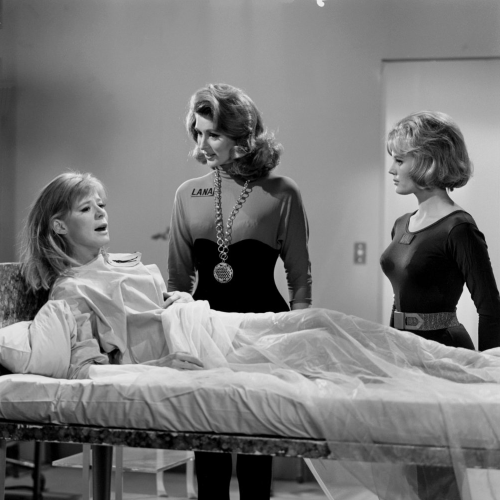
2016 marks the 50th anniversary of Star Trek, a tv series that lasted just three seasons and yet would not die.  Star Trek went on to spawn a cartoon series, comic books, novelizations, several more tv series and many Star Trek movies [with more on the way].

In honor of Star Trek’s 50th Anniversary

Roddenberry Entertainment, the original creators of Star Trek, is celebrating the anniversary of its brainchild by unearthing rare photos, memos, script pages, documents, and the like from the archives. The initiative, called “The 366 Project,” will see one piece of Trek history posted to Roddenberry Entertainment’s social media channel each day beginning in 2016. Like the title suggests, there are 366 pieces to be released.

If you can’t wait, Entertainment Weekly has three bonus pieces available now!

13 Spirited Facts About “How the Grinch Stole Christmas”

Andrew N. Wong and Mental_Floss present 13 Spirited Facts About How the Grinch Stole Christmas.  Here are three of my favorites

4. ITS BUDGET WAS MASSIVE.

Coming in at over $300,000, or $2.2 million in today’s dollars, the special’s budget was unheard of at the time for a 26-minute cartoon adaptation. For comparison’s sake, A Charlie Brown Christmas’s budget was reported as $96,000, or roughly $722,000 today (and this was after production had gone $20,000 over the original budget).

8. CHUCK JONES HAD TO FIND WAYS TO FILL OUT THE 26-MINUTE TIME SLOT.

Because reading the book out loud only takes about 12 minutes, Jones was faced with the challenge of extending the story. For this, he turned to Max the dog. “That whole center section where Max is tied up to the sleigh, and goes down through the mountainside, and has all those problems getting down there, was good comic business as it turns out,” Jones explained in TNT’s How the Grinch Stole Christmas special, which is a special feature on the movie’s DVD. “But it was all added; it was not part of the book.” Jones would go on to name Max as his favorite character from the special, as he felt that he directly represented the audience.

7. THURL RAVENSCROFT DIDN’T RECEIVE CREDIT FOR HIS SINGING OF  “YOU’RE A MEAN ONE, MR. GRINCH.”

The famous voice actor and singer, best known for providing the voice of Kellogg’s Tony the Tiger, wasn’t recognized for his work in How the Grinch Stole Christmas. Because of this, most viewers wrongly assumed that the narrator of the special, Boris Karloff, also sang the piece in question. Upset by this oversight, Geisel personally apologized to Ravenscroft and vowed to make amends. Geisel went on to pen a letter, urging all the major columnists that he knew to help him rectify the mistake by issuing a notice of correction in their publications.

12 Seductive Facts About “The Graduate”

Eric D. Snider and Mental_Floss present 12 Seductive Facts About The Graduate. Here are three of my favorites

7. NOBODY, INCLUDING DUSTIN HOFFMAN, THOUGHT DUSTIN HOFFMAN SHOULD STAR IN IT.

The obvious choice for the role of Benjamin Braddock—a privileged Beverly Hills kid with wealthy parents—was someone tan, handsome, white, Anglo-Saxon, and Protestant. Robert Redford was everyone’s first choice, but Nichols vetoed him on the grounds that the audience wouldn’t believe him as a character who has been rejected by women. Nichols auditioned hundreds of actors for the part. After seeing Hoffman’s audition, Nichols realized the key to the character should be that he’s out of place. He’s surrounded by tall, beautiful blond people, but he’s none of those things. Hoffman thought his audition had been terrible, but Nichols hired him, against the advice of the producers and financiers.

11. IT COULD HAVE STARRED THE BOY WONDER!

Burt Ward, then becoming very famous as the Caped Crusader’s sidekick in TV’s Batman, was offered the lead role by producer Turman. But Ward’s bosses nixed it. Ward said, “Because Batman was so enormous and successful … they didn’t want to dilute anything to do with the character by having me play a different role. The studio wouldn’t let me do it.”

12. IT COULD HAVE STARRED ABOUT A MILLION OTHER PEOPLE, TOO.

Besides Redford and Ward, many other actors were considered for Benjamin, including Charles Grodin, who came very close to being cast before dropping out over money and scheduling. Elaine, eventually played by Katharine Ross, was supposed to be Candice Bergen, with Natalie Wood, Ann-Margret, and Jane Fonda on the wish list, too. Nichols’ top choice for Benjamin’s father (William Daniels) was Ronald Reagan, who was just then going into politics. Doris Day turned down Mrs. Robinson because the book was too dirty (according to one telling, her husband-slash-manager didn’t even show it to her). And when Nicholsvisited Ava Gardner, who’d expressed interest in playing Mrs. Robinson, she acted like a nutty movie star. She declared, unasked, that she wouldn’t take off her clothes, and said she’d been trying all day to place a phone call to Ernest Hemingway, who really was a friend of hers but who’d been dead for five years.

8 Jolly Facts About “Frosty the Snowman”

Kara Kovalchik and Mental_Floss present 8 Jolly Facts About Frosty the Snowman Here are three of my favorites

4. THE NARRATOR WAS UNIVERSALLY REGARDED AS A NICE GUY.

Jimmy Durante was a jazz pianist, singer, and comedian whose career spanned a little over 50 years. In the 1950s, he was a regular not only at Las Vegas’ Desert Inn, but also at the Guardian Angel Cathedral, where he stood outside and greeted fellow parishioners with the priest after Sunday mass each week. Durante loved children, and is famous for turning down a performance fee at the Eagles International Convention in 1961. When asked by the organizers “What can we do, then?” Durante replied in his trademark Brooklynese: “Help da kids.”

5. LEGENDARY VOICE ACTORS JUNE FORAY AND PAUL FREES WERE REPLACED AFTER THE ORIGINAL AIRING.

The original film featured June Foray performing the voices of both the schoolteacher and young Karen, who accompanied Frosty to the North Pole. Paul Frees was the Traffic Cop and Santa Claus, and the two combined to voice the remaining schoolchildren. For reasons unknown (even to Foray herself), nearly all the children’s voices—including Karen’s—were redubbed by unidentified child actors for the 1970 airing. All subsequent TV appearances and video releases contain this new soundtrack. The original is only available on the 1970 soundtrack LP and a 2002 CD release by Rhino.

8. FROSTY HAS MAGIC FINGERS AS WELL AS A MAGIC HAT!

Watch carefully when Frosty attempts to count to 10: He has five fingers on one hand for a brief moment, then when he clasps his hand and flexes his digits, he’s down to four fingers. Maybe that falls under the category of “animation blooper” rather than “magic.”

16 Fun Facts About “Tootsie”

Roger Cormier and Mental_Floss present 16 Fun Facts About Tootsie. Here are three of my favorites

13. IT WAS GEENA DAVIS’ FIRST MOVIE.
Davis landed the role of soap actress April Page despite never having auditioned for any other movie before. “But I didn’t know you’re only supposed to come on the days that you’re working,” Davis told The Frame. “And so I came every day for six weeks, because I thought that was just part of it. I’d get a chair and put it right next to Sydney Pollack and sit there all day.”

14. BILL MURRAY INSISTED ON NOT BEING CREDITED.
Murray’s contract stipulated that he not be given any billing for the role, and Columbia agreed not to publicize his part in the film, because Murray thought it would be a “fun practical joke”to play. Hoffman insisted on casting Murray as his playwright roommate, even though Pollackwas unfamiliar with his work. Murray improvised most of his lines.

10. POLLACK AND HOFFMAN HAD LOUD DISAGREEMENTS THROUGHOUT PRODUCTION.
The two would go to each other’s trailers, scream at one another, and then do it Pollack’s way (according to the late director). They had their biggest arguments on Mondays, because they had each separately been working on the script over the weekend.

15 Epic Facts About “Heat”

Garin Pernia and Mental_Floss present 15 Epic Facts About Heat.  Here are three of my favorites

10. DESPITE BEING IN THE SAME FILM, PACINO AND JON VOIGHT HAVE NEVER WORKED TOGETHER.
The actors didn’t share any scenes together in Heat, and somehow throughout their veteran careers they haven’t gotten around to appearing on-screen together. When Maxim asked Voight which actor he most wanted to work with, living or dead, he said Pacino. “I really love Al’s work, and himself, and we’re friends … so that would be something that would be fun for me to do. I like the audacity of his work, and the greatness of his work. I’m very aware of it.”

14. VAL KILMER’S IDEA FOR HEAT 2 ENTAILS ROMANCING NATALIE PORTMAN.
During a 2013 appearance on Larry King’s Hulu show, Kilmer—who played Chris Shiherlis in Heat—shared his idea for a potential Heat sequel. “You remember Natalie Portman in it? She’s Pacino’s adopted daughter, so she comes home and says, ‘Daddy, daddy, I want you to meet my fiancé.’ And it’s me. He’s retired and I come to Chicago where he’s retired back to and I’m going to torture him, and then I’m going to kill him.” It’s worth noting that Portman was only 14 years old when Heat came out, and Kilmer was 35.

15. HEAT IS ONE OF BEN AFFLECK’S FAVORITE HEIST FILMS.
For The Town, the 2010 bank robbery heist movie that he co-wrote, directed, and starred in, Ben Affleck found inspiration in Heat. “A movie hasn’t been made since that has a deeper feel of authenticity,” Affleck told The Daily Beast of Heat. “It feels so real that bank robbers then copied Heat. And when I was interviewing people in prison they referenced Heat. And when I was interviewing the FBI, they referenced Heat. So, aside from feeling bummed out that I’d always be in the shadow of Heat, I can certainly tell you, for sure, with great authority, that Heat is the one movie that’s cited as the real thing by people who really do that stuff.”