10 Operatic Facts About “Bohemian Rhapsody”

Kara Kovalchik and Mental_Floss present 10 Operatic Facts About Bohemian Rhapsody Here are three of my favorites

1. FREDDIE MERCURY STARTED WRITING IT IN 1968.
“Bohemian Rhapsody”, or “Bo Rhap” as it is known by Queen fans, had its beginnings in 1968 when Freddie Mercury was a student at London’s Ealing Art College. He’d come up with an opening line—“Mama, just killed a man”—but no melody. Because of the Old West feel (in his mind) to the lyric, he referred to his work in progress as “The Cowboy Song.”

6. PROMOTING THE SONG PROVED PROBLEMATIC.
After it was decided to release “Bohemian Rhapsody” as a single, the band was faced with a bit of a dilemma: At the time in England, it was traditional for bands to appear on shows like Top of the Pops to promote their latest hits. But Queen was scheduled to begin a tour soon, plus (as Brian May admitted) they’d feel self-conscious miming to the operatic section. They solved the problem by filming a promotional film, or “pop promo” as it was called in the industry lingo of the time, that could be shown not only on UK music shows, but also around the world in other markets, such as American Bandstand.
10. A BLUE VINYL PRESSING OF THE SONG IS WORTH MORE THAN $5000.
The Holy Grail in terms of Queen collectibles is a 7-inch limited edition of “Bohemian Rhapsody” that was pressed in blue vinyl. In the summer of 1978, EMI Records won the Queen’s Award To Industry For Export Achievement (that’s “Queen” as in Her Majesty Elizabeth II). The label’s primary reason for sales in far-reaching territories that lacked manufacturing facilities was Queen, as in the band. To celebrate their prestigious award, EMI pressed 200 copies of “Bohemian Rhapsody” in blue vinyl, each of which was hand-numbered. Numbers one through four went to the band members, of course, while other low-numbered copies were given to friends and family members. Bona fide copies from this original pressing currently sell for upwards of $5000.

The Best Cities for Surviving the Zombie Apocalypse

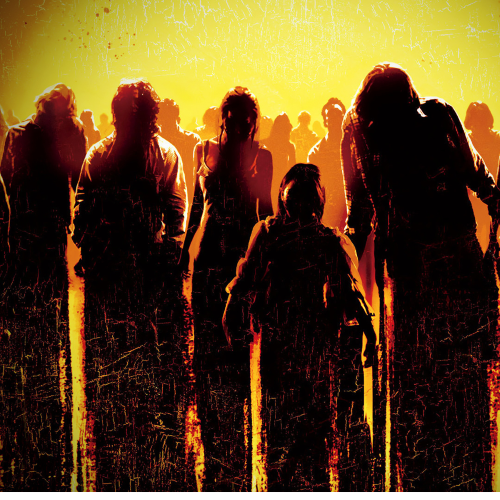
Ok, so the zombie apocalypse breaks out… where do you go?

Kiona Smith-Strickland and Gizmodo might have the answers in These Are the Best Cities for Surviving the Zombie Apocalypse.  The worst cities are also listed.

Neither my home town [Port Orange, Florida] nor my birth town [Terre Haute, Ind.] made the best cities for survival list.  Of course they also managed to stay off the worst cities list as well.  So I do have that going for me.

7 of the Creepiest Coincidences in Movie History

Hollywood.com provides us with 7 of the Creepiest Coincidences in Movie History.  I thought this was the creepiest of the bunch…

3. Poltergeist
In the classic horror film, Poltergeist, there’s a poster hanging above Robbie’s bed that reads “1988 Superbowl XXII”

You’d expect a little kid to a have a football poster up in his room, but what makes this weird is the fact Poltergeist was released in 1982, but Superbowl XXII wouldn’t be played for another six years.

So why did they use a poster from a future game? Well, no one really knows, but on January 31, 1988, the day Superbowl XXII was held, Heather O’Rourke (the actress who played Robbie’s younger sister) became violently ill. She passed away the next day at Rady Children’s Hospital in San Diego, less than five miles away from Jack Murphy Stadium where Super Bowl XXII was played.

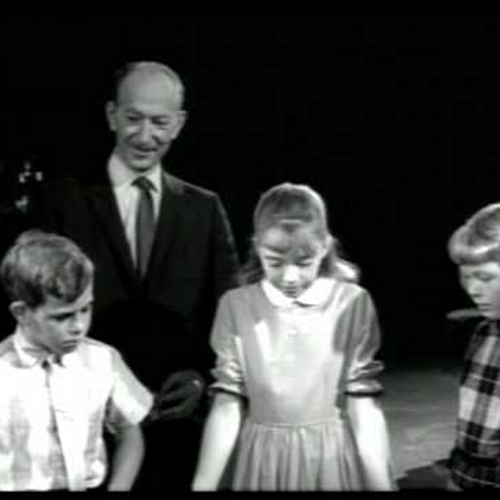
12 Fiendishly Fun Facts About “The Munsters”

Kara Kovalchik and Mental_Floss present 12 Fiendishly Fun Facts About The Munsters.  Here are three of my favorites

2. THE CHOICE OF MONSTER CHARACTERS WAS STRICTLY INTENTIONAL (AND ROYALTY-FREE).
Universal Studios owned Universal Television, which owned The Munsters. Universal Studios also owned the copyrights to most of the classic monsters, including Dracula, the Wolf Man, and Frankenstein’s monster. The studio had been running their old classic horror films on television since the 1950s and found that there was still an impressive audience for these decades-old monster movies. When Connelly and Mosher pitched their series idea, CBS executives knew that they had one advantage that ABC lacked with The Addams Family: the ability to use the Universal monster characters. The Munsters regularly topped The Addams Family in the ratings, mainly because of the instant identifiability of (and built-in fan base for) Dracula, Frankenstein’s bride, et al.

10. HERMAN’S COSTUME WAS A PERSONAL TORTURE CHAMBER FOR FRED GWYNNE.
Even though Gwynne would eventually reminisce that Herman was one of his favorite characters, the time he spent on The Munsters set was often fairly miserable, thanks to the various devices necessary to transform him into the lovable Frankenstein monster. On his feet he wore asphalt paver’s boots with four-inch soles, and his thighs, arms, and torso were covered in 40 pounds of foam rubber padding. He contended with back pain daily caused by the weight of the suit and inflexibility of the shoes. His head was fitted with a foam latex piece to flatten the top of his head and then he had to endure two hours in the makeup chair. He perspired freely under the heavy costume and hot studio lights and lost 10 pounds in one month despite consuming gallons of lemonade between takes. The producers eventually rented a compressed air tank and would poke the nozzle inside Gwynne’s collar to blow cool air on him.

11. THE COSTUME HAD ONE BENEFIT: IT EXCUSED GWYNNE FROM PERSONAL APPEARANCES.
As The Munsters gained popularity, its stars received more and more requests to appear at various functions. The producers, of course, sent the actors out as often as possible since such appearances not only promoted the show, they also propelled the sales of the variousMunsters merchandise that saturated the market at the time. Only Fred Gwynne was able to relax on his days off (for the most part), since the time and expense required to get him into character outweighed the publicity value of cutting ribbons at supermarket openings. One of the rare times he played Herman in public was alongside Al Lewis in the 1964 Macy’s Thanksgiving Day Parade. Gwynne confessed to TV Guide that he’d been taking slugs from a bottle of whiskey the entire time, because he “had to get bombed so I could say ‘hello’ to the little kiddies for 40 blocks.”

13 Foreboding Facts About “The Omen”

Stacy Conradt and Mental_Floss present 13 Foreboding Facts About The Omen.  Here are three of my favorites

9. GREGORY PECK AND RICHARD DONNER HAD ONE ARGUMENT DURING FILMING.
Peck wanted to angrily smash a bunch of stuff during the scene where Robert finds out his wife has died. Donner disagreed; he wanted to cut in on Thorn well after the discovery, not in the moment. According to Donner, he and Peck argued about the scene for an entire day before Peck told him, “You’re wrong. I’m right. But you’re the director, and therefore I have to do it your way.” After the scene was shot, Peck reviewed the dailies and conceded that Donner had been right about how to film Thorn’s reaction.

11. THE MOVIE CAME WITH A TERRIFYING AD CAMPAIGN.
To promote the movie, gloom-and-doom posters and promotional materials went up all over the U.S. They contained uplifting messages such as:

  • “Good morning. You are one day closer to the end of the world.”
  • “Remember … you have been warned.”
  • “It is a warning foretold for thousands of years. It is our final warning. It is The Omen.


12. THE PRODUCTION MAY HAVE BEEN CURSED.
Like many other horror movies, some spooky things happened to the cast and crew that made them wonder if they had angered some higher power. Here are just a few of the incidents:

  • Peck, writer David Seltzer, and executive producer Mace Neufeld were on planes that were struck by lightning or had a near-miss.

  • The crew had planned to charter a plane to get some aerial shots, but had to switch at the last minute due to a scheduling conflict. The original plane ended up crashing, killing everyone on it.

  • Director Richard Donner’s hotel was bombed by the IRA the day after they shot the safari park scene.

  • A zookeeper at the safari park was killed in the lion area, which also happened the day after filming.

  • The stuntman standing in for Peck was attacked by Rottweilers during the graveyard scene; they managed to bite through the protective gear he was wearing.

  • After the film wrapped, special effects director John Richardson and his assistant, Liz Moore, moved on to the film A Bridge Too Far. While filming in the Netherlands, the duo was in a serious car accident. Richardson survived, but Moore was decapitated. This was especially eerie since Richardson was responsible for the infamous decapitation scene in The Omen.

10 Things You May Not Know About Teddy Roosevelt

Christopher Klein and History.com present 10 Things You May Not Know About Teddy Roosevelt.  Here are three of my favorites

His mother and his first wife died on the same day.

On Valentine’s Day in 1884, Roosevelt’s mother passed away from typhoid fever. One floor above in the same house, his first wife, Alice, died less than 12 hours later from Bright’s disease and complications from giving birth to the couple’s first child just two days before. “The light has gone out of my life,” Roosevelt wrote in his diary that night.

He won the Nobel Peace Prize.

The man famed for his exploits at San Juan Hill during the Spanish-American War and “Big Stick” diplomacy captured the 1906 Nobel Peace Prize for his role in mediating the Treaty of Portsmouth, which ended the Russo-Japanese War. Roosevelt was the first American to capture the award, and he used the prize money to fund a trust to promote industrial peace.

A boxing accident left him virtually blind in one eye.

Roosevelt boxed for Harvard University’s intramural lightweight championship and continued to spar recreationally during his political career. During his days in the White House, he regularly put up his dukes against former professional boxers and other sparring partners until a punch from a young artillery officer smashed a blood vessel and left him nearly blind in his left eye.