Category: Movies
26 Things We Learned from Tom Cruise and JJ Abrams’ “Mission: Impossible III” Commentary

Rob Hunter and Film School Rejects present 26 Things We Learned from Tom Cruise and JJ Abrams’ Mission: Impossible III Commentary.  Here are three of my favorites…

5. That’s Abrams’ voice on the phone calling Hunt at the party. His hands also cameo as the coroner removing the explosive charge from Lindsey Farris’ (Keri Russell) dead head.

14. They couldn’t control the area for the scenes shot around the actual Vatican, and crowds gathered which caused interruptions. “So what we did is about a block and a half away from this location we set up a phony shoot, and we had three girls in bikinis and three old women dressed as nuns, and we had a camera and we had a tent. We pretended to be shooting something.”

20. “Listen carefully to the flute,” says Abrams during the scene where Musgrave mouths his support to a secured Hunt. “It’s the Mission: Impossible theme.”

19 Things to Look for the Next Time You Watch “Die Hard”

Sean Hutchinson and Mental Floss present 19 Things to Look for the Next Time You Watch Die Hard.  Here are three of my favorites…

10. THERE ARE SOME REAL FALLS.
In the scene where McClane makes an epic jump into an elevator shaft, the stunt man was supposed to grab onto the first vent—but missed completely. The resulting footage shows the actor slipping further down the shaft. McTiernan and co-editor Frank Urioste kept it in the final cut because it made the scene more harrowing.  (Craig – Check out the video of the elevator fall footage at Hutchinson’s post.)

19. HOW DID MCCLANE KNOW GRUBER WAS A BAD GUY?
In the scene where McClane unwittingly stumbles on Gruber—who identifies himself as Bill Clay and puts on a convincing American accent—it’s never made 100 percent clear how McClane realizes that Clay isn’t who he says he is. Chalk it up to a NYPD-veteran hunch, or a deleted scene.

Gruber’s watch allegedly tips McClane off before he hands the terrorist an empty gun, but nothing about the watch is introduced in the actual movie. There was supposed to be a scene where Hans Gruber and his team synchronize the exact same watch they all wear, and, according to screenwriter Steven E. De Souza, “When Bruce offers the cigarette to Alan Rickman, Bruce sees the watch. You see his eyes look at the watch. That’s how he knows that he is one of the terrorists.”

The timepiece scene was cut, but the audience never really noticed the plot hole.

12. HANS GRUBER AND HIS GOONS DON’T ACTUALLY SPEAK GERMAN.
Americans might think the German language that Gruber and his goons speak to one another sounds legit, but it’s actually gibberish. The grammar, diction, and pronunciation don’t actually match up. In the German release of the movie, Gruber’s group were described as being from “Europe” instead of Germany.

Weirdly enough Willis was actually born in West Germany to an American father and a German mother.

10 Facts About Steven Spielberg’s “Duel”

Sean Hutchinson and Mental Floss present 10 Facts About Steven Spielberg’s Duel.  Here are three of my favorites…

1. THE MOVIE WAS INSPIRED BY A REAL-LIFE INCIDENT.
Author and screenwriter Richard Matheson based his original novella, which first appeared in the April 1971 issue of Playboy, on an actual road rage incident. Matheson had played a round of golf on November 22, 1963, the same day President John F. Kennedy was assassinated. On his car ride home, and in a daze after receiving the terrible news, he was ruthlessly tailgated by a truck driver.

Matheson initially pitched the idea to TV producers but, after it was rejected numerous times, he decided to put his real-life incident into prose form. In order to gather details of the open road, Matheson set out from his home in Ventura, California with a voice recorder in hand and simply described what he saw. Those descriptions of the desolate landscape ended up in the novella.

3. DENNIS WEAVER’S WORK WITH ORSON WELLES GOT HIM THE LEAD IN DUEL.

For the lowly protagonist, David Mann, Spielberg hand-picked character actor Dennis Weaver because he loved his performance as the jittery and feeble hotel night manager in Orson Welles’s 1958 film Touch of Evil.

Weaver drove more than 2000 miles while shooting his scenes, and did many of the stunts himself, including the dangerous phone booth scene at the “Snakerama” gas station in a single take.

Of working with the rookie director, the veteran Weaver later said, “I gave him the benefit of the doubt. I said, ‘There’s no reason for me to judge him because of his age. Let’s see what he does.’ And he did extremely well … I really think it’s one of the most creative jobs he’s ever done.”

10. SPIELBERG HAS REVISITED DUEL MORE THAN ONCE—AND PEOPLE HAVE STOLEN FROM HIM, TOO.
Duel was something of lucky charm once Spielberg’s career began to take off, and he’d continually reference parts of the movie in subsequent films.

The Snakerama gas station seen in the film also appears in Spielberg’s 1979 World War II comedy, 1941, with actress Lucille Benson again appearing as the proprietor. The two elderly people Weaver tries to flag down in a car also appear as helpless motorists in Close Encounters of the Third Kind.

But it wasn’t all good luck. Spielberg was not happy when stock footage of both vehicles was later used in an episode of the television series The Incredible Hulk, titled “Never Give a Trucker an Even Break.” The recycled footage was completely legal since the show was also produced by Universal

Jon Pinto Casts Paul Newman as Aquaman!

Dream casting can be a fun game when played with friends.  Can you imagine Bruce Lee in The Matrix?   How about Alfred Hitchcock’s Halloween starring Kim Novak and Robert Mitchum?

Jon Pinto and some of his friends were riffing on Aquaman and decided that Paul Newman would be the ideal lead for a movie made back in the day.  Of course Sidney Poitier and Ann Margaret would co-star!  You can see an ocean-sized version of Pinto’s poster by clicking over.

We need more of these, Jon!

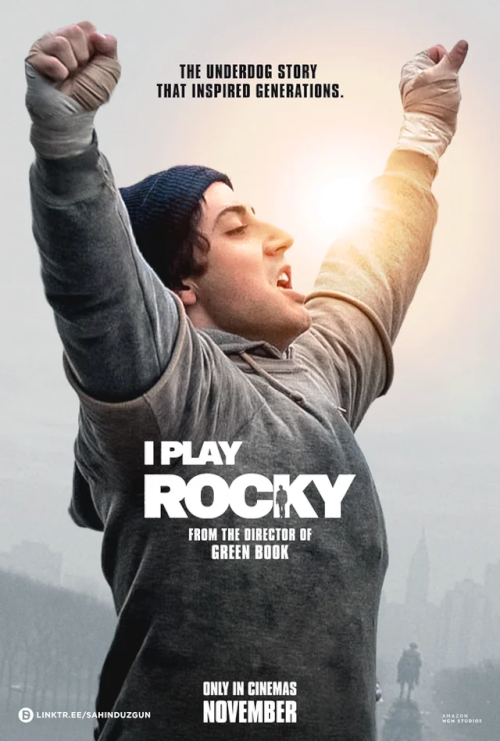
“Rocky” by JC Richard from Grey Matter Art Ready for Framing!

A couple of weeks ago I posted that Grey Matter Art, under license from MGM, was set to release a new officially licensed, limited edition screen print featuring “Rocky” by artist, JC Richard.  As you can see I can’t wait to get mine framed and up!

If you’re interested in getting a print here are the details:

“Rocky” by JC Richard
12″ x 36″ hand-numbered screen print
Regular Edition: 150/40.00
Variant Edition: 75/50.00
Printed by: D&L Screenprinting

This poster is released through www.greymatterart.com

Follow Grey Matter Art on Twitter, Facebook, and Instagram, and be sure to sign up for the GMA Newsletter for all future news & information.


10 Slap-Happy Facts About The Three Stooges

Jake Rossen and Mental Floss present 10 Slap-Happy Facts About The Three Stooges.  Here are three of my favorites…

3. HITLER WANTED THEM DEAD.

Having established their comic personas on film, the Stooges proceeded to make some accidental history. Their 1940 short, You Nazty Spy!, was the first American production to openly make a mockery of Adolf Hitler’s regime. (Charlie Chaplin’s The Great Dictator opened nine months later.) The short was perceived as a great insult by the Führer, who listed the Stooges as favored casualties on his own personal death list. (It’s not known whether he named each one individually.)

7. A REPLACEMENT STOOGE HAD A NO-VIOLENCE CONTRACT CLAUSE.
Sorting out the musical chairs of Stooges enrollment can be difficult: While Moe and Larry were largely engrained, the trio was originally rounded out with Shemp before he departed for a solo career: Curly was his replacement. Following Curly’s departure due to illness, Shemp stepped back in, but he died in 1955. After briefly considering a run as the Two Stooges, Moe and Larry recruited Joe Besser, a comic actor who already had a deal with Columbia, in 1956. But Besser wasn’t quite as game for the physical comedy as his predecessors. He insisted his contract contain language prohibiting him from being abused to excess, including anything pastry-related. “I never was the type of comic to be hit by a pie,” he said, a mentality that calls into question the decision to become part of The Three Stooges. Following Besser’s departure in 1959, the group roped in Joe DeRita for live shows and several feature films, including 1961’s Snow White and the Three Stooges.

10. THERE’S A STOOGES MUSEUM IN PENNSYLVANIA.

The Stooges’ vital contributions to pop culture have always deserved some archival recognition. They got it in 2004, when The Stoogeumopened its doors in Ambler, Pennsylvania, about 25 miles outside of Philadelphia. The museum’s founder is Gary Lassin, who married Larry Fine’s great niece in 1981. A Stooges fan, Lassin acquired over 100,000 items related to their careers and displays roughly 3500 pieces at a time. There’s a Hall of Shemp, a game area (with Whack-a-Moe), as well as countless artifacts.

The Unlikely Story of the “Enter The Dragon” Novelization

Enter the Dragon is one of my all-time favorite films.  The photo above is from the novelization written by Mike Roote.  I read this adaptation in 10th grade.  I got the book from Mrs. Adams’ student library.  Although not as good as the film (how could it be?), I enjoyed reliving the Enter the Dragon experience.

It is important to remember…

…that in the early ’70s – unless a film was shown on TV or did a second round in cinemas – there wasn’t much scope for a re-watch. This was before VHS existed, so buying a book was your best way of reliving the magic.

The Enter the Dragon novelization was a best-seller!   Mike Roote must have been a pretty cool guy to get the gig.

Except Mike Roote wasn’t a guy at all!

Mike Roote was actually a woman named Leonore Fleischer!  Mike Roote was just one of her many pen-names.

If you’ve read this far, you’d probably enjoy The Unlikely Story of the Enter The Dragon Novelization by Craig Lines for Den of Geek.   You’ll learn a lot about the adaptation and may just discover that you’ve read one or more of Fleischer’s novels even if it wasn’t under written her name.


11 Astonishing Facts About “Freaks”

Matthew Jackson at Mental Floss posted 11 Astonishing Facts About Freaks.  Here are three of the most interesting…

2. MGM WANTED IT TO RIVAL DRACULA AS A HORROR FILM.

Though there were certainly monstrous characters populating various silent films (particularly those portrayed by Chaney in The Phantom of the Opera and London After Midnight), the horror film as a genre didn’t really take off until the era of talkies began. Shortly after Chaney’s death due to complications from lung cancer, Browning was off at Universal Pictures, helping to lead the horror wave with his now-classic adaptation of Dracula. When Browning returned to MGM in the wake of Dracula’s success, head of production Irving Thalberg wanted to capitalize on the horror boom. The hope was that, with the director of Dracula back at the studio, MGM could best Universal with something even more horrifying, and so Browning was finally given the go-ahead to make Freaks, which had remained a pet project of his for years.

According to Skal, it became a classic lesson for Thalberg in being careful what you wish for: The story goes that after he was presented with the screenplay for the film, Thalberg reportedly hung his head and said, “Well, I asked for something horrible, and I guess I got it.”

10. IT DERAILED BROWNING’S CAREER.

Before Freaks, Browning was one of the most successful directors in Hollywood, and his success had earned him enough clout to get the ambitious and gutsy film made after Dracula hit big at Universal. After Freaks, he never quite recovered. According to Skal, this was not just due to that film’s failure, but due to Browning’s continued discomfort with the change in the filmmaking process that came from the rise of talkies. That discomfort, coupled with an increasing inability to get more personal projects approved by the studios in the wake of Freaks, led to his decline in the 1930s.

Browning directed just four more films (two of them uncredited), with his final directing credit coming on the MGM mystery Miracles for Sale in 1939. He retired with enough savings from his directorial successes to live comfortably in a pair of homes in Beverly Hills and Malibu, and died in 1962.

11. IT FOUND A NEW AUDIENCE IN THE 1960S.

After its critical and commercial failure in the United States, Freaks faded into the background as a kind of Hollywood curiosity, and was banned in several countries (including the United Kingdom) for decades. The film was licensed by distributor Dwain Esper in the late 1940s, and played on the grindhouse circuit at various independent theaters, but it wasn’t until the 1962 Cannes Film Festival that the film’s revival really began. After screening there, it was heralded as a kind of forgotten classic. Noted film collector and archivist Raymond Rohauer picked up the baton from there, landing the rights to Freaks and showing it as a cult film. It gained prominence on the midnight movie circuit, and found particular success with members of the 1960s counterculture movement, who saw kindred spirits in its cast.


15 Facts About John Carpenter’s “Christine”

Sean Hutchinson at Mental Floss posted 15 Facts About John Carpenter’s Christine.  Here are three of my favorites…

2. JOHN CARPENTER SIGNED ON SIMPLY BECAUSE HE WANTED A JOB.
Kobritz approached John Carpenter after the critical and financial failure of his 1982 adaptation of The Thing, which is now widely regarded as one of the filmmaker’s best.

The pair previously worked together on Carpenter’s 1978 TV movie Someone’s Watching Me! and Carpenter agreed to take on the project because he wanted to jump immediately into another movie after his first high-profile box office flop.

8. KEVIN BACON WAS ORIGINALLY CAST AS ARNIE.

Carpenter held auditions in California and New York, looking for the right fresh faces for the teen characters in the film, and he found the perfect newcomer for Arnie: Kevin Bacon.

The now-famous actor’s only other significant work at the time was bit parts in Animal House and Friday the 13th, and Kobritz and Carpenter thought Arnie’s transformation from dweeby hero to suave villain was a perfect fit for Bacon. But after being cast, Bacon dropped out when he was offered a starring role in Footloose.

Carpenter went back the the drawing board to cast Arnie, and eventually found actor Keith Gordon in a play in New York City. Carpenter initially took to Gordon as Arnie because of the actor’s previous appearance in Brian De Palma’s thriller Dressed to Kill.

7. CARPENTER DIDN’T WANT TO CAST MOVIE STARS.

Columbia execs wanted a star-studded cast to round out their King adaptation, and suggested that Brooke Shields—coming off the hit film The Blue Lagoonbe cast as Leigh, and Scott Baio be cast as Arnie. But Carpenter didn’t want recognizable faces in the movie as a way to stress that the titular car was the real star of the movie.

The 100 Best Horror Movies of All Time, According to Critics

Josh Lynch at Business Insider posted The 100 Best Horror Movies of All Time, According to Critics.  Lynch’s list is a good one worth checking out.

Here are three of my favorites and some comments…

69. “28 Days Later” (2003)

Critic score: 86%

Audience score: 85%

What critics said: “The movie’s craft makes the dread of a killer virus contagious: viewers may feel they have come down with a case of secondhand SARS or sympathetic monkeypox.” — Time

What Craig said:  I’m a huge fan of 28 days later.  While quite a few folks like to argue if 28 days later is truly a zombie film or not, I’d rather spend the time re-watching it.

39. “Train to Busan” (2016)

Critic score: 95%

Audience score: 88%

What critics said: “A zombie movie content not to aspire to any loftier subtextual readings needs little more than a skilled choreographer of action, and there’s plenty of evidence that this film had one in Yeon.” — The AV Club

What Craig said:  Train to Busan came out of nowhere to be one of my favorite horror films in recent years.  I hadn’t heard the buzz before seeing it.  This is a zombie movie with heart.  Dong-seok Ma should be a breakout star.  If you haven’t caught the Train to Busan you owe it to yourself to give it a ride.  Just be aware that not everyone makes it to the final stop.

2. “The Cabinet of Dr. Caligari” (1920)

Critic score: 100%

Audience score: 89%

What critics said: “Undoubtedly one of the most exciting and inspired horror movies ever made.” — Time Out

What Craig said: Of the three movies from this list that I chose to highlight, I’ll bet that The Cabinet of Dr. Caligari is the one that has been seen the least by those reading this.  It has three strikes against it:

1.  It is a silent film.

2.  It is a foreign silent film.

3.  It is nearly 100 years old.

The Cabinet of Dr. Caligari has a twist ending that would make M. Night Shamalan and Rod Serling high-five.  When I first watched The Cabinet of Dr. Caligari I thought the choices being made in set design were due to budget restrictions and experimentation with expressionism and the relatively new form of story-telling called film.  I was wrong… at least partially.

The Cabinet of Dr. Caligari tells the tale of a serial killer hypnotist who uses a somnambulist to commit murders. The film takes advantage of the lack of color film and makes the most of a light and shadow with sets that are off-kilter.

If you haven’t seen The Cabinet of Dr. Caligari and you’re a film lover, give it a try.