Category: History

1st Moon Landing Trivia

Oliver Taylor and Listverse present 10 Crazy Facts No One Ever Told You About the First Moon Landing.   Here are three of my favorites…

10 The Crew Filled Out US Customs Forms On Their Return
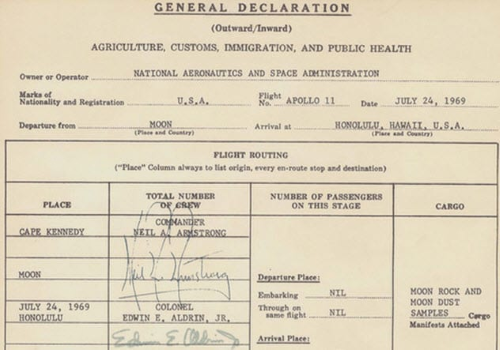
US Customs made the Apollo 11 astronauts—Neil Armstrong, Buzz Aldrin, and Michael Collins—fill out a form for importing Moon rocks and dust into the United States on July 24, 1969, the same day they landed in the Pacific Ocean around Hawaii. The flight route was listed as Cape Kennedy, Florida, to the Moon and finally to Honolulu, Hawaii.The Apollo 11 crew declared their cargo as “Moon rock and Moon dust samples.” Customs could not determine whether the astronauts had any illnesses, so the section that was supposed to list any possible diseases simply said “to be determined.”[1]

3 The Crew Could Not Get Life Insurance, But They Found A Way Around It
As we mentioned earlier, the crew of Apollo 11 faced the possibility that they might not return from the Moon. The astronauts would have taken out life insurance, but it would have been unbelievably expensive. So, the crew of Apollo 11 signed autographs that their families could sell after their deaths. The Apollo 11 astronauts were famous long before they left Earth. They had lots of fans who requested autographs. In fact, the crew signed thousands of autographs after their mission, which some of their fans sold for considerable amounts.While such autographs would have fetched a good sum following the deaths of the crew, the envelopes signed by the astronauts and postmarked on dates like the launch and the Moon landing would have been worth a fortune if any of the crew members had died in space.[8]

1 The Crew Was Quarantined Once They Returned To Earth
Today, astronauts leave their spacecraft and mix with people immediately after landing. This was not so at the time of Apollo 11. After their mission to the Moon, the Apollo 11 astronauts were quarantined for three weeks before they were allowed to mingle with other people.This was a precautionary measure. NASA was unsure whether the Moon contained deadly microorganisms. So it recommended that the astronauts be quarantined, that Moon samples and spacesuits (among other things) be examined for microorganisms, and that the crew be monitored for new infections.The crews of Apollo 12 and 14 were also quarantined. However, NASA stopped doing that by the time Apollo 15 landed because it had already been confirmed that the Moon was sterile in the areas explored.[10]

Frank Miller’s “300” Sequel!

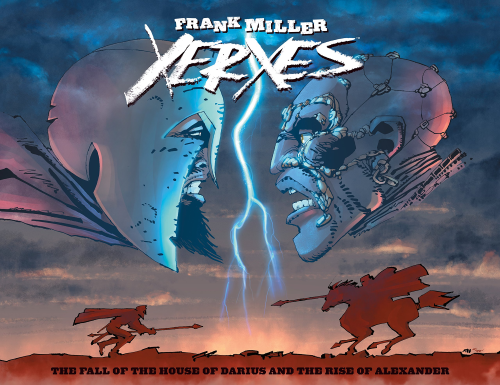
If you enjoyed Frank Miller’s graphic novel or the movie adaptation that followed, you may want to check out Xerxes: The Fall of Darius and the Rise of Alexander.  That mouth full of title is Miller’s 300 sequel.    Here’s the synopsis:

This historical epic, set in the world of 300, tells of the upsurge and decline of the Persian King’s empire, and the ascent of the Grecian realm through Alexander.

Written and illustrated by comics luminary and legend, Frank Miller (Sin City, The Dark Knight, 300), and colored by Alex Sinclair (Batman: The Dark Knight III: The Master Race), this companion to Miller’s epic masterpiece, 300, brings the historical story of Xerxes to the graphic novel audience with grit and visual style!

The ongoing Greek rebellion against Persian tyranny reaches a turning point after the destruction of the city of Sardis and the later battle of Marathon: on a military campaign to vanquish the city of Athens and silence the Greeks once and for all, Xerxes, Persian Prince, watches as his father, King Darius, falls in battle . . . The mantle of king is passed and while his newly-inherited fleet retreats toward home, Xerxes’ hatred is cemented toward Athens–and his incentive to build the Persian empire is fueled. Xerxes becomes the king of all countries–the king of Persia, ruler of Zion, and Pharoah of Egypt–and his empire is unlike any the world has ever seen, until . . . The mantle is again passed, the god king dies and Darius III continues as the king of all. But then, from the west, a tiger force strikes in Asia Minor and is on a course for collision with Persian forces. This will be the beginning of the end for Persia and the launch of Alexander the Great’s rise to power!

Xerxes: The Fall of Darius and the Rise of Alexander drops on March 5, 2019.  But you can click on the link and get your order in now if you so desire.

25 Things You Might Not Know About Thomas Jefferson

Jake Rossen and Mental Floss present 25 Things You Might Not Know About Thomas Jefferson.  Here are three of my favorites…

2. HIS GREATEST WORK WAS A STUDY IN CONTRADICTION.
As a member of the Second Continental Congress and the “Committee of Five” (a group consisting of John Adams, Roger Sherman, Benjamin Franklin, Robert Livingston, and Thomas Jefferson brought together for this purpose), Jefferson was tasked with writing the Declaration of Independence, an argument against the 13 colonies being held under British rule. While the Declaration insisted that all men are created equal and that their right to liberty is inherent at birth, Jefferson’s plantation origins meant that he embraced the institution of slavery. In any given year, Jefferson supervised up to 200 slaves, with roughly half under the age of 16. He perpetuated acts of cruelty, sometimes selling slaves and having them relocated away from their families as punishment. Yet in a book titled Notes on the State of Virginia (which he began writing during his stint as governor and published in 1785), Jefferson wrote that he believed the practice was unjust and “tremble[d]” at the idea of God exacting vengeance on those who perpetuated it. Though Jefferson acknowledged slavery as morally repugnant—and also criticized the slave trade in a passage that was cut from the Declaration of Independence “in complaisance to South Carolina and Georgia”—he offered no hesitation in benefiting personally from it, a hypocrisy that would haunt his legacy through the present day.

11. HIS WIFE HAD A CURIOUS CONNECTION TO HIS MISTRESS.
Jefferson was married for just 10 years before his wife, Martha Wayles, died in 1782 at age 33 of unknown causes. Curiously, Jefferson’s involvement with his slave, Sally Hemings, was part of Martha’s convoluted family tree. Martha’s father, John Wayles, had an affair with Sally’s mother, Elizabeth Hemings—meaning most historians think Sally and Martha were half-sisters.

18. HE PROBABLY HAD A FEAR OF PUBLIC SPEAKING.
Without today’s methods of addressing the public—radio, television, and Twitter—Jefferson was largely free to succumb to his reported phobia of speaking in public. While working as a lawyer, he found himself unable to deliver orated arguments as eloquently as he could write them. When he did speak, it was apparently with a meek disposition. One listener to his inaugural address in 1801 described Jefferson’s speech as being in “so low a tone that few heard it.”


12 Things to Know About Crazy Horse

Lucas Reilly and Mental Floss present 12 Things to Know About Crazy Horse.  Here are three of my favorites…

1. “CRAZY HORSE” WAS NOT HIS FIRST GIVEN NAME.
Born around 1840 to Lakota parents, Crazy Horse was originally named Cha-O-Ha, or Among the Trees. (His mother, however, insisted on calling him “Curly.”) When Cha-O-Ha reached maturity, he was given the name held by his father and grandfather—Ta-Sunko-Witko, or Crazy Horse.

9. HIS PERFORMANCE AT THE BATTLE OF THE LITTLE BIGHORN WAS LEGENDARY.
And we mean legendary—nobody is sure what, exactly, Crazy Horse did. But there are rumors. An Arapaho warrior named Water Man said Crazy Horse “was the bravest man I ever saw. He rode closest to the soldiers, yelling to his warriors. All the soldiers were shooting at him, but he was never hit.” Another Native American soldier said, “The greatest fighter in the whole battle was Crazy Horse.”

12. IF COMPLETED, THE CRAZY HORSE MEMORIAL COULD BE THE WORLD’S LARGEST SCULPTURE.
Under construction since 1948, the Crazy Horse Memorial was commissioned by Henry Standing Bear, the Oglala Lakota chief in the late 1930s, as a response to Mount Rushmore. Today, the memorial—built by a non-profit that refuses government funding—is still incomplete. When it is finished, the monument carved into the side of South Dakota’s Thunderhead Mountain will stand 563 feet high.

10 Things You May Not Know About Harry S. Truman

Jake Rossen and Mental Floss present 10 Things You May Not Know About Harry S. Truman.  Here are three of my favorites…

1. THE “S” DOESN’T REALLY STAND FOR ANYTHING.
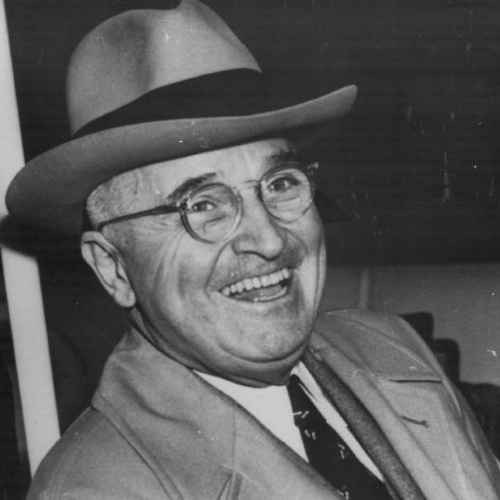
Truman was born in Lamar, Missouri on May 8, 1884 to mule trader and farmer John Anderson Truman and Martha Ellen Truman. After some deliberation, John and Martha realized they couldn’t decide on a middle name for their first child, so they settled on “S.” His maternal grandfather was named Solomon, while his paternal grandfather had a middle name of Shipp. “S” was his parents’ compromise. (And, since his S is a name of sorts rather than an initial, it can stand alone without a period, though stylistically, it’s most often seen with one.)

5. HE PUSHED FOR UNIVERSAL HEALTH INSURANCE.
Truman anticipated much of the contemporary debates over health care spending. Just seven months into office, he began advocating for care facilities in underrepresented rural areas and more public health services. He wanted Americans to pay monthly fees that would go toward health care that would cover costs if and when they fell ill. It would not be “socialized medicine,” he argued, since the doctors weren’t government employees. But the American Medical Association resisted, instead promoting private insurance. With Democrats losing power in the Senate and the House, Truman’s plans withered. He later referred to his failed attempt for national health insurance to be one of the biggest defeats of his presidency.

7. TWO ASSASSINS TRIED TO KILL HIM OUTSIDE THE WHITE HOUSE.
The morning of November 1, 1950 could have been the last of Truman’s life. Two members of the Puerto Rican National Party, Oscar Collazo and Griselio Torresola, traveled from the Bronx to Washington with plans to assassinate the president. They believed the move would bring attention to Puerto Rico’s struggle for independence. Both wielding guns, the two idled outside Blair House, the residence across the street from the White House where Truman and his family were staying during renovations. A gun fight ensued—a guard killed Torresola but later died of gunshot wounds himself. Collazo was shot but survived and later had his death sentence commuted to life imprisonment by Truman (President Carter would later commute that sentence, too, and Collazo was released in 1979). Truman was napping upstairs at the beginning of the altercation; he woke up, went to the window, and was shouted at to get down.

10 Things That Will Shock You About King Henry VIII

Rob Hunter and Listverse present 10 Things That Will Shock You About King Henry VIII.  Here are three of my favorites…

8.  Henry Ate A Shocking 5,000 Calories Every Day Before He Died
While we know that Henry VIII was overweight in his later years, it’s hard to imagine just how big he was. However, a quick look at his daily diet makes it easy to see just why the king was so big. Every single day, he would eat about 13 different courses, mainly made up of meats like chicken, lamb, pork, rabbit, swans, peacocks, and venison. Not only did he eat excessively, but he also drank as many as 70 pints of ale every week, together with sweetened red wine. The total amounts to about 5,000 calories per day, twice today’s recommended allowance for an active man.[3] It’s no wonder that one of his surviving suits of armor, which is displayed at the Tower of London, has a waist size of 132 centimeters (52 in)!

6.  Henry Was The Very First English Monarch To Write A Book
There is no doubt whatsoever that Henry VIII was an extremely intelligent and well-educated man. The fact that he was fluent in at least three languages is well-known, and he had an impressive knowledge that spanned everything from theology to medicine. Yet most people are completely unaware that he was the first king of England to write and publish his own book. In 1521, Henry VIII published the rather confusingly titled Defense of the Seven Sacraments, or, to give it its Latin title, Assertio Septem Sacramentorum, as a response to Martin Luther’s challenge to the pope’s authority in publishing the Ninety-five Theses. At 30,000 words long, Henry’s book became a top seller in its day, and he was actually awarded the title of “Defender of the Faith” by the pope as a reward for his efforts.[5]

1.   Henry Turned Beards Into A Status Symbol
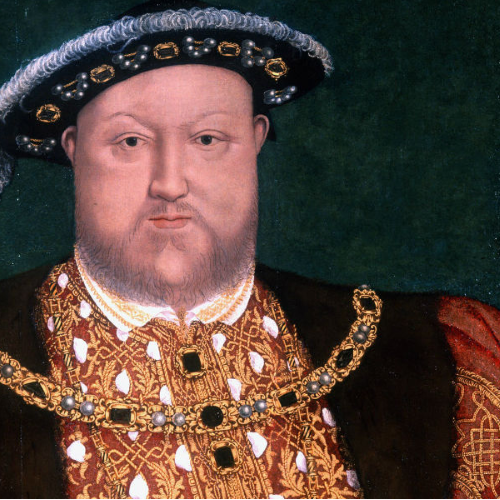
Portraits of England’s best-known monarch usually depict him wearing an impressive set of whiskers. However, it isn’t widely known that Henry introduced a tax which was levied on the wearing of beards and which turned facial hair into a status symbol overnight.[10] There have been some seriously bizarre taxes over the years, but Henry’s beard tax has to be one of the strangest. In 1535, the king demanded that taxes be paid by any man who chose to wear a beard, and the amount charged varied depending on the social status of its wearer, meaning that every man who wanted to be viewed as high-status immediately decided to grow their facial hair.So, there you have it—ten amazing things that you never knew about England’s not-so merry monarch. The next time you see a movie or TV show featuring this Tudor king, you’ll know a little more about what made him tick!

10 Strange Facts About The Mysterious Death Of Rasputin

After over 100 years most folks still know the story of the murder of Rasputin, the Mad Monk!  That he was fed enough poison to kill an elephant and showed no signs of sickness.  That he was shot through the heart and still struggled with his assassins.  That he was shot several more times, tied up and tossed in a river… and when his body was found his hands were free!

History books tell us that  Prince Felix Yusupov and four co-conspirators planned and executed Rasputin.  Yisupov took credit from the start…

… But Yusupov’s confession didn’t fit a single one of the facts. Every single detail in his story contradicted the autopsy and the evidence…

Mark Oliver and Listverse present 10 Strange Facts About The Mysterious Death Of Rasputin.  Here are three of my favorites…

7.  The Autopsy That Contradicts Everything Yusupov Said
Yusupov’s story certainly is exciting—but it doesn’t fit the facts. The autopsy report on Rasputin’s body, conducted by Professor Dmitry Kosorotov, contradicts every single word.In his memoirs, Yusupov claims that he shot Rasputin in the heart and even says that he had Dr. Lazovert check the body and confirm that was where the bullet had hit its mark. Kosorotov’s autopsy, though, found only three bullet wounds, and not a single one had even come close to the heart. Instead, the bullets went through his stomach, liver, kidney, and skull, with wounds that no physician could possibly mistake for a gunshot to the heart.[4]Likewise, Yusupov claimed that Rasputin was taken down by a long-range shot from Purishkevich that took him in the back of the head. The bullet in Rasputin’s skull, however, had entered from the front at point-blank range, while Rasputin was lying on the ground.It’s hard to reconcile Yusupov’s story with the facts. Some have suggested that he blew the murder up to make Rasputin more of a threat—but his account is nowhere near the truth. It’s almost as though Yusupov had no idea how Rasputin died.

3. The British Spy Who Might Have Killed Him
Every bullet in Rasputin’s body, according to the autopsy, came out of a different caliber gun. At least three people—or at least three guns—had to have been involved in his death.The bullet holes in his stomach and kidney could have been made by Yusupov and Purishkevich’s guns, but the one in his skull didn’t fit. It was made with a revolver, specifically, according to the most popular theory, a .455 Webley—a gun none of the conspirators carried.A British friend of Yusupov’s named Oswald Rayner, though, carried a .455 Webley on him at almost all times. And though Yusupov denies that he was ever there, a lot of people think that Rayner fired the shot that finished Rasputin off, all under the orders of British Intelligence.The British had a vested interest in seeing Rasputin dead. He was trying to broker peace between Russia and Germany, and his treaty would have turned the tide of World War I against the Allies. In Rasputin hadn’t died, it’s possible that the Germans would have won the war. And there’s a letter that seems to completely give it away. A man named Stephen Alley, stationed in Petrograd, sent a missive to England on January 7, 1917, that read: Our objective has clearly been achieved. Reaction to the demise of ‘Dark Forces’ has been well received by all, although a few awkward questions have already been asked about wider involvement. Rayner is attending to loose ends and will no doubt brief you on your return.

1.  The Burning Body That Sat Up
The most popular explanation for Yusupov’s outrageous story is that he was trying to erase a guilty conscience. He’d killed a defenseless man in cold blood, but he still wanted the people to believe that he was a hero. And so he changed the truth, making himself look better by selling Rasputin as a demonic monster who couldn’t be killed.But one strange moment in March 1917 almost makes it tempting to believe that Yusupov was telling the truth: that Rasputin really a supernatural being.A group of soldiers exhumed Rasputin’s body, threw it onto a pile of logs, doused it in gasoline, and set it on fire. They destroyed his body, afraid his tomb would become a monument to the Tsarist regime.A whole crowd of villagers came out to watch Rasputin’s body burn—and almost every one of them insists that they saw his decomposing corpse rise up in the fire.[10]There are scientific explanations, of course. It’s been speculated that Rasputin’s tendons shrank in the fire, causing his body to bend at the waist. Or else the whole thing has been written off as a great mass delusion.But Rasputin, they say, predicted every bit of it. In a letter that Rasputin (supposedly) wrote to Tsarina Alexandra shortly before his death, he said: “I feel that I shall leave life before January 1. ”Even dead, the sorcerer predicted, he would not be left in peace. His body would be burned, his ashes scattered into the winds.

14 Facts About Daniel Boone

Daniel Boone holds a special place in American History and the childhood memories of many my age.  Fess Parker portrayed Daniel Boone as a decent, fearless, fair man who’s exciting adventures were the basis of legend.

Lucas Reilly and Mental Floss present 14 Facts About Daniel Boone.  I hope the legend and the truth aren’t too far apart.  Here are three of my favorites…

6. HE ESSENTIALLY LIVED THE PLOT OF TAKEN.
In July 1776, Boone’s daughter Jemima, along with two other teenagers, were abducted by Cherokee and Shawnee Indians while they were out canoeing. With help from the girls—who were breaking twigs and leaving markings whenever they could—Boone managed to find them in just three days (just like Liam Neeson, he had a very particular set of skills). At least two of their captors were killed. The incident later inspired a scene in James Fenimore Cooper’s The Last of the Mohicans.
7. HE WAS A SHAWNEE CHIEF’S ADOPTED SON.
In February 1778, Boone and a party of men were captured by Shawnee Indians. Boone made an impassioned case to Chief Blackfish, asking the natives to spare their lives. In exchange, come spring he would ensure that Boonesborough would surrender peacefully. Boone’s plea worked. Not only did Chief Blackfish adopt Boone into the tribe, he made the frontiersman his son. “During our travels, the Indians entertained me well; and their affection for me was so great, that they utterly refused to leave me there with the others,” Boone said. He was given the name Big Turtle.

13. FAME ANNOYED HIM.
John Filson’s 1784 book The Discovery, Settlement and Present State of Kentucke made Boone famous. Soon, stories about Boone’s life were detaching from reality. He hated it: “Nothing embitters my old age [more than] the circulation of absurd stories … many heroic actions and chivalrous adventures are related of me which exist only in the regions of fancy. With me the world has taken great liberties, and yet I have been but a common man.”

10 Things You May Not Know About John Dillinger

Evan Andrews and History.com present 10 Things You May Not Know About John Dillinger.    Here are three of the most interesting things and my thoughts on each…

Dillinger helped bust his fellow gang members of out of jail.
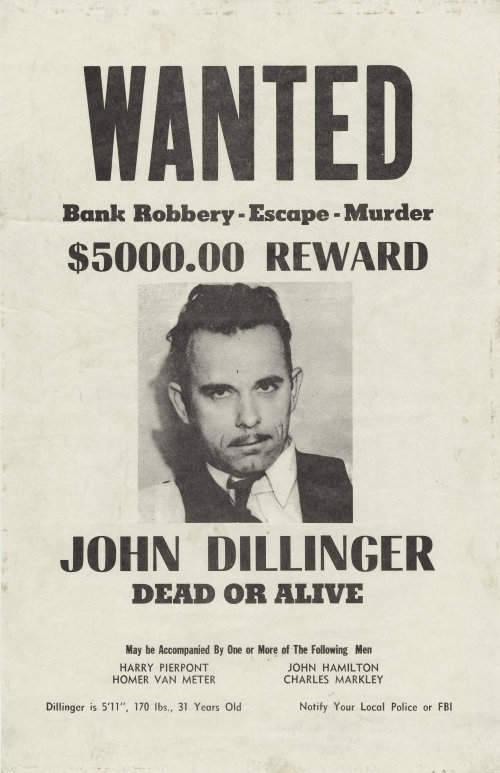
Dillinger committed a string of high profile heists during the summer of 1933, but he was desperate to reunite with some of his old prison buddies to form an ace bank robbing gang. That September, he began plotting to break his would-be accomplices out of the Indiana State Prison at Michigan City. Dillinger conspired to have three .38 pistols hidden in a crate of thread bound for the jail’s shirt making factory, allowing 10 convicts—including experienced stickup men “Handsome” Harry Pierpont, Charles Makley and John Hamilton—to get the drop on their guards and escape. The timing couldn’t have been better. Dillinger had been arrested at a girlfriend’s house only a few days before, and was languishing in jail in Lima, Ohio. On October 12, the newly liberated Pierpont and two other men waltzed in the front door and busted him out, gunning down the county sheriff in the process.
Craig: The fact that Dillinger was able to bust his crime partners out of prison and they in turn able to free him from a jail started the legacy of John Dillinger.

He robbed police stations.
While most criminals stayed as far away from lawmen as possible, Dillinger was willing to march right into their headquarters with gun in hand. Shortly after being sprung from jail in October 1933, Dillinger and his band carried out a pair of audacious heists on the police stations at Auburn and Peru, Indiana. As bewildered deputies looked on, the gangsters emptied their gun cabinets of Thompson submachine guns, shotguns, rifles, tear gas guns, bullet proof vests and more than a dozen pistols. The crooks immediately put the arsenal to use committing a wave of bank heists that left two police officers dead.

Craig: Dillinger did have guts and a tendency for flash.  How many other criminals have you heard of who would dare rob a police station?

He escaped from jail using a wooden gun.
Dillinger was arrested in Tucson, Arizona in January 1934, after locals recognized a few of his heavily wanted accomplices. Following a flurry of media coverage, he was extradited to Indiana and confined to the jail in Crown Point to await trial. Authorities boasted that the jail was escape proof, but Dillinger would only remain a resident for a little over a month. On March 3, 1934, he forced his way out of the main cellblock by brandishing a phony gun. Dillinger claimed he had fashioned it from a block of wood, a razor handle and a coat of black shoe polish, but reports would later suggest it was smuggled into the prison by one of his attorneys. In any case, Dillinger used the wooden pistol to round up several guards and get his hands on a Thompson submachine gun. Once armed with real firepower, he made his way to the prison garage, stole the sheriff’s personal police car and motored to Chicago. Amazingly, Dillinger was back in action only three days later, teaming with gangster Baby Face Nelson and others to knock over a bank in Sioux Falls, South Dakota.

Craig: One of the things Dillinger is most famous for is his breakout from the “escape proof” jail using a fake wooden gun to round up several guards and get his hands on real fire-power.  Dillinger’s escapes and escapades made him a celebrity, but folks lose sight of the good people who ended up dead because of Dillinger before he met the same fate.

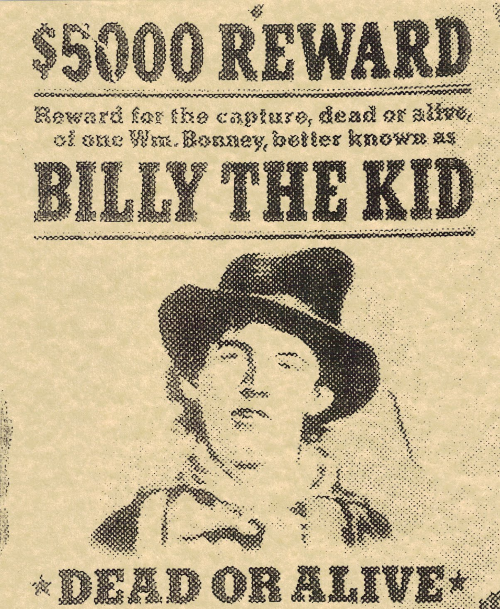
9 Things You May Not Know About Billy the Kid

Evan Andrews and History.com present 9 Things You May Not Know About Billy the Kid.  Here are three of my favorites…

The Kid’s first arrest came for stealing clothes from a laundry.
Henry McCarty’s first run-in with the law came in 1875, when he assisted a local street tough known as “Sombrero Jack” in stealing clothing from a Chinese laundry. Henry hid the loot in his boarding house, but was arrested after his landlord turned him in to the sheriff. The crime only carried a minor sentence, but rather than face punishment, the wiry youth escaped the jailhouse by shimmying up a chimney. McCarty then fled town and embarked on a career as a roving ranch hand, gambler and gang member. He became handy with a Winchester rifle and a Colt revolver, and in August 1877 he killed his first man during a dispute in an Arizona saloon. That same year, he adopted the alias “William H. Bonney” and became known as “Billy the Kid” or simply “The Kid.”

He played a prominent role in a frontier feud.
Billy the Kid first earned his reputation as a gunslinger in 1878, when he participated in a bloody frontier war in Lincoln County, New Mexico. The conflict centered on a business rivalry between British-born rancher John Tunstall and a pair of Irish tycoons named James Dolan and Lawrence Murphy. Dolan and Murphy’s outfit—known as “The House”—had long held a monopoly over the dry goods and cattle trades in Lincoln County. When they tried to intimidate Tunstall’s upstart operation, the Englishman enlisted the Kid and several other gunmen to protect his property. The tensions finally boiled over in February 1878, when Tunstall was murdered by a posse organized by Sheriff William Brady, a supporter of The House.

Following Tunstall’s death, the Kid and several other former employees organized themselves into a vigilante group called “The Regulators” and swore revenge. In what became known as the “Lincoln County War,” the Regulators assassinated Sheriff Brady and spent the next several months shooting it out with The House’s forces. In July 1878, the feud reached its climax with a deadly, five-day firefight in the town of Lincoln, after which the Regulators disbanded and the two sides sealed a flimsy peace agreement. The Kid left the war with a reputation as one of the West’s most skilled gunmen, but he remained wanted for the murder of Sheriff Brady. He would spend the rest of his life on the run from the authorities.

The Kid made a famous jailbreak.
In late 1880, Lincoln County Sheriff Pat Garrett tracked the Kid to a cabin in Stinking Springs, New Mexico, and forced his surrender. The outlaw was found guilty of the murder of Sheriff William Brady and confined to the Lincoln courthouse. He was scheduled for a date with the hangman, but on the evening of April 28, 1881, he engineered the most daring getaway of his criminal career. During a trip to the outhouse, the Kid slipped out of his handcuffs, ambushed a guard and shot the man to death with his own pistol. He then armed himself with a double-barreled shotgun and gunned down a second guard who was crossing the street. Once in control of the courthouse, the Kid collected a small arsenal of weapons, cut his leg shackles with a pickaxe and fled town on a stolen horse. News of the brazen escape was soon reprinted in newspapers across the country, making the Kid the most wanted man in the West.

10 Of History’s Most Cartoonish Deaths

We all know that at some point, we’ll pass on.  Our best hope is that the end will come peacefully, after a long, happy life.  Sadly, that is not always the case.

Micah Hirsch and Listverse present 10 Of History’s Most Cartoonish Deaths.   Here are the three that struck me as being the most avoidable had the deceased used a bit more sense before becoming deceased.

10 Demonstrating A Suicide
On June 17, 1871, Representative Clement Vallandigham of Ohio died in the name of justice—accidentally. Retiring to his law practice after a life of treason, Vallandigham was attempting to prove a client innocent of murder by arguing that the victim shot himself.Prior to the trial, Vallandigham headed to open land to determine the level of residue left by a point-blank shot and then left the field with three live rounds in his pistol. Arriving back at his hotel, he was handed a parcel with the unloaded gun used by the victim. He laid that gun beside his own pistol. Leaving his suite, he pocketed the deadlier of the two choices of weaponry.Confident in his case, he entertained a hotel visitor with a live demonstration of his argument. It’s fair to say that it was very convincing. While Vallandigham wasn’t present for the occasion, his client was ultimately cleared. And though the novelty had worn off, another man met his death in the same fashion while trying to demonstrate how Vallandigham killed himself.

Craig says: If you’re going to demonstrate (not just tell, but demonstrate) how a person committed suicide using a pistol, why not double or triple check that your pistol is not loaded?

And furthermore, if you’re going to demonstrate (not just tell, but demonstrate) how a man who was demonstrating how a person accidentally killed himself with a loaded pistol and then went on to accidentally kill himself, why not just not?

4 Exactly As Advertised
Working at Toronto’s TD Centre, Garry Hoy had a habit of bodychecking windows to demonstrate their tensile strength in front of impressionable youths. Hoy, a partner at Holden Day Wilson LLP, worked on the 24th floor of the building. He was clearly impressed by the skyscraper’s workmanship. However, his habit of slamming into windows as a testament to the structure was never approved by any known building code in the world.  On July 9, 1993, he was entertaining a group of articling students with his old tricks on the 24th floor. While the window in question held through one run of Hoy battering against it, the glass popped out of the frame on the second run, sending Hoy into free fall. He died of his injuries soon after.

Craig says: “Let me prove to you how safe our windows are.  I’m going to run into it at full force 24 stories above the ground.”  BAM!  “Impressive, huh? Let me show you agaaaaaaaaaaa”

7 Tripped By A Beard
Hans Steininger, a 16th-century town mayor, is best known in Braunau am Inn for his 1.4-meter-long (4.5 ft) beard. In his life, he was very popular with the townsfolk and served multiple terms, but his untimely end serves as the most memorable aspect of his legacy.In 1567, a large fire sent the town into panic. Steininger, who usually rolled up his beard in a pouch that he carried with him, unfortunately had his beard hanging free amid the chaos. At some point during the ruckus, his foot caught on his beard and he tumbled down a flight of stairs, ultimately breaking his neck. Today, the town features a full-body illustration of the man carved in rock that is displayed on the side of St. Stephan’s Church. His beard is engraved in its entire length as it is a celebrity in the town’s cultural memory.

Craig says:  “My long beard will make me famous throughout history,” claimed Steininger.  “Indeed it will” responded Craig.

27 Things You Might Not Know About Theodore ‘Teddy’ Roosevelt

Jake Rossen and Mental Floss present 27 Things You Might Not Know About Theodore ‘Teddy’ Roosevelt.  Here are three of my favorites and some thoughts about each…

1. HE WENT FROM WIMP TO WARRIOR.

Born on October 27, 1858, Roosevelt—often called “Teedie” or “Teddy” by friends—was a frail kid, prone to illness, asthma, and lacking physical strength. Despite his modest build, he was an avid outdoors enthusiast, and sometimes carried his fascination with wildlife indoors by practicing taxidermy. At 14, his family went on a tour of Egypt, and he traveled with his somewhat macabre tools of the trade, including arsenic. As a teen, Roosevelt put his stuffed birds aside and decided to become aggressive in his physical routine, training in gymnastics and weightlifting. Later, he would practice both boxing and judo. The intense interest he showed in combat sports made him a fitness advocate for the rest of his life.
Craig’s Thoughts:  His love of taxidermy before he was even in his teens makes me think of someone who would grow up to be a serial killer, not the President of the United States.

25. HE GAVE A SPEECH IMMEDIATELY AFTER BEING SHOT.

Roosevelt’s reputation as a “bull moose,” his term to describe anyone made of sturdy stuff, was never on better display than October 14, 1912, when the former president was giving a speech in Milwaukee and announced he had just been shot by a would-be assassin named John Schrank. A shocked crowd looked on as Roosevelt revealed a bloody shirt and a stack of prepared remarks with a bullet hole in them (above; you can see both the papers and the shirt at the Theodore Roosevelt Birthplace National Historic Site in New York City). Roosevelt spoke for 90 minutes before allowing his aides to take him to a hospital. The bullet had lodged itself near his ribs and would remain there for the rest of his life.
Craig’s Thoughts: This probably more than anything else would have been enough to give TR the reputation as a tough guy.  But when you add it to the fact that he went west as a young man (Shades of Horace Greeley) and made his living as a cowboy; that he volunteered to serve in the army, that he distinguished himself in battle, that he was a decorated war hero, that he boxed (and continued to spar at the age of 50, losing sight in one eye in the process), that he was an avid outdoorsman, then you have to admit that Teddy Roosevelt was a legitimate tough guy.

9. HE WAS A MASSIVE ENVIRONMENTALIST.

A lover of the outdoors, Roosevelt made protecting the natural wonder of American territory a priority. Over his tenure in the White House, he reserved 200 million acres of land for national forests and wildlife refuges; previous presidents combined had only done a fifth of that. “We have become great because of the lavish use of our resources and we have just reason to be proud of our growth,” he said in 1908. “But the time has come to inquire seriously what will happen when our forests are gone, when the coal, the iron, the oil and the gas are exhausted, when the soils have been still further impoverished and washed into the streams, polluting the rivers, denuding the fields, and obstructing navigation.

“These questions do not relate only to the next century or to the next generation. It is time for us now as a nation to exercise the same reasonable foresight in dealing with our great natural resources that would be shown by any prudent man in conserving and widely using the property which contains the assurance of well-being for himself and his children.”
Craig’s Thoughts:  I love that TR had the foresight and love of nature enough to work to preserve our natural resources for future generations.

Why Frank Miller Is Revisiting the World of 300 With His New Xerxes

Abraham Riesman recently spoke with Frank Miller to discover why Why Frank Miller Is Revisiting the World of 300 With His New Xerxes.  Here are a few tidbits…

Did you go back and reread 300 in preparation for Xerxes? I know a lot of creators don’t like looking at their old work.
Oh, I have to refer to it. I’m very, very proud of 300. I look at it and I don’t think, Well, what would I do differently? I simply accept it as what it is. It was very much a product of the time I did it, but it was the best story I ever had my hands on, and I did my very best by it.

But the Athenians can hold their own in the battlefield. Honestly, in junior high, I mostly just learned about them as paragons of democracy and culture.
They were brilliant in battle and they were a culture that succeeded on every level. The Spartans, essentially, became so culturally paranoid that they kind of ceased to exist because they didn’t read. They built for war while the Athenians built for progress. What we have from the Greeks is basically Athenian: the art, the learning, the culture, the sense of democracy.

Any interview with Frank Miller is worth a read especially when it contains (more) preview art.