12 Nosy Facts About “Chinatown”
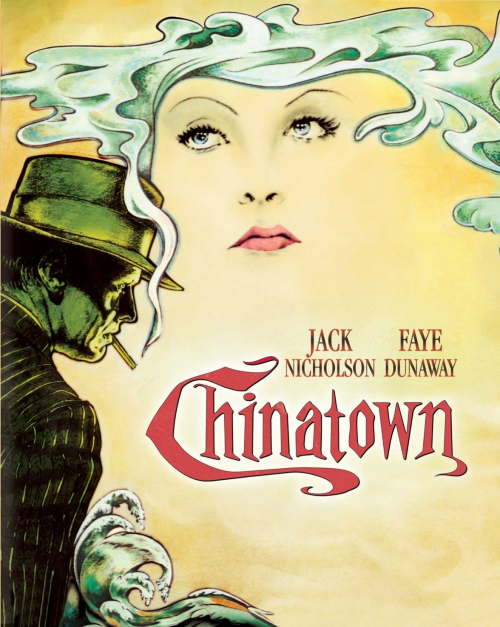
Eric D. Snider and Mental_Floss present 12 Nosy Facts About Chinatown. Here are three of my favorites…
1. IT WOULDN’T EXIST IF ROBERT TOWNE HADN’T BEEN FRIENDS WITH JACK NICHOLSON.
The screenwriter and the actor were good friends, even roommates at one point, and they’d studied acting together. Towne has said repeatedly that he wrote the lead role specifically for Nicholson: “I could not have written that character without knowing Jack.” Furthermore, it was while visiting Nicholson in Oregon, where he was directing Drive, He Said, that Towne started reading Raymond Chandler detective novels and a book about the history of California water rights, all of which led to Chinatown.9. WE DON’T KNOW ANYTHING THAT J.J. GITTES DOESN’T KNOW.
This is the sort of detail that’s either “well, duh” obvious, or that blows your mind a little when you realize it. The film is entirely from Gittes’ point of view: he’s in every scene, and there’s no information that we learn before he does. When he gets a phone call, we hear the voice but don’t see the person at the other end. When he gets knocked unconscious in the orange grove, the movie fades with him, fading back in when he wakes up. To emphasize the point that we’re seeing everything from Gittes’ perspective, Polanski often put the camera behind Nicholson, so we see his back and shoulders. Watch for it.12. THERE’S A RECURRING VISUAL MOTIF THAT SHOWS UP OVER AND OVER—AND IT’S THERE ACCIDENTALLY.
Chinatown frequently shows us images of two things that are identical, except that one is flawed: Two pocket watches side by side, one broken. A pair of eyeglasses, one lens cracked. Gittes’ nostrils, one sliced. Gittes smashes one taillight on Evelyn’s car. He loses one shoe in the reservoir. Evelyn has a flaw in one of her irises. Katherine looks like a duplicate of Evelyn, but is the product of incest. The list goes on. But when Towne is asked about this on the DVD commentary, he says it was totally unintentional; he and Polanski never discussed using such images as a recurring theme. Whatever meaning we may ascribe to the symbolism, the filmmakers didn’t put it there on purpose.