13 Judicious Facts About “To Kill a Mockingbird”
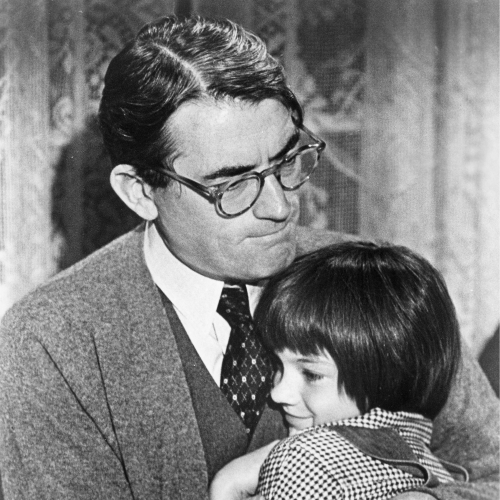
Eric D. Snider and Mental_Floss present 13 Judicious Facts About To Kill a Mockingbird. Here are three of my favorites…
1. ROCK HUDSON ALMOST PLAYED ATTICUS FINCH.
Universal Pictures offered the role to Rock Hudson when the project was first being developed, and the actor was prepared to take it. Things stalled, however, when the film’s producer, Alan J. Pakula, wanted an even bigger star: Gregory Peck. Universal basically said, “Well, sure! If you can get Gregory Peck, we’ll not only agree to it, we’ll finance the movie!” And that’s what happened. Sorry, Rock.3. GREGORY PECK WANTED TO CHANGE THE TITLE.
He wasn’t the only person who felt the phrase “to kill a mockingbird” didn’t accurately reflect the content of the story. He was the most influential, though, and he pushed for a change before he’d even read the screenplay. Lee’s literary agent, Annie Laurie Williams, was furious at the suggestion, and wrote to the publisher (who naturally wanted the bestselling book’s title to carry over) to assure him that Peck “has been signed to play the part of Atticus, but has no right to say what the title of the picture will be.” Mulligan and Pakula publicly stated that the title would remain intact, and Peck dropped the subject.8. THERE’S A REASON THE MOVIE FOCUSES MORE ON ATTICUS THAN THE BOOK DOES, AND THAT REASON IS NAMED GREGORY PECK.
After seeing a rough cut of the film early in the summer of 1962, Peck sent a memo to his agent and to Universal execs listing 44 problems he had with it. What it boiled down to was that the children had too much screen time, Atticus not enough. “Atticus has no chance to emerge as courageous or strong,” Peck wrote. He said in a later memo, “In my opinion, the picture will begin to look better as Atticus’ story line emerges, and the children’s scenes are cut down to proportion.” Universal wanted the star to be happy, but Mulligan and Pakula’s contract had stipulated they’d get final cut. Still, they made more changes to appease Peck, deleting some of the children’s scenes in favor of Peck’s. In the end, the trial occupies some 30 percent of the film, despite being only about 15 percent of the book