14 Moving Facts About “Planes, Trains and Automobiles”

Roger Cormier and Mental_Floss present 14 Moving Facts About Planes, Trains and Automobiles.   Here are three of my favorites

1. JOHN HUGHES ONCE HAD A HELLISH TRIP TRYING TO GET FROM NEW YORK CITY TO CHICAGO.
Before he became a screenwriter, Hughes used to work as a copywriter for the Leo Burnett advertising agency in Chicago. One day he had an 11 a.m. presentation scheduled in New York City on a Wednesday, and planned to return home on a 5 p.m. flight. Winter winds forced all flights to Chicago to be canceled that night, so he stayed in a hotel. A snowstorm in Chicago the next day continued the delays. The plane he eventually got on ended up being diverted to Denver. Then Phoenix. Hughes didn’t make it back until Monday. Experiencing such a hellish trip might explain how Hughes managed to write the first 60 pages of Planes, Trains and Automobiles in just six hours.

13. IN THE ORIGINAL ENDING, DEL FOLLOWED NEAL ALL THE WAY HOME.
Hughes decided during the editing process that instead, John Candy’s character would be “a noble person” and finally take the hint from Martin’s character, and let Neal return home alone, before Neal has a change of heart and finds Del again.

14. IN THE SCENE WHERE NEAL THINKS ABOUT DEL ON THE TRAIN, MARTIN DIDN’T KNOW THE CAMERA WAS ON.
In order to get the new ending he wanted, Hughes and editor Paul Hirsch went back to look for footage they previously didn’t think would be used. Hughes had kept the cameras rolling in between takes on the Chicago train, without his lead’s knowledge, while Martin was thinking about his next lines. Hughes thought Martin had a “beautiful expression” on his face in that unguarded moment.

8 Reasons Sylvester Stallone Should Win an Oscar for “Creed”

What a week Sly Stallone is having!  I know we’re covering him quite a bit this week, and I hope you’re enjoying the ride.  If not, things will get back to normal [well, as normal as ever around here] soon enough.

This morning we have 8 Reasons Sylvester Stallone Should Win an Oscar for Creed by Ben Travers at Indiewire.  Normally, I would list my top three favorite reasons from the article.

Not today… because I agree with every single one.

The Top Ten Action Movie Stars of All-Time

Alex Maidy and JoBlo.com present the Top Ten Action Movie Stars of All Time.

Using just their list, here are my top five [and where they placed at JoBlo]…

  1. Sly Stallone [1st at JoBlo]
  2. Bruce Lee [4th at JoBlo]
  3. Arnold Schwarzenegger [3rd at JoBlo]
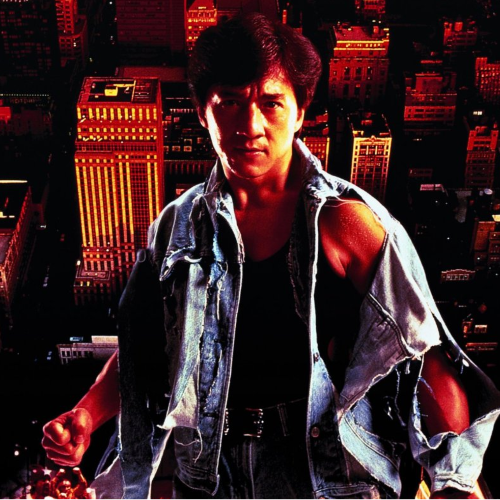
  4. Jackie Chan [9th at JoBlo]
  5. Clint Eastwood [2nd at JoBlo]

Overall, their list wasn’t bad.  They definitely got #1 right, but are there others who should have made the Top 10 but didn’t?

Off the top of my head I’m thinking of Charles Bronson, Vin Diesel, Dwayne Johnson [perhaps it is too early in Diesel and Johnson’s career], Harold Lloyd, Jean Claude Van Damme… others?


Robert Rodriguez Talks Up Sly Stallone in “The Director’s Chair”

Robert Rodriguez is a true Sylvester Stallone fan.  Recently Sly sat down with Rodriguez for an episode of The Director’s Chair and…

Rodriguez was so impressed with Stallone’s insight and honestly that he wanted to make the episode available for free to everyone. You can watch it on the …

Capone from Ain’t It Cool News had a chance to interview Rodriguez about Sly’s appearance on The Director’s Chair and their interview should be required reading for anyone who checks in here.

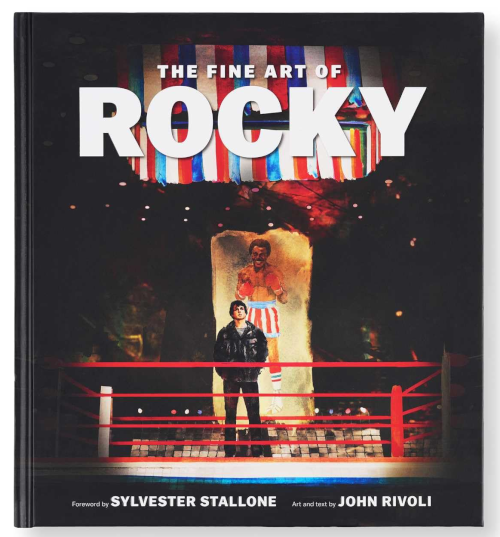
16 Hard-Hitting Facts About the Rocky Movies

Roger Cormier and Mental_Floss present 16 Hard-Hitting Facts About the Rocky Movies Here are three of my favorites

3. ADRIAN WAS ALMOST PLAYED BY SUSAN SARANDON.
Stallone and the producers decided that she was “too sexy.” Cher was also considered. Bette Midler was offered the role but turned it down. Carrie Snodgress had in fact won the part, until her agent asked for too much money. Talia Shire auditioned at the last minute to save the day.

7. CHARLIE CHAPLIN AND ELVIS PRESLEY WERE FANS OF THE FIRST MOVIE.
Chaplin wrote to Stallone that Rocky reminded the silent film star of a character he used to play. Stallone regretted turning down Chaplin’s invitation to visit him in Switzerland after the director died a few months later. Similarly, Stallone turned down Elvis’ offer to watch Rocky with him in Memphis months before The King passed away.

16. ROCKY’S TURTLES CUFF AND LINK OUTLIVED A COUPLE OF THE CHARACTERS.
The female red-eared sliders that appeared in 2006’s Rocky Balboa are the same turtles from the original 1976 picture.

11 Far Out Facts About “Lost in Space”

Bryan Reesman and Mental_Floss present 11 Far Out Facts About Lost in Space Here are three of my favorites

1. THE ORIGINAL UNAIRED PILOT SET A DARKER TONE. IT ALSO COST $600,000.
The original pilot “No Place To Hide”—which cost $600,000, or $4.5 million in today’s dollars—was a more straight up sci-fi tale that did not include either Dr. Smith or the Robot in the cast. The Space Family Robinson saga—inspired by a comic book with that title from Gold Key Comics that began in 1962—started with their 1997 mission going awry thanks to a meteor shower, and the Jupiter 2 crash landing on a seemingly barren planet with harsh weather conditions and inhabited by dangerous cyclops giants. It was pretty impressive for the day and hinted at a more intense show than the one that ultimately aired. We still love the series, but this episode—unseen until early last decade—promised many more dramatic possibilities.

2. THE JUPITER 2 COST MORE THAN THE ENTERPRISE.
The cost of the Robinson family’s Jupiter 2 spacecraft was $350,000 ($2.6 million today), more than the Enterprise on Star Trek, which began airing when Lost In Space started its second season. Of course, a major difference is that the Jupiter 2 was a smaller ship, so we saw every chamber in it, whereas the Enterprise was a larger wessel (as Pavel Chekov would say) with many unseen nooks and crannies. It was all about scale.

7. GUY WILLIAMS RETIRED FROM ACTING AFTER LOST IN SPACE.
The man who was famed for playing Zorro on TV between 1957 and 1961 and Dr. John Robinson from 1965 to 1968 decided to retire from the spotlight at the young age of 44 following the cancellation of Lost In Space. He later moved to Argentina, where he was reportedly beloved and where he lived until his death in 1989.

16 Sure Facts About “Mrs. Doubtfire”

Roger Cormier and Mental_Floss present 16 Sure Facts About Mrs. Doubtfire Here are three of my favorites

3. THEY WENT THROUGH PHOTOGRAPHS OF OLD WOMEN.
Director Chris Columbus claimed that he and his fellow filmmakers looked through “hundreds and hundreds” of photographs until finding a 1940s-era English woman to base Mrs. Doubtfire’s look on.
7. CHUCK JONES SUPERVISED THE OPENING ANIMATION.
Jones was the iconic animator of Looney Tunes and Merrie Melodies cartoons for Warner Bros. The full five minutes of Pudgy Parakeet and Grunge the Cat was released as a DVD feature.

8. COLUMBUS USED MULTIPLE CAMERAS SIMULTANEOUSLY TO CAPTURE THE CAST WHEN WILLIAMS IMPROVISED.
The director mostly shot one or two takes of each scene as it was written in the script before shooting something Williams made up. Columbus said the resulting footage gave him the option of cutting a PG, PG-13, R, or NC-17 version of the movie. (He ended up going with the PG-13 version.)

18 Epic Facts About “Dances with Wolves”

Jeff Wells and Mental_Floss present 18 Epic Facts About Dances with Wolves.  Here are three of my favorites

1. IT STARTED AS A NOVEL THAT NOBODY WANTED TO PUBLISH.
Inspired by books he’d read about the Plains Indians, screenwriter Michael Blake (who died earlier this year) pitched Costner on the idea for Dances with Wolves. Costner told Blake, whom he’d met in a Los Angeles acting class, to write a novel instead of a screenplay, reasoning that a novel could generate studio interest more effectively than a cold script. So Blake spent months writing and sleeping on friends’s couches (including Costner’s). “I wrote the entire book in my car, really,” Blake said in a behind-the-scenes feature. Once finished, Blake submitted Dances with Wolves, to numerous publishers, all of whom passed on his manuscript. Finally, after more than 30 rejections, a small publisher called Fawcett accepted it.

2. IT BECAME THE FILM THAT NO STUDIO WANTED TO FINANCE.
Turned down by American studios, Costner looked abroad for help, eventually securing startup funds from a handful of foreign investors. With only a fraction of the movie’s $15 million budget secured, he began filming. Orion Pictures eventually stepped in with $10 million, but Dances with Wolves ended up going more than $3 million over budget. Costner covered the overage out of his own pocket.

18. THERE’S A SEQUEL.
A sequel to the book, that is. In 2001, Blake published The Holy Road, which continues the story of John Dunbar, now a full-fledged Sioux warrior, as he tries to protect his tribe from encroachment by white settlers. Critics praised the novel for the ways it portrayed westward expansion and the plight of Native Americans without coming off heavy-handed. There have been rumblings about a possible miniseries, but nothing is confirmed at this time.

7 Ways Frank Miller Changed Batman

Jesse Schedeen and IGN.com present 7 Ways Frank Miller Changed Batman.  Here are three of my favorites [Alert — some profanity]

2. He Grounded the DCU in Reality.
With aliens, giant robots, talking animals and people who can fly, the DC Universe is a pretty strange and wonderful place. But before The Dark Knight Returns, it was a place several steps removed from the real world.. Miller grounded his alternate DCU in reality. His dilapidated Gotham City was much more like the New York City of the time – dirty, crime-ridden and harsh. Miller also drew heavily on the politics of the time. The Dark Knight Returns presented a world where Ronald Reagan was US President and Superman was the country’s first line of defense in their ongoing conflict with the Soviet Union. Not every Batman story since has taken the same approach, but DKR renewed the emphasis on Gotham being as much a character as the people who inhabit her streets.
4. He Made Commissioner Gordon Important.
Miller followed up The Dark Knight Returns with Batman: Year One, a story that offered a more grounded and realistic look at Batman’s first year on the job. However, the most revolutionary element of this story didn’t involve Batman at all, but rather Jim Gordon. Year One focused as much attention on Gordon’s troubled first year in Gotham City. It portrayed him as a character with the same burning desire to save his city as Batman, and it made him a more integral player in Batman’s world than ever before. In DC’s current comics, Gordon himself has taken up the mantle of Batman. Would that have been possible without the influence of Year One?
5. He Made Batman and Superman Frenemies.
Before Frank Miller, Batman and Superman were always the best of friends. The comic series World’s Finest chronicled their many team-up adventures, which always seemed to culminate with the two heroes smiling and shaking hands after a job well done. Miller offered a very different view of their relationship in The Dark Knight Returns. In that comic, the two heroes were less friends than former allies turned bitter enemies. The climax of the series featured an armored Batman fighting a bloody battle against the Man of Steel in the streets of Gotham. That rivalry only grew more heated in Miller’s later work like The Dark Knight Strikes Again and All-Star Batman & Robin. Not only has Miller’s depiction of the Batman/Superman relationship influenced countless other comics, it’s pretty much the basis of next year’s Batman v Superman: Dawn of Justice.

12 Intense Facts About “Platoon”

Eric D. Snider and Mental_Floss present 12 Intense Facts About Platoon.  Here are three of my favorites

6. IT TOOK MORE THAN A DECADE TO GET THE FILM PRODUCED.
Stone wrote a screenplay based on his experiences in Vietnam as soon as he got back from the war, in 1969. (He sent a copy of it to Jim Morrison, hoping the Doors frontman would star in it.) By 1976, that draft morphed into what he was then calling The Platoon. Stone couldn’t find anyone willing to make the movie, though. The war was still too fresh in people’s minds; it would be another few years before films like Apocalypse Now and The Deer Hunter addressed it. And after that, studios had another excuse not to make Platoon: why bother, when Apocalypse Now and The Deer Hunter had already covered it?

8. IT CHANGED THE WAY HOLLYWOOD LOOKED AT WAR.
A much-decorated retired Marine named Dale Dye, who loved war movies but was disappointed by their failure to convey the mental and emotional realities of combat, offered Stone his services as an advisor. Dye had been turned down by other filmmakers, who felt the way Hollywood had been doing it—you hire a consultant to make sure the medals, guns, and uniforms are accurate, and you don’t worry about the less tangible details—seemed to be working just fine. (Dye said: “They had been making zillions of dollars making war films for decades, and here was some clown coming in to tell them they had a better mousetrap? Go away.”) But Dye’s vision matched Stone’s, and the psychological authenticity they created together was a major factor in Platoon’s success. For the first time, Vietnam veterans were seeing their experiences portrayed realistically. Dye has since become the foremost military consultant in Hollywood, advising (and occasionally acting in) everything from Saving Private Ryan to the Medal of Honor video games.

11. CHARLIE SHEEN ALMOST LOST THE LEAD ROLE TO HIS OWN BROTHER.
Sheen auditioned during one of Stone’s earlier, unsuccessful attempts to get the movie made, and didn’t impress him. The guy Stone really liked was Sheen’s older brother, Emilio Estevez. But financing fell through and the film was shelved. By the time Sheen auditioned again a few years later, he had grown into the role. “This time I knew in 10 minutes he was right,” said Stone.