Oldest Known Movie Footage of New York City

Want to see the oldest movie footage of New York City known? You can by checking out the video below.
Previews and Reviews that are Z's Views
Want to see the oldest movie footage of New York City known? You can by checking out the video below.

In 2010, Randy Guijarro purchased the vintage photo above for two bucks. Guijarro is a collector of old photos and the shot of some folks in the wild west playing croquet would make a nice addition to his collection.
It was recently confirmed that one of the croquet players in the photo is none other than Billy the Kid and the other folks playing are the Kid’s gang known as the Lincoln County Regulators.
The photo has been verified to be legit and is going to auction. Guijarro’s two buck purchase could bring in as much as five million dollars.
I’m not sure which surprises me more…

Source: People.

Jake Rosen and Mental_Floss present 14 Unusual Ways McDonalds Did Business in the ’60s. Here are three of my favorites…
1. THEY DIDN’T HIRE WOMEN.
Fast-service restaurants in the ‘40s and ‘50s were renowned for their carhops—perky young women who delivered trays of food to parked automobiles. But franchise founders Maurice and Richard McDonald held a negative opinion about these jobs: They felt it created an atmosphere where families would be uncomfortable visiting a burger stand populated by obnoxious teen boys ogling employees. They eliminated the carhop position, expecting customers to instead approach windows on foot. Subsequent owner Ray Kroc held firm to the no-women policy: “We don’t hire female help,” he told the Associated Press in 1959. The freeze lasted until franchise operators began insisting on a gender-balanced staff in the mid-to-late-‘60s. Even then, Kroc ruled that female employees be “flat-chested” and not work the grill since they didn’t possess the “stamina” for such intensive labor.6. THEY DIDN’T WANT BUSINESS FROM DIRTY HOBOS.
Family was a key selling point for McDonald’s. Time and again, spokespeople for the chain reinforced the idea of creating an environment parents would be comfortable in. The companytold press that new locations were scouted based on the number of church steeples, schools and residential streets nearby, not foot traffic. McDonald’s, Kroc said, didn’t want to cater to “transients.”9. YOU COULDN’T SIT DOWN.
With an average transaction time of just 50 seconds, McDonald’s didn’t really have the time or resources to put into washing dishes. Virtually all locations in the early ‘60s amounted to front counters and drive-in windows: There was no place to sit down inside the restaurant itself until 1962, when a Denver, Colo. location became the first to offer stools.

A new photo of Jesse James has surfaced. Not only that, but James is seated next to Robert Ford, the “coward” who shot James in the back.
Lois Gibson, a forensic analyst who has compared the “new” photo to other verified images of James has given it her seal of approval. If this photo turns out to be legit, then the owner, Sandy Mills, will make out like a, uh… bandit, when she decides to sell it.
Source: Mental_Floss.

Evan Andrews and History.com present 9 Things You May Not Know About the Warren Commission. Here are three of my favorites…
Earl Warren suppressed key evidence from the Commission.
Chief Justice Earl Warren was a close friend of the Kennedy family, and his personal attachment may have interfered with his duties to the Commission. In one of the most infamous episodes of the investigation, Warren denied his fellow Commission members access to Kennedy’s autopsy photos because he deemed them too disturbing. He later refused to allow the Commission to interview certain witnesses whom Lee Harvey Oswald may have known in Mexico, and even tried to block an interview with first lady Jackie Kennedy because he didn’t want to invade her privacy.
The Commission secretly interviewed Fidel Castro.
Many believed that Fidel Castro might have conspired in Kennedy’s murder, and it turns out that the Cuban dictator personally proclaimed his innocence in an off-the-record interview with the Warren Commission. According to journalist Philip Shenon, at one point in the investigation, Commission lawyer William Coleman met face to face with Castro on a fishing boat off the coast of Cuba. During a three-hour exchange, Castro repeatedly denied having any involvement in the assassination. No notes were taken during the secret rendezvous, and only Earl Warren and one other investigator were ever made aware of it.
The FBI and the CIA intentionally misled the Commission.
The FBI and the CIA had monitored Lee Harvey Oswald in the months before the assassination, but both agencies later tried to downplay their knowledge of him to the Warren Commission. Oswald had once even left a threatening note for an FBI agent at the Bureau’s office in Dallas. Fearful of catching blame for not preventing the assassination, the FBI later destroyed the note and even removed the agent’s name from a typewritten transcript of Oswald’s address book provided to the Warren Commission. Congressman Hale Boggs would later say that FBI Director J. Edgar Hoover “lied his eyes out” to the Commission’s investigators.
Evidence also suggests that the CIA had Oswald under surveillance when he made a trip to Mexico in September 1963 and visited the Cuban and Soviet embassies, but the agency repeatedly denied any connection to the alleged shooter. The CIA also neglected to inform the Commission about its many covert operations in Cuba—including several schemes to assassinate Fidel Castro—even though those revelations might have helped shape the investigation.
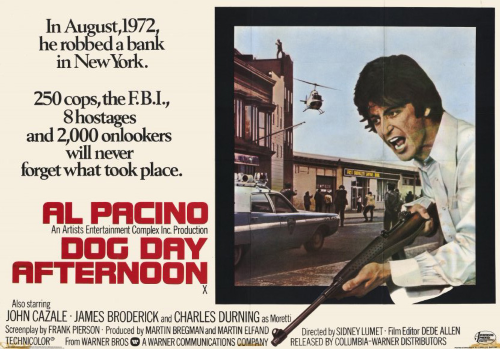
Eric D. Snider and Mental_Floss present 13 Fascinating Facts About Dog Day Afternoon. Here are three of my favorites…
2. THE REAL BANK ROBBER LOOKED A LOT LIKE AL PACINO.
Fluge’s magazine article described John Wojtowicz as “a dark, thin fellow with the broken-faced good looks of an Al Pacino or Dustin Hoffman,” so naturally the screenplay found its way into both actors’ hands. (Pacino was Lumet’s first choice, but Hoffman was reportedly approached when Pacino, seeking to take a brief break from movies, initially turned it down.) We see a bit more De Niro in Wojtowicz than Pacino or Hoffman, but Pacino was a good fit, too.
9. THEY LOST A DAY’S WORK BECAUSE OF PACINO’S MUSTACHE.
One of the things the actor did as a means of getting into character was grow a mustache—not because the real robber had one, but because the character was gay, and in the mid-’70s, many gay men had mustaches. In Lumet’s words, however, Pacino’s mustache “looked terrible.” And after the first day of filming, Pacino agreed. Watching the footage, Pacino told Lumet, “The mustache has got to go,” and asked if he could shave it and redo that day’s work. Lumet agreed, and the mustache was gone—as was a day’s worth of footage.10. IT’S THE ONLY TIME LUMET EVER INCORPORATED IMPROVISATION INTO ONE OF HIS MOVIES.
Sidney Lumet’s first film was 1957’s 12 Angry Men. He made 20 more between that and Dog Day Afternoon (and 22 more afterward), and by his own account, he never used improv. “I don’t like actors to improvise, to use their own language,” he said in the Dog Day AfternoonDVD commentary. “They are not going to come up with something … better than a really talented writer who has done months of work on something.”But as Lumet and the cast rehearsed Dog Day Afternoon—especially the parts where the robbers and bank employees are just sitting around killing time—someone asked about the possibility of improv, and Lumet realized it could be useful for helping the actors bond, as well as making the characters’s interactions feel more natural. With screenwriter Frank Pierson present, Lumet let the actors improvise in rehearsal; recorded it; and ended up adding some of their conversations to the script (which won the film’s only Oscar, by the way).

Eric D. Snider and Mental_Floss present 15 Punchy Facts About Raging Bull. Here are three of my favorites…
1. IT PARTIALLY OWES ITS EXISTENCE TO ROCKY.
Comparisons to that other Oscar-winning boxing movie from four years earlier were inevitable, but the two were actually connected. Rocky was produced by Irwin Winkler and Robert Chartoff, and released by United Artists. When those same producers approached that same studio about doing another boxing movie, the studio said, “A sequel to Rocky? Sure!” That wasn’t what they had in mind (though they did soon enough), but in the meantime, Rocky’s huge success was enough to sell UA on another boxing movie.5. PAUL SCHRADER FIXED THE SCREENPLAY BY ADDING JAKE LAMOTTA’S BROTHER, JOEY.
It’s strange to imagine Raging Bull without the Joe Pesci character, but that’s how Mardik Martin’s first drafts had it. He was adapting LaMotta’s 1970 memoir, Raging Bull: My Story, co-authored by LaMotta’s lifelong friend Peter Savage (born Peter Petrella). The book didn’t feature Joey as a prominent character, and it had Savage doing most of the things that Joey would eventually do in the movie. When Schrader was hired to build on the work Martin had done and take another stab at the screenplay, he decided the story would be more compelling if it involved brothers rather than friends (blood ties and all that), so he introduced the Joey character and excised poor old Pete. This creative license proved problematic later, when Joey LaMotta sued for defamation because the movie had attributed to him a number of unwholesome deeds (like beating the crap out of a neighborhood mobster) that had actually been perpetrated by Savage.9. JOE PESCI WAS RUNNING AN ITALIAN RESTAURANT WHEN DE NIRO AND SCORSESE APPROACHED HIM ABOUT BEING IN THE MOVIE.
Pesci had been a professional actor and musician (he sang and played guitar) off and on since childhood, but he called it quits in the 1970s. His 1975 Broadway show with comedy partner Frank Vincent (whom he would later recruit to play Salvy in Raging Bull) had closed after a week, and his first movie, 1976’s The Death Collector (also featuring Vincent), was a flop. But Robert De Niro happened to see that film in 1978, and was so impressed by Pesci’s performance that he pitched him to Scorsese. The two tracked Pesci down and called him at his restaurant to coax him out of showbiz retirement.

Jake Rosen and Mental_Floss present 11 Things You Might Not Know About Apollo 13. Here are three of my favorites…
2. Steven Spielberg Made a Crucial Suggestion.
To simulate the weightlessness inside the module, Howard and his crew were contemplating using wires and harnesses, a logistical decision that would’ve had his cast suspended like marionettes for months of shooting. Instead, Spielberg (a friend of Howard’s and frequent collaborator with Hanks) suggested that he look into the KC-135, a NASA-owned airplane that’s able to simulate zero gravity by maneuvering 45 degrees up and then plummeting.Howard’s test shooting went well enough—and his producer, Todd Hallowell, was persistent enough—that NASA granted permission for a crew to film while on board the plane. That meant that …
9. “Houston, We Have a Problem” Was Not the Exact Quote.
One of the most popular lines in culture, Lovell’s grim delivery of his module’s malfunctions to Mission Control was not quoted word for word in the film. In reality, NASA received the message, “Houston, I believe we’ve had a problem,” not, “Houston, we have a problem.” (Maybe present tense made it more impactful.) Filmmakers also decided to have Hanks’ Lovell deliver the line; in fact, it was Swigert who first said it, though Lovell repeated it immediately as “Houston, we’ve had a problem.”12. The Checklist Fetched $388,375 at Auction.
Because it was shown so prominently in the feature film, Jim Lovell’s original checklist book filled with equations and other notes addressing their mission’s issues sold for $388,375 in a November 2011 auction. But the purchase was held up when NASA inquired whether Lovell actually owned the artifact outright. In 2012, President Obama signed a bill into law clarifying that astronauts had ownership of such materials.
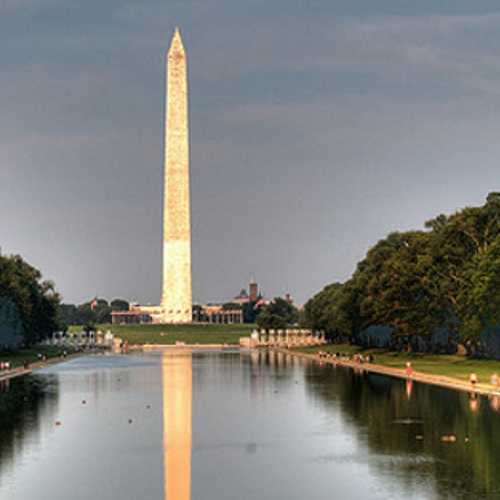
Michael Arbeiter and Mental_Floss present 15 Things You Might Not Know About the Washington Monument. Here are three of my favorites…
1. Building a monument to George Washington was not a unanimously supported proposition.
Today, trumpeting George Washington as a hero and a symbol of national pride isn’t going to start any arguments. In the 19th century, however, Washington’s approval rating was far from 100 percent. The very idea of constructing a monument to honor the former president felt like an affront to the Democratic-Republicans—the opposing party to the Washington-aligned Federalists—who both favored Thomas Jefferson over Washington and decried such tributes as unseemly and suspiciously Royalist.2. IT TOOK ALMOST 40 YEARS TO COMPLETE CONSTRUCTION.
After decades of deliberation about where to build a monument to Washington, what form it should take, and whether the whole thing was a good idea in the first place, the foundation for a great stone obelisk was laid at the center of Washington, D.C.’s National Mall on July 4, 1848. Although the design looks fairly simple, the structure would prove to be a difficult project for architect Robert Mills and the Washington National Monument Society. Due to ideological conflicts, lapses in funding, and disruptions during the Civil War, construction of the Washington Monument would not be completed until February 21, 1885. The site opened to the public three years later.8. THE ENGINEER WHO COMPLETED THE MONUMENT ASKED THE GOVERNMENT TO SUPPLY HIS WORKERS WITH HOT COFFEE.
Several years after the 1855 death of Mills, Col. Thomas Lincoln Casey Sr., Chief of Engineers of the United States Army Corps of Engineers, assumed responsibility for completing the Washington Monument. Among his most memorable orders was an official request to the U.S. Treasury Department to supply his workers—specifically those assigned to the construction of the monument’s apex—with “hot coffee in moderate quantities.” The treasury complied.
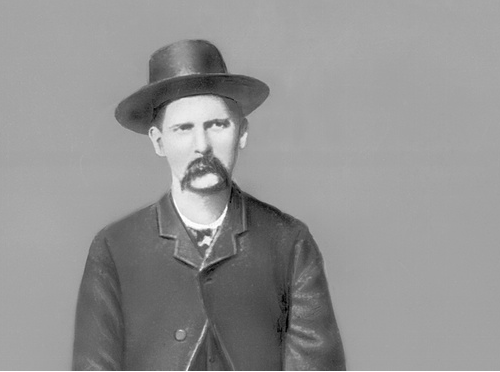
When most people hear the name Wyatt Earp they think of the brave lawman who participated in the gunfight at the OK Corral. You know the hero of countless movies, books, and tv shows. Historians may have a slightly more tarnished image.
Did you know that…
…At the start of the 20th century, most people did not see Earp as a demigod of frontier justice, but rather as a dirty referee who fixed the heavyweight championship, running away before many in the crowd realized what had happened.
Click over to The Guardian and read The Forgotten Story of Wyatt Earp and the Fixed Heavyweight Title Fight by Les Carpenter. You’ll never see Wyatt Earp in quite the same light!
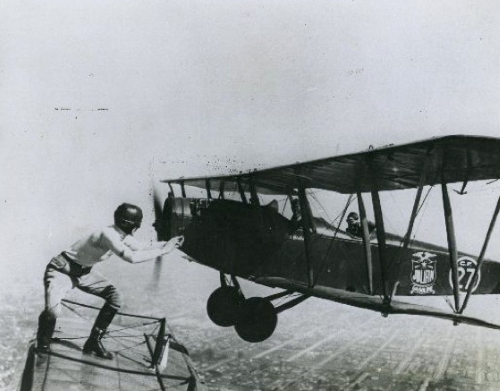
Until recently I had never heard of Gladys Ingle of the 13 BLACK CATS. In the video below Ingle changes planes in mid-air to replace a missing wheel.
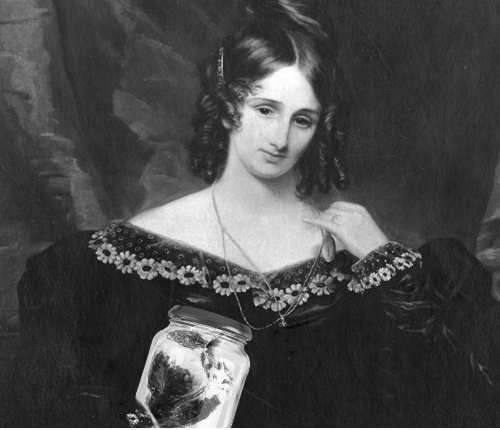
Two famous sayings come to mind for this morning’s post…
A reporter once asked Stephen King why he writes such scary stories. King answered, “It is because I have the heart of a small boy… and I keep it in a jar on my desk.”
The second quote is when a person in love tells his/her lover: “I give you my heart.”
It seems that Frankenstein author Mary Shelley took the second quote literally. After her husband died Shelley…
…kept the heart in a silken shroud, and is said to have carried it with her nearly everywhere for years. In 1852, a year after she died, Percy’s heart was found in her desk. It was wrapped in the pages of one of his last poems, Adonais…
Source: Mental_Floss.

Would you know what to do to survive if an Atom Bomb was dropped on your town?
If you don’t, then you need the handy-dandy You Can Survive An Atom Bomb Survival Wheel!
I wonder if the Atom Bomb Survival Wheel can confirm that the best way of surviving a direct hit from an A-Bomb is to get in a refrigerator (and hope you don’t suffocate) a la Indiana Jones!
Source: Channing Thompson.

Evan Andrews and History.com present 10 Things You May Not Know About P.T. Barnum. Here are three of my favorites…
1. Barnum was an entrepreneur from an early age.
Barnum’s knack for moneymaking first manifested during his youth in Bethel, Connecticut. The future showman sold snacks and homemade cherry rum during local gatherings, and by age 12, he had made enough money to purchase his own livestock. By 21, his holdings also included a general store, a small lottery and even his own newspaper called the “Herald of Freedom.”2. He first rose to prominence by engineering a famous hoax.
In 1835, Barnum launched his career in entertainment by purchasing Joice Heth, a blind slave touted as being the 161-year-old former nurse of George Washington. After billing Heth as “the most astonishing and interesting curiosity in the world,” Barnum put her on display in New York and took her on a small tour of New England. Visitors lined up to gawk at her withered body and hear her tales of “dear little George,” and Barnum helped fuel popular interest by spreading a rumor that she was actually an automaton controlled by a ventriloquist. The truth about Heth didn’t emerge until after her death in February 1836. During a public autopsy—staged by Barnum at the price of 50 cents for admission—it was revealed that she was most likely no older than 80.3. Barnum didn’t go into the circus business until relatively late in life.
Barnum is best known for his traveling three-ring circuses, but he didn’t make his first forays under the big top until he was 60 years old. Before then, he was better known as the owner of the Manhattan-based American Museum, a sprawling collection of historical artifacts, aquariums, animal menageries, zoological curiosities and freak shows. Some of the museum’s most notable exhibits included General Tom Thumb, a child dwarf who Barnum famously brought to audience with Queen Victoria of Britain; and the “Fejee Mermaid,” which was actually the upper half of a monkey sewn to the bottom of a fish. Barnum only launched his traveling circus after his museum was twice destroyed by fire. He later teamed with his famed partner James Bailey in 1881, and the two went on to make a fortune running their “Greatest Show on Earth.”
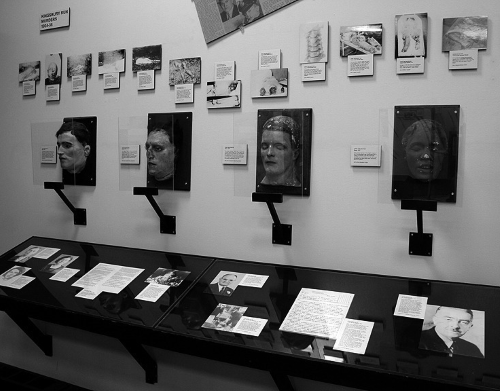
posted his choices for 10 Creepy, True Stories That Deserve Their Own TV Shows. Venable makes some good suggestions and my favorite is…
The Cleveland Torso Murderer
Given how incredible David Fincher’s Zodiac was, it seems only natural that more unsolved serial killer stories would have been made in the last few years. But somehow, the story of the Cleveland Torso Murderer – also known as the Mad Butcher of Kingsbury Run – has yet to make it to the small screen. (But definitely read Brian Michael Bendis’ graphic novel.) His lethal streak took place in the 1930s and included at least 12 victims (most of them unidentified), with all of them decapitated and many dismembered. Thus the nickname. Beyond being unsolved, the murders are remembered as one of the last cases that fell under former Untouchables investigator Eliot Ness, although he wasn’t heavily involved. NBC had plans to turn this into a miniseries back in 2013, but there hasn’t been any news about it since. HBO and Netflix are better homes for this gritty mystery anyway.
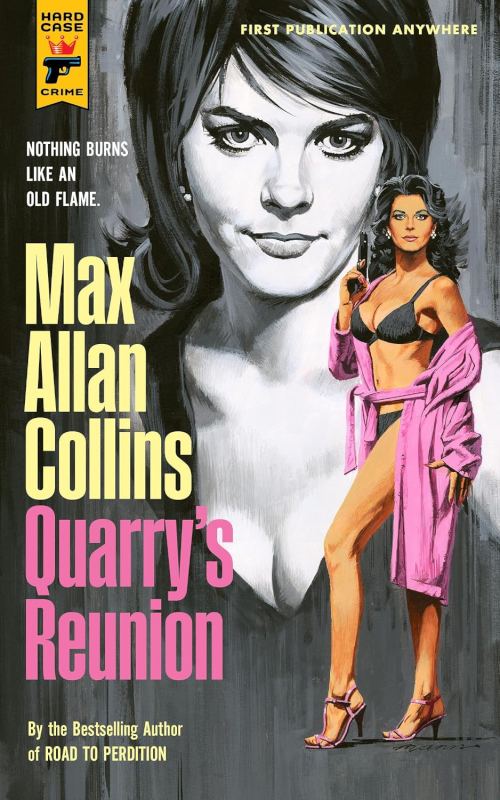
I read Bendis’ graphic novel and Max Allan Collins work about the subject and agree that The Cleveland Torso Murderers could make for interesting viewing.