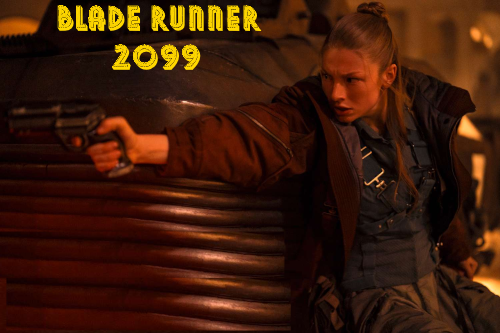
10 Fascinating Facts About “Blade Runner”
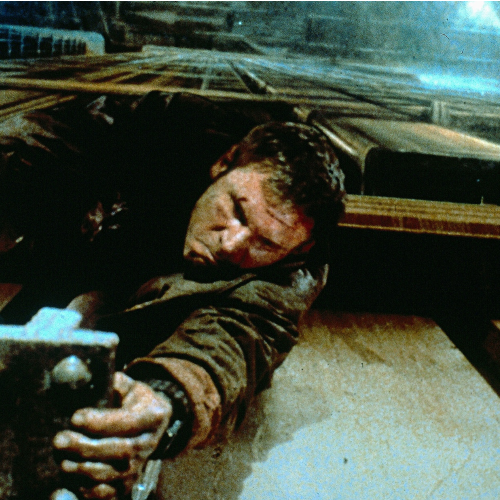
Rebecca Pahle and Mental_Floss present 10 Fascinating Facts About Blade Runner. Here are three of my favorites…
3. DUSTIN HOFFMAN ALMOST PLAYED DECKARD.
At various times during development, Blade Runner’s original screenwriter, Hampton Fancher, pictured Robert Mitchum, Christopher Walken, and Tommy Lee Jones as Rick Deckard. Ridley Scott wanted to go in a completely different direction by casting Dustin Hoffman, whom he later acknowledged didn’t really fit the type. “I figured, unlikely though he may be in terms of his physical size as a sci-fi hero, as an actor Hoffman could do anything,” explained Scott. “Therefore, it really didn’t matter.”Hoffman, Scott, Fancher, producer Michael Deeley, and production executive Katherine Haber worked on the film for months, workshopping Deckard’s character and shifting the script in a more “socially conscious” (Scott’s words) direction until Hoffman abruptly dropped out in October of 1980. “Frankly,” Scott later said, “I think it might have been something as simple as money.”
8. PHILIP K. DICK REFUSED TO DO A NOVELIZATION.
Dick was approached about penning a Blade Runner novelization, for which he would get a cut of the film’s merchandising rights. “But they required a suppression of the original novel,” Dick explained, “in favor of the commercialized novelization based on the screenplay,” so he refused. “Blade Runner’s people were putting tremendous pressure on us to do the novelization—or to allow someone else to come in and do it, like Alan Dean Foster. But we felt that the original was a good novel. And also, I did not want to write what I call the ‘El Cheapo’ novelization.” At one point, Blade Runner’s team threatened to refuse Dick and his publishers access to the film’s logo or stills (essentially, subsequent printings would not be able to cite the book as the inspiration for Blade Runner), but they eventually backed down.10. IT’S CURSED.
It might not be quite as hardcore-cursed as Poltergeist or The Omen, but Blade Runner has a curse of its own … on the businesses whose logos appear in the film. Atari, Pan Am, RCA, Cuisinart, and Bell Phones all suffered severe business problems in the years shortly afterBlade Runner’s release, as did Coca-Cola, whose 1985 “New Coke” experiment was less than successful. Members of the Blade Runner production team refer to this as the “product-placement Blade Runner curse.”