Category: Crime

15 Fascinating Facts About “The Departed”

Sean Hutchinson and Mental_Floss present 15 Fascinating Facts About  The Departed.  Here are three of my favorites…

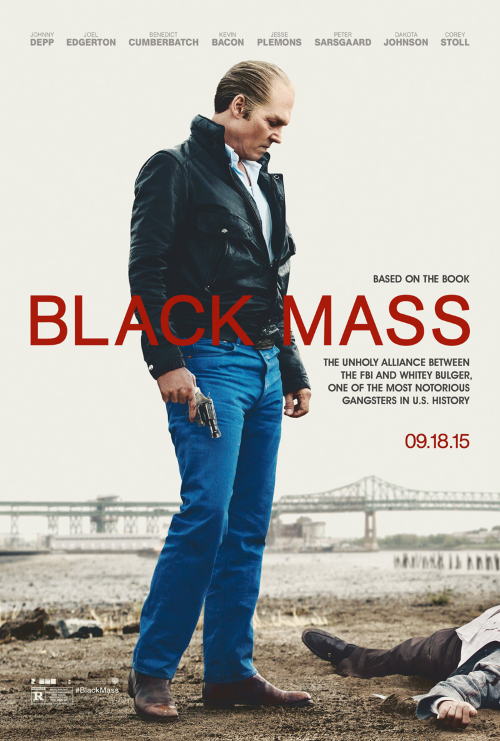
2. IT’S BASED ON A REAL-LIFE GANGSTER.
Jack Nicholson’s character is based on infamous Boston mob boss Whitey Bulger. Before he was captured in 2011, he was second only to Osama bin Laden on the FBI’s Most Wanted List and had a reward of $1 million for his capture.

6. MARK WAHLBERG WASN’T THE FIRST CHOICE TO PLAY DIGNAM.
Ray Liotta (who was also in Scorsese’s Goodfellas) and Denis Leary were initially considered for the role, which eventually went to Wahlberg. Wahlberg was nominated for a Best Supporting Actor Oscar for his performance.

8. THE FILM TAKES A WHILE TO GET GOING.
The title card doesn’t appear until 18 minutes after the movie starts.

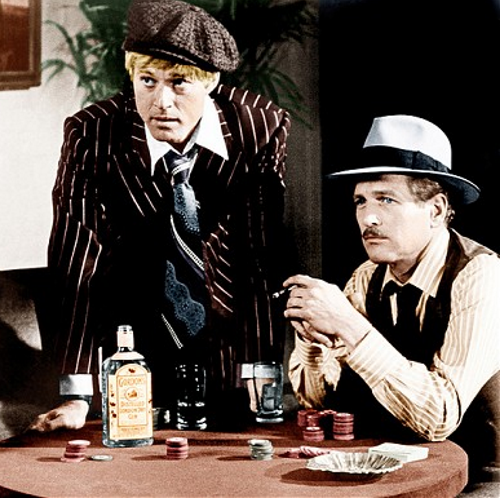
14 Tricky Facts About “The Sting”

Eric D. Snider and Mental_Floss present 14 Tricky Facts About The Sting.  Here are three of my favorites…

2. REUNITING BUTCH AND SUNDANCE WASN’T THE NO-BRAINER YOU’D EXPECT.
Separately, Robert Redford and Paul Newman were two of the biggest movie stars in the world in the early 1970s. As a duo, they were perhaps even more popular, with mega-hit Butch Cassidy and the Sundance Kid (1969) fresh in people’s memories. When the director of that film, George Roy Hill, signed on for The Sting, Redford soon followed. Then came Newman, as described above. But while a Butch and Sundance reunion sounded tempting (and lucrative), the studio had a concern: In the movie, the two con men’s partnership hinges on the possibility that one (or both) will try to double-cross the other. With Redford and Newman so famously chummy, Universal was concerned that audiences wouldn’t believe such a betrayal was possible, and the film would thus lose some of its suspense. Hill assuaged their fears.

6. ROBERT SHAW’S LIMP WAS REAL.
Shaw, who played crime boss Doyle Lonnegan in the film, hurt his leg playing racquetball two days before shooting began. Director Hill decided to work with it and had Shaw turn his injury into a character trait.

8. THE DIRECTOR ISN’T AS FAMOUS AS YOU’D THINK, CONSIDERING HE MADE TWO OF THE HIGHEST-GROSSING FILMS OF ALL TIME.
George Roy Hill’s Butch Cassidy and the Sundance Kid made $102 million in 1969, or about $575 million at today’s ticket prices. When Hill reunited with his Butch and Sundance for The Sting, the result took in $156 million ($723 million adjusted for inflation). The Sting was the fourth highest-grossing film in history at the time, behind The Exorcist (which was released the same week), Gone with the Wind, and The Sound of Music, and ahead of The Godfather.Butch Cassidy and the Sundance Kid was number eight, making Hill the only director to have two movies in the top 10. But Hill was reclusive compared to most Hollywood directors, disliking publicity tours and talk show interviews. As a result, despite his successes (he also made Slap Shot and The World According to Garp), he never quite became a household name.

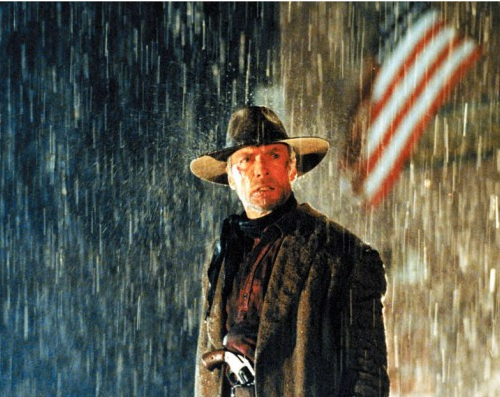
12 Dusty Facts About “Unforgiven”

Eric D. Snider and Mental_Floss present 12 Dusty Facts About Unforgiven.  Here are three of my favorites…

4. EASTWOOD WAS INITIALLY STEERED AWAY FROM THE MOVIE.
Sonia Chernus, a longtime associate of Eastwood’s (and screenwriter of The Outlaw Josey Wales), read The Cut-Whore Killings in the 1980s and was appalled by it. She wrote Eastwood this memo: “We would have been far better off not to have accepted trash like this piece of inferior work … I can’t think of one good thing to say about it. Except maybe, get rid of it FAST.” (It may be worth noting that Chernus was in her seventies at the time, and the script was full of profanity and violence.) Eastwood took her advice and didn’t read the script. Then, while looking for someone to rewrite a different project, he read The Cut-Whore Killings as a sample of Peoples’ work, not realizing it was the screenplay Chernus had warned him away from.

7. THEY BUILT A PRETTY CONVINCING WESTERN TOWN.
Eastwood’s production designer, Henry Bumstead, and his team built the main set for the 1880s town of Big Whiskey, Wyoming on a lonesome prairie in Alberta from which no signs of modern civilization could be seen in any direction. The nearest big city was Calgary, 60 miles away. For authenticity—and since so much of the movie was to be shot on this set—all of the buildings were fully functional (and expensive), not just facades.

11. THE FINAL PRODUCT SHOWS ALMOST NO CHANGES FROM THE ORIGINAL SCRIPT.
That’s a rarity in Hollywood, where even the best screenplays are tinkered with as they’re converted from words on a page into images on a screen. Eastwood had some ideas for revising Peoples’ script, too, only to discover that “the more I fiddled with it, the more I realized I was screwing it up.” All he ended up changing was the title. According to Peoples, Frances Fisher—who plays Strawberry Alice—told him “that this was the first time she saw a shooting script that was entirely in white. Most of them are multicolored, full of blue and red pages or whatever representing various changes in the screenplay.”

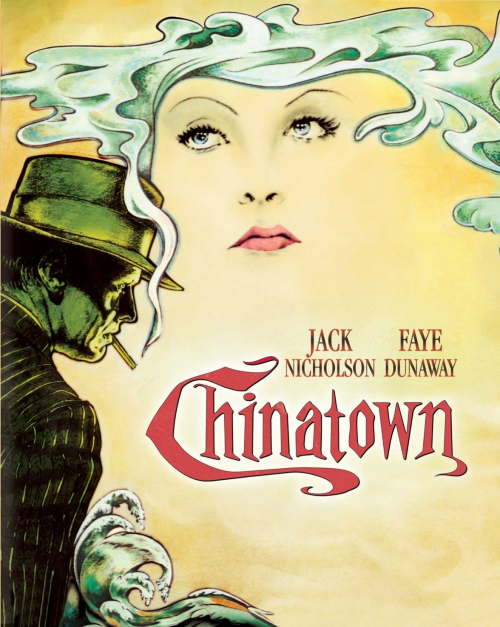
12 Nosy Facts About “Chinatown”

Eric D. Snider and Mental_Floss present 12 Nosy Facts About Chinatown.  Here are three of my favorites…

1. IT WOULDN’T EXIST IF ROBERT TOWNE HADN’T BEEN FRIENDS WITH JACK NICHOLSON. 
The screenwriter and the actor were good friends, even roommates at one point, and they’d studied acting together. Towne has said repeatedly that he wrote the lead role specifically for Nicholson: “I could not have written that character without knowing Jack.” Furthermore, it was while visiting Nicholson in Oregon, where he was directing Drive, He Said, that Towne started reading Raymond Chandler detective novels and a book about the history of California water rights, all of which led to Chinatown.

9. WE DON’T KNOW ANYTHING THAT J.J. GITTES DOESN’T KNOW. 
This is the sort of detail that’s either “well, duh” obvious, or that blows your mind a little when you realize it. The film is entirely from Gittes’ point of view: he’s in every scene, and there’s no information that we learn before he does. When he gets a phone call, we hear the voice but don’t see the person at the other end. When he gets knocked unconscious in the orange grove, the movie fades with him, fading back in when he wakes up. To emphasize the point that we’re seeing everything from Gittes’ perspective, Polanski often put the camera behind Nicholson, so we see his back and shoulders. Watch for it.

12. THERE’S A RECURRING VISUAL MOTIF THAT SHOWS UP OVER AND OVER—AND IT’S THERE ACCIDENTALLY.
Chinatown frequently shows us images of two things that are identical, except that one is flawed: Two pocket watches side by side, one broken. A pair of eyeglasses, one lens cracked. Gittes’ nostrils, one sliced. Gittes smashes one taillight on Evelyn’s car. He loses one shoe in the reservoir. Evelyn has a flaw in one of her irises. Katherine looks like a duplicate of Evelyn, but is the product of incest. The list goes on. But when Towne is asked about this on the DVD commentary, he says it was totally unintentional; he and Polanski never discussed using such images as a recurring theme. Whatever meaning we may ascribe to the symbolism, the filmmakers didn’t put it there on purpose.
“The Six” by George Pelecanos & Andrew Ewington and Mack Chater

I am going to be all over this one.
From master author George Pelecanos, (HBO’s The Wire, The Pacific, Treme), comes a searing tale of warfare at its worst and fighting soldiers at their best. When the wife of a former Marine buddy finds herself a target of a vicious Mexican cartel, she ends up turning to her husband’s old squad for help. Sergeant James McQuade and five former members of the Five-One Sand Scorpions find themselves outnumbered and outgunned against the most lethal and unpredictable enemy they ever went head-to-head with.  It was someone else’s war but it was their fight.  Just the way they like it.

The Six, written by George Pelecanos with Andrew Ewington, art by Mack Chater  from Michael Bay‘s 451 Media Group this November.

Source: Bleeding Cool.

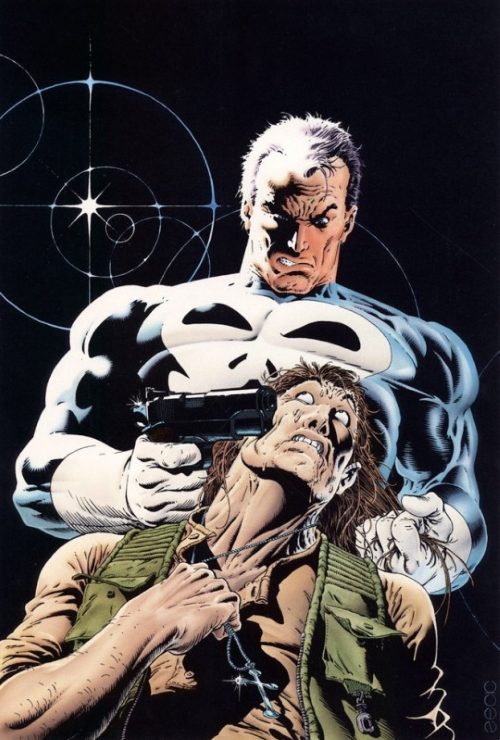
Tom Hardy Gets “100 Bullets”

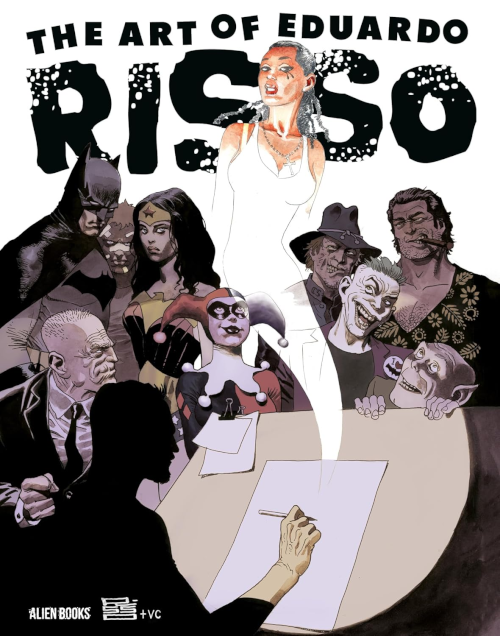
As a huge fan, I loved reading this week that Tom Hardy has teamed with New Line Cinema to bring Brian Azzarello and Eduardo Risso’s 100 Bullets to a theater near you.  Hardy looks to direct and star in the adaption.

My guess is Hardy will play Lono which would work.  If he doesn’t and needs help with the cast, I’ll stick with my 100 Bullets dream cast from 2011.

Source: The Hollywood Reporter.

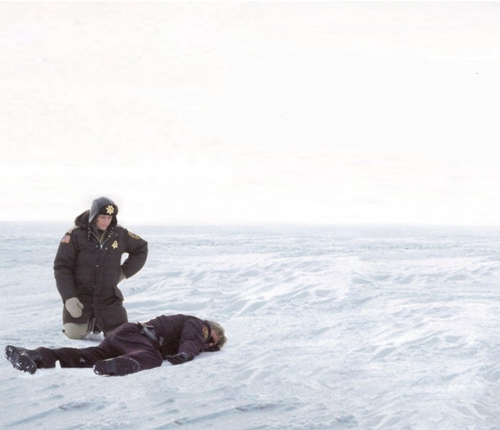
21 Darn Tootin’ Facts About “Fargo”


Adam D’Arpino and Mental_Floss present 21 Darn Tootin’ Facts About Fargo.  Here are three of my favorites…

1. Fargo was almost a TV show back in 1997.
FX’s original series Fargo, which debuted last year to critical praise and enthusiastic viewership, has breathed new life into the funny-accents-meet-brutal-violence formula. However, FX’s take on the Coen Brothers classic actually marks the second major attempt to adapt Fargo for the small screen. In 1997, a pilot directed by Kathy Bates (yes, that Kathy Bates) and starring a pre-Sopranos Edie Falco as Marge Gunderson was passed on by the major networks. Although it never had a full run on television, this first made-for-TV version of Fargo wasn’t lost forever: it aired on the short-lived cable network Trio in 2003, as part of its Brilliant But Cancelled programming series.

17. The film’s editor, Roderick Jaynes, is actually Joel and Ethan Coen.
Because the Coens found having their names appear on screen as directors, writers, producers, and editors a bit tacky, they credit their editing work to the fictional “Roderick Jaynes,” who’s listed on all of their films outside of Raising Arizona and Miller’s Crossing. When the fictional Jaynes was for nominated for his first Oscar on Fargo, the Coens wanted to have actor Albert Finney accept the award in character, but because the Academy doesn’t allow for surrogates to accept awards (presumably due to a 1973 incident involving Marlon Brando and a Native American named Sacheen Littlefeather) they had to scratch the plan. Jaynes ended losing to Walter Murch for his work on The English Patient, and would lose again in 2008 (with The Bourne Ultimatum‘s Christopher Rouse beating out the Coens and No Country for Old Men).

11. An inside joke led to rumors that Prince had a cameo in the film.
The Coens provided anyone willing to stick around for the extended credits to a bit of a Minnesota insider joke. The role of “Victim in the Field” is credited to a scribble resembling Prince’s “Love Symbol,” which he went by between 1993 and 2000. This spurred rumors that Prince had a hidden cameo in the film. Anyone paying attention, however, would have noticed that the role was clearly played by a much huskier fellow, who also happened to be the film’s storyboard artist (and a longtime Coen collaborator) J. Todd Anderson.