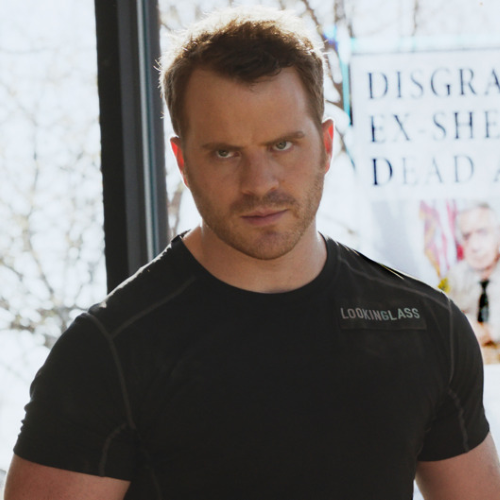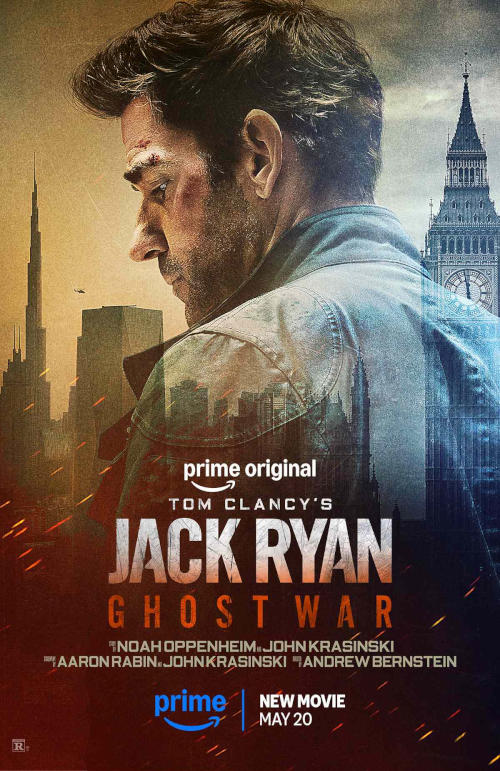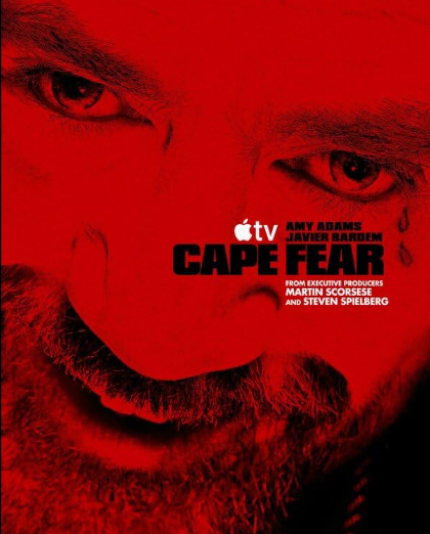
“Lookinglass” aka “The Frankenstein Code” Trailer is Here!

Lookinglass has been through a couple of name changes.  It was originally called The Frankenstein Code.

I like The Frankenstein Code title  but understand why it was changed — it sounds like a horror movie.  Of course since the series was inspired by Mary Shelley’s Frankenstein, the title wasn’t too much of a stretch.

At any rate, a rose monster by any other name and all that, the trailer for Lookinglass is below and looks interesting enough to be added to my list of shows to watch.

17 Things You Never Knew About “The Shawshank Redemption”

Hollywood.com presents 17 Things You Never Knew About The Shawshank Redemption.   Here are three of my favorites…

3. Clint Eastwood, Harrison Ford, Paul Newman, and even Robert Redford were considered for the part of Red, who is a middle-aged Irishman in the original story… Darabont had Freeman in mind all along because of his presence, demeanor, and, of course, that voice.

16. When the cut-out hiding space for his digging tool was discovered in Andy’s Bible, it’s clear the book is open to Exodus.

Shawshank Redemption
Columbia Pictures

The word literally means “to escape or depart.”

5. The mugshot of Red attached to his parole papers looks just like a young Morgan Freeman for a reason: it’s Freeman’s son, Alfonso in the photos.

Shawshank Redemption
Columbia Pictures

Alfonso Freeman also appears in the film as a convict yelling, “Free fish! Free fish today!”

15 Fascinating Facts About “The Departed”

Sean Hutchinson and Mental_Floss present 15 Fascinating Facts About  The Departed.  Here are three of my favorites…

2. IT’S BASED ON A REAL-LIFE GANGSTER.
Jack Nicholson’s character is based on infamous Boston mob boss Whitey Bulger. Before he was captured in 2011, he was second only to Osama bin Laden on the FBI’s Most Wanted List and had a reward of $1 million for his capture.

6. MARK WAHLBERG WASN’T THE FIRST CHOICE TO PLAY DIGNAM.
Ray Liotta (who was also in Scorsese’s Goodfellas) and Denis Leary were initially considered for the role, which eventually went to Wahlberg. Wahlberg was nominated for a Best Supporting Actor Oscar for his performance.

8. THE FILM TAKES A WHILE TO GET GOING.
The title card doesn’t appear until 18 minutes after the movie starts.

“Hell’s Club” is MUST SEE!

Hell’s Club  is the coolest thing on the net right now.  The editing choices on this video are amazing.  The idea is not unique, but the execution is flawless. Join me as we travel to…

… a place where all fictional characters meet. . Outside of time, Outside of all logic, This place is known as HELL’S CLUB, But this club is not safe…

14 Tricky Facts About “The Sting”

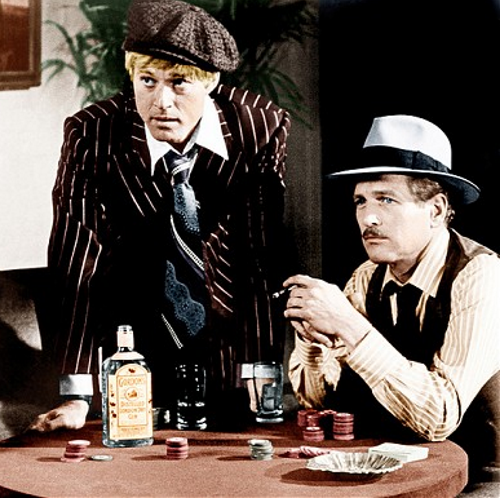
Eric D. Snider and Mental_Floss present 14 Tricky Facts About The Sting.  Here are three of my favorites…

2. REUNITING BUTCH AND SUNDANCE WASN’T THE NO-BRAINER YOU’D EXPECT.
Separately, Robert Redford and Paul Newman were two of the biggest movie stars in the world in the early 1970s. As a duo, they were perhaps even more popular, with mega-hit Butch Cassidy and the Sundance Kid (1969) fresh in people’s memories. When the director of that film, George Roy Hill, signed on for The Sting, Redford soon followed. Then came Newman, as described above. But while a Butch and Sundance reunion sounded tempting (and lucrative), the studio had a concern: In the movie, the two con men’s partnership hinges on the possibility that one (or both) will try to double-cross the other. With Redford and Newman so famously chummy, Universal was concerned that audiences wouldn’t believe such a betrayal was possible, and the film would thus lose some of its suspense. Hill assuaged their fears.

6. ROBERT SHAW’S LIMP WAS REAL.
Shaw, who played crime boss Doyle Lonnegan in the film, hurt his leg playing racquetball two days before shooting began. Director Hill decided to work with it and had Shaw turn his injury into a character trait.

8. THE DIRECTOR ISN’T AS FAMOUS AS YOU’D THINK, CONSIDERING HE MADE TWO OF THE HIGHEST-GROSSING FILMS OF ALL TIME.
George Roy Hill’s Butch Cassidy and the Sundance Kid made $102 million in 1969, or about $575 million at today’s ticket prices. When Hill reunited with his Butch and Sundance for The Sting, the result took in $156 million ($723 million adjusted for inflation). The Sting was the fourth highest-grossing film in history at the time, behind The Exorcist (which was released the same week), Gone with the Wind, and The Sound of Music, and ahead of The Godfather.Butch Cassidy and the Sundance Kid was number eight, making Hill the only director to have two movies in the top 10. But Hill was reclusive compared to most Hollywood directors, disliking publicity tours and talk show interviews. As a result, despite his successes (he also made Slap Shot and The World According to Garp), he never quite became a household name.

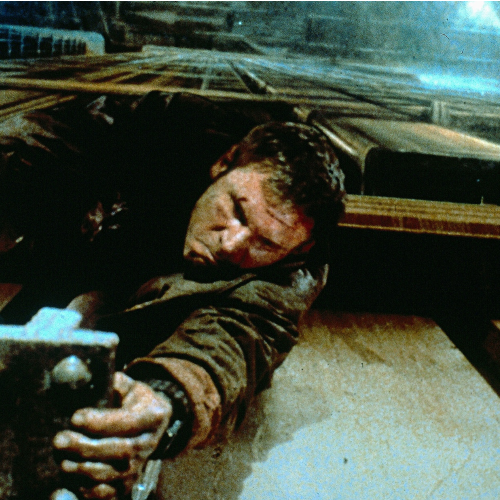
10 Fascinating Facts About “Blade Runner”

Rebecca Pahle and Mental_Floss present 10 Fascinating Facts About Blade Runner.  Here are three of my favorites…

3. DUSTIN HOFFMAN ALMOST PLAYED DECKARD.
At various times during development, Blade Runner’s original screenwriter, Hampton Fancher, pictured Robert Mitchum, Christopher Walken, and Tommy Lee Jones as Rick Deckard. Ridley Scott wanted to go in a completely different direction by casting Dustin Hoffman, whom he later acknowledged didn’t really fit the type. “I figured, unlikely though he may be in terms of his physical size as a sci-fi hero, as an actor Hoffman could do anything,” explained Scott. “Therefore, it really didn’t matter.”

Hoffman, Scott, Fancher, producer Michael Deeley, and production executive Katherine Haber worked on the film for months, workshopping Deckard’s character and shifting the script in a more “socially conscious” (Scott’s words) direction until Hoffman abruptly dropped out in October of 1980. “Frankly,” Scott later said, “I think it might have been something as simple as money.”

8. PHILIP K. DICK REFUSED TO DO A NOVELIZATION.
Dick was approached about penning a Blade Runner novelization, for which he would get a cut of the film’s merchandising rights. “But they required a suppression of the original novel,” Dick explained, “in favor of the commercialized novelization based on the screenplay,” so he refused. “Blade Runner’s people were putting tremendous pressure on us to do the novelization—or to allow someone else to come in and do it, like Alan Dean Foster. But we felt that the original was a good novel. And also, I did not want to write what I call the ‘El Cheapo’ novelization.” At one point, Blade Runner’s team threatened to refuse Dick and his publishers access to the film’s logo or stills (essentially, subsequent printings would not be able to cite the book as the inspiration for Blade Runner), but they eventually backed down.

10. IT’S CURSED.
It might not be quite as hardcore-cursed as Poltergeist or The Omen, but Blade Runner has a curse of its own … on the businesses whose logos appear in the film. Atari, Pan Am, RCA, Cuisinart, and Bell Phones all suffered severe business problems in the years shortly afterBlade Runner’s release, as did Coca-Cola, whose 1985 “New Coke” experiment was less than successful. Members of the Blade Runner production team refer to this as the “product-placement Blade Runner curse.”
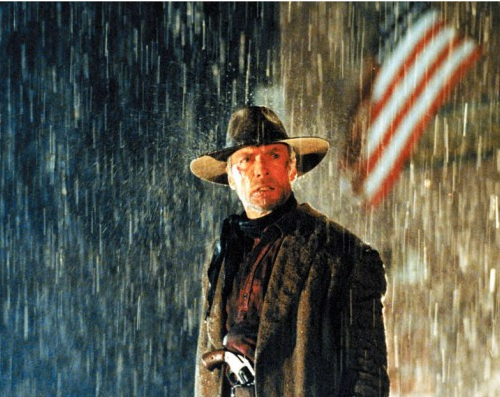
12 Dusty Facts About “Unforgiven”

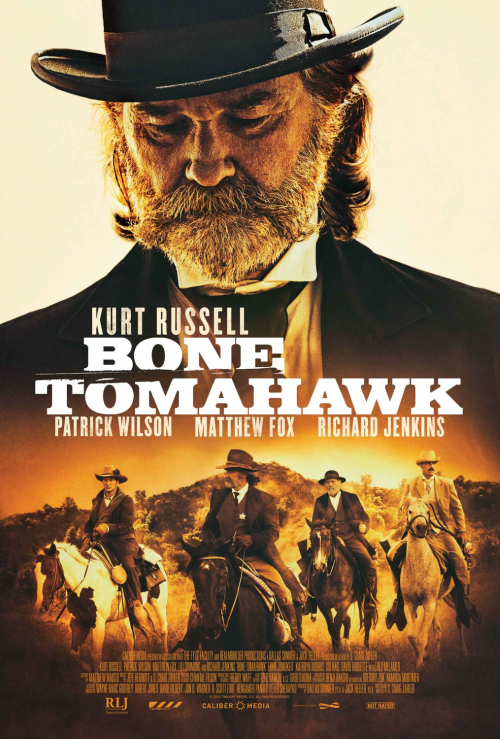
Eric D. Snider and Mental_Floss present 12 Dusty Facts About Unforgiven.  Here are three of my favorites…

4. EASTWOOD WAS INITIALLY STEERED AWAY FROM THE MOVIE.
Sonia Chernus, a longtime associate of Eastwood’s (and screenwriter of The Outlaw Josey Wales), read The Cut-Whore Killings in the 1980s and was appalled by it. She wrote Eastwood this memo: “We would have been far better off not to have accepted trash like this piece of inferior work … I can’t think of one good thing to say about it. Except maybe, get rid of it FAST.” (It may be worth noting that Chernus was in her seventies at the time, and the script was full of profanity and violence.) Eastwood took her advice and didn’t read the script. Then, while looking for someone to rewrite a different project, he read The Cut-Whore Killings as a sample of Peoples’ work, not realizing it was the screenplay Chernus had warned him away from.

7. THEY BUILT A PRETTY CONVINCING WESTERN TOWN.
Eastwood’s production designer, Henry Bumstead, and his team built the main set for the 1880s town of Big Whiskey, Wyoming on a lonesome prairie in Alberta from which no signs of modern civilization could be seen in any direction. The nearest big city was Calgary, 60 miles away. For authenticity—and since so much of the movie was to be shot on this set—all of the buildings were fully functional (and expensive), not just facades.

11. THE FINAL PRODUCT SHOWS ALMOST NO CHANGES FROM THE ORIGINAL SCRIPT.
That’s a rarity in Hollywood, where even the best screenplays are tinkered with as they’re converted from words on a page into images on a screen. Eastwood had some ideas for revising Peoples’ script, too, only to discover that “the more I fiddled with it, the more I realized I was screwing it up.” All he ended up changing was the title. According to Peoples, Frances Fisher—who plays Strawberry Alice—told him “that this was the first time she saw a shooting script that was entirely in white. Most of them are multicolored, full of blue and red pages or whatever representing various changes in the screenplay.”