14 Tricky Facts About “The Sting”
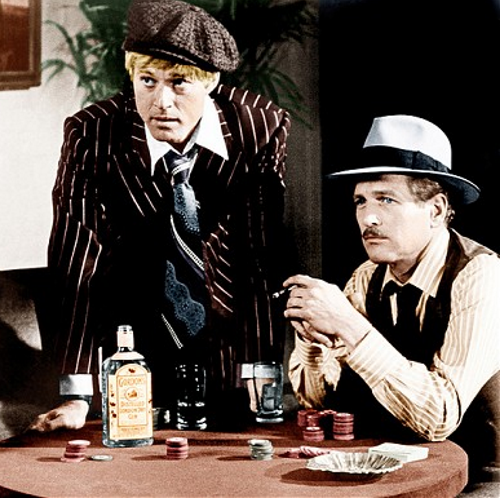
Eric D. Snider and Mental_Floss present 14 Tricky Facts About The Sting.  Here are three of my favorites…

2. REUNITING BUTCH AND SUNDANCE WASN’T THE NO-BRAINER YOU’D EXPECT.
Separately, Robert Redford and Paul Newman were two of the biggest movie stars in the world in the early 1970s. As a duo, they were perhaps even more popular, with mega-hit Butch Cassidy and the Sundance Kid (1969) fresh in people’s memories. When the director of that film, George Roy Hill, signed on for The Sting, Redford soon followed. Then came Newman, as described above. But while a Butch and Sundance reunion sounded tempting (and lucrative), the studio had a concern: In the movie, the two con men’s partnership hinges on the possibility that one (or both) will try to double-cross the other. With Redford and Newman so famously chummy, Universal was concerned that audiences wouldn’t believe such a betrayal was possible, and the film would thus lose some of its suspense. Hill assuaged their fears.

6. ROBERT SHAW’S LIMP WAS REAL.
Shaw, who played crime boss Doyle Lonnegan in the film, hurt his leg playing racquetball two days before shooting began. Director Hill decided to work with it and had Shaw turn his injury into a character trait.

8. THE DIRECTOR ISN’T AS FAMOUS AS YOU’D THINK, CONSIDERING HE MADE TWO OF THE HIGHEST-GROSSING FILMS OF ALL TIME.
George Roy Hill’s Butch Cassidy and the Sundance Kid made $102 million in 1969, or about $575 million at today’s ticket prices. When Hill reunited with his Butch and Sundance for The Sting, the result took in $156 million ($723 million adjusted for inflation). The Sting was the fourth highest-grossing film in history at the time, behind The Exorcist (which was released the same week), Gone with the Wind, and The Sound of Music, and ahead of The Godfather.Butch Cassidy and the Sundance Kid was number eight, making Hill the only director to have two movies in the top 10. But Hill was reclusive compared to most Hollywood directors, disliking publicity tours and talk show interviews. As a result, despite his successes (he also made Slap Shot and The World According to Garp), he never quite became a household name.
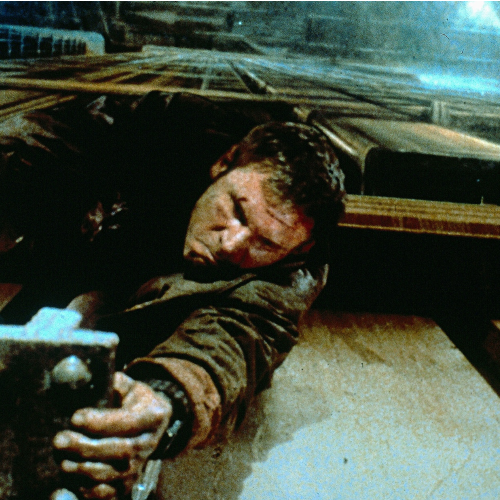
10 Fascinating Facts About “Blade Runner”

Rebecca Pahle and Mental_Floss present 10 Fascinating Facts About Blade Runner.  Here are three of my favorites…

3. DUSTIN HOFFMAN ALMOST PLAYED DECKARD.
At various times during development, Blade Runner’s original screenwriter, Hampton Fancher, pictured Robert Mitchum, Christopher Walken, and Tommy Lee Jones as Rick Deckard. Ridley Scott wanted to go in a completely different direction by casting Dustin Hoffman, whom he later acknowledged didn’t really fit the type. “I figured, unlikely though he may be in terms of his physical size as a sci-fi hero, as an actor Hoffman could do anything,” explained Scott. “Therefore, it really didn’t matter.”

Hoffman, Scott, Fancher, producer Michael Deeley, and production executive Katherine Haber worked on the film for months, workshopping Deckard’s character and shifting the script in a more “socially conscious” (Scott’s words) direction until Hoffman abruptly dropped out in October of 1980. “Frankly,” Scott later said, “I think it might have been something as simple as money.”

8. PHILIP K. DICK REFUSED TO DO A NOVELIZATION.
Dick was approached about penning a Blade Runner novelization, for which he would get a cut of the film’s merchandising rights. “But they required a suppression of the original novel,” Dick explained, “in favor of the commercialized novelization based on the screenplay,” so he refused. “Blade Runner’s people were putting tremendous pressure on us to do the novelization—or to allow someone else to come in and do it, like Alan Dean Foster. But we felt that the original was a good novel. And also, I did not want to write what I call the ‘El Cheapo’ novelization.” At one point, Blade Runner’s team threatened to refuse Dick and his publishers access to the film’s logo or stills (essentially, subsequent printings would not be able to cite the book as the inspiration for Blade Runner), but they eventually backed down.

10. IT’S CURSED.
It might not be quite as hardcore-cursed as Poltergeist or The Omen, but Blade Runner has a curse of its own … on the businesses whose logos appear in the film. Atari, Pan Am, RCA, Cuisinart, and Bell Phones all suffered severe business problems in the years shortly afterBlade Runner’s release, as did Coca-Cola, whose 1985 “New Coke” experiment was less than successful. Members of the Blade Runner production team refer to this as the “product-placement Blade Runner curse.”

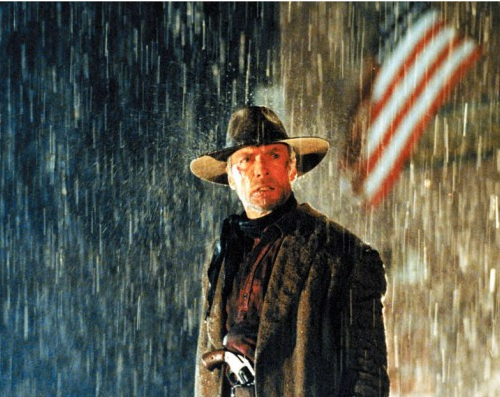
12 Dusty Facts About “Unforgiven”

Eric D. Snider and Mental_Floss present 12 Dusty Facts About Unforgiven.  Here are three of my favorites…

4. EASTWOOD WAS INITIALLY STEERED AWAY FROM THE MOVIE.
Sonia Chernus, a longtime associate of Eastwood’s (and screenwriter of The Outlaw Josey Wales), read The Cut-Whore Killings in the 1980s and was appalled by it. She wrote Eastwood this memo: “We would have been far better off not to have accepted trash like this piece of inferior work … I can’t think of one good thing to say about it. Except maybe, get rid of it FAST.” (It may be worth noting that Chernus was in her seventies at the time, and the script was full of profanity and violence.) Eastwood took her advice and didn’t read the script. Then, while looking for someone to rewrite a different project, he read The Cut-Whore Killings as a sample of Peoples’ work, not realizing it was the screenplay Chernus had warned him away from.

7. THEY BUILT A PRETTY CONVINCING WESTERN TOWN.
Eastwood’s production designer, Henry Bumstead, and his team built the main set for the 1880s town of Big Whiskey, Wyoming on a lonesome prairie in Alberta from which no signs of modern civilization could be seen in any direction. The nearest big city was Calgary, 60 miles away. For authenticity—and since so much of the movie was to be shot on this set—all of the buildings were fully functional (and expensive), not just facades.

11. THE FINAL PRODUCT SHOWS ALMOST NO CHANGES FROM THE ORIGINAL SCRIPT.
That’s a rarity in Hollywood, where even the best screenplays are tinkered with as they’re converted from words on a page into images on a screen. Eastwood had some ideas for revising Peoples’ script, too, only to discover that “the more I fiddled with it, the more I realized I was screwing it up.” All he ended up changing was the title. According to Peoples, Frances Fisher—who plays Strawberry Alice—told him “that this was the first time she saw a shooting script that was entirely in white. Most of them are multicolored, full of blue and red pages or whatever representing various changes in the screenplay.”

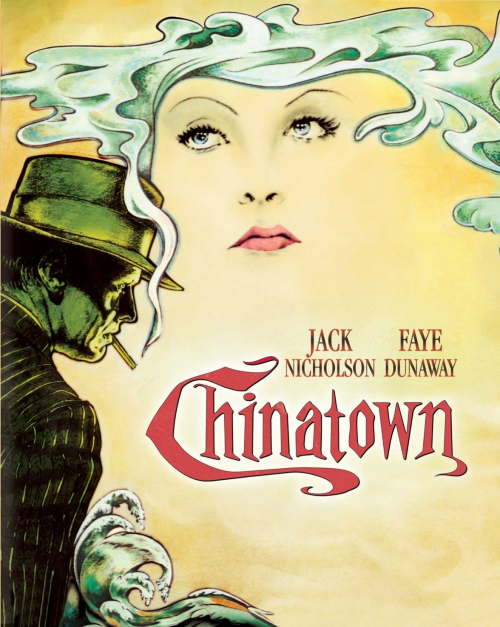
12 Nosy Facts About “Chinatown”

Eric D. Snider and Mental_Floss present 12 Nosy Facts About Chinatown.  Here are three of my favorites…

1. IT WOULDN’T EXIST IF ROBERT TOWNE HADN’T BEEN FRIENDS WITH JACK NICHOLSON. 
The screenwriter and the actor were good friends, even roommates at one point, and they’d studied acting together. Towne has said repeatedly that he wrote the lead role specifically for Nicholson: “I could not have written that character without knowing Jack.” Furthermore, it was while visiting Nicholson in Oregon, where he was directing Drive, He Said, that Towne started reading Raymond Chandler detective novels and a book about the history of California water rights, all of which led to Chinatown.

9. WE DON’T KNOW ANYTHING THAT J.J. GITTES DOESN’T KNOW. 
This is the sort of detail that’s either “well, duh” obvious, or that blows your mind a little when you realize it. The film is entirely from Gittes’ point of view: he’s in every scene, and there’s no information that we learn before he does. When he gets a phone call, we hear the voice but don’t see the person at the other end. When he gets knocked unconscious in the orange grove, the movie fades with him, fading back in when he wakes up. To emphasize the point that we’re seeing everything from Gittes’ perspective, Polanski often put the camera behind Nicholson, so we see his back and shoulders. Watch for it.

12. THERE’S A RECURRING VISUAL MOTIF THAT SHOWS UP OVER AND OVER—AND IT’S THERE ACCIDENTALLY.
Chinatown frequently shows us images of two things that are identical, except that one is flawed: Two pocket watches side by side, one broken. A pair of eyeglasses, one lens cracked. Gittes’ nostrils, one sliced. Gittes smashes one taillight on Evelyn’s car. He loses one shoe in the reservoir. Evelyn has a flaw in one of her irises. Katherine looks like a duplicate of Evelyn, but is the product of incest. The list goes on. But when Towne is asked about this on the DVD commentary, he says it was totally unintentional; he and Polanski never discussed using such images as a recurring theme. Whatever meaning we may ascribe to the symbolism, the filmmakers didn’t put it there on purpose.

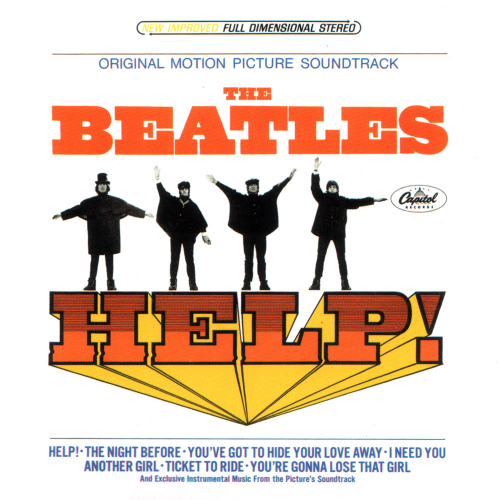
15 Fab Facts About “Help!”

Sarene Leeds and Mental_Floss present 15 Fab Facts About Help!  Here are three of my favorites…

1. HELP! WAS ALMOST CALLED EIGHT ARMS TO HOLD YOU.
At first listen, “Eight Arms to Hold You” sounds like a nice idea: who wouldn’t want to be held by all four Beatles, right? But when Lester reveals that the Ringo Starr-suggested title was in fact a reference to the multi-armed statue of Kaili that appears in the film, and not a teenage girl’s fantasy of being cradled by The Fab Four, much of the romantic element fades away. In the book accompanying the film’s 2007 DVD re-release, Lester claims that he had wanted to call the movie Help from the get-go, but the title had already been registered. Luckily, thanks to The Beatles’ lack of enthusiasm to write a song called “Eight Arms to Hold You” and a legal loophole involving an exclamation point, the film was able to proceed as Help!

3. THE MOVIE’S INTERNATIONAL LOCALES WERE REALLY JUST AN EXCUSE FOR THE BEATLES TO TRAVEL.
While A Hard Day’s Night stuck to the familiarity of London, Help! was a veritable travelogue, sending The Beatles to such far-flung destinations as the Bahamas and the Austrian Alps in their attempts to evade the evil Clang (Leo McKern) and his cult of Eastern sycophants. But as Paul McCartney and Ringo Starr revealed in Anthology interviews, the film’s travel budget was increased mainly because they wanted to go to the aforementioned locales. McCartney recalled how they would say to the writers, “We’ve never been to the Bahamas—could you write that in?” and “I’ve never been skiing. I wonder if you could write in a scene with skiing?”

But The Beatles learned the consequences of their actions the hard way: the weather in the Bahamas was freezing at the time (“It was absolutely bloody cold,” said Starr), and their crash course in skiing consisted of, according to the drummer, little more than being “edged down the mountain.”

10. THE MUSICAL NOTES IN THE “TICKET TO RIDE” SEQUENCE WERE PRODUCED OUT OF NECESSITY RATHER THAN CREATIVITY.

There’s a cute moment in the “Ticket to Ride” sequence where The Beatles are skiing in the Austrian Alps and they appear to ski right underneath part of the song’s musical score (it starts at around 1:27 in the above video). But as Lester explained in the 2007 documentary that accompanied the film’s DVD release, the decision to add musical notes came from the fact that the lads were skiing under some unsightly “telegraph wires” (Lester’s words; for all we know they could’ve been telephone wires). Since he couldn’t remove the wires digitally—this was the pre-CGI era, after all—he figured they’d make an ideal musical staff instead!

22 Fresh Facts You Probably Didn’t Know About “The Fresh Prince of Bel-Air”

Hollywood.com presents 22 Fresh Facts You Probably Didn’t Know About The Fresh Prince of Bel-Air.   Here are three of my favorites…

1.  The show was nearly canceled after the fourth season.  During the season finale, Will returns to Philly with the Banks to visit his mom and he decides to stay. Fresh Prince fans were so outraged by the show’s cancellation that NBC brought it back for two additional seasons.

7. Will Smith would memorize and mouth the other actors’ lines so that he could remember his own. If you look closely you can see him doing this in various episodes.

12. Alfonso Ribero who plays Carlton Banks in the series credits Eddie Murphy’s “white man dance” in Delirious and Courteney Cox in Bruce Spingsteen’s “Dancing in the Dark” video for his iconic Carlton Dance.

Big Beatty, Mitch Hyman and the Infinity Toy and Comic Show

I spent the day yesterday with my buddy, John Beatty at the Infinity Toy and Comic Show in Orlando, Florida.  When Big John wasn’t selling prints of his art or signing autographs for fans, much of the day was spent conversing with Mitch Hyman [in the photo above].  I can’t remember the last time I laughed so much.

The Infinity Toy and Comic Show had a nice turnout and some surprisingly great cosplayers [for such a small show].  The show was big enough that it took up three hotel meeting rooms — and that may have been the biggest downside.  I generally prefer one room for shows and my guess is most folks do as well.  That aside (and it is a small quibble), the Infinity Toy and Comic Show made for a fun day.  Of course hanging with Beatty and Hyman didn’t hurt either.

15 Fiery Facts About “Barton Fink”

Roger Cormier and Mental_Floss present 15 Fiery Facts About Barton Fink.

1. THE COEN BROTHERS WROTE IT WHILE STUCK ON MILLER’S CROSSING.
Writer-director siblings Joel and Ethan found themselves struggling with the script for their next project, 1990’s Miller’s Crossing, so spent three weeks writing a movie about a screenwriter with writer’s block. From the beginning, they knew that they wanted John Turturro involved in Barton Fink, and they planned to feature the concept of a “huge abandoned hotel.”

14. IT FORCED THE CANNES FILM FESTIVAL TO CHANGE THEIR RULES.
Barton Fink won the Palme d’Or, Best Director, and Best Actor honors at Cannes. Because of the hat trick, the rules were changed so that no movie could ever win all three awards again.

15. THERE MIGHT BE A SEQUEL.
Joel said it would be called Old Fink, and they’re waiting for Turturro to be old enough to play Fink in 1967, after turning friends over to the House Un-American Activities Committee.

“The Six” by George Pelecanos & Andrew Ewington and Mack Chater

I am going to be all over this one.

From master author George Pelecanos, (HBO’s The Wire, The Pacific, Treme), comes a searing tale of warfare at its worst and fighting soldiers at their best. When the wife of a former Marine buddy finds herself a target of a vicious Mexican cartel, she ends up turning to her husband’s old squad for help. Sergeant James McQuade and five former members of the Five-One Sand Scorpions find themselves outnumbered and outgunned against the most lethal and unpredictable enemy they ever went head-to-head with.  It was someone else’s war but it was their fight.  Just the way they like it.

The Six, written by George Pelecanos with Andrew Ewington, art by Mack Chater  from Michael Bay‘s 451 Media Group this November.

Source: Bleeding Cool.